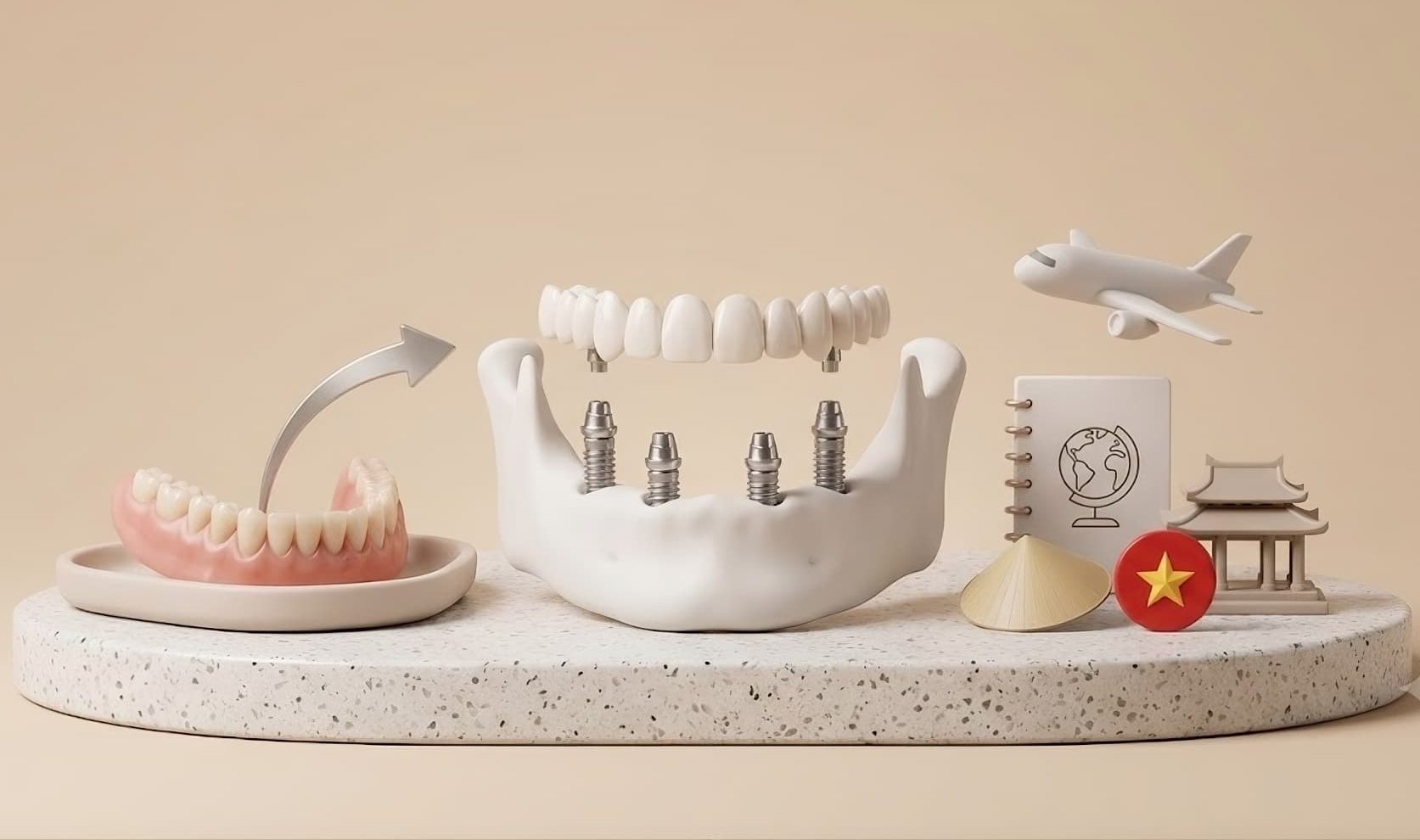
Most dentures wearers can switch to fixed implants, but how straightforward the switch is depends on the bone left under the denture. A denture rests on the gum, and the jawbone beneath it keeps shrinking after the teeth are gone. That is why a denture that fitted well in the first year can slip, click and rub years later.
A radiographic study comparing patients with different lower jaw prostheses found more annual ridge resorption in complete denture wearers than in patients with implant supported overdentures. Fixed implants anchor in the jaw instead of sitting on the gum, but long term denture wear can leave less bone to anchor into. A CBCT scan decides whether the switch is a standard placement, needs bone grafting or calls for a different implant layout.
This guide covers what happens to the jawbone under a denture, who can switch, how a fixed bridge compares with an implant overdenture, and how many implants, trips and dollars the switch usually involves. It describes common patterns and is not a diagnosis.
Quick Answer
Many long term denture wearers can switch to fixed implants, but years of wear can reduce the jawbone, so some cases need bone grafting or a different implant layout. A CBCT scan decides the plan. Fixed full arch treatment usually uses four to six implants per jaw and often takes two trips, with healing at home between them.
Why Dentures Loosen and What Happens to the Jawbone
Dentures loosen because the bone under them shrinks, and the denture has no root to slow that process. Natural tooth roots stimulate the jawbone when you chew. Once they are gone, the ridge gradually resorbs, the gum surface changes shape and the denture stops matching it.
Relining or adhesive can improve the fit for a while, but neither replaces lost bone. The rate of loss varies from person to person, so two patients who have worn dentures for ten years can have very different amounts of bone left. Only imaging shows which situation applies, which is why a recent panoramic X-ray or CBCT scan is the first record any implant dentist asks for.
Can You Get Fixed Implants After Years of Wearing Dentures?
Usually yes, but the plan depends on how much bone remains. Long term denture wear does not rule out implants. It changes how much preparation they need.
When the Bone Is Still Enough
Some denture wearers keep enough bone height and width for implants to be placed without extra surgery. In those cases the switch follows the same staged pattern as other full arch treatment: surgery, a temporary fixed bridge, healing, then the final bridge.
When Grafting, a Sinus Lift or Cheekbone Implants Come Up
Where bone has thinned, a dentist may suggest bone grafting to rebuild volume before or during implant placement. In the upper jaw, the sinus often limits bone height, and a sinus lift before upper jaw implants may be discussed. In severe upper jaw bone loss, zygomatic implants that anchor in the cheekbone are sometimes considered as an alternative to extensive grafting. Grafting can add a healing stage and a trip, and it is not included in the standard full arch packages, so it is worth knowing early whether your scan points that way.
Fixed Implants or an Implant Overdenture?
Both options use implants, but they behave differently day to day. A fixed bridge is screwed or fitted onto the implants and stays in the mouth. An overdenture is a denture that clips onto implants and is taken out for cleaning. A systematic review by Goodacre and Goodacre compared the two and found high implant survival with both, with more maintenance and complications in overdentures and greater residual ridge resorption.
| Factor | Fixed implant bridge | Implant overdenture |
|---|---|---|
| Removed by the patient | No | Yes, for cleaning and at night if advised |
| Typical number of implants | Usually four to six per jaw | Often fewer, studies include as few as two in the lower jaw |
| Maintenance | Cleaned under the bridge, checked at follow ups | More frequent adjustments and replacement of clips reported |
| Residual ridge resorption | Lower in the review | Greater in the review |
| Patient satisfaction | High, with three of eight compared studies favouring fixed | High, with five of eight showing no difference |
| Upfront cost | Higher, more implants and a larger prosthesis | Usually lower, fewer implants |
The review concludes that several factors decide which suits a given patient, and patient expectations and cost are often the deciding points when both are clinically possible. This article focuses on fixed treatment because that is what Delia Dental Clinic plans for denture wearers who want teeth that stay in place. The overdenture comparison is here so you can ask your dentist informed questions, whichever clinic you choose.
How Many Implants, Which Option Fits and How Long the Switch Takes
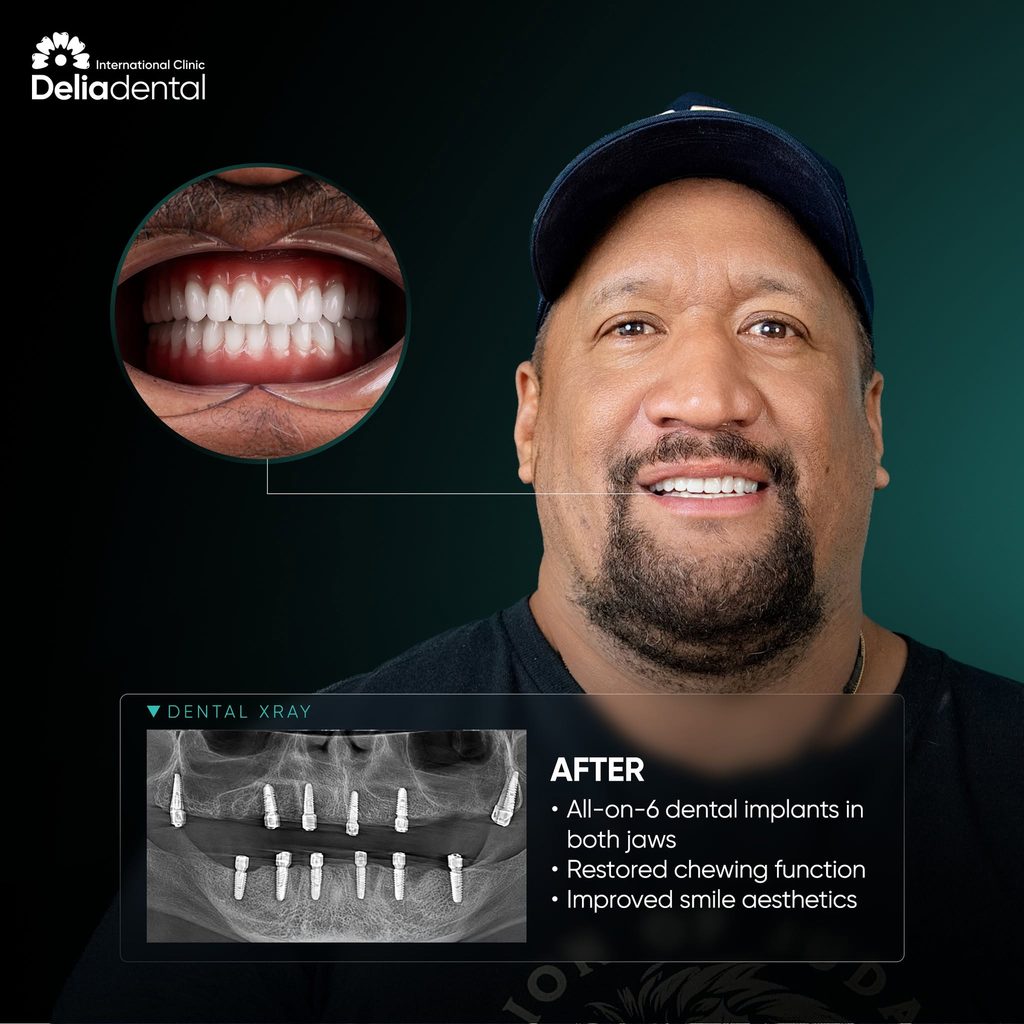
Fixed full arch treatment usually uses four to six implants per jaw, and most cases need two trips to Vietnam with healing at home in between. The exact number of implants, the type of final teeth and the trip schedule are set after a CBCT scan and an in person examination.
How Many Implants
An All-on-4 plan uses four implants per jaw and an All-on-6 plan uses six. More implants do not automatically make a plan better for every patient. The choice depends on bone volume, jaw shape and bite forces, and the difference between All-on-4 and All-on-6 is covered in a separate guide. Denture wearers with thinner bone may be steered toward more implants for load sharing, or toward grafting first, depending on what the scan shows.
What the Final Teeth Are Made Of and What Each Option Costs
Delia Dental Clinic offers three types of final bridge. Package 1 is a fixed screw retained high strength resin bridge. Package 2 is metal ceramic teeth fitted on a titanium framework. Package 3 is zirconia teeth fitted on a titanium framework.
The table shows standard prices in USD for one jaw with four implants. Each package includes four implants, four abutment sets, an immediate fixed temporary bridge and the final bridge.
| Implant system | Origin | Package 1 | Package 2 | Package 3 |
| Osstem | South Korea | $4,960 | $5,960 | $6,260 |
| Dentium | USA | $5,360 | $6,360 | $6,660 |
| HIOSSEN | USA | $5,960 | $6,960 | $7,260 |
| ETK | France | $6,160 | $7,160 | $7,460 |
| SIC | Switzerland | $6,560 | $7,560 | $7,860 |
| NEODENT GM Helix Neoporos | Switzerland | $6,560 | $7,560 | $7,860 |
| NEODENT GM Helix Acqua | Switzerland | $6,960 | $7,960 | $8,260 |
| STRAUMANN SLA | Switzerland | $8,760 | $9,760 | $10,060 |
| STRAUMANN SLActive | Switzerland | $9,360 | $10,360 | $10,660 |
| NOBEL | Sweden | $8,760 | $9,760 | $10,060 |
| NOBEL ACTIVE | Sweden | $9,360 | $10,360 | $10,660 |
These prices do not cover bone grafting, sinus lift, sedation or other treatment found during assessment, and treating both jaws is priced as two arches. All-on-5 and All-on-6 plans use more implants and are quoted per case. Because denture wearers are the group most likely to need grafting, the final figure for your mouth can sit above these base prices. The guide to bone grafting and dental implant cost in Vietnam explains what drives that difference.
Trip by Trip Timeline
| Stage | What usually happens | Planning reference |
|---|---|---|
| Before travel | Remote review of X-rays, photos and your current denture | Done by message |
| Trip 1 | Examination, CBCT, any extractions, implant surgery, immediate fixed temporary bridge where suitable | Often five to seven days for implant cases, confirmed per case |
| At home | Healing and integration of the implants | Commonly three to six months, case dependent |
| Trip 2 | Final bridge fitting, bite check and adjustment | Often three to five days, longer for full arch cases |
These are travel planning estimates, not completion dates. Staged grafting, infection treatment or slower healing can add visits. The length of stay guide for dental implants sets out what each trip involves, and the temporary teeth guide for All-on-4 and All-on-6 explains what to expect between trips.
What the First Weeks Feel Like Compared With Dentures
A temporary fixed bridge does not move like a denture, but it is not your final bridge and it is built for healing, not heavy chewing. Most patients are advised to stay on soft food early on while the implants integrate. Speech can feel different for a short time because the shape of the teeth and palate changes, particularly when an upper plate is replaced by a bridge with a thinner palate. The article on speech changes after All-on-4 and All-on-6 covers what is normal and what to report. Swelling, bleeding or a temporary bridge that feels loose should be reported to the clinic, not left to settle.
How Delia Dental Clinic Reviews a Denture to Implant Case
The international patient team at Delia Dental Clinic’s Hanoi and Ho Chi Minh City branches can review your records before you book a flight and suggest a preliminary direction, an estimated cost and the likely number of trips. Imaging is the key record, because the plan depends on how much bone has been lost. A CBCT scan taken at the clinic shows the bone, the sinus position and nearby structures in three dimensions, and it is what confirms whether grafting or a different layout is needed.
A remote review has limits. Photos and a panoramic X-ray can show the general picture, but they cannot confirm bone volume, implant positions or final cost. The plan can change after the examination, so the final treatment plan and quote are confirmed in person.
Useful records to send:
- A recent panoramic X-ray or CBCT scan, in its original format if you have it
- Photos of your smile and mouth with and without the denture in
- A photo of the denture itself, showing the fitting surface
- How long you have worn it, whether it is upper, lower or both, and what bothers you most
- Any quote or treatment plan you have already received
Frequently Asked Questions
Can I Keep Wearing My Old Denture While the Implants Heal?
Sometimes, but not always, and not in the same way as before. Pressure on the gum over fresh implants can disturb healing, so a dentist may suggest a temporary fixed bridge, an adapted denture or a short period without one, depending on how stable the implants are. Do not decide this yourself, and ask the clinic what they plan for the weeks after surgery before you travel.
Is the Switch Different for the Upper and Lower Jaw?
Yes, in some ways. The upper jaw often has less bone height because of the sinus, so sinus lifts and grafting come up more often there. The lower jaw can have denser bone but has a nerve running through it that limits how deep implants can go. Which jaw is harder varies by patient, which is why scans matter more than general rules.
Does Age or a Long Denture History Rule Me Out?
Not on its own. General health, bone condition and healing ability matter more than age, and long term denture wear usually changes the plan rather than ending the option. Medical history can matter too, and the article on implants for older patients and the records to prepare lists what to gather before an assessment.
Do I Need to Replace Both Jaws at Once?
No. Some patients treat only the jaw that causes the most trouble, often the lower denture that slips, and leave the other for later. Treating one jaw can affect the bite against the other, so the dentist plans both arches even if only one is treated first. The difference between treating one arch and the whole mouth is explained in the guide to full arch versus full mouth implants.
Is Switching Worth It If My Denture Only Slips Sometimes?
It depends on how much the problem affects eating, speaking and daily life. A reline, adhesive or a new denture may be reasonable first steps for mild problems, while implants involve surgery, higher cost and at least one trip. If the denture keeps slipping, causes sore spots or limits what you eat, a preliminary review shows what your options would involve before you decide.
Planning the Trips and Costs Around Your Switch
Once you know the switch is possible, the next questions are usually how long to stay, what grafting could add and what the warranty covers.
- How Long Should You Stay in Vietnam for Dental Implants?
- Bone Grafting and Dental Implant Cost in Vietnam
- Implant Warranty vs Prosthetic Warranty: What’s Covered?
- Night Guard After Implants or Crowns: Do You Actually Need One?
Final Thoughts
The first answer you need is how much bone is left under your denture, because that decides whether the switch is a direct placement, a grafting case or a different layout. Price and trip count follow from that scan, not the other way around.
Send your panoramic X-ray or CBCT scan, photos with and without your denture and any existing quote via WhatsApp or Messenger so Delia Dental Clinic can suggest a preliminary direction and estimate cost and trip timing before you book a flight. The final treatment plan and quote are confirmed after an in person examination in Hanoi or Ho Chi Minh City.


