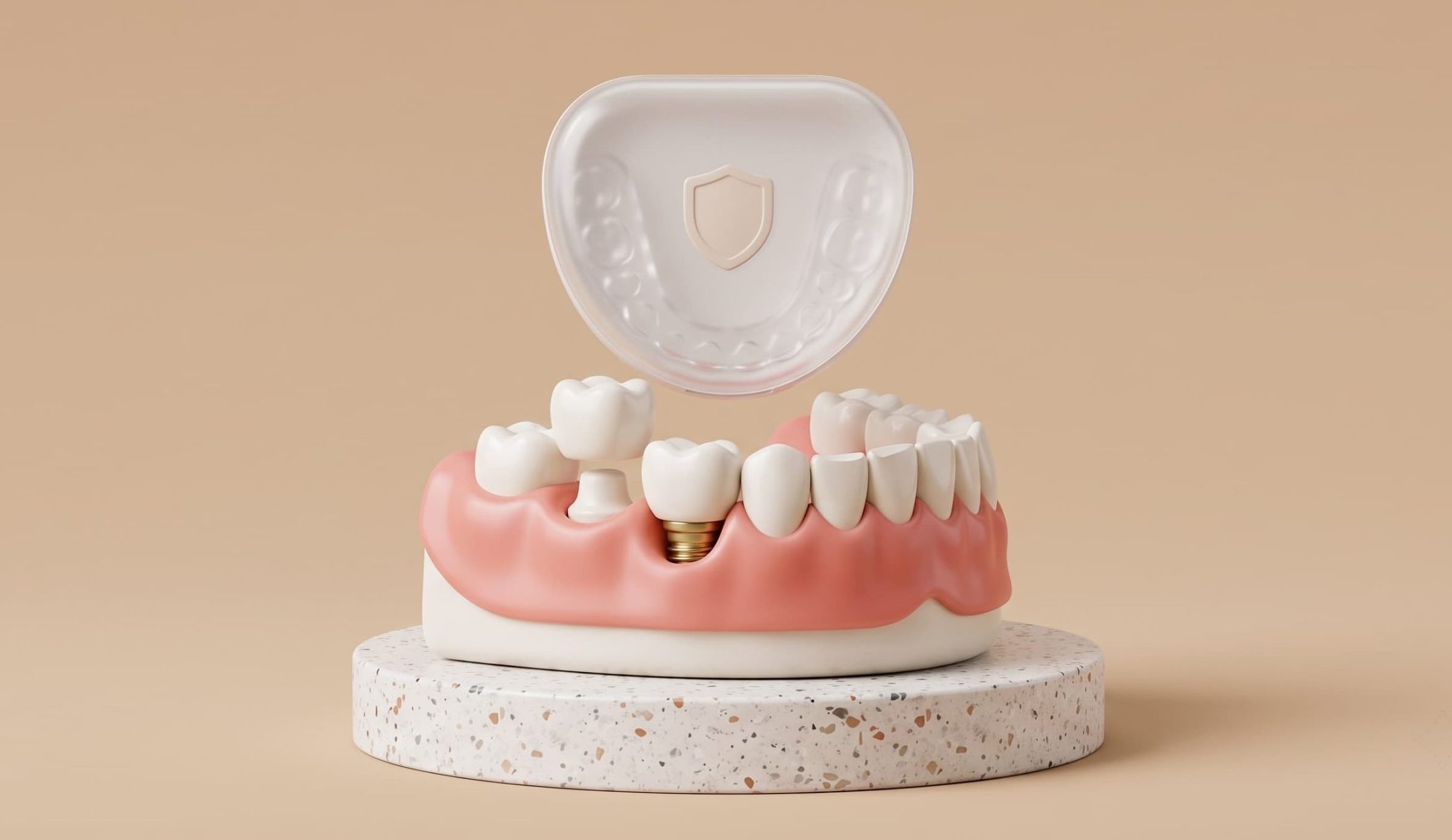
Not every patient needs a night guard after dental implants or crowns. The deciding factor is whether the patient grinds or clenches, not which restoration was placed, and a guard protects new teeth from the force without removing the habit that produces it.
Implants raise the stakes because they are anchored directly in bone and have no periodontal ligament to soften a hard bite. Research links grinding with more loose screws, chipped ceramic and, in some studies, implant loss. That link is well documented, whereas the evidence that a guard prevents these outcomes is thinner than many clinic websites suggest, and crowns on natural teeth perform better in the studies than implant bridges do.
This guide explains why implants respond differently to grinding, what the studies show and where they are limited, which restorations are most likely to need grinding protection, and when night guard fitting should take place if treatment in Vietnam is split across two trips.
Quick Answer
A night guard is usually advised after implants or crowns when there are signs of grinding or clenching, such as worn edges, jaw soreness, or earlier chips and loose screws. Implants have no ligament to cushion bite force, so patients who grind face more mechanical complications, and full arch bridges are the most exposed. A dentist should confirm the need by examining the bite.
Why Implants and Full Arch Bridges React Differently to Grinding
A natural tooth sits in a periodontal ligament that gives slightly under load. A narrative review of full arch prostheses reports that a light force of 20 newtons pushes a natural tooth inward by about 50 micrometres, compared with about 2 micrometres for an osseointegrated implant. The ligament also carries nerve endings that tell the brain how firmly the teeth are meeting. A fixed full arch bridge supported by implants has no ligament receptors at all, so feedback about excessive force is weaker.
The difference in sensation is smaller than is often assumed. A 2022 review of tactile thresholds found mean active thresholds of 16.1 micrometres for natural teeth and 23.3 micrometres for implant prostheses, which suggests that implant patients keep some sensation through a mechanism known as osseoperception. Feedback is therefore reduced rather than absent. Forces during sleep bruxism have also been reported to exceed the maximum voluntary bite force and to reach more than 800 newtons in men, so even good sensation would not reliably interrupt a habit that occurs during sleep.
None of this means implants cannot cope with chewing or with bruxism. A 2025 narrative review reports limited evidence linking bruxism to bone loss around implants, while technical complications such as prosthetic fractures and screw loosening are well described. The mechanical parts of the restoration are therefore where grinding protection matters most, and the studies below deal with them directly.
Which Restorations Are Most Likely to Need a Night Guard
The need varies with the type of restoration, because each one transfers force differently. The right hand column reflects common practice, and the dentist who examines the bite makes the final decision.
| Restoration | What grinding tends to affect | Guard usually advised |
|---|---|---|
| Full arch bridge (All-on-4, All-on-6) | Acrylic teeth, ceramic layers, screws, framework | Yes for most patients |
| Implant bridge on two or more implants | Ceramic, screws | If there are signs of grinding |
| Single implant crown | Screw, ceramic | If there are signs or a history of chips |
| Crowns on natural teeth | Wear, occasional chipping | If there are signs of grinding |
Full Arch Bridges (All-on-4 and All-on-6)
Most complications in full arch bridges are prosthetic rather than biological. Acrylic teeth can wear or fracture, layered ceramic can chip and screws can loosen, which is the pattern seen in the 10.7 year study above. Material choice affects the outcome. In a small retrospective study of 16 patients with bruxism who received complete rehabilitations in monolithic zirconia, implant survival was 97.7%, while veneered restorations showed minor chipping in 16.4% and usually needed polishing only. The German S3 guideline on implant supported all ceramic restorations similarly reports that monolithic and micro veneered designs reduce chipping risk.
A guard is added on top of good design and does not replace it. The temporary bridge fitted at surgery is typically made with resin teeth, which generally wear and fracture more readily than a final ceramic bridge, so the difference between temporary and final full arch teeth matters for any patient who grinds.
Single Implants and Short Bridges
A single implant crown receives the same biting force as a natural tooth in that position, without the ligament that cushions it. A screw that keeps loosening or a crown that keeps chipping is usually the first sign that the bite or a grinding habit needs review, and a guard is reasonable when those signs are present. If a chip has already occurred after returning home, the guide to a chipped crown or veneer after returning home covers the first steps, and the guide to a loose implant crown explains how to tell which component is moving.
Crowns on Natural Teeth
The evidence here is more reassuring. The three year trial above found no effect of sleep bruxism on monolithic zirconia or lithium disilicate molar crowns, and a retrospective study of 637 monolithic zirconia restorations (331 in bruxers, 306 in non bruxers) found no significant difference in overall complications or survival. Veneered porcelain did chip significantly more often in bruxers, and three natural teeth fractured only in the bruxer group, a difference that fell just short of statistical significance. Those fractures show that the natural tooth beneath a crown is also exposed to grinding, which is one reason a guard is considered for these patients. Monolithic material is why zirconia crowns are a common choice when grinding is a concern.
A night guard is a different appliance from an orthodontic retainer, which holds tooth position after tooth movement. The guide to a retainer after a smile makeover explains when each one applies.
Signs of Grinding and Clenching
A dentist looks for a pattern rather than a single sign. Common indicators include:
- Flattened or shiny worn edges on teeth or restorations
- Jaw, temple or ear soreness, or headaches on waking
- A partner who hears grinding at night
- Earlier chipped ceramic, snapped acrylic teeth or loose screws
- A bite that feels heavier on one side in the morning
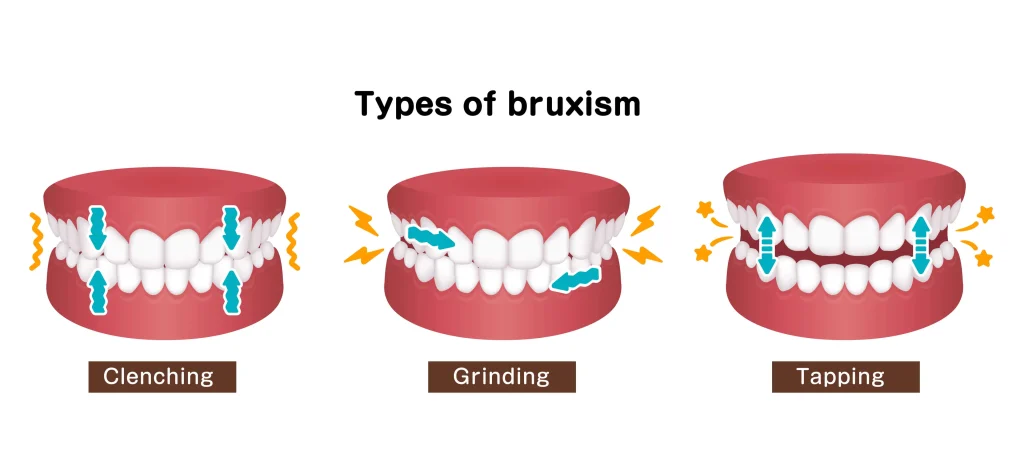
Research classes bruxism as probable when self report is combined with clinical examination, and trials add portable electromyography to confirm it, so a checklist alone is not enough and many patients grind without noticing. A guard worn at night also gives no protection against clenching during the day, which is a separate habit to raise with the dentist.
When Night Guard Fitting Takes Place if Treatment Spans Two Trips
A guard is moulded to the surface it covers, so night guard fitting takes place after the final restoration is in the mouth. A guard made over a temporary bridge does not fit the final teeth, because the shape and surface change. In a two trip implant case, the first trip covers examination, surgery and the temporary restoration and the second covers the final prosthesis, so the guard is normally made after that final fitting.
For crowns and single implants completed in one stay, the impression can be taken once the bite has been checked and adjusted. Whether the guard is made during the stay or by a dentist at home depends on the case and on timing, and the dentist fitting the final teeth can advise which is more practical. A home dentist who makes the guard needs the implant and restoration details recorded during treatment.
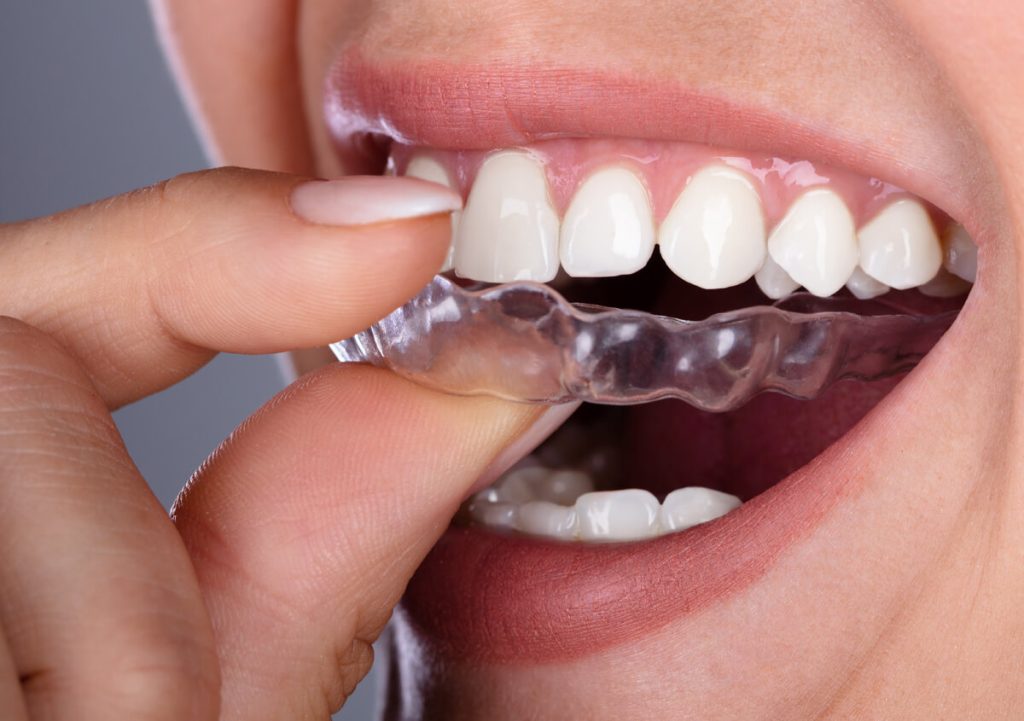
Design also matters. Reviews of splint therapy for implant patients advise covering all teeth and removing premature contacts so that teeth do not drift, and they describe the upper arch as the usual choice when only one arch is protected, because it is more exposed to sideways forces. An off the shelf guard is not moulded to the individual bite and cannot be adjusted for premature contacts in the same way, so the dentist should be consulted before one is relied on.
How Delia Dental Clinic Handles Grinding Protection and Warranty Terms
At Delia Dental Clinic in Hanoi and Ho Chi Minh City, a night guard is prescribed case by case, based on what the dentist finds at the final bite review, such as wear patterns, jaw tenderness or an uneven bite. It is not added to every case. Patients who already know they grind can mention it when they first send X-rays or photos, so that it can be raised at the planning stage.
The written warranty policy refers to grinding in different ways for different components. For crowns and veneers, the conditions include periodic checkups, typically every six months, good oral hygiene, following post treatment instructions and using a night guard or other protective device when prescribed, and the exclusions include teeth grinding or clenching without protective measures. The implant section requires checkups and follow up appointments every three to six months and lists injuries caused by extreme stress, including clenching, among the circumstances in which the warranty may change or cease to be valid. It does not use the same night guard wording, and it sets separate periods for full arch bridges, from one to five years depending on the bridge type. Ask for the written terms for each component in the treatment plan before treatment starts, and keep invoices and notes from any checkups completed at home.
After returning home, patients can send photos of worn or chipped areas and a short description of any jaw soreness or loose parts to the international patient team through WhatsApp or Messenger. The team can advise whether a local bite assessment is needed. A remote review cannot confirm bruxism or diagnose a problem, and it does not replace an examination.
Frequently Asked Questions
Can I use a store bought night guard over new implants or crowns?
It is better to ask the dentist first. Off the shelf guards are shaped for an average mouth rather than for the surface of new restorations, and a loose or uneven fit can leave some teeth carrying more pressure than others. Reviews of splint therapy advise covering all teeth and removing premature contacts, which a custom guard made after the final restoration is fitted can follow more closely. If cost is the concern, the dentist can say whether a simpler custom design suits the case.
Can a night guard loosen an implant or move teeth?
A well made guard should not. The risk comes from poor design or fit, because a splint that does not cover all teeth or leaves premature contacts can allow some teeth to drift, which is why reviews recommend full coverage and adjustment of contacts. A guard that feels tight, changes how the teeth meet or leaves part of the bite sore should be reviewed by the dentist before further nightly use.
I do not grind. Do I still need a night guard?
Not automatically, and the answer depends on the restoration. For single implants and crowns on natural teeth, a guard is usually advised only when there are signs of grinding or clenching. For a full arch bridge, a published guideline recommends a rigid guard for these patients in general, because complications are mostly mechanical. The dentist can judge this from the bite and from the materials chosen for the case.
Does a night guard stop the grinding?
No. A review of bruxism treatments reports that occlusal splints are successful in preventing dental damage and grinding sounds, but their effect on reducing bruxism muscle activity is transient. The guard therefore protects teeth and restorations rather than treating the habit. Regular checkups remain necessary, and they are also where wear on the guard itself can be assessed.
What if a restoration chips even though I wear the guard?
A guard lowers the load on the restoration without removing it, so chips can still occur, particularly on veneered ceramic. Under the claim procedure in the Delia Dental Clinic warranty policy, the patient notifies the clinic promptly and attends for examination, and the clinic determines the cause and eligibility of the claim. The published terms cover cracking or fracture of crowns and veneers under normal usage and exclude natural wear and tear, so whether a particular chip is covered is decided at that examination. Wearing the guard as prescribed and keeping records of completed checkups supports the assessment.
Can a guard made for my temporary bridge be used with my final teeth?
In most cases no. The final bridge has a different shape and surface from the temporary one, and a guard depends on that fit for even contact. Wearing the old guard over new teeth can leave some areas taking more pressure than others. The dentist at the second trip fitting can say whether a new guard should be made straight away or once the bite has settled.
Keeping Your New Teeth Protected After You Fly Home
These guides cover the questions that usually follow: what the warranty expects from you, who can look after implants at home, and how the bite feels after several crowns.
- Implant Warranty vs Prosthetic Warranty: What’s Covered?
- Can a Home Dentist Maintain Dental Implants Placed in Vietnam?
- Why Does My Bite Feel Different After a Full Set of Crowns?
Final Thoughts
The need for a night guard depends on the bite and on grinding habits, not on the fact that a patient has implants or crowns. Grinding raises the risk of loose screws, chipped ceramic and, in some studies, implant loss, and full arch bridges carry the greatest exposure, while the evidence that a guard prevents those outcomes remains limited. A guard therefore works best alongside suitable materials, a balanced bite and regular checkups.
If you have worn or chipped teeth, a loose part or morning jaw soreness, send photos and a short description to Delia Dental Clinic via WhatsApp or Messenger, and the international patient team can advise whether to arrange a bite assessment locally or at the Hanoi or Ho Chi Minh City clinic. Any final plan is confirmed after an in person examination.


