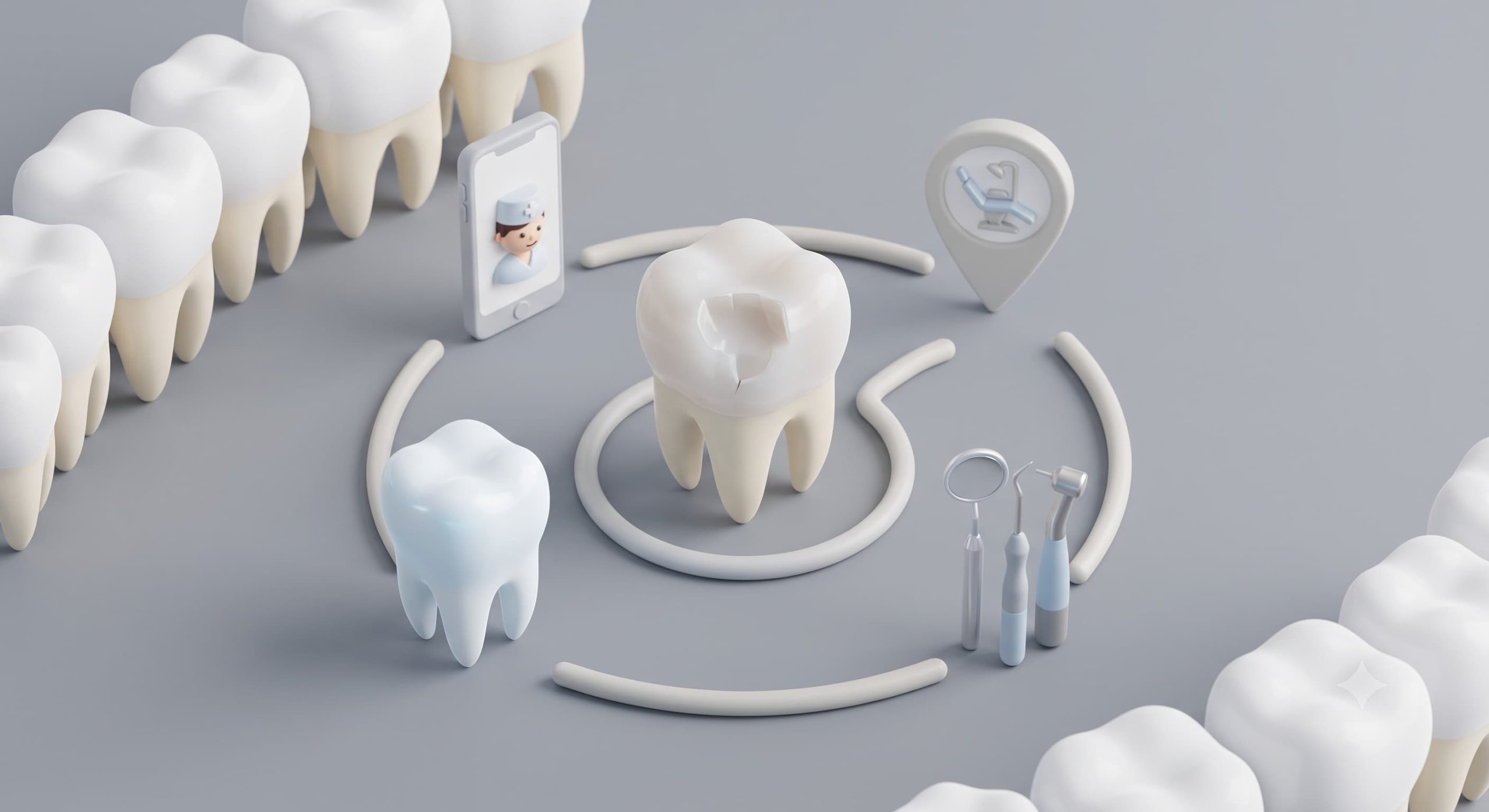
A chip in a crown or veneer months after you’ve flown home doesn’t automatically mean the restoration failed, and it doesn’t automatically mean you need to fly back either. What it means depends on the type of damage, how it happened, and how urgent the situation actually is.
Most patients discover this kind of chip at an inconvenient moment: biting into something harder than expected, a small piece coming loose, or noticing a rough edge with the tongue days after it happened. The instinct is often to panic about cost or assume the whole tooth needs replacing. In most cases, that’s the wrong first move.
This guide walks through how to tell what kind of damage you’re actually dealing with, what to do in the first day or two, when local emergency care is the right call versus waiting, and how a warranty assessment with Delia Dental Clinic actually works when you’re no longer in Vietnam.
Quick Answer
A chipped crown or veneer discovered months after returning home is usually manageable without panic. Small cosmetic chips with no pain or sharp edges can often wait for photos to be reviewed remotely. A sharp edge, exposed structure, or pain needs prompt local dental attention first. Warranty coverage depends on the cause and on what happens next, since Delia Dental Clinic’s published policy treats material or fitting defects differently from damage caused by biting something hard, and treats permanent local repair differently from a temporary fix.
What Kind of Damage Are You Actually Looking At?
Not every chip is the same problem, and the type of damage decides almost everything else in this guide.
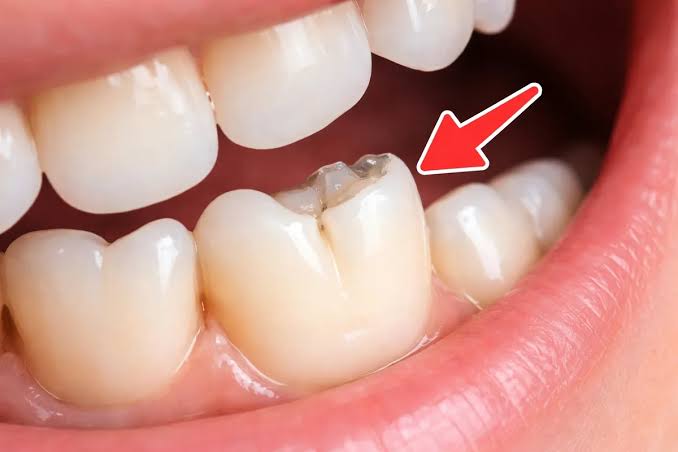
A small surface chip is the least urgent version of this. It’s usually just a flake of glaze or a tiny corner missing from the biting edge, the rest of the restoration stays intact, and it rarely causes pain on its own.
A crack or fracture running through more of the restoration is a different situation. Even if it doesn’t hurt yet, a crack can spread with continued chewing, and it changes the shape and structural strength of the crown or veneer in ways a small chip doesn’t.
A piece coming off cleanly is the most urgent version, especially if it exposes the tooth underneath, the metal or zirconia core, or the cement line. That exposed area is more vulnerable to bacteria, temperature sensitivity, and further breakage until it’s addressed.
Take a clear, well-lit photo before doing anything else. It’s the single most useful thing for judging urgency and, later, for a remote assessment.
What to Do in the First 24 to 48 Hours
Avoid chewing on that side of the mouth, particularly with anything hard, sticky, or chewy, until the tooth has been looked at. If a piece broke off cleanly and you still have it, keep it in a small container rather than throwing it away. It occasionally helps a dentist understand exactly what failed, even if it can’t be reattached.
Rinsing gently with warm salt water can help if there’s any tenderness, but avoid poking at the area with fingers, floss, or anything sharp. Do not attempt to glue the piece back on with household adhesive or dental cement bought without guidance. This can trap bacteria against the tooth, interfere with a proper repair later, and in some cases make an eventual fix more difficult rather than less.
If the edge feels sharp against the tongue or inner cheek, a small amount of dental wax or even sugar-free gum pressed gently over the area can reduce irritation temporarily. This is a stopgap, not a fix.
When It’s a Local Emergency and When It Can Wait
A sharp edge that’s cutting the tongue or cheek, visible exposed tooth structure or metal, ongoing pain, sensitivity to hot or cold that wasn’t there before, or a piece that’s mobile and at risk of being swallowed or inhaled are all reasons to see a dentist locally without waiting for a remote opinion first. These situations are about immediate comfort and safety, not about where the original work was done.
A small cosmetic chip with no pain, no sharp edge, and nothing exposed can usually wait a day or two for photos to be reviewed before deciding on next steps. There’s rarely a clinical reason to rush into a temporary or permanent fix within hours for this kind of damage, and doing so sometimes closes off options that a slightly more informed decision would have kept open.
If urgent local care is genuinely needed and there’s no time to check in with Delia Dental Clinic first, patient safety and comfort come before anything else. What matters afterward is what kind of work gets done and how it’s documented, which the next section covers.

What Delia Dental Clinic Can Assess Remotely, and What Local Repair Means for Warranty
Sending photos and a short description via Whatsapp or Messenger of when and how the damage happened can tell Delia Dental Clinic a fair amount: whether the pattern looks like a defect in the material or the original fit, or whether it looks more consistent with an impact, such as biting into something hard. That distinction matters, because Delia Dental Clinic’s published warranty covers eligible material defects, manufacturing or laboratory faults, and issues tied to how the restoration was originally placed, assessed case by case after the clinic examines it. It isn’t written as blanket coverage for any chip regardless of cause. The published terms also list accidents among the circumstances that can affect warranty validity, so damage that looks like it came from an outside event, such as biting something unusually hard, is reasonably expected to be assessed differently from a restoration that failed on its own.
What a photo can’t do is replace an in-person exam. It can’t confirm whether the underlying tooth or the cement seal has been affected, and it can’t substitute for X-rays if there’s any suspicion the damage goes deeper than the visible chip.
The other factor is what happens if local repair is needed before there’s time to loop in Delia Dental Clinic Hanoi or Ho Chi Minh city. Delia Dental Clinic’s published warranty terms state that warranty does not apply once a restoration has been placed, replaced, or otherwise modified or repaired by a dentist not affiliated with the clinic. The policy doesn’t spell out a separate category for a quick protective fix versus a full rebuild, so the safer assumption is that any permanent local work on the restoration itself carries that same risk to the warranty. That doesn’t mean urgent local care should be avoided when it’s genuinely needed, since patient safety comes first. It means the more cautious sequence is: get the urgent issue handled locally if it can’t wait, ask the local dentist to document what they found and what they did (including any X-rays), and send that documentation to Delia Dental Clinic before agreeing to anything permanent on the restoration, so the warranty position can still be reviewed against what actually happened rather than assumed either way.
Send a photo to Delia Dental Clinic for a consultation
Frequently Asked Questions
Does a chipped crown or veneer always mean it needs to be replaced?
No. A small surface chip can sometimes be smoothed or cosmetically repaired without remaking the whole restoration, depending on the material and how much is affected. A crack running through the restoration or a piece exposing the underlying tooth is more likely to need a full replacement. This is a case-by-case clinical decision rather than a fixed rule based on the size of the chip alone.
Will this be covered under Delia Dental Clinic’s warranty?
It depends on the cause and on the material’s published warranty term. Delia Dental Clinic’s policy covers eligible material defects, manufacturing or laboratory faults, and issues connected to the original clinical placement, assessed after the clinic examines the restoration or the documentation from a local exam. Damage from an accident or from biting something unusually hard is generally treated differently from a defect the restoration developed on its own, so the same type of chip can have a different warranty outcome depending on how it happened.
Can I get it fixed locally without losing my warranty?
Urgent local care for pain, a sharp edge, or exposed structure is reasonable when it can’t wait, and safety comes first. The published policy states that warranty does not apply once a restoration has been placed, replaced, or modified by a dentist not affiliated with Delia Dental Clinic, and it doesn’t carve out an exception for a quick or temporary fix. Getting the local dentist’s findings and any X-rays documented, and sending that to Delia Dental Clinic before agreeing to any permanent work on the restoration, keeps the option open to have the warranty position reviewed rather than assumed lost.
What if the crown or veneer wasn’t originally done at Delia Dental Clinic?
Delia Dental Clinic can still review photos and offer an initial opinion on urgency and likely cause as a courtesy, but any warranty consideration would apply only to work originally carried out there. For a restoration done elsewhere, the warranty terms of that original clinic would be the relevant ones to check.
Can this wait until my next scheduled trip to Vietnam?
For a small cosmetic chip with no pain or sharp edge, it often can, provided it’s monitored for any change and doesn’t start catching on the tongue, cheek, or opposing teeth. For anything involving exposed structure, ongoing sensitivity, or a crack that could spread, waiting several months carries more risk, and local interim care or an earlier assessment is usually the safer route.
Does biting into something hard automatically void the warranty?
Not automatically, but it does change how the case is assessed. Delia Dental Clinic’s policy separates material and fitting defects from damage tied to an external event, and an accident is one of the circumstances the published terms treat differently from a restoration failing under normal use. The clinic still needs to examine the case, or review documentation and photos, before making that determination rather than ruling it out on description alone.
Final Thoughts
A chip discovered months after treatment is rarely as urgent as it first feels, but the type of damage decides what happens next more than how alarming it looks. A small cosmetic chip usually allows time to get a proper read before doing anything permanent. A sharp edge, exposed structure, or pain calls for prompt local attention, and the way that local visit is handled and documented matters for how the case can be reviewed afterward.
Send a clear photo of the damage, when it happened, and what you were doing at the time to Delia Dental Clinic via WhatsApp or Messenger before deciding between a local temporary fix and waiting. The international team can give an initial read on urgency and whether the case looks warranty-eligible, and can advise on what to ask a local dentist to document if urgent care is needed first..


