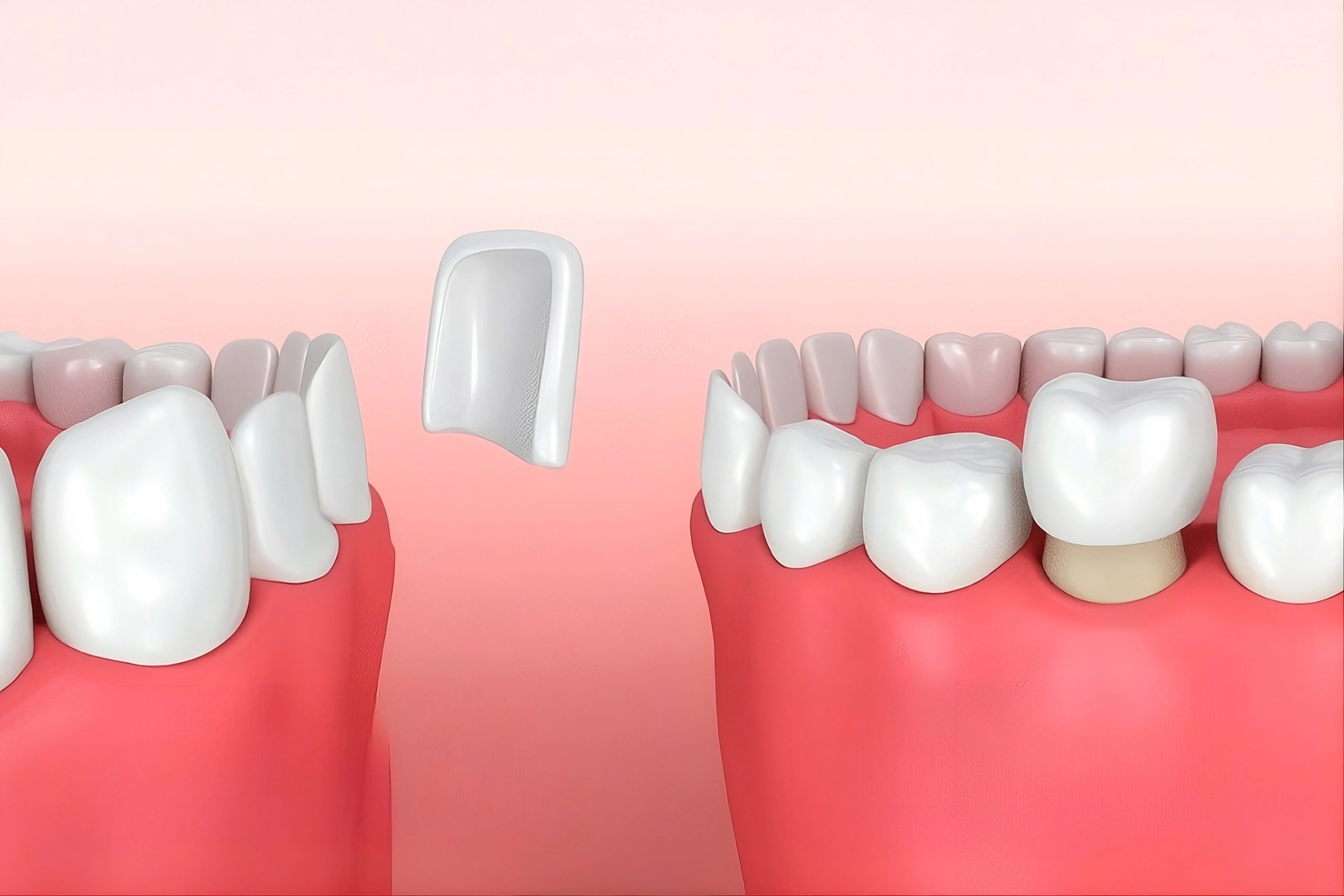
Dental veneers vs dental crowns comes down to one question: how much of your own tooth is still sound? A veneer suits a tooth that is strong and needs a cosmetic change. A crown suits a tooth that has lost structure through a root canal, a large filling, a deep crack or heavy wear.
On a front tooth, a well made veneer and a well made crown can look much the same. What differs is how much of the tooth is reshaped to get there, so the wrong match either removes healthy tooth you did not need to touch or puts a cosmetic layer on a tooth that needed support.
This guide covers which problems point to each option, where the middle ground sits, what Delia Dental Clinic charges per tooth for each material, and what to send before you plan a trip to Hanoi or Ho Chi Minh City.
How Much Tooth Structure Each Option Removes
A crown covers the whole tooth above the gumline, so the dentist reshapes the tooth on all sides to create a base the crown can fit over. Once it is in place, the crown carries the biting load for that tooth. A veneer covers only the front surface, and preparation is usually limited to a thin layer of enamel, which leaves the back of the tooth and most of its structure intact. Enamel does not regrow, so veneer preparation is irreversible, but it takes far less natural tooth than a crown does. The exact amount depends on the tooth and is confirmed at the exam.
A stained front tooth with an intact biting edge is a typical veneer candidate. The same tooth after a root canal and a large filling behind it is a different case, because there may be too little tooth wall left for a veneer to bond to and hold.
What Is A Dental Crown Used For?
A dental crown protects a tooth that has lost enough structure that it can no longer hold together or chew reliably on its own. It restores both the appearance and the biting strength of the tooth, which is why it fits cases where structure is the main concern rather than looks. Typical triggers are heavy decay, a fracture, or a tooth weakened by earlier treatment. A crown is not an upgrade on a veneer. It does a different job.
What Is A Dental Veneer Used For?
A dental veneer is a cosmetic option for a tooth that is already strong. It can change color, shape, length or surface texture while leaving the biting surface and the back of the tooth alone. It cannot reinforce a weak tooth. Placed on a tooth that needs a crown, a veneer is more likely to chip, crack or come loose under normal biting, so the choice has to follow the condition of the tooth and not the budget.

When You Need a Dental Crown Instead of a Veneer
Many patients who choose dental crowns in Vietnam have specific teeth problems that a veneer cannot fix. A dental crown is the correct choice if you have any of the following issues:
- Teeth with root canals: A tooth that had a root canal treatment becomes brittle over time and can break easily.
- Large old fillings: If a tooth has a very large filling, there is not enough natural tooth structure left to hold a veneer safely.
- Deep cracks: A cracked or broken tooth where the damage goes deep past the front surface needs a full cover.
- Severe teeth grinding: Heavy grinding wears down the height and strength of your teeth, which requires a stronger solution.
In all these situations, a veneer is a bad choice. It will break quickly under normal biting pressure because it cannot fix the deep structure problems underneath. A dental crown is not too much work for these cases. It is simply the correct medical solution for what your tooth actually needs to stay healthy.
When Porcelain Veneers Are the Best Choice
Getting porcelain veneers in Vietnam makes the most sense when your tooth is still strong and healthy, but you do not like the way it looks. Veneers are excellent for fixing common visual problems such as:
- Teeth that are permanently stained or dark, even after you try professional teeth whitening treatments.
- Teeth that look a bit too short, or have small chips and wear at the very edges.
- Small gaps between your front teeth that you want to close without braces.
- Minor shape problems where your teeth look uneven or slightly crooked.
The main rule here is that your underlying tooth must be completely healthy. If a 3D dental scan or an in person exam shows that your tooth can handle normal chewing on its own, a veneer is perfect. It gives you a beautiful and bright smile while leaving most of your original, natural tooth alone.
The Middle Ground: When Either Option Could Work
Sometimes, a tooth sits right in the middle. This happens with small chips, slight wear, or minor shape problems that are hard to judge at first glance. The tooth is close to needing a crown, but a veneer might still be able to do the job.
In these specific cases, the best decision is almost always to choose the veneer if the tooth is strong enough to support it. Keeping as much of your natural tooth material as possible is vital for the long term health of your smile. A dentist who tells you to get a crown when a veneer could easily fix the problem is doing too much unnecessary work.
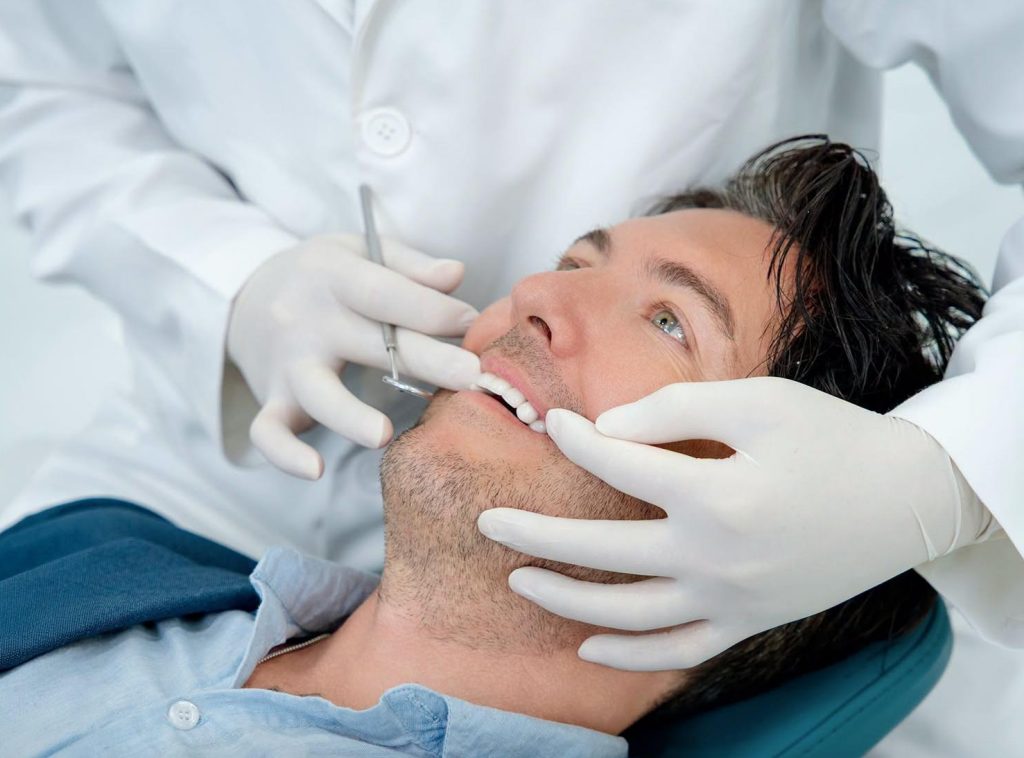
This is exactly why you need a real, thorough dental exam at the clinic. A basic online consultation using only photos from your phone cannot give you a final answer. You need a proper clinical check with modern tools before making your final decision.
Materials at Delia Dental Clinic and what each costs
Choosing between a veneer and a crown is one decision. The material is a separate one, and it affects both the aesthetic result and how long the restoration holds up.
Dental Crown Materials and Prices at Delia Dental Clinic
Choosing between a veneer and a crown is your first decision. Your next step is picking the right material. The material you select changes how your new tooth looks and how long it lasts.
Delia offers six high quality crown materials to fit different budgets and dental needs. These are the standard promotional prices per tooth in USD.
| Crown Material | Price per Tooth | Expected Lifespan | Best Used For |
| Ceramill | $190 | 10 years | A solid basic option made from Austrian zirconia. |
| Emax | $290 | 20 years | Front teeth because it lets light pass through like a real tooth. |
| Lava Plus | $350 | 30 years | Back teeth because it stays incredibly strong under heavy chewing. |
| Lava Esthetic | $600 | 40 years | A natural look with a beautiful, gradual color shading. |
| Orodent Bleach | $950 | Lifetime | Patients who want premium brightness and a lifetime warranty. |
| Orodent Innovation | $1,150 | Lifetime | The absolute highest quality and best visual result available. |
The total dental crown cost in Vietnam at Delia Dental Clinic ranges from $190 to $1,150 per tooth depending on the material. In comparison, you would pay between $800 and $2,500 per crown for the exact same dental systems in Australia or the United States.
Dental Veneer Materials and Prices at Delia Dental Clinic
If your teeth are strong and you only need cosmetic updates, Delia Dental Clinic offers two excellent porcelain veneer choices.
- Emax Press ($300 per tooth): This option uses a thin shell made from lithium disilicate glass ceramic. It is perfect for your front teeth because it reflects light beautifully and matches natural tooth colors.
- Veneer Lisi ($550 per tooth): This is a premium ceramic material with highly refined optical qualities. It is designed specifically for patients who want the most natural look possible.
The dental veneers cost in Vietnam at Delia starts at just $300 per tooth. For comparison, a single veneer costs between $800 and $2,000 in Australia, and from $900 to $2,500 in the United States.
If you need a full smile makeover with a set of 16 front veneers, the massive price difference easily covers your flights and hotel stay. You will still return home with significant cash savings in your pocket.
How Vietnam pricing compares to home
| Procedure | Delia Vietnam | Australia | United States |
| Crown (entry, Ceramill) | from $190 | $800–$1,500 | $800–$1,800 |
| Crown (Emax) | from $290 | $1,200–$2,000 | $1,000–$2,500 |
| Veneer (Emax Press) | from $300 | $800–$2,000 | $900–$2,500 |
| Veneer (Lisi) | from $550 | $1,200–$2,000 | $1,200–$2,500 |
Dental veneers in Vietnam at these prices make a full smile makeover financially viable for patients who would otherwise be looking at $16,000 to $40,000 at home for the same number of teeth.
How Delia Dental Clinic Reviews Veneer Or Crown Cases Before You Travel
The first step with Delia Dental Clinic is not booking a flight. It is sending the records that let the international patient team form a preliminary view of each tooth:
- Close up photos of the teeth you want treated, plus a smile photo.
- Any recent X-rays you already have.
- Your existing quote or treatment plan, if you have one.
- A note on root canals, large fillings, grinding or earlier veneers and crowns.
From these, the team can suggest a direction for each tooth (veneer, crown or undecided), give an estimated cost range and outline a likely travel timeline. What a remote review cannot confirm is how much sound tooth structure remains, how your bite loads the teeth, or the final quote. Those are settled at the in person exam, with a scan or X-ray taken where the case needs one.
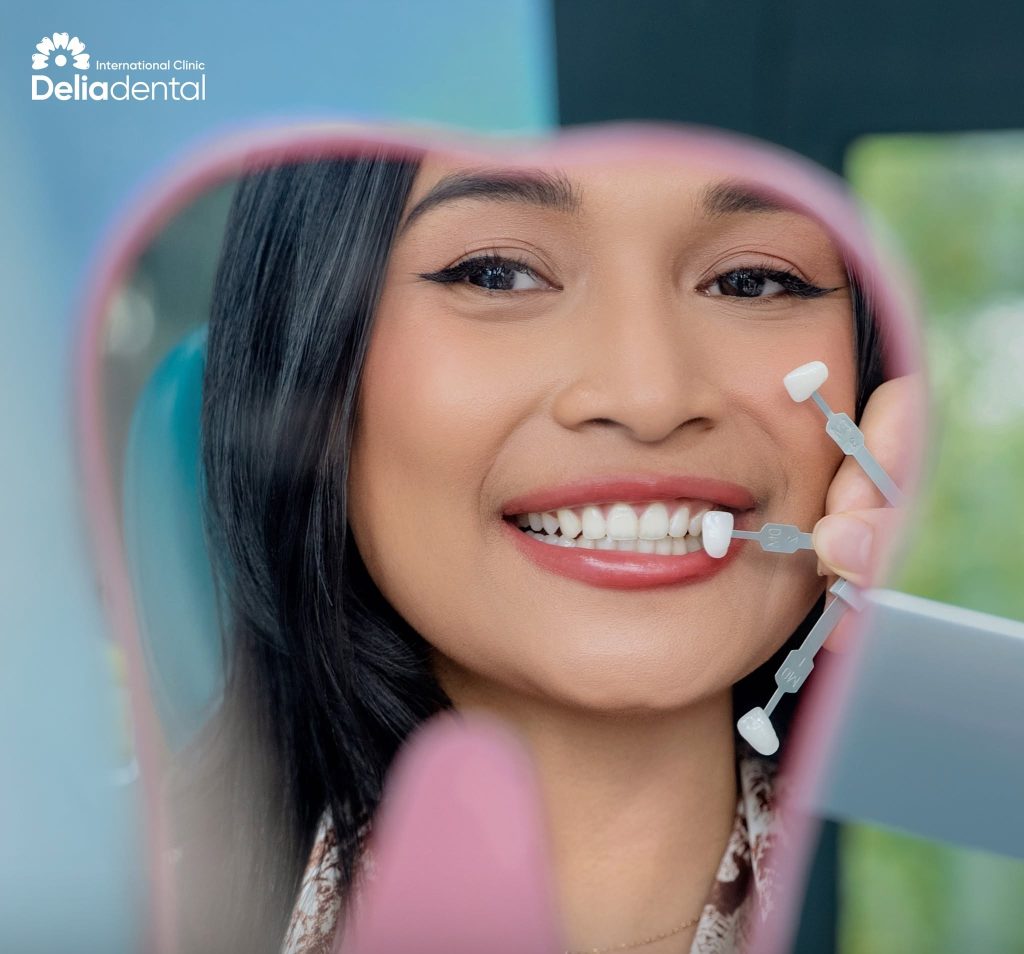
For the design itself, Delia Dental Clinic uses Digital Smile Design, a mock-up and a try-in so you can review the proposed result before the final restoration is completed. Provisional restorations may be used so shape and color can be checked before permanent placement. The number of days in Vietnam depends on how many teeth are involved and whether root canal or gum work is needed, so the team confirms a schedule after the exam instead of quoting a fixed number up front. Warranty terms differ by material and restoration, so ask for the written warranty documentation that applies to your plan.
Book a free consultation here.
Frequently Asked Questions
Can Crowns And Veneers Be Used In The Same Smile?
In many cases yes, because each tooth is assessed on its own condition. A strong front tooth with a stain may receive a veneer while the root canal treated tooth beside it receives a crown. The challenge is making the two look like one smile, since different materials handle light differently. Delia Dental Clinic plans shade, translucency, surface texture and fluorescence across mixed restorations as one design, and the mock-up and try-in let you review the result before it is finalised. Which tooth gets which restoration is decided at the exam, so a direction based on photos may change. Pricing follows the same logic, with each tooth quoted at the price of its own material.
What If My Dentist At Home Recommends A Different Option?
A different recommendation does not automatically mean one of the two plans is wrong. A recommendation can vary depending on which records the dentist had, for example a visual check on one side and X-rays with a bite assessment on the other. Send your existing quote or treatment plan with your photos and X-rays so Delia Dental Clinic can see which teeth were proposed for which restoration. The team can then point out where the plans agree and where the difference depends on how much structure remains in a given tooth. Anything still unresolved is settled by the in person exam, not by the remote review. You can use the comparison to decide whether travel makes sense before committing to anything.
Is A Veneer Always Cheaper Than A Crown?
No. At Delia Dental Clinic’s standard prices, the entry Ceramill crown is $190 per tooth, which is lower than the $300 Emax Press veneer. A veneer is not the budget route and a crown is not the premium one, so price should not decide between them. The condition of the tooth decides, and material is a second choice made after that. The extra treatments mentioned above, such as root canal work or core buildup, can raise the total for crown cases. Ask for an itemised quote after your exam so each tooth, material and extra procedure sits on its own line.
What Happens If A Veneer Goes On A Tooth That Later Needs A Crown?
A veneer placed on a tooth that cannot support it may chip, debond or crack under normal biting, and the tooth may then need a crown. Because veneer preparation removes enamel permanently, the tooth cannot return to its original state, and a later crown would sit on a tooth that has already been reshaped. That is the main reason Delia Dental Clinic assesses structure before agreeing on a design. The mock-up and try-in also let you judge the look before the restoration is completed. If a problem appears after you return home, send photos to the international patient team so the next step can be planned. Warranty coverage differs by material and case, so check the written documentation for your own plan.
Can A Veneer Fix Crooked Teeth?
Veneers can improve the look of minor irregularities, such as a slightly uneven edge or a small difference in tooth length. They do not move teeth, so the roots and the bite stay as they were. Where crowding is more than minor, the tooth may need extra preparation or shaping to hide it, and that depends on how much natural tooth is available. A bite problem behind the teeth can also affect how long any restoration lasts, so bite and wear are checked alongside appearance. Delia Dental Clinic assesses this at the in person exam, with photos and X-rays serving only as a preliminary guide. If alignment is your main concern, ask at the exam whether it should be addressed before or instead of cosmetic work.
Pricing And Timing Once You Know Your Option
These guides cover the pricing, material choices and visit length that follow once you know whether your teeth point toward veneers or crowns.
- Dental Crown Cost in Vietnam: Zirconia & Emax Prices
- Veneers in Vietnam Cost: 2026 Guide for International Patients
- Dental Crown Cost in Vietnam: Zirconia & Emax Prices
- How Many Days Do Veneers in Vietnam Take?
Final Thoughts
Send your tooth photos, X-rays and any existing quote to Delia Dental Clinic via WhatsApp or Messenger before you book your flight.


