Your dental crowns in Vietnam was fitted and cemented before you left, which means the procedure itself is done. What happens in the weeks after, though, has a real effect on how long that crown actually lasts. Patients who get crowns at a local clinic can walk back in a few days later if something feels off. When the clinic is on the other side of the world, knowing what is normal, what to watch for, and when to actually reach out matters more.
The first 24 hours
The cement holding your dental crown in place needs time to reach full strength, even though it feels solid right away. Some fast-setting cements harden within 10 to 15 minutes on the surface, but the full chemical bond between the crown and your tooth continues developing for several hours after that, which is why this window matters more than it might seem.
1. Wait for the numbness to fully wear off
If you still have numbness from local anaesthesia, do not eat or drink anything until it has completely faded. This usually takes one to four hours. Biting down while your mouth is still numb is the most common way people accidentally injure their cheek or tongue without realising it until the anaesthetic wears off.
2. Stick to soft, room-temperature foods
Once feeling has returned, keep meals soft for the rest of the day. Think scrambled eggs, soup, yoghurt, or a smoothie rather than anything that requires real chewing. Avoid very hot drinks in particular, since lingering numbness can make it hard to judge temperature accurately and burns are easy to miss until later.
3. Avoid the side of your mouth with the new dental crowns
Chew on the opposite side where possible for the first day. This keeps direct pressure off the crown while the cement is still curing and reduces the chance of it shifting before it has fully set.
4. Expect some mild sensitivity
Sensitivity to hot or cold, or a general feeling that the tooth is slightly different from the others, is normal at this stage. It is not a sign that anything went wrong, and it typically eases on its own within the first day or two.
The first two weeks
This is the adjustment period, where your gums and bite settle around the new dental crown. Most of the soreness, sensitivity, and general strangeness people associate with new crowns happens in this window and improves steadily rather than suddenly.
1. Manage ongoing sensitivity
Sensitivity to temperature can reasonably continue for up to 2 weeks while your mouth fully adjusts to the new tooth. A warm salt water rinse a few times a day helps if your gums feel tender or mildly inflamed, and over-the-counter pain relief is usually enough if there is any lingering discomfort.
2. Brush gently around the dental crowns
Use a soft-bristled toothbrush and avoid scrubbing aggressively at the gumline near the demtal crown for the first week or so. The crown itself is durable, but the surrounding gum tissue may still be settling, particularly if any reshaping was done during preparation.
3. Floss with care, not by skipping it
Continue flossing daily, including around the crowned tooth. The technique matters more than usual here: slide the floss out from the side rather than pulling it straight up through the contact point, which reduces the risk of catching and dislodging the crown while the cement is still maturing.
4. Pay attention to your bite
If your bite feels uneven, or the crown seems to hit before your other teeth when you close your mouth, that is a sign it needs a small adjustment, not something that resolves with time. Dental crowns that sits even slightly high can cause ongoing discomfort and, left unaddressed, puts uneven stress on the tooth underneath.
How long should foods stay off the menu, and which ones
Not every food restriction after a crown is temporary. Some apply for the first day or two while the cement sets, and others are worth keeping in mind for as long as you have the crown, since they are the most common reason crowns crack or come loose years later.
| Food type | Avoid for | Why |
| Sticky (caramel, taffy, chewing gum) | Indefinitely | The repeated pulling motion gradually works at the cement bond over time |
| Hard (ice, nuts, hard candy, popcorn kernels) | Indefinitely | Risk of cracking or chipping the crown material on a hard bite |
| Very hot or very cold drinks | First 24–48 hours | Sensitivity is highest while the cement is still fully curing |
| Chewy or tough meat | First few days | Reduces repeated pressure on the crown while your gums settle |
The first two categories are not really about recovery. They are general crown maintenance that applies for as long as you have the restoration, in the same way it would apply to a dental crown placed anywhere else in the world. Chewing ice and biting down on hard candy account for a large share of crown fractures seen well after the initial healing period has passed, often years into otherwise normal use.
After the first couple of days, most other foods can be reintroduced gradually. If something causes noticeable discomfort when you bite down, that is worth paying attention to rather than pushing through.

Long-term care that protects your dental crowns
A dental crown that is cared for well can outlast one that was placed identically but neglected afterward by a wide margin. The material plays a smaller role in this than most people expect, the daily habits around it play a much larger one.
1. Maintain a real brushing and flossing routine
Brush twice a day with a non-abrasive toothpaste, paying particular attention to the gumline around the crown, where plaque tends to accumulate if brushing becomes rushed. Floss daily, including around the crowned tooth itself, not just the natural teeth next to it. The crown cannot decay, but the natural tooth structure underneath it still can, and a crown does not protect against gum disease forming around its edges.
2. Stop using your teeth as tools
Opening packaging, ripping tags off clothing, or cracking nuts with your teeth puts sudden, uneven force directly on the crown’s edge, which is a different kind of stress than normal chewing. This is a surprisingly common cause of cracked crowns that has nothing to do with how the crown was made.
3. Address grinding or clenching directly
If you grind or clench your teeth, particularly at night, get fitted for a night guard rather than waiting to see if it becomes a problem. Bruxism is one of the most preventable causes of crown failure, and the forces involved during grinding are significantly higher than normal chewing, which is exactly the kind of load a crown is not designed to absorb repeatedly over years.
4. Keep up with regular dental check-ups
See a local dentist for a check-up every 6 months so any early issues with the crown or the surrounding gum tissue are caught before they turn into bigger problems. This is also when a dentist can check the margin where the crown meets your natural tooth, which is the area most likely to develop a problem first if one is going to occur.
5. Treat your crown the same as your natural teeth, not as something separate
Some patients unconsciously baby the crowned tooth or, in the opposite direction, treat it as indestructible because it is artificial. Neither approach helps. Normal use, combined with the habits above, is what actually gets you the most years out of it.
How long should your dental crowns actually last
With reasonable care, a quality dental crown made from zirconia or e.max typically lasts 10 to 15 years, and published clinical studies have reported survival rates above 95% at 10 years for both materials when properly placed and maintained. Some patients get well beyond that with consistent hygiene and regular check-ups.
The material matters less than people assume. A well-made dental crown that is neglected, particularly one exposed to grinding or repeated hard biting, can fail well before its expected lifespan. A crown that is cared for properly tends to meet or exceed it.
When to contact Delia instead of a local dentist
Some issues are fine to handle with a dentist near you. Others should go back to Delia first, particularly anything related to the crown’s fit, material, or warranty.
- Pain that lasts more than a few days or is getting worse — message Delia’s team via WhatsApp with photos or a short video before assuming it will pass on its own.
- The dental crowns feels loose or comes off entirely — this falls under warranty. Delia can advise on next steps remotely and arrange a return visit if the crown needs to be re-cemented or replaced.
- Minor bite adjustments — these can usually be handled by a local dentist using the treatment records Delia provides, without needing to fly back.
- Cracking, chipping, or other material defects within the warranty period — this is Delia’s responsibility to resolve, not an additional cost to you.
Keeping the documentation Delia gives you after treatment makes this process easier, since a local dentist can reference the exact crown material, shade, and placement details rather than starting from scratch.
Final thoughts
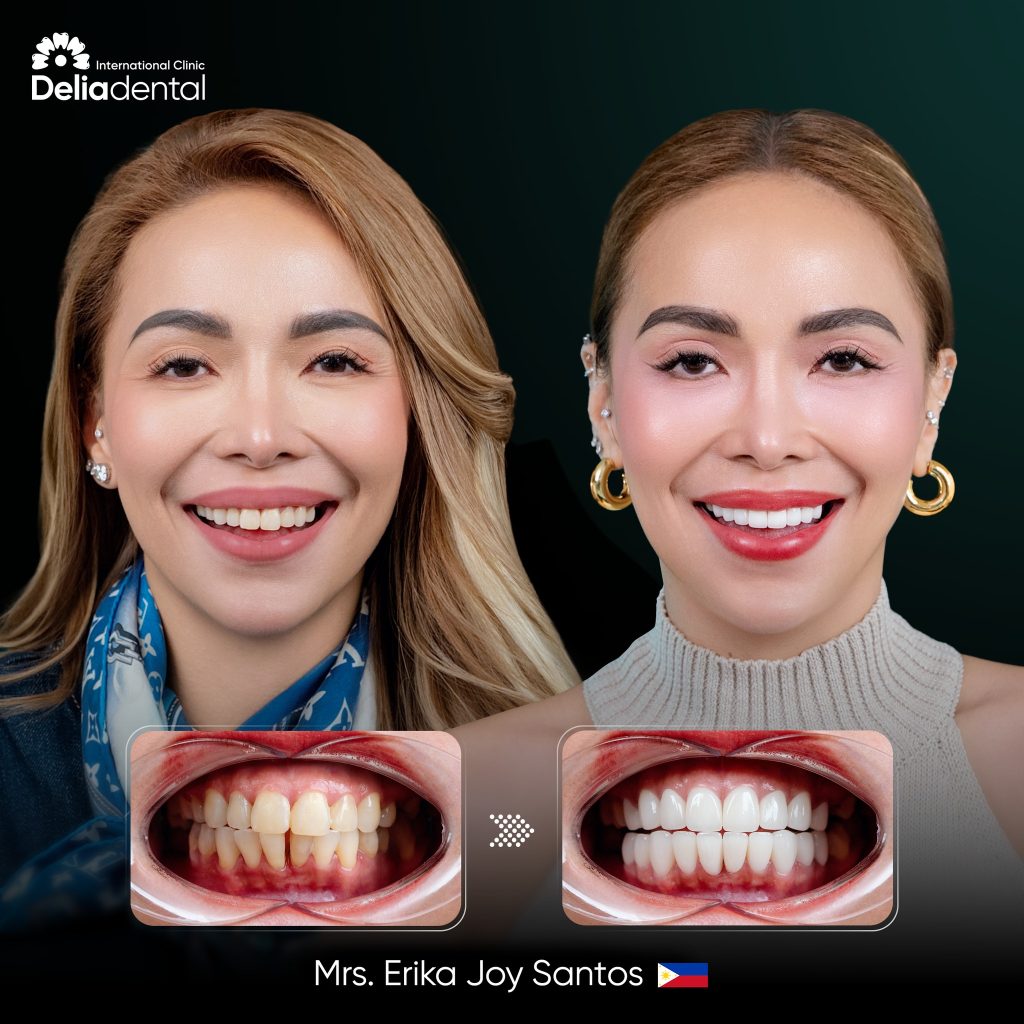
A dental crown placed in Vietnam is held to the same standards as one placed anywhere else, and it responds to the same things: gentle care in the first two weeks, avoiding sticky and hard foods long term, and regular check-ups. The only real difference for dental tourism patients is knowing which problems are worth a message to Delia before involving a dentist back home, and which ones a local dentist can simply handle using your treatment records.


