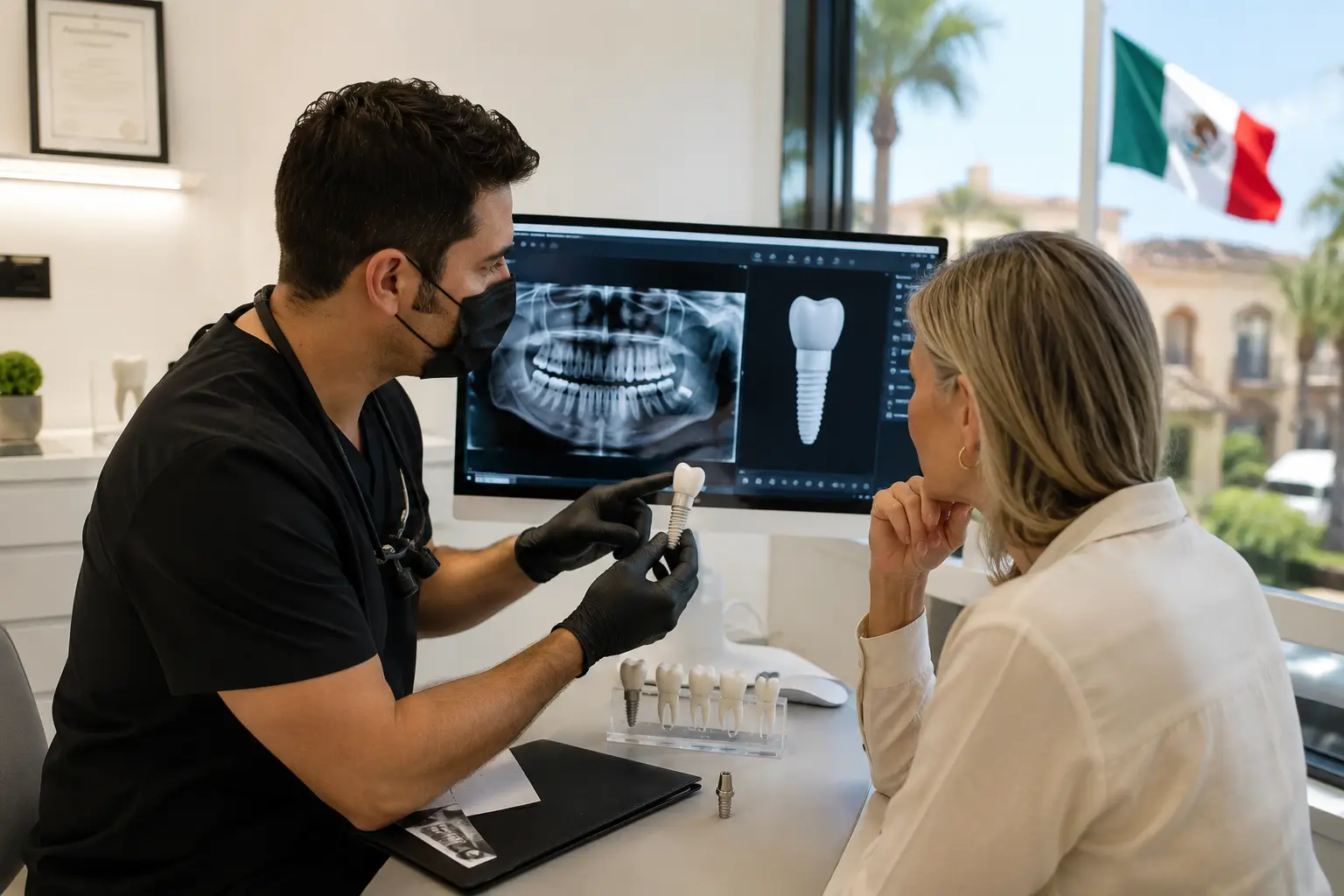
In many cases, a dentist in your home country can provide routine cleaning, clinical examinations and X-ray monitoring for dental implants placed in Vietnam. The implant does not need to be maintained exclusively in the country where the surgery was performed.
However, maintenance becomes more complicated when a dentist needs to adjust, remove or replace an implant component. They may need to identify the implant system, obtain compatible instruments and review the original treatment records before proceeding.
Warranty is another matter. A manufacturer guarantee and a clinic-issued treatment warranty are separate arrangements. This guide explains what a home dentist can usually do, what may require help from the original clinic and which documents you should obtain before leaving Vietnam.
Quick Answer
A home dentist can usually clean and monitor an implant placed in Vietnam, but component adjustments and warranty claims may require the original records. Manufacturer guarantees and clinic warranties are separate. Before leaving Vietnam, obtain the implant brand, system, placement date, product details, relevant imaging, treatment records and written warranty conditions.
Are Maintenance and Warranty the Same Thing?
No. Implant maintenance is the ongoing clinical care used to monitor the implant, restoration and surrounding tissue. A warranty or guarantee describes what a clinic or manufacturer may provide if a covered product or part of the treatment develops a problem.
Routine implant maintenance may include:
- Professional cleaning around the implant
- Examination of the surrounding gum tissue
- X-ray monitoring where clinically indicated
- Assessment of the bite
- Checking whether the crown, bridge or overdenture remains stable
- Reviewing symptoms such as bleeding, swelling, discomfort or mobility
- Discussing oral hygiene, smoking and bruxism
A home dentist can often perform these checks without being connected to the original clinic. Nevertheless, the original records can help them understand which implant and restoration were used.
A warranty claim follows a different process. It depends on who issued the warranty, what component is affected, what the written conditions cover and whether those conditions have been followed.
Being able to maintain an implant does not automatically mean the home dentist can activate the original clinic’s warranty or submit a manufacturer claim.
What Can a Home Dentist Usually Do?
A home dentist can usually examine the implant site and monitor its condition as part of regular dental care. The exact services they are prepared to provide will depend on the implant system, the type of restoration and their clinical experience.
Provide professional cleaning
Implants require ongoing cleaning even though the implant fixture itself cannot develop decay. Plaque and inflammation can still affect the gum and bone around it.
A dental professional may clean around the implant and assess the patient’s home-care routine. They may also recommend changes to the type of toothbrush, interdental brush, floss or water flosser being used.
Monitor the surrounding tissue
Bleeding, swelling, tenderness, discharge or progressive gum changes may require clinical assessment. A home dentist can examine the tissue and determine whether further investigation or treatment is needed.
Remote photographs can help the original clinic understand a visible concern, but they cannot show the condition of the bone or provide a complete diagnosis.
Take appropriate X-rays
A dentist may recommend an X-ray to examine selected features around the implant. The type and timing of imaging should be based on the clinical situation rather than treated as a fixed requirement for every appointment.
Existing X-rays and treatment records can provide a useful reference, particularly when the home dentist did not place the implant.
Assess the bite and restoration
A dentist can check whether the implant crown or bridge feels stable and whether the bite appears to be placing unusual pressure on it.
Minor adjustments may be possible, but the dentist will first need to consider the restoration design and implant components involved. Any adjustment should also be documented because changes made by another provider may affect the original clinic’s warranty conditions.
When Might a Home Dentist Need the Original Clinic?
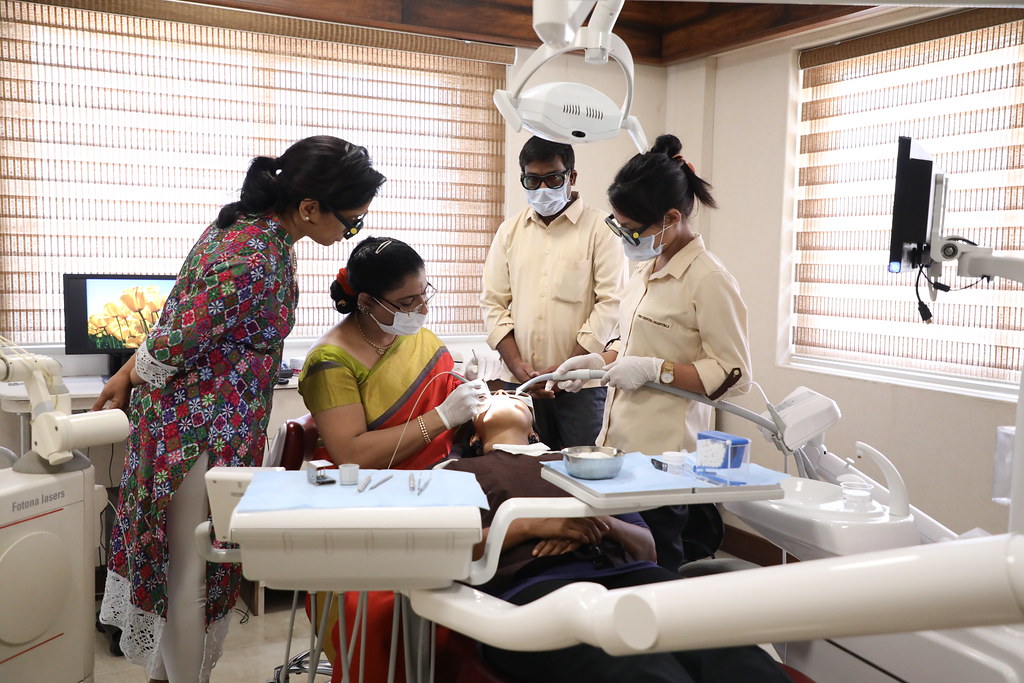
Routine monitoring may not require direct contact with the clinic in Vietnam. More complex work can be different.
The home dentist may need additional information if:
- The implant brand or system is unknown
- The restoration uses a proprietary connection
- A screw, abutment or other component needs to be removed
- Compatible instruments or replacement components are not readily available
- The original treatment plan is unclear
- The dentist needs to compare current X-rays with earlier records
- A warranty or manufacturer guarantee may be involved
- The patient has developed symptoms requiring clarification of the original procedure
A home dentist may also decide not to adjust or remove a component if they do not work with that particular system. This does not necessarily mean the implant cannot be treated locally. It may mean that the patient needs a dentist familiar with the system or that the original clinic should provide further documentation first.
Manufacturer Guarantee and Clinic Warranty: What Is the Difference?
A manufacturer guarantee applies to eligible products under the manufacturer’s written conditions. A clinic warranty is issued by the treating clinic and applies according to that clinic’s own terms.
They should not be treated as interchangeable.
Manufacturer guarantee
Depending on the manufacturer and implant system, a guarantee may cover replacement of an eligible implant or component. It does not necessarily cover:
- The dentist’s clinical fees
- Additional surgery
- Bone grafting
- A new implant crown
- Laboratory work
- Medication
- Travel expenses
- Accommodation
- Treatment provided by another clinic
Coverage and exclusions vary between manufacturers and products. Patients should ask for the applicable written terms rather than relying on the word “lifetime” alone.
Clinic warranty
A clinic warranty describes what the treating clinic may do if an eligible part of its treatment requires correction, repair or replacement.
The terms may distinguish between:
- Implant fixture
- Abutment
- Implant crown
- Implant bridge
- Temporary restoration
- Final full-arch prosthesis
- Ceramic crown
- Veneer
The warranty may also include maintenance requirements and exclusions. Patients should confirm whether a future assessment must take place at the original clinic and who is responsible for travel or third-party treatment costs.
How Does a Straumann Guarantee Work?
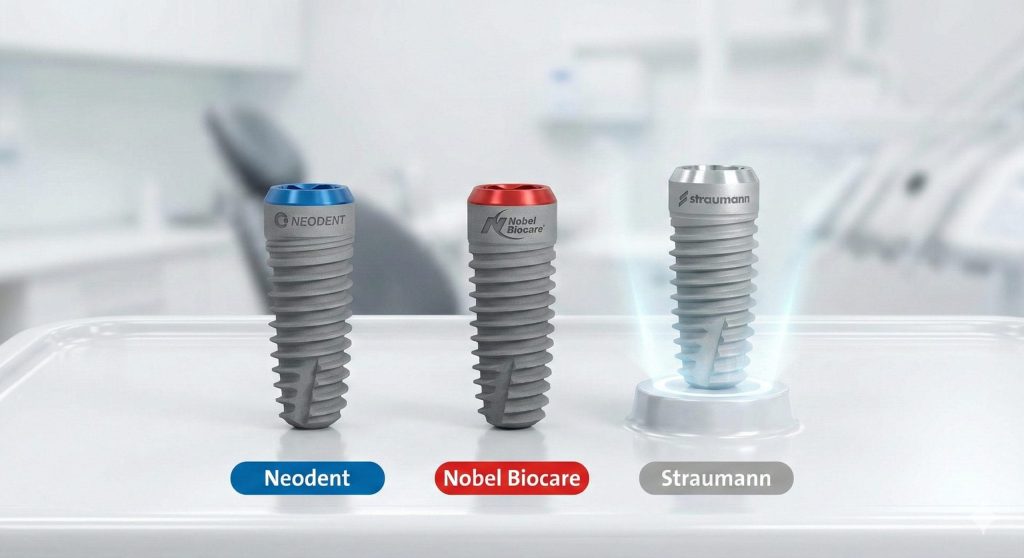
Straumann is one of the implant systems available at Delia Dental Clinic. Its official guarantee illustrates why patients should distinguish product replacement from complete retreatment coverage.
Straumann states that its guarantee is provided in favour of the attending physician or dentist. This means a claim is generally handled through a dental professional rather than submitted directly by the patient.
Depending on the applicable country and claim process, the dental professional may need to provide:
- A completed guarantee or complaint form
- Relevant radiographs
- Implant or component identification
- Information about the clinical event
- The affected product in the required condition
- Evidence that the applicable guarantee conditions were followed
The requirements should be confirmed through the relevant Straumann office or authorised distributor. A claim form published for one market should not automatically be treated as the process used in every country.
Straumann’s standard guarantee and its additional Lifetime Plus provisions also need to be distinguished. Eligibility for Lifetime Plus may depend on the implant product, the applicable version of the guarantee and the country in which the dental professional practices.
Most importantly, product replacement does not automatically mean all associated clinical, laboratory or travel costs will be covered. Patients should review the current written terms for their specific Straumann implant.
For more information about the system itself, read our guide to Straumann dental implants in Vietnam.
Can a Different Dentist Handle the Manufacturer Claim?
Possibly, but it should not be assumed.
Manufacturer claims are generally handled through dental professionals and the relevant manufacturer office or distributor. A home dentist may be able to assist if they work with the same implant system and are prepared to follow the applicable claim process.
In other cases, the original treating clinic may remain the most practical first point of contact because it has:
- The original surgical records
- The implant product information
- Evidence of the placement date
- Details of the components used
- The initial X-rays or imaging
- The relationship with the supplier or distributor
If a problem develops after the patient returns home, the home dentist and original clinic may need to share information. Patients should ask both providers before any implant component is removed or altered when a warranty claim may be involved.
What Records Should You Receive Before Leaving Vietnam?
You should not wait until a problem develops to ask what implant was placed.
Before leaving Vietnam, request a clear treatment record containing the information relevant to your case. This may include:
- Implant manufacturer and brand
- Implant system
- Product or reference number, where provided
- Lot or batch number, where available
- Implant dimensions
- Placement site
- Placement date
- Treating dentist and clinic
- Abutment information
- Crown, bridge or prosthesis material
- Relevant imaging and X-rays where available
- Written treatment plan
- Itemised invoice
- Written clinic warranty
- Applicable manufacturer guarantee information
- Medication and aftercare instructions
- Recommended maintenance schedule
- Contact details for follow-up questions
An implant passport may contain some of this information, but patients should check what is actually recorded rather than assuming every document contains the same details.
If a CBCT scan was taken and the data are available, ask whether the DICOM files can be provided. CBCT is not required for every maintenance appointment, and it should not be described as mandatory for every implant patient. However, existing files may be useful if a dentist later needs to review the original anatomy or treatment planning.
What May Affect Warranty Eligibility?
Warranty conditions differ between clinics, manufacturers and implant systems. A factor that affects one warranty does not automatically apply to every other warranty.
Depending on the written terms, eligibility may be affected by:
- Poor oral hygiene
- Missed recommended reviews
- Smoking
- Trauma or accidental damage
- Bruxism
- Failure to use a prescribed night guard
- Incomplete treatment
- Use of incompatible third-party components
- Alteration of the work by another provider
- Failure to follow aftercare instructions
- Medical conditions that affect healing
- A problem outside the components covered by the warranty
Patients should ask what evidence of maintenance is required. If checkups are completed by a home dentist, keeping invoices, clinical notes and relevant X-rays may help document that the recommended care was followed.
A lifetime warranty should never be interpreted as a promise that an implant cannot fail. It describes the duration and conditions of a particular warranty, not a guaranteed clinical outcome.
You can also read our guide to dental implant failure causes for more information about the clinical factors that may affect an implant.
What Should You Do If a Problem Develops at Home?
Do not rely only on remote messages if you have symptoms that need an in-person examination.
A practical first step is to contact both the original clinic and a dentist near you. Tell them:
- When the implant was placed
- What type of restoration you have
- When the symptoms started
- Whether the implant, crown or bridge feels mobile
- Whether you have swelling, bleeding, discharge or pain
- Whether there has been an accident or bite-related event
- What treatment or adjustments have already been performed
You may be asked to provide dental photographs, current X-rays or a report from the home dentist. These records can support communication between providers, but the original clinic should not claim that a remote review can confirm the final diagnosis.
If the concern may involve a warranty, ask the home dentist not to discard a removed component. The relevant clinic or manufacturer may require product identification or return of the affected component as part of its assessment.
Urgent symptoms should be assessed locally rather than delayed while waiting for an international response.
How Delia Dental Clinic Supports International Patients
Delia Dental Clinic can provide international patients with a written treatment plan, implant-system information, warranty documentation, aftercare instructions and relevant treatment records.
Before leaving Vietnam, patients should check that their documents identify the implant brand and system, placement date, treatment completed and the appropriate contact route for future questions.
After returning home, patients may contact the international patient team through WhatsApp or Messenger. The team can review healing updates, discuss symptoms or documentation and advise whether the patient should arrange an in-person assessment locally. Remote communication cannot replace a clinical examination when one is needed.
Delia Dental Clinic has branches in Hanoi and Ho Chi Minh City. Before travelling, patients can send recent X-rays, existing CBCT files, dental records or another treatment quote for an initial review. This can help the team provide preliminary treatment direction, an initial cost estimate and a suggested travel timeline, subject to in-person examination.
For patients comparing implant systems, Delia Dental Clinic currently publishes different warranty periods for different implant brands. Patients should confirm the system selected, the components covered and all current warranty conditions in writing before treatment.
Questions to Ask Before Booking Implant Treatment Abroad
Before choosing a clinic, ask:
- Which implant brand and system are you recommending?
- Does the quoted implant price include the fixture, abutment and crown?
- Which parts of the treatment have separate warranty periods?
- Is the warranty issued by the clinic, the manufacturer or both?
- What maintenance conditions must I follow?
- Can routine checkups be completed by my dentist at home?
- What happens if another dentist adjusts the restoration?
- Who handles a manufacturer claim?
- Which treatment, laboratory and travel costs are not covered?
- What documents and imaging will I receive before leaving?
- Who should my home dentist contact if a component is needed?
- Would a warranty assessment require me to return to Vietnam?
These questions help reveal whether a warranty is practically usable after the patient returns home, rather than simply attractive on paper.
FAQ
Can a dentist at home clean an implant placed in Vietnam?
In many cases, yes. A home dentist can usually provide professional cleaning, clinical checks and X-ray monitoring. Work involving implant components may depend on whether the dentist has the necessary records, compatible instruments and experience with the system.
Does seeing another dentist cancel the implant warranty?
Not automatically in every case. Warranty eligibility depends on the written terms, the components used, the treatment performed by the other dentist and whether the required maintenance conditions have been followed. Ask the original clinic before another provider alters the restoration.
Can my home dentist submit a manufacturer guarantee claim?
They may be able to assist if they work with the implant system and are prepared to follow the manufacturer’s local process. However, the original treating clinic is often the most practical first contact because it holds the original product and treatment records.
What implant documents should I take home?
Ask for the implant brand and system, product details, lot or batch information where available, implant dimensions, placement site and date, restoration details, relevant imaging, treatment records and written warranty conditions.
Does an implant guarantee cover a new crown?
Not necessarily. A manufacturer guarantee may cover an eligible implant or component without covering the crown, clinical fees, laboratory work or additional treatment. The exact coverage must be checked in the written terms.
Will I have to return to Vietnam for warranty treatment?
It depends on whether the issue concerns routine maintenance, an implant component, the clinic’s treatment or a manufacturer guarantee. Clinic warranty treatment may require assessment at the clinic that issued it. Travel expenses should not be assumed to be included unless this is confirmed in writing.
Final Thoughts
A home dentist can often provide routine care for an implant placed in Vietnam. The main challenges arise when the implant system is unknown, a proprietary component needs attention or a warranty claim must be assessed.
Good documentation makes continuity of care easier. Before leaving Vietnam, obtain the implant-system details, relevant treatment records, written warranty conditions and a clear contact route for future questions.
Send your recent X-rays, existing CBCT files, dental records or another treatment quote to Delia Dental Clinic via WhatsApp or Messenger before booking your flight. The international patient team can provide an initial treatment, cost, timeline and travel-planning review for treatment at the Hanoi or Ho Chi Minh City branch.


