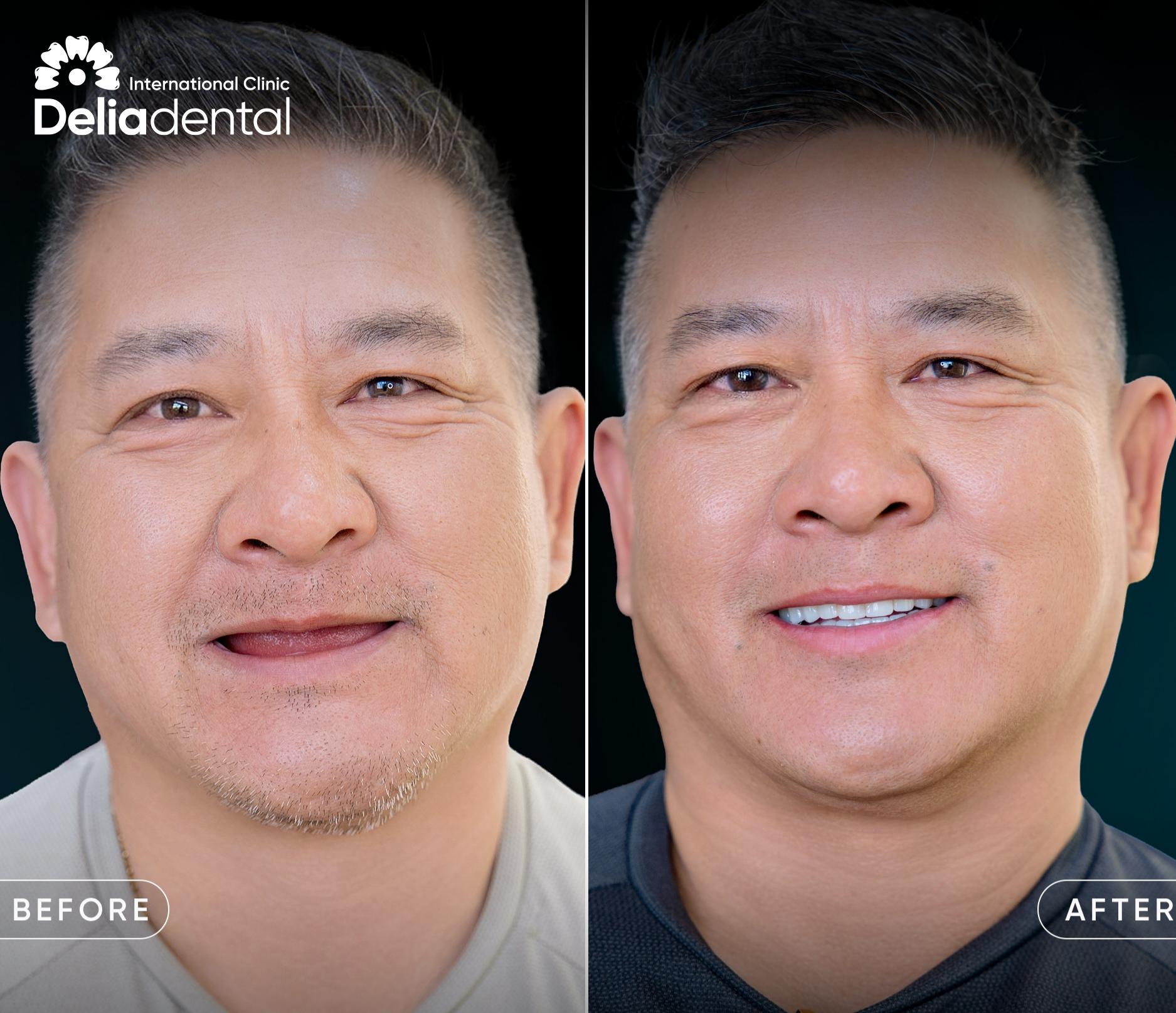
Full arch dental implants in Vietnam are commonly completed in stages. The provisional teeth fitted during the first treatment stage and the definitive prosthesis fitted after healing are not the same restoration under two different names. They serve different purposes and may differ in material, fit, design and expected period of use.
The temporary restoration allows selected patients to leave the surgical stage with teeth while the implants and surrounding tissues heal. The final restoration is produced later, using clinical information collected after the dentist has reassessed the implant sites, bite and healed tissues.
Understanding this difference helps international patients see why the second trip is a separate restorative stage rather than a simple exchange of one bridge for another.
Quick Answer
The temporary bridge is acrylic, built to be adjusted during healing, and not meant to last. The final bridge is zirconia, built from a new scan of your healed result, and designed to last 15 to 20 years. The implants underneath don’t change between visits. Everything sitting on top of them does.
What Actually Changes Between The Two
| Temporary bridge (trip 1) | Final bridge (trip 2) | |
| Material | Acrylic (PMMA), often reinforced with a titanium bar | Monolithic zirconia, sometimes layered with ceramic |
| Made from | Pre-surgical digital scan, fabricated before you arrive | New intraoral scan taken after healing is confirmed |
| Fit | Functional, built for soft loading during healing | Precision-fitted to your healed gum contour |
| Appearance | Natural-looking but not the final shade or shape | Matched shade, translucency, and final tooth shape |
| Designed to last | Weeks to months, not a long-term solution | 15 to 20 years with proper care |
| Attachment | Screwed in, meant to be removed for adjustment | Permanently screwed into place at the final visit |
The acrylic bridge you leave with after surgery is not a lesser version of your final teeth. It’s doing a specific job: giving you a functional, fixed set of teeth while your jawbone fuses to the implants underneath, without putting the final restoration through months of healing-stage bite forces it wasn’t built for.
The Temporary Bridge Is Also a Planning Tool
The temporary bridge provides teeth during healing, but that is not its only purpose. It may also give the dental team useful information about how the planned restoration functions in daily life before the definitive bridge is produced.
During the provisional stage, the dentist can consider how the tooth length, lip support, speech and bite are working for the patient. The bridge design should also allow the patient to clean around the prosthesis according to the instructions provided. Feedback from this period may help identify details that should be maintained or adjusted in the final design.
This does not mean that every temporary bridge is used as an exact prototype of the final one. Gum contours can change as swelling resolves and the tissues heal, while the final prosthetic records are collected later. The temporary phase provides practical information, but the definitive bridge must still be based on the patient’s current clinical condition.
Why The Temporary Can’t Just Become Permanent
Acrylic is soft enough to adjust chairside if your bite needs correcting during healing, which is exactly why it’s the standard material for this stage everywhere in the world, not just at Delia. That same softness is why it’s not meant to carry you for years. It wears faster, stains more easily, and doesn’t hold up to normal biting force the way zirconia does over the long run.
There’s also a fit issue. The temporary bridge is built from a scan taken before your implants finish integrating and before your gum tissue settles into its final shape. The final bridge is built from a new scan taken after all of that has happened, which is the only way to get a restoration that fits the healed result rather than the surgical-day starting point.
What Changes on the Second Trip for Full Arch Dental Implants in Vietnam?
This is the part of most dental work abroad FAQ guides that gets skipped over. The second visit isn’t just a swap. It follows its own sequence:
- A new CT scan confirms the implants have fully integrated with the bone
- A digital scan captures the current shape of your healed gums and bite
- The final zirconia bridge is fabricated to match that scan
- The bridge is fitted, checked for bite and fit, and adjusted if needed
- Written warranty documentation is issued once the final bridge is in place
This visit typically runs 4 to 5 days, shorter than the first trip, since there’s no surgery involved, just imaging, fabrication, and fitting.
Why the Second Trip Is More Than a Bridge Exchange
The restorative visit begins with reassessment rather than automatic replacement of the temporary teeth. The dentist needs to review the condition of the implant sites, surrounding tissue, prosthetic components and bite before proceeding with the definitive restoration.
Depending on the case, the records collected during this visit may include an intraoral scan or conventional impression, bite registration, photographs and other restorative measurements. Appropriate imaging or implant-stability checks may also be used when clinically indicated. A repeat CBCT is not automatically required for every patient, and no single image should be described as independently confirming osseointegration.
Full-arch restorations may require a verification or trial stage before final insertion. This gives the clinical and laboratory teams an opportunity to evaluate fit, tooth position, bite, appearance, speech and cleaning access. If an important detail requires adjustment, an additional fitting may be safer than completing the bridge simply to stay within a predetermined travel schedule.
For patients receiving full arch dental implants in Vietnam, this is the main purpose of the second trip: to produce and verify a definitive restoration against the healed clinical condition rather than the conditions present on surgery day.
What You’ll Actually Notice When The Final Bridge Goes In
Most patients notice the bite feels more precise, since the final bridge is built to match exactly how your jaw has healed rather than an estimate made on surgery day. The appearance also shifts, since the final shade and tooth shape are chosen and confirmed at this stage rather than defaulted to a functional temporary look. Some patients notice the final bridge feels slightly different in weight or texture, since zirconia and acrylic don’t feel identical in the mouth, even when both are well-fitted.
The Final Bridge Material Depends on Your Treatment Plan
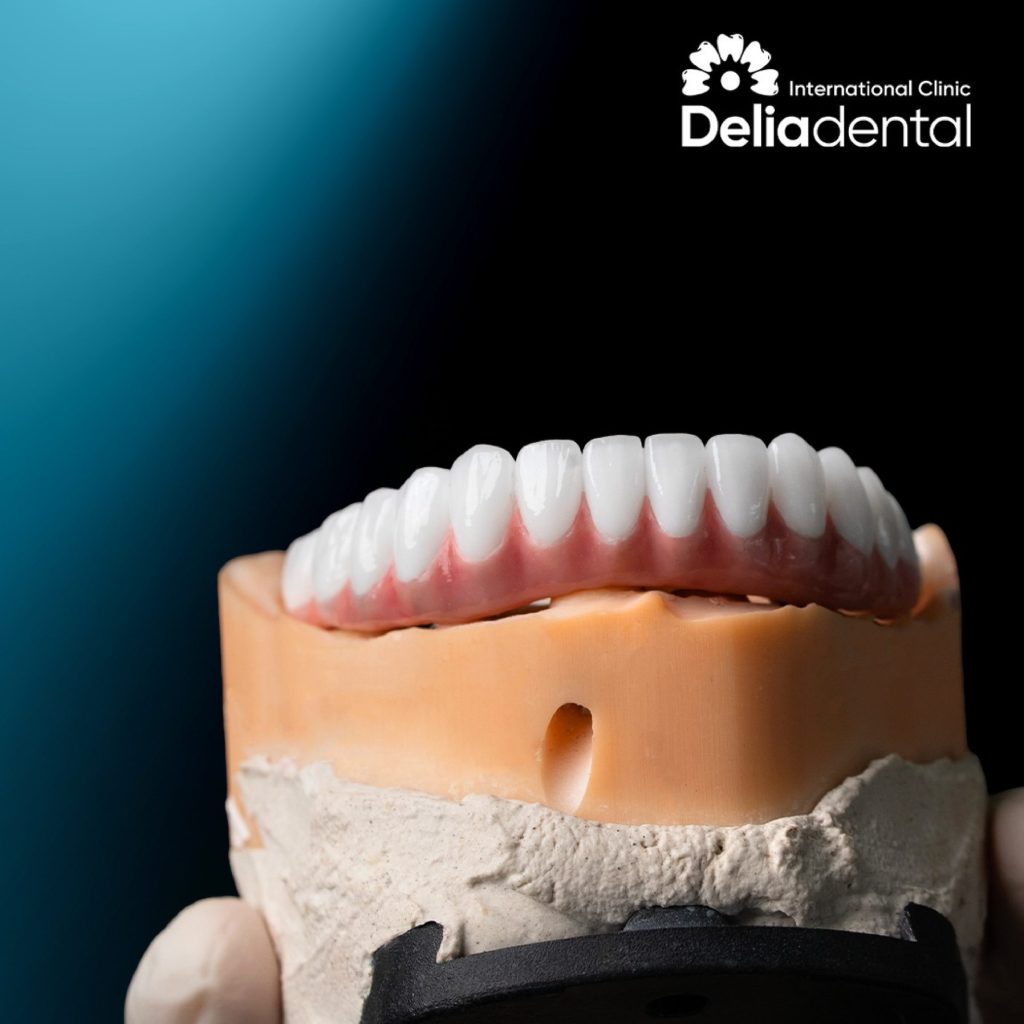
Zirconia is one option for a definitive full-arch restoration, but it should not be presented as the automatic final material for every patient. Full-arch prostheses can use different combinations of acrylic, porcelain, zirconia and metal or high-performance frameworks. The appropriate construction depends on the restorative design, available space, bite forces, maintenance requirements and the treatment package selected.
The temporary and final bridges may therefore differ in more than surface appearance. The framework, tooth construction, weight, texture, repair process and warranty terms can also change. These details should be identified in the written treatment plan instead of being assumed from the general description “final teeth”.
Before approving treatment, ask the clinic to specify the temporary restoration, definitive prosthetic material, framework, method of retention and written warranty for each stage. This makes it possible to compare treatment plans accurately and avoids treating “temporary acrylic teeth” and “final zirconia teeth” as universal components of every full-arch case.
How Delia Dental Clinic Handles The Transition Between Visits
Delia Dental Clinic schedules the second visit around confirmed osseointegration rather than a fixed date, so patients aren’t rushed back before the implants are actually ready. During the healing period between trips, the team stays reachable for questions about the temporary bridge, and patients are asked to send a photo if anything about the temporary feels off before the second trip is booked. The final bridge fabrication only starts once the new scan confirms the healed result, so the shade and fit selected at trip two are based on the actual outcome, not a guess made months earlier.
Send a photo of your temporary bridge via WhatsApp or Messenger if anything feels different before your second trip, or to check your treatment timeline.
FAQ
Why can’t the final zirconia bridge just be ready for the first trip? It has to be milled from a scan of your implants after they’ve healed into position, not before. Milling it earlier would mean fitting it to bone and gum tissue that hasn’t finished settling, which defeats the point of a precision final restoration.
Will the final bridge feel completely different from the temporary? The fit and bite precision improve, since the final bridge is built from your healed result rather than a pre-surgery estimate. Most patients adjust to the difference within a few days.
What if I can’t make it back for the second trip on schedule? The implants themselves don’t need the second trip to stay integrated. What matters is the condition of the temporary bridge and surrounding gum tissue during a longer wait, which is worth checking in remotely before rebooking.
Does the temporary bridge look noticeably different from the final one? It looks natural and functional, but the final shade and exact tooth shape are confirmed at the second visit, so there is usually a visible refinement between the two.
Final Thoughts
The temporary bridge and the final one are doing two different jobs at two different stages of healing, not two versions of the same result. Knowing what’s actually supposed to change between them is what makes the second trip make sense instead of feeling like an unexplained extra step.


