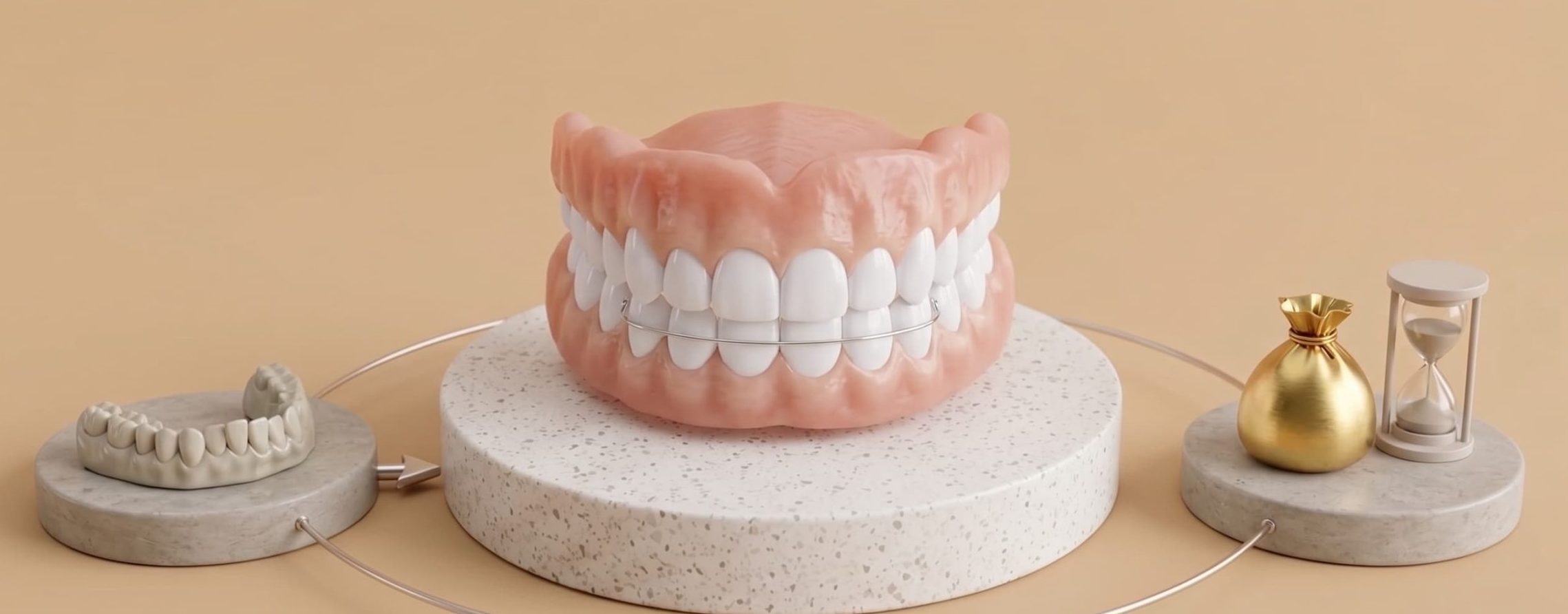
Whether you actually need a retainer after a smile makeover depends on what the makeover included. If orthodontic treatment moved your teeth before veneers or crowns were placed, a retainer in the true sense, an appliance that holds teeth in their new position, is still relevant. If the makeover was veneers or crowns without any prior orthodontics, the teeth themselves were never moved, so what most patients actually need afterward is a night guard to protect the new restorations from bite force, not a retainer.
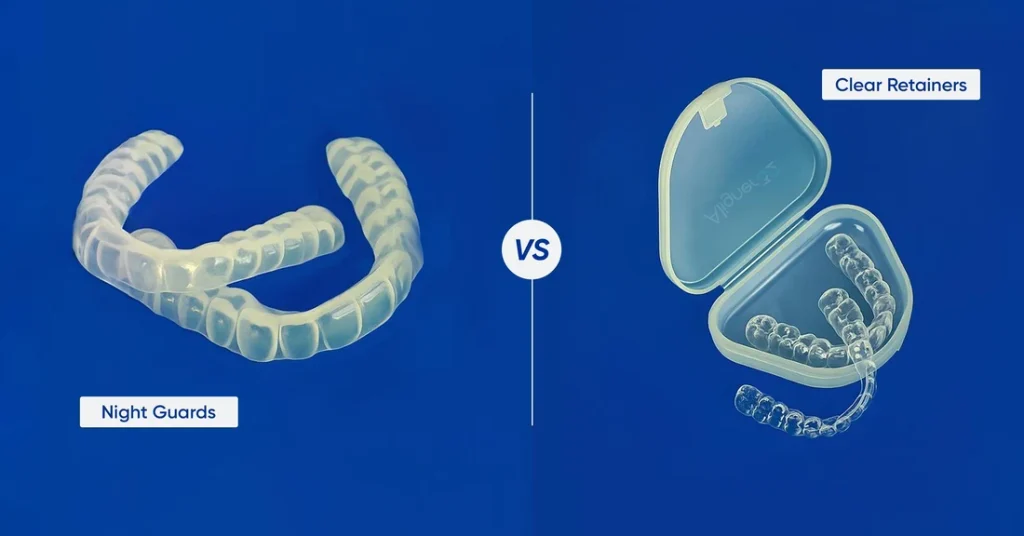
The two get used interchangeably in everyday conversation, but they solve different problems. A retainer keeps teeth from drifting back toward their original position. A night guard cushions veneers and crowns against the force of clenching or grinding so the porcelain doesn’t chip, crack, or come loose. Confusing the two leads to patients either skipping something they actually need or wearing something that isn’t doing what they think it is.
This article separates the two cases clearly, explains the wear schedule for each, and covers what changes about your bite that might affect either appliance later on.
Quick Answer
A true retainer is only relevant if orthodontic treatment was part of your smile makeover, since it holds teeth in a new position after they’ve moved. If your makeover was veneers or crowns without prior orthodontics, a night guard is usually the more relevant appliance, protecting the restorations from grinding or clenching rather than holding tooth position. Whether either is needed depends on the individual case and should be confirmed by the dentist who placed the work.
Retainer or Night Guard: Which One Actually Applies to Your Case
These two appliances can look similar, sometimes identical, but they exist for opposite reasons.
A retainer’s job is to prevent relapse after orthodontic movement. Teeth that have just been straightened by braces or clear aligners sit in bone and ligament that is still adapting to the new position, and without something holding them there, they tend to drift back toward where they started. This is true regardless of whether veneers or crowns were placed afterward, since a crown or veneer covers the visible surface of a tooth but doesn’t anchor its position in the jaw.
A night guard’s job is entirely different. It exists to absorb and spread the force generated by clenching or grinding, most commonly at night when the habit is unconscious and can’t be controlled. Veneers and crowns are bonded to natural tooth structure and handle normal chewing well, but porcelain is more rigid than natural enamel and responds less forgivingly to the sharp, repeated force of bruxism. Over time that force can chip an edge, crack a restoration, or loosen the bond holding it to the tooth.
The practical question to ask is simple: did anything move your teeth before the cosmetic work was done. If yes, a retainer is still part of the picture. If the makeover started and ended with veneers or crowns on teeth that were already in their final position, the more relevant appliance is a night guard, and only if there’s a reason to think grinding or clenching is a factor.
If Orthodontics Was Part of Your Smile Makeover
Combining orthodontic treatment with veneers or crowns is common when a patient’s main concern involves both alignment and the appearance of individual teeth. In this sequence, braces or aligners move the teeth first, then veneers or crowns are placed once the position is finalised.
Because the teeth moved, they need to be held in place while the surrounding bone and ligament stabilise. The typical pattern is full-time wear for an initial period, often several months, followed by a gradual reduction to night-only wear that continues long-term. The exact schedule varies by case and should follow what the treating orthodontist specifies rather than a generic timeline, since factors like how much the teeth moved and how the bite settled affect how long full-time wear is needed.
A retainer that was fitted before the final veneers or crowns went on may need to be checked once the restorations are complete, since a small change in tooth shape or contour can affect how closely the retainer seats.
If Your Smile Makeover Was Veneers or Crowns Only
When no orthodontic movement was involved, the teeth are in the same position they were before treatment. What changed is the surface material and, in many cases, the height, thickness, and contact points where opposing teeth meet.
Whether a night guard is recommended in this situation usually comes down to signs of grinding or clenching rather than being a default part of every case. A dentist looks for indicators such as flattened or worn edges on the restorations, morning jaw tightness or soreness, or a bite that feels heavier on the front teeth than expected. If those signs are present, or if the patient already has a known history of bruxism, a custom night guard is a reasonable way to protect a set of new restorations rather than waiting to see whether damage develops first.
A night guard for this purpose is typically worn at night only, since that’s when clenching and grinding are hardest to control consciously. It doesn’t need to be worn during the day unless a dentist identifies a specific daytime habit worth addressing separately.

What Changes and What Doesn’t With a New Bite
Veneers and crowns can shift where and how teeth make contact, even by a small amount, and that shift matters for anyone already wearing a retainer or night guard from before the makeover.
An appliance made to fit the old tooth shapes may not seat the same way once new restorations are in place, particularly if the makeover changed the height or angle of several front teeth at once. A retainer that used to click into place cleanly might now feel tight in one spot or loose in another. The same applies to a night guard made before the restorations existed, since it was moulded to a bite that no longer exists in the same form.
What generally doesn’t change is the underlying reason either appliance is needed. If orthodontic relapse was a risk before the makeover, it remains a risk afterward, since veneers and crowns don’t add any stability to tooth position. If grinding was already a habit, the restorations don’t reduce or increase the habit itself, only the level of damage a given amount of force can cause to the tooth surface.
Delia Dental Clinic’s Approach to Post Makeover Retention
At Delia Dental Clinic in Hanoi and Ho Chi Minh City, whether a retainer or night guard is relevant after a smile makeover is assessed based on the specific treatment sequence, including whether orthodontic movement was part of the plan and whether the dentist observes signs of bruxism during the final review of the bite. Patients who already have an orthodontic retainer from treatment done elsewhere are checked to confirm the fit still matches once veneers or crowns are complete, since a change in tooth contour can affect how it seats.
For patients without a prior orthodontic history, the decision on a night guard follows the same clinical signs used anywhere else, such as wear patterns, jaw tenderness, or an uneven bite noticed during the fitting stage, rather than being added automatically to every case. Patients who notice new symptoms after returning home, such as a retainer or guard that no longer fits comfortably, can send a photo and a description of what changed to the international patient team for guidance on next steps.
Frequently Asked Questions
Do I need a retainer if I only got veneers and never had braces?
Not in the orthodontic sense, since your teeth were never moved and there’s nothing for a retainer to hold in place. What you may need instead is a night guard, and that depends on whether there are signs of grinding or clenching rather than on having had veneers placed.
Can I use my old retainer after getting new crowns or veneers?
It depends on how much the restorations changed the shape of your teeth. A retainer made before the makeover was fitted to the old tooth surfaces, so if the new restorations altered contour or height significantly, the retainer may no longer seat properly and should be checked rather than assumed to still fit.
How do I know if I actually grind my teeth?
Common signs include a partner mentioning the sound at night, waking up with jaw soreness or a mild headache, or a dentist noticing flattened edges or wear patterns during an exam. Some people grind without any of these signs being obvious to them, which is why a dentist’s assessment during a check-up is more reliable than trying to self-diagnose.
Will wearing a night guard change how my veneers look or feel during the day?
No, since a night guard worn only during sleep has no effect on the appearance or feel of veneers while awake. The purpose is limited to protecting the restorations during the hours when clenching or grinding is most likely to happen without your awareness.
What happens if I skip the retainer or night guard I was told to wear?
For a true retainer, skipping wear increases the chance that teeth gradually shift back toward their pre-treatment position, sometimes noticeably within months. For a night guard, skipping it means veneers or crowns are left unprotected against grinding forces, which raises the risk of chipping, cracking, or the restoration coming loose over time.
Final Thoughts
The word retainer gets used loosely, but the appliance that actually matters after your smile makeover depends entirely on what happened before the cosmetic work, not on the cosmetic work itself. Knowing whether your case involves holding tooth position or protecting a new bite from grinding is what makes the difference between wearing the right appliance and wearing the wrong one out of habit.
If you’re unsure which applies to you, or your current retainer or night guard doesn’t fit the way it used to after treatment, send a description of your case and a photo of the appliance to Delia Dental Clinic via WhatsApp or Messenger. The international patient team can help confirm what’s actually needed before it becomes a bigger issue.


