Zirconia has become the most widely used crown material in modern dentistry, but most patients encounter the word on a price list without understanding what it actually means for their tooth. Knowing what zirconia is, where it performs best, and where another material might serve better is the difference between choosing a crown that lasts and one that does not.
This guide covers the material science behind zirconia crowns, how the clinical evidence compares across materials, and what patients getting zirconia crowns in Vietnam should know before they book.
Quick Answer
Zirconia crowns are ceramic restorations with roughly 1,200 MPa flexural strength and published 5-year survival rates of 95 to 98%. They are the standard for back teeth and implant-supported crowns, while Emax remains preferred for front teeth needing natural light transmission. At Delia Dental Clinic, prices start from $190 per tooth depending on material and warranty tier.
What zirconia crowns actually is and why it became the dominant crown material
What Zirconia Crowns Actually Are And Why They Became The Dominant Crown Material
Zirconia is a ceramic material, not a metal, despite being described as having metal-like strength. The full name is yttria-stabilized zirconia, a crystal structure that gives it a flexural strength of around 1,200 MPa, which is approximately two to three times stronger than lithium disilicate and far beyond what natural enamel can produce.
The reason zirconia displaced older crown materials is largely about failure modes. Porcelain-fused-to-metal crowns, the standard for decades, fail primarily through porcelain chipping off the metal substructure. Veneered zirconia crowns, an earlier iteration, had the same problem. A 2025 retrospective cohort study comparing monolithic and porcelain-fused zirconia crowns over 10 years found survival rates of 86.0% for monolithic and 71.0% for porcelain-fused zirconia (Journal of Prosthetic Dentistry, 2025). The gap is largely explained by chipping on the veneered version.
Modern zirconia crowns are monolithic, meaning a single continuous block of material with no layered porcelain veneer. This eliminates the weakest point in older crown designs. A prospective 5-year study specifically evaluating Lava Plus monolithic zirconia crowns on premolars and molars found a survival rate of 98% after 5 years (Solá-Ruiz et al., Journal of Prosthodontic Research, 2020). Patients getting Lava Plus zirconia crowns in Vietnam at a clinic using this system can reference the same published data when assessing long-term outcomes.
The material is also fully biocompatible, chemically inert, and does not corrode. For patients with metal sensitivities, it removes the allergy risk that exists with porcelain-fused-to-metal systems.
Zirconia Vs Emax Vs PFM: How To Choose The Right Crown Material
| Material | Flexural strength | Best suited for | Price from at Delia Dental Clinic | Warranty |
|---|---|---|---|---|
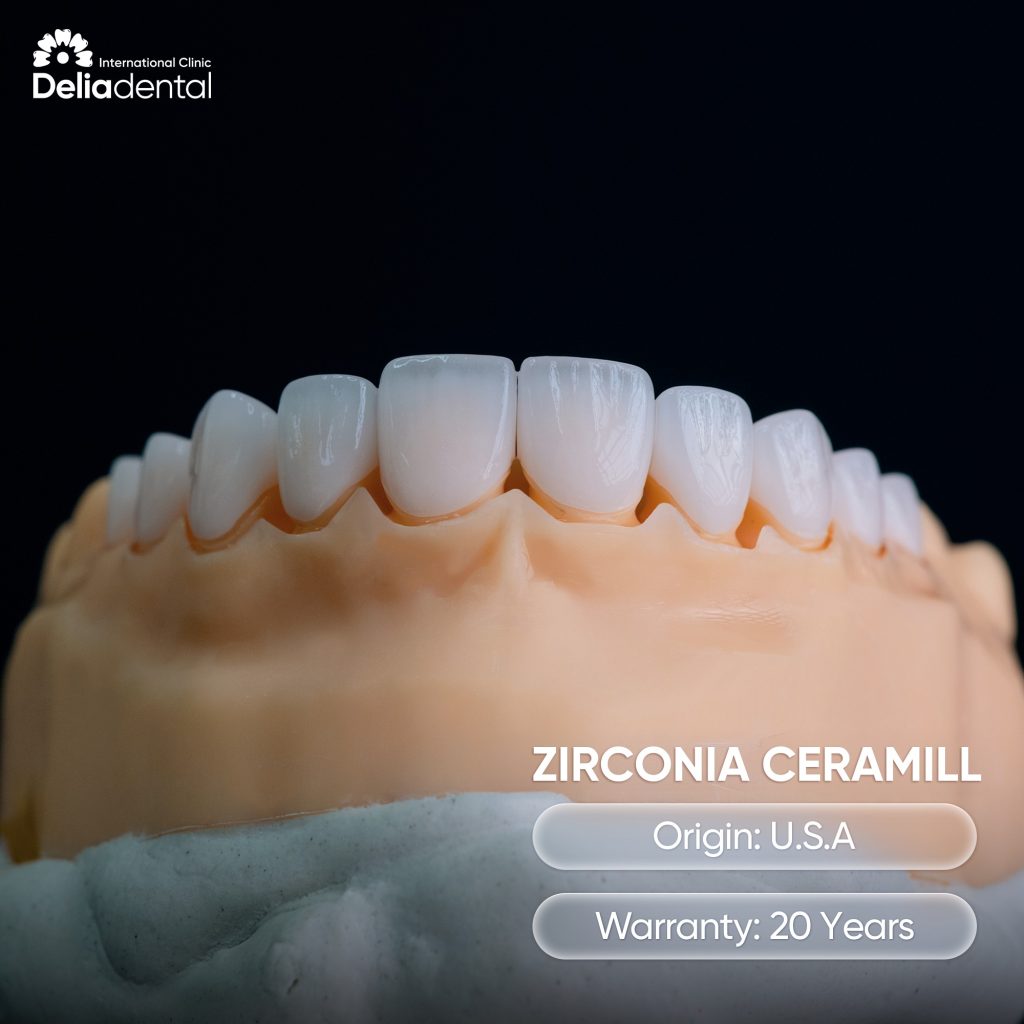
| Zirconia, monolithic (Ceramill) | ~1,200 MPa | Back teeth, budget-conscious cases | $190 per tooth | 10 years |
| Zirconia, monolithic (Lava Plus) | ~1,200 MPa | Back teeth, implant-supported crowns, bruxism cases | $350 per tooth | 30 years |
| Emax (lithium disilicate) | ~530 MPa | Front teeth, natural light transmission | $290 per tooth | 20 years |
| Porcelain-fused-to-metal (PFM) | Depends on metal substructure | Posterior teeth in budget cases, matching existing PFM work | Not offered as a distinct product; Ceramill serves as the all-ceramic entry option | Varies by clinic |
When Zirconia Is The Right Choice
Zirconia’s strength makes it the standard for posterior teeth, meaning premolars and molars where biting force is highest. Its resistance to fracture under heavy load is unmatched by any other all-ceramic material.
For patients comparing zirconia vs Emax crown options in Vietnam, the clearest guide is tooth position: zirconia for back teeth where strength matters most, Emax for front teeth where light transmission and natural appearance take priority.
It is also the recommended material for implant-supported crowns. A systematic review and meta-analysis found a 5-year survival rate of 97.6% for zirconia implant-supported single crowns, and its dimensional stability under implant loading conditions makes it a preferred choice for this application.
Patients with bruxism are generally better served by zirconia than by other ceramics, since its fracture resistance makes it less likely to fail under the sustained forces that grinding generates. Modern multilayer zirconia has also improved the aesthetic performance of the material, with gradient translucency from the gumline to the tip of the tooth, making high-translucency zirconia a viable option for some anterior cases.
When Emax Is The Better Choice
Emax has a strength of around 530 MPa, lower than zirconia but sufficient for anterior and premolar cases. Its defining advantage is optical. The crystal microstructure of lithium disilicate allows light to pass through and scatter in a way that closely mimics natural enamel, giving front teeth the depth and translucency that monolithic zirconia, even high-translucency grades, does not fully replicate.
For patients restoring front teeth where the result will be directly visible next to adjacent natural teeth, Emax remains the more common choice for aesthetics. At Delia Dental Clinic, Emax crowns start from $290 per tooth with a 20-year warranty.
The material is not generally recommended for molars or for patients with bruxism, where biting force can exceed what lithium disilicate reliably withstands over the long term.
When PFM still makes sense
Porcelain-fused-to-metal crowns have the longest clinical track record of any crown type, with data spanning more than 50 years. A 2025 university-based retrospective study comparing monolithic zirconia and metal-ceramic crowns found an overall survival rate of 91.5% for both types within the study follow-up period, with similar clinical complications between groups.
The grey-black line that can appear at the gumline as tissue recedes over time is the main reason PFM has been largely replaced by all-ceramic materials for anterior teeth. For posterior teeth in budget-conscious cases, or where matching existing PFM restorations is clinically relevant, PFM remains a practical option. At Delia, Ceramill all-ceramic crowns, an entry-level alternative to PFM, start from $190 per tooth with a 10-year warranty.
The Clinical Data Behind Zirconia Crowns
The evidence base for zirconia is now substantial. The key distinction across studies is monolithic versus veneered design. The 10-year survival gap between monolithic zirconia (86.0%) and porcelain-fused zirconia (71.0%) reflects the chipping problem that makes layered designs less durable, which is why modern clinics use monolithic designs by default.
Two risk factors for crown complications are worth noting from the 2025 cohort study: molar crowns carry higher complication risk than premolar crowns, and upper jaw crowns carry higher risk than lower jaw crowns. Neither factor changes the material recommendation, but both are relevant when discussing longevity expectations with a dentist.
Wear on opposing natural teeth is also relevant. Properly polished and glazed zirconia produces low wear on adjacent teeth, comparable to natural enamel. Unglazed or rough zirconia surfaces are more abrasive under biting force, which is why the finishing step in fabrication matters.
| Crown type | Survival rate | Follow-up period | Source |
|---|---|---|---|
| Zirconia implant-supported single crowns | 97.6% | 5 years | Pjetursson et al., 2018 |
| Monolithic zirconia crowns, Lava Plus study | 98.0% | 5 years | Solá-Ruiz et al., 2020 |
| Monolithic zirconia crowns | 86.0% | 10 years | Journal of Prosthetic Dentistry, 2025 |
| Porcelain-fused zirconia crowns | 71.0% | 10 years | Journal of Prosthetic Dentistry, 2025 |
| Monolithic zirconia vs metal-ceramic crowns | 91.5% | Variable, university-based study | Journal of Prosthetic Dentistry, 2025 |
Zirconia Crown Cost In Vietnam Vs Australia, The US, And The UK
Lava Plus is manufactured by 3M and imported into Vietnam at international wholesale pricing, the same product placed in Sydney or London. What changes between markets is the cost of the dentist’s time, the lab technician’s work, clinic rent, and support staff. In Vietnam those costs are a fraction of Western equivalents, which is why the same 3M crown costs $350 at Delia Dental Clinic against a commonly reported range several times higher in Australia.
| Market | Commonly reported price range per zirconia crown | Notes |
|---|---|---|
| Vietnam, Delia Dental Clinic | $190 to $350 | Depends on Ceramill vs Lava Plus grade |
| Australia | AUD 1,500 to AUD 2,500 | General market range, confirm current pricing locally |
| United States | $1,200 to $3,500 | General market range, confirm current pricing locally |
| United Kingdom | £900 to £2,000 | General market range, confirm current pricing locally |
The material cost for Lava Plus zirconia is similar globally, since it is an imported product traded at international wholesale prices. The price difference mainly reflects labor cost, clinic rent, and operational overhead in Vietnam, not a difference in the crown material itself.
For a patient restoring six posterior teeth with Lava Plus zirconia at Delia Dental Clinic, the total treatment cost starts from $2,100. Using the Australia range above for six crowns, the equivalent would run from roughly AUD 9,000 to AUD 15,000. Including return flights and accommodation, the savings across a six-crown case can still be substantial, though the exact figure depends on flight cost, stay length, and the specific quote on both sides.
How Delia International Dental Clinic handles zirconia crown cases
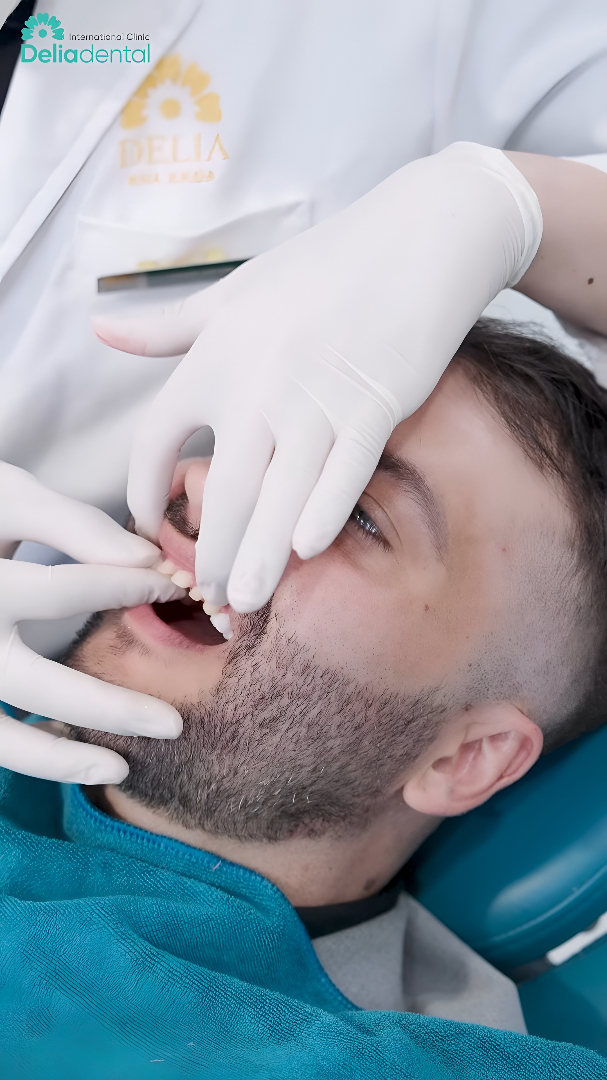
At Delia Dental Clinic, zirconia crown treatment generally follows a 2 to 3 visit process across 4 to 5 days, structured around the international patient’s schedule. For patients booking from abroad, the process usually starts with a WhatsApp or Messenger consultation before travel to review photos and outline an initial direction.
The first in-clinic visit covers Digital Smile Design, shade selection under natural light, tooth preparation under local anesthesia, and a temporary crown fitting. The second visit covers the trial fitting of the permanent crown, adjustment of shape, bite, and color, and final cementation, followed by a check for bite adjustment and comfort.
The trial step before cementation is treated as non-negotiable. Every crown is seated and reviewed under multiple light conditions, including natural light, before anything is bonded permanently, and the patient confirms the result before the appointment ends.
Lava Plus zirconia crowns at both Delia Dental Clinic Hanoi and Ho Chi Minh city come with a 30-year written warranty, documented at the end of treatment. For international patients, the clinic coordinates hotel accommodation near the clinic and provides English-language aftercare instructions before departure.
Frequently Asked Questions
Can a zirconia crown be whitened after it is placed?
No. Zirconia is a fired ceramic material, and its shade is set during fabrication rather than absorbed the way natural enamel can be. Whitening products have no effect on it. If a patient wants a brighter shade later, the only option is remaking the crown to a lighter shade, which is one reason shade selection before cementation matters more for zirconia than for a natural tooth.
Will a zirconia crown look natural on a front tooth people can see up close?
It depends on the grade. Older, more opaque zirconia can look flatter than a natural tooth in strong light, which is why Emax has traditionally been preferred for visible front teeth. Modern high-translucency multilayer zirconia has narrowed that gap and is now a viable option for some anterior cases, but for a tooth that will be compared directly with the teeth next to it, many dentists still lean toward Emax for the closest match.
Does a metal allergy rule out any crown option besides PFM?
Not with zirconia or Emax. Both are metal-free ceramics, so a documented metal sensitivity does not exclude either one. PFM is the material affected, since it relies on a metal substructure under the porcelain layer, which is one of the reasons all-ceramic options have largely replaced it for patients with known sensitivities.
What happens if a zirconia crown cracks or fails within the warranty period?
Zirconia crowns at Delia Dental Clinic carry a written warranty covering material defects and manufacturing faults under normal use, ranging from 10 years on Ceramill to 30 years on Lava Plus. Coverage depends on attending recommended check-ups roughly every six months and following aftercare instructions, and it does not extend to damage from accidents, unprotected teeth grinding, or poor oral hygiene. If an issue comes up within the warranty period, the crown is examined in person before the clinic confirms repair or replacement.
Is zirconia a good choice for a crown on a dental implant?
Yes, and the published evidence supports it specifically for this use. A systematic review found a 97.6% five-year survival rate for zirconia implant-supported single crowns, and the material’s dimensional stability under implant loading is a practical advantage over more brittle ceramics. It is one of the more commonly recommended materials for this application.
Can a chipped or cracked zirconia crown be repaired instead of replaced?
Usually not in a way that restores full strength. Monolithic zirconia is a single fired block, so unlike a porcelain-fused-to-metal crown, which can sometimes have a chipped veneer patched, a cracked zirconia crown typically needs to be remade rather than repaired intraorally. This is a separate question from routine polishing or minor surface adjustment, which is a normal part of aftercare and does not affect the crown’s integrity.
Final Thoughts
Zirconia is not one material but a category, and the clinical performance depends heavily on whether the crown is monolithic or veneered, which brand and grade is used, and how it is fabricated and finished. The survival data for modern monolithic zirconia, including the Lava Plus system specifically, is among the strongest in restorative dentistry.
The question for patients is not whether zirconia is reliable. It is which type, from which brand, placed by which team, with what warranty documentation. Those four questions predict the outcome more reliably than any country-level price comparison.


