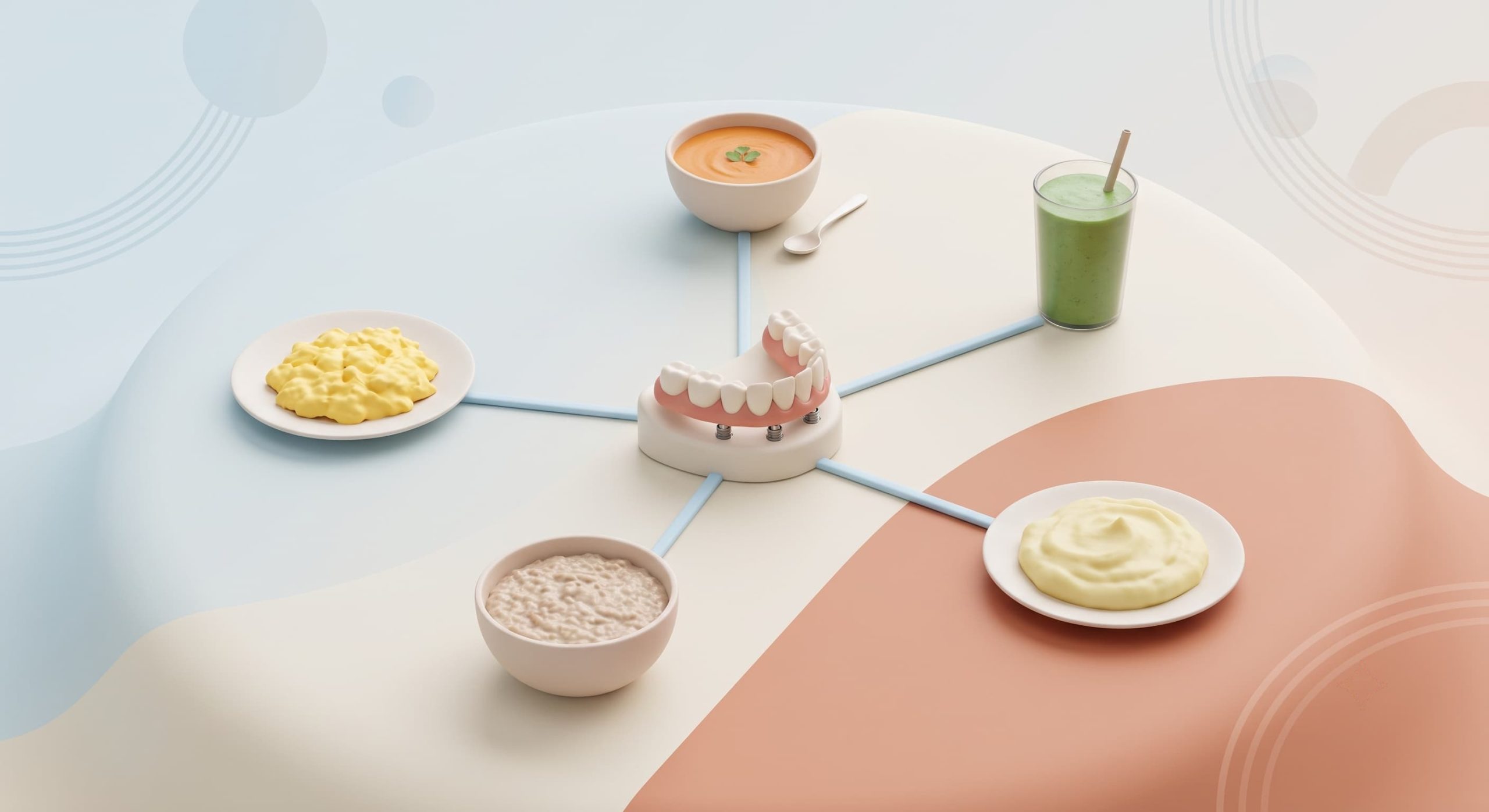
Leaving the dental clinic with a complete, fixed set of teeth on the same day or within a few days of full-arch surgery is one of the most rewarding moments of the entire treatment. Patients who have struggled for years with missing teeth, failing bridge work, or uncomfortable removable dentures suddenly experience the immediate cosmetic relief of a complete smile. However, this immediate aesthetic transformation can sometimes create a false sense of security regarding chewing ability.
While a provisional full-arch bridge looks like natural teeth, it serves a specific clinical purpose during the initial stage of treatment. The temporary bridge is designed primarily for aesthetics, speech, and gentle chewing while the underlying titanium implant posts fuse with your jawbone. Treating temporary teeth like permanent natural enamel during this early phase can compromise the surgical outcome.
Understanding how to eat safely with a temporary All-on-4 or All-on-6 bridge protects both the acrylic framework and the healing implants underneath. By following a structured diet protocol during your recovery stay in Hanoi or Ho Chi Minh City and throughout your healing period at home, you ensure that your implants integrate smoothly before receiving your final zirconia teeth at Delia Dental Clinic.
Quick Answer
During the 3 to 6-month healing phase with temporary All-on-4 or All-on-6 teeth, patients must follow a strict fork-tender soft food diet. Safe choices include eggs, soft fish, pasta, porridges, and well-cooked vegetables. Hard, sticky, or chewy foods can fracture provisional acrylic bridges and disrupt implant osseointegration.
Why Provisional Full-Arch Bridges Require a 3-to-6-Month Soft Diet Protocol
The need for a soft food diet during full-arch restoration is rooted in the biological process of osseointegration. When 4 or 6 dental implants are placed into the jawbone, bone cells called osteoblasts begin building new bone tissue around the titanium threads. Over a period of 3 to 6 months, this process permanently locks the implants into the jaw structure. During the early weeks of this healing phase, the connection between the titanium post and the bone is delicate.
Excessive biting force during osseointegration generates a phenomenon known as micromotion. If mechanical force causes an implant post to shift by more than 150 micrometers within the bone socket, the body cannot form solid bone connection around the threads. Instead, the body forms fibrous scar tissue around the implant, a complication called fibrous encapsulation that ultimately leads to implant failure. Splinting implants together with a rigid temporary bridge reduces individual post movement, but heavy chewing forces across the entire arch can still exceed safe biological limits.
Material characteristics also dictate dietary restrictions. Temporary bridges are milled or processed from medical-grade polymethyl methacrylate (PMMA) or aesthetic dental acrylic. PMMA is lightweight, which reduces initial gravitational and functional torque on fresh implant sites, but it possesses lower flexural strength than final monolithic zirconia. Heavy vertical impacts or lateral grinding movements can crack the acrylic framework, chip provisional teeth, or loosen the underlying prosthetic retaining screws.
Maintaining a disciplined soft diet throughout the entire provisional phase protects your surgical investment. The soft food protocol is not a temporary inconvenience for a few days, but a continuous protective measure that remains active until your clinician confirms solid osseointegration and fits your final, high-strength zirconia bridge.
The Fork-Tender Rule for All-on-4 and All-on-6 Provisional Teeth
Navigating daily meals with a temporary full-arch bridge becomes straightforward when you apply a simple clinical benchmark known as the fork-tender rule. Any food placed in front of you should be soft enough to be easily pressed, divided, or mashed using only the side edge of a plastic or metal fork, without applying downward muscular pressure. If a food item requires a knife to cut or demands force to press through, it is too hard for temporary full-arch teeth.
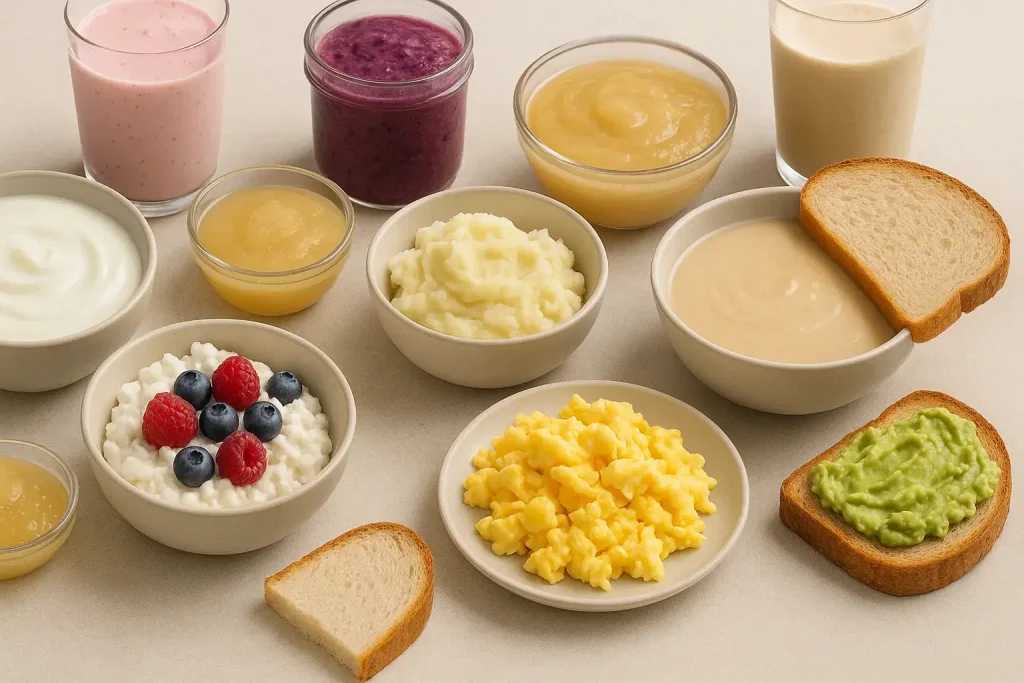
Soft protein sources are essential for tissue repair, and several options meet the fork-tender criteria easily. Scrambled, poached, or soft-boiled eggs provide excellent nutrition with minimal chewing requirement. Steamed white fish, such as sea bass, cod, or snapper, breaks apart effortlessly and offers clean protein. Soft silk tofu, finely minced chicken or turkey cooked in mild broths, and slow-cooked meat stews where muscle fibers pull apart without resistance are also excellent choices.
Carbohydrates provide necessary energy during recovery and are simple to prepare in soft forms. Well-cooked pasta, soft white or brown rice, mashed potatoes, mashed sweet potatoes, oatmeal, and soft bread without crusts offer substantial filling power. Cooking grains slightly past their usual al dente texture ensures that your jaws do not need to work hard during mastication.
Vegetables and fruits should be selected based on texture and seed content. Steamed carrots, squash, zucchini, and pumpkin can be cooked until completely soft. Avocados, ripe bananas, baked apples without skin, and smooth fruit purees deliver vitamins without introducing hard crunching forces. Berries with small, hard seeds should be blended and strained to prevent seeds from lodging beneath the provisional bridge acrylic.
Dairy products and smooth alternatives offer comfortable calorie sources throughout the provisional phase. Plain yogurt, Greek yogurt, soft cottage cheese, smooth custard, and room-temperature creamy vegetable soups provide variety while requiring zero chewing effort.
High-Risk Eating Habits That Can Fracture Acrylic Provisional Bridges
Certain chewing habits and food textures introduce severe structural risks to provisional acrylic bridges. Understanding these high-risk factors helps patients make conscious choices when sitting down for meals.
Biting directly into food using front provisional teeth is one of the most common causes of bridge fracture. When you bite into an apple, sandwich, or thick burger using your front teeth, you create a lever effect that exerts strong outward cantilever forces on the front implants and acrylic framework. This movement can snap the front provisional teeth or loosen the front retaining screws. All food during the provisional phase must be cut into small, bite-sized pieces and placed directly onto your back teeth for gentle crushing.
Lateral shearing forces are equally destructive to temporary full-arch restorations. Chewing movements that involve side-to-side grinding or heavy tearing place horizontal stress on provisional teeth. PMMA acrylic resists vertical compression relatively well, but it is vulnerable to lateral shearing forces.
Sticky and adhesive foods pose a unique mechanical danger to provisional screw-retained bridges. Items such as caramels, chewing gum, sticky rice cakes, and dense gummies create upward suction when you open your mouth after biting down. This pulling force can loosen the tiny prosthetic screws holding your bridge to the implant abutments or pull acrylic sections away from the metal framework.
Hard and crunchy foods introduce sudden impact forces that exceed the yield strength of temporary acrylic. Biting down on ice cubes, hard nuts, hard candies, raw carrots, or crusty baguettes can produce localized force spikes above 500 Newtons. This level of force can snap provisional acrylic units instantly or cause microscopic fractures around the implant-abutment connection.
Provisional Full-Arch Diet Comparison
| Food Category | Risk Level | Impact on PMMA Bridge & Implants | Recommended Soft Alternative |
| Hard & Crunchy (Nuts, ice, raw carrots, crusty bread) | High Risk | Acrylic fracture, screw loosening, implant micromotion | Mashed potatoes, steamed squash, soft avocado |
| Sticky & Adhesive (Caramel, gum, sticky rice, taffy) | High Risk | Upward pulling force, prosthetic screw unseating | Smooth puddings, Greek yogurt, fruit purees |
| Tough & Fibrous (Steak, pork chops, jerky, squid) | High Risk | Heavy lateral shearing, muscle overload | Steamed white fish, soft scrambled eggs, minced meat |
| Front Tooth Biting (Whole apples, burgers, sandwiches) | High Risk | Cantilever leverage force, front acrylic chipping | Bite-sized cut portions placed on back teeth |
| Fork-Tender Solids (Pasta, soft fish, cooked rice, tofu) | Safe Choice | Gentle vertical compression within safe biological limits | Steamed fish, soft pasta, minced chicken broth |
Navigating Restaurants in Vietnam with a Temporary Full-Arch Bridge
International patients recovering in Hanoi or Ho Chi Minh City often worry about finding suitable meals in a country famous for its vibrant culinary scene. Fortunately, Vietnamese cuisine features numerous naturally soft, broth-based, and steamed dishes that align perfectly with provisional bridge care when ordered with simple modifications.
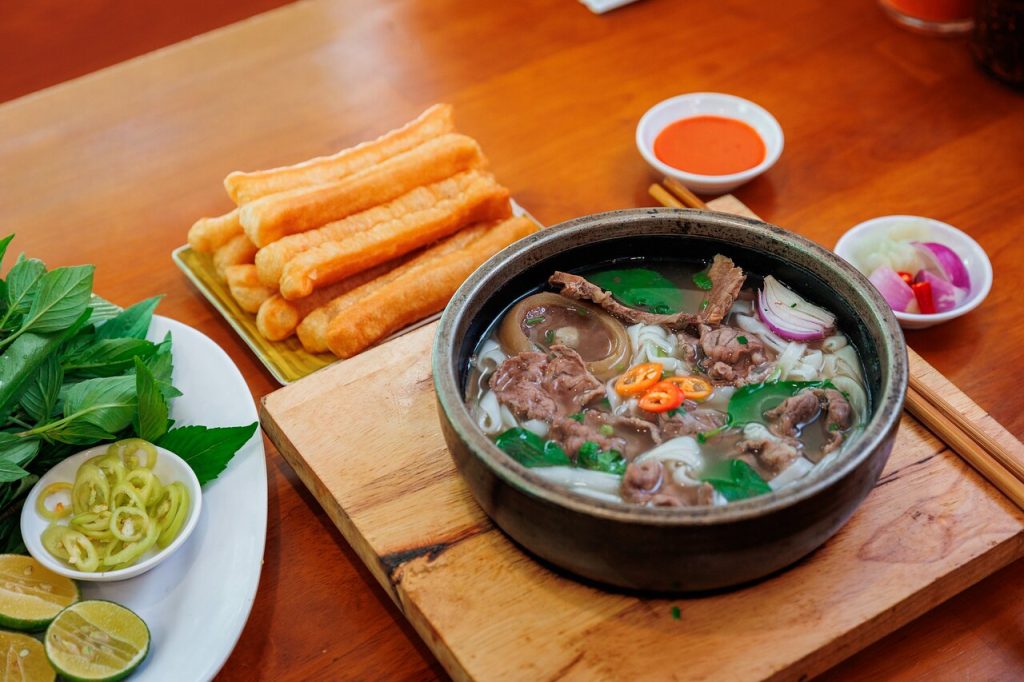
Vietnamese noodle broths, such as Pho or Hu Tieu, serve as excellent recovery meals when prepared thoughtfully. Patients should ask for noodles to be cooked thoroughly until very soft and request shredded chicken or finely minced meat rather than tough cuts of beef. Using clean food scissors to cut long noodle strands into short 1-inch segments prevents the need to bite through noodles with front teeth. Always allow hot broths to cool down to lukewarm room temperature before eating, as high heat increases blood flow to healing gums. Omit raw chili, raw garlic, and crunchy toppings like fried dough sticks (Quay) to prevent tissue irritation.
Rice porridges, known locally as Chao, represent one of the safest dining choices across Vietnam. Smooth rice porridge cooked with minced chicken, fish, or soft minced pork requires zero chewing force and provides warm, comforting nourishment. Ask the server to leave off crunchy fried shallots, peanuts, or crispy dough toppings.
Steamed dishes are widely available in Vietnamese restaurants and fit provisional dietary rules effortlessly. Steamed white fish with ginger and spring onions, soft savory egg custards (Trung Hap), and braised soft tofu (Dau Hu) deliver rich flavor without introducing hard physical textures.
When dining out, communicating your needs to restaurant staff is straightforward. Asking for dishes to be served soft, warm rather than boiling hot, and without hard or crunchy garnishes ensures a safe and enjoyable dining experience throughout your stay.
What to Do If Your Provisional Bridge Chips, Loosens, or Shifts
Despite taking precautions, structural issues can occasionally arise with temporary acrylic bridges during the multi-month healing period. Recognizing early warning signs allows for prompt intervention before minor bridge issues affect underlying implant integration.
A sudden clicking sound or feeling a slight shift when biting is a primary indication of screw loosening. Over time, gentle chewing forces can cause one of the tiny prosthetic screws connecting your bridge to an implant abutment to back out slightly. When a screw loosens, the bridge loses uniform support, transferring extra leverage force onto the remaining tight screws and implants. If you feel any movement, stop chewing on that side immediately and refrain from pressing down on the bridge to test it.
A bite imbalance, where one specific tooth on the provisional bridge touches before all others when you close your mouth, requires professional evaluation. High spots concentrate your entire biting force onto a single point, which can cause localized pain, acrylic fracture, or excessive stress on the individual implant post underneath.
If a piece of PMMA acrylic chips off your temporary bridge, remain calm. Acrylic chipping is a material issue rather than an implant failure. Save the chipped fragment if possible, keep the area clean with warm salt-water rinses, and avoid chewing near the sharp edge.
Under no circumstances should you attempt to fix, adjust, or glue a temporary bridge yourself. Household glues and over-the-counter dental adhesives contain toxic chemicals that irritate gum tissue and can permanently damage the precision titanium abutment surfaces. If you experience bridge movement, chipping, or bite discomfort while in Vietnam or after returning home, contact Delia Dental Clinic immediately via WhatsApp or Messenger. Sending clear photos or a short video allows our clinical team to evaluate the situation and provide step-by-step instructions for in-clinic adjustment or remote coordination.
Delia Dental Clinic Remote Monitoring During Your Full-Arch Osseointegration
The journey to a complete full-arch smile involves continuous clinical oversight from the moment your provisional bridge is placed until your final zirconia teeth are secured. Delia Dental Clinic structures international treatment protocols so that distance never compromises patient care.
Before you leave Hanoi or Ho Chi Minh City after your initial surgical visit, our team performs a comprehensive bite check to ensure that chewing forces are evenly distributed across your provisional PMMA bridge. You receive a complete post-operative care package, including written diet instructions, specialized soft-bristled cleaning tools, and your official implant documentation recording post serial numbers and placement details.
Throughout your 3 to 6-month osseointegration period at home, Delia Dental Clinic maintains structured remote contact through WhatsApp and Messenger. Scheduled check-ins at 2 weeks, 1 month, 3 months, and 5 months allow our international care team to review your recovery progress, evaluate photos of your gum tissue, and address any dietary or comfort questions.
Prior to booking your second trip back to Vietnam for final zirconia bridge fabrication, our clinical team verifies that your provisional bridge has remained stable and that your tissue healing is complete. This remote verification process ensures that your return visit is perfectly timed, efficient, and completely stress-free.
Frequently Asked Questions
Can I bite into a burger or sandwich using my front temporary All-on-4 teeth?
Biting directly into sandwiches, burgers, or apples using front temporary teeth should be avoided entirely throughout your provisional healing period. Biting with front acrylic teeth creates outward cantilever leverage that places severe mechanical stress on front implant posts and can easily snap the temporary acrylic bridge. All foods, including soft sandwiches or pancakes, must be cut into small, bite-sized pieces using a knife and placed onto your back teeth for gentle crushing.
What should I do if a piece of acrylic chips off my temporary All-on-6 bridge while I am back home?
If a small piece of acrylic chips off your provisional bridge while you are home, contact Delia Dental Clinic via WhatsApp immediately and send clear photos of the area. Small acrylic chips are cosmetic material issues that rarely affect the underlying titanium implants, but they should be evaluated by our clinical team. Avoid chewing on the side with the chip, do not attempt to sand or glue the area yourself, and our team will guide you on whether a quick smoothing visit with a local dentist is recommended or if it can be safely monitored until your planned return trip.
How long do I have to stay on a soft food diet with temporary full-arch implants?
You must maintain a fork-tender soft food diet for the entire duration that you wear your temporary acrylic bridge, which typically spans 3 to 6 months. While your soft gum tissue feels completely healed within 2 to 3 weeks after surgery, the underlying jawbone requires several months to complete osseointegration with the titanium implant posts. Staying on a soft diet during this entire window prevents micromotion, protects the temporary PMMA bridge from cracking, and ensures that your implants remain stable for your final zirconia teeth.
Why does my temporary All-on-4 bridge feel bulkier or different when I chew compared to my natural teeth?
A temporary full-arch bridge often feels slightly thicker or bulkier than natural teeth because PMMA acrylic requires additional bulk material thickness to maintain structural strength across the arch span. Additionally, the bridge rests against healing gum tissue that may be slightly swollen during the early weeks following surgery. As your gum tissue settles and your tongue adapts over the first few weeks, the bridge will feel significantly more natural, and your final zirconia bridge will be custom-milled to an even sleeker, precise profile.
What happens if I accidentally eat something hard with my temporary full-arch bridge?
If you accidentally bite down on a hard food item, stop chewing immediately and assess how your mouth feels. Check whether you experience any sharp pain around an implant site, notice any new movement or clicking in the bridge, or feel a high spot when you close your teeth together. If the bridge feels completely normal, comfortable, and stable, rinse your mouth with warm salt water and return to your strict soft food diet. If you feel movement, persistent pain, or notice a crack in the acrylic, contact Delia Dental Clinic right away for a clinical assessment.
Final Thoughts
Patience during the provisional healing phase is one of the most valuable investments you can make in your new smile. While wearing a temporary All-on-4 or All-on-6 bridge requires temporary dietary discipline, adhering to the fork-tender soft food rule protects your implants during the critical osseointegration window and prevents unnecessary acrylic fractures.
Treating your temporary teeth with care ensures that your surgical foundation matures safely, setting the stage for the placement of your permanent, high-strength zirconia bridge.
If you have questions about specific foods, notice any shift in your provisional bridge, or want our clinical team to review your recovery progress while in Vietnam or back home, send a message or photo to Delia Dental Clinic via WhatsApp or Messenger. Our international patient care team is always available to support your recovery every step of the way.


