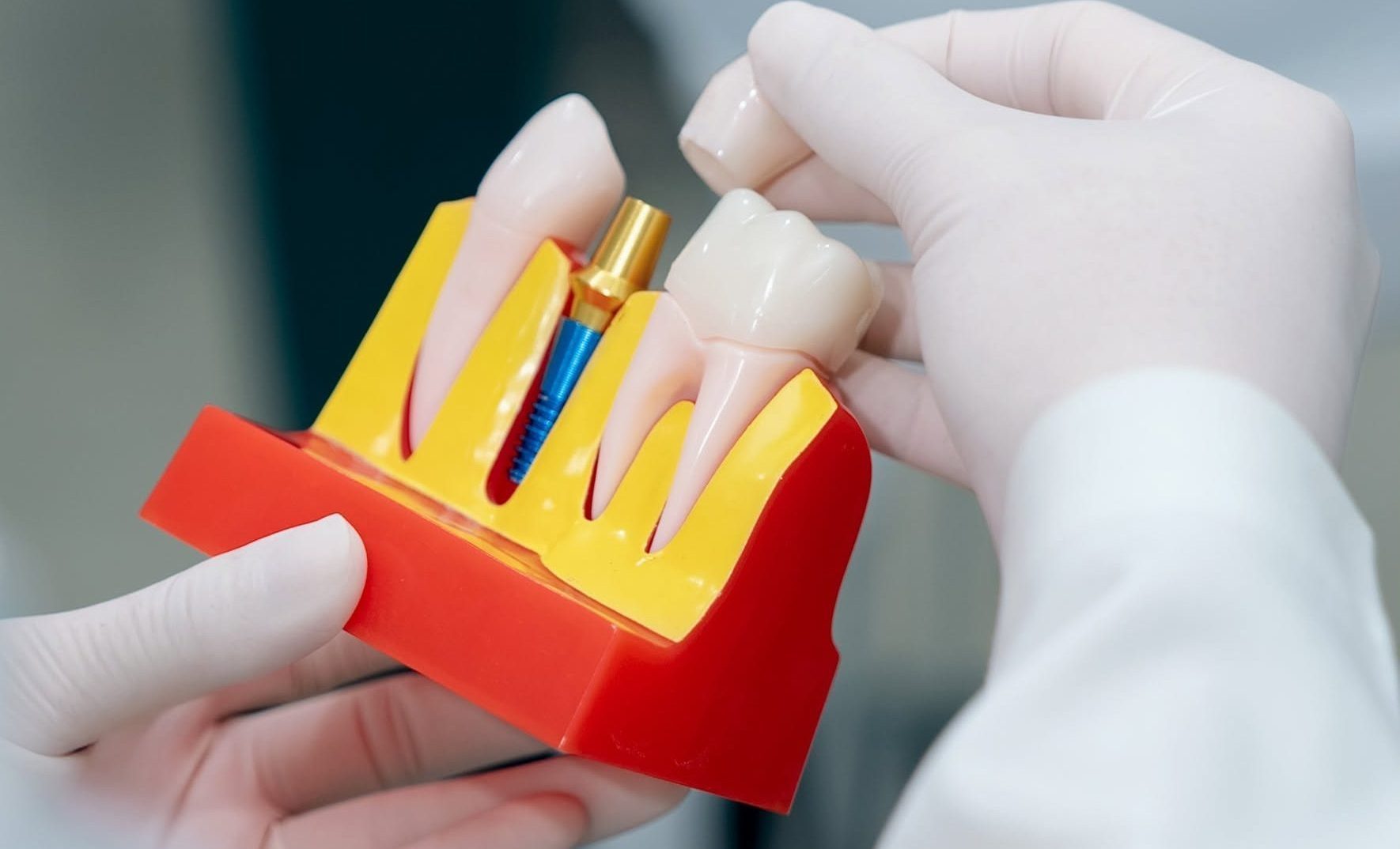
Full-arch implant treatment can replace the teeth in one complete jaw: either the upper arch or the lower arch. When implant-supported teeth are planned for both jaws, clinics often describe the case as full-mouth dental implant treatment.
That distinction sounds simple, but the treatment decision is not based only on how many teeth are missing. Each arch must be assessed separately, and the dentist must also consider which remaining teeth can be predictably maintained, the condition of the gums and bone, the opposing bite, the proposed prosthesis and the patient’s health and treatment priorities.
Treating both jaws does not merely mean repeating an identical one-jaw procedure twice. The surgical and restorative principles remain similar, but coordinating the upper and lower bite, provisional teeth, loading protocol and follow-up requires a plan that accounts for both arches together.
Quick answer
Full-arch dental implants usually restore one complete upper or lower jaw. Full-mouth implant treatment commonly involves both jaws, although “full mouth rehabilitation” can also combine implants with crowns or other treatment for retained teeth. The final scope requires an arch-by-arch clinical and imaging assessment, not a CBCT scan alone.
What do “full arch” and “full mouth” actually mean?
A dental arch is the curved row of teeth in one jaw. The upper arch is called the maxillary arch, and the lower arch is the mandibular arch.
A full-arch implant restoration replaces most or all of the teeth in one of those arches with a prosthesis supported by dental implants. It may be used for an arch that is already toothless or for one containing teeth that have been assessed as having a poor long-term prognosis.
The phrase “full-mouth dental implants” is used less consistently. In many clinic websites and patient searches, it means implant-supported restoration of both the upper and lower arches. However, full-mouth or complete-mouth rehabilitation can also involve rebuilding teeth with a combination of:
- Dental implants
- Implant-supported bridges
- Crowns
- Conventional bridges
- Retained natural teeth
- Removable prostheses in selected cases
A written treatment plan should therefore avoid relying on “full mouth” as a standalone description. It should state clearly whether the upper arch, lower arch or both arches are being treated and what type of restoration is proposed for each.
What Determines Whether One Jaw or Both Need Treatment?
The decision begins with an assessment of each arch, but it is not based on imaging alone.
CBCT imaging can provide three-dimensional information about available bone, anatomical limitations and possible implant positions. It cannot independently determine whether every remaining tooth should be removed or whether full-arch implants are the best treatment.
The assessment may include:
| Area assessed | Why it affects the decision |
| Prognosis of each remaining tooth | Teeth with extensive decay, fractures, severe mobility or advanced periodontal support loss may not be predictable to retain |
| Gum and periodontal condition | Active inflammation and supporting-bone loss can affect both tooth prognosis and implant planning |
| Available bone | Bone volume, quality and anatomy influence implant position, number and whether additional procedures may be considered |
| Existing restorations | Crowns, bridges, root canal treatment and previous implants must be assessed individually |
| Bite and opposing arch | The restoration must function against natural teeth, a denture, crowns or another implant-supported arch |
| Prosthetic space | There must be adequate room for the planned framework, teeth and cleaning access |
| Medical and risk factors | General health, medication, smoking, bruxism and ability to maintain the restoration can affect suitability |
| Patient priorities | Treatment length, maintenance, willingness to undergo surgery and acceptance of alternatives form part of shared decision-making |
This means the decision is not simply:
“There are several damaged teeth, so the entire arch must be removed.”
The dentist should explain the prognosis of the remaining teeth, which alternatives have been considered and why a complete-arch restoration is being recommended.
Full-Arch vs Full-Mouth Dental Implants Comparison
| Treatment feature | One jaw: full-arch treatment | Both jaws: full-mouth implant treatment |
| Treatment area | Upper or lower arch | Upper and lower arches |
| Opposing bite | May be natural teeth, restored teeth, a denture or an existing implant restoration | Both arches must be designed to function against each other |
| Implant number | Determined for the treated arch | Determined separately for each arch |
| Surgery | May involve one surgical arch | Both arches may be treated together or in stages |
| Provisional teeth | Fixed or removable provisional teeth may be possible, depending on the protocol | Each arch needs a coordinated provisional plan if both are treated during the same stage |
| Bite planning | The restoration is designed against the existing opposing arch | The upper and lower tooth positions, vertical dimension and contacts are planned together |
| Healing | Depends on the treated site, implant stability, bone condition and additional procedures | Each arch may follow a different healing or loading schedule |
| Cost | Based on the procedures and prosthesis required for that arch | Based on two arch-specific plans and any shared or additional procedures |
| Follow-up | Focused on the treated arch and its relationship with the opposing teeth | Must monitor both arches, their prostheses and the bite between them |
Treating both jaws may increase surgical time, laboratory work and follow-up requirements, but it should not be described as a simple doubling of a one-arch case.
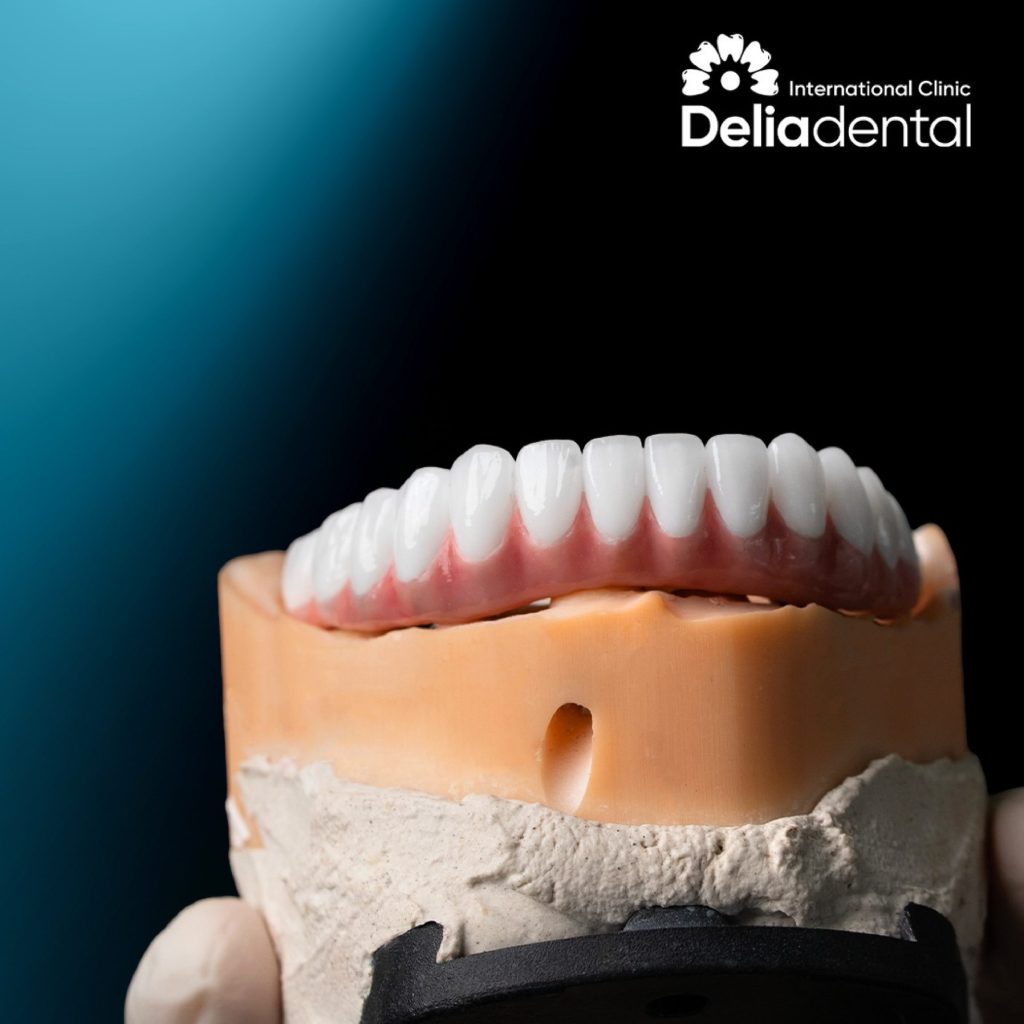
How Many Implants Are Used For One Arch?
Four and six implants are commonly discussed because All-on-4 and All-on-6 are widely used fixed full-arch concepts. However, “four to six implants per arch” is a common planning range, not a rule that applies to every patient.
Research reviewed in the ITI consensus on implant numbers includes complete-arch fixed prostheses supported by different implant numbers and configurations. The final plan should be based on more than a preference for four or six.
Factors affecting how many implants are used include:
- Whether the arch is upper or lower
- Bone volume and quality
- Implant distribution across the arch
- Anatomical structures that must be avoided
- Proposed prosthesis design and material
- Available restorative space
- Cantilever length
- Bite forces and opposing dentition
- Hygiene and maintenance access
- Whether immediate loading is being considered
More implants do not automatically produce a better result, and fewer implants are not automatically a cost-cutting compromise. The relevant question is whether the selected number, position and distribution can support the planned prosthesis for that individual arch.
Patients comparing four- and six-implant options can read the separate guide to All-on-4 vs All-on-6 dental implants in Vietnam.
What Changes When Both Jaws Are Treated?
The bite must be rebuilt between two new arches
When only one arch is restored, the dentist designs it against the existing opposing teeth or prosthesis. That opposing arch is not automatically ideal, but it provides information about tooth position, available space and how the patient currently closes the mouth.
When both arches are being rebuilt, the upper and lower restorations must be planned together. The team may need to establish:
- The vertical distance between the jaws
- The relationship between the upper and lower arches
- Tooth position and arch form
- Lip and facial support
- Speaking space
- Bite contacts
- Space for the restorative materials
- A design that the patient can clean
This creates more restorative coordination than treating one arch alone. It can also provide an opportunity to correct an unstable or severely worn bite, but the proposed change must be tested and verified rather than assumed.
Both arches may be treated together or in stages
Some patients may be suitable for upper- and lower-arch surgery during the same treatment stage. Other cases may be divided because of surgical complexity, additional procedures, health considerations, treatment tolerance or the need to preserve function during the transition.
Staging does not necessarily mean that one method is safer or better in every case. The dentist should explain:
- Which arch will be treated first
- Whether both surgeries are planned for the same visit
- What teeth or prostheses will be present between stages
- How the patient will eat during the transition
- Whether the approach changes the number of trips
- When each final prosthesis is expected
Temporary fixed teeth are not guaranteed
A fixed provisional bridge may be connected soon after implant placement in selected full-arch cases. This is often described as immediate loading.
According to the ITI definitions of implant loading protocols, immediate loading means connecting the implants to a prosthesis in contact with the opposing arch within one week. Early and conventional loading follow different timeframes.
A patient should not be promised fixed temporary teeth solely because four or six implants are planned. Suitability may depend on:
- Primary implant stability
- Bone condition
- Implant distribution
- Need for grafting
- Bite forces
- Bruxism
- Prosthetic design
- General and oral health
- Whether the patient can follow a modified diet
If immediate fixed teeth are not appropriate, the transitional plan may involve a removable prosthesis, a delayed fixed prosthesis or another case-specific arrangement.
Eating and maintenance require a coordinated plan
Patients with both arches treated must protect two surgical and restorative areas during the early period. Even when fixed provisional bridges are fitted, they are not equivalent to fully healed final teeth.
The treating team may recommend a modified diet and limits on biting force while integration and tissue healing progress. The exact instructions depend on the loading protocol and provisional design.
Patients also need to learn how to clean beneath each prosthesis. Treating both arches means maintaining two tissue-facing bridge surfaces rather than one, so cleaning access should form part of the design rather than being addressed only after the prostheses have been fitted.
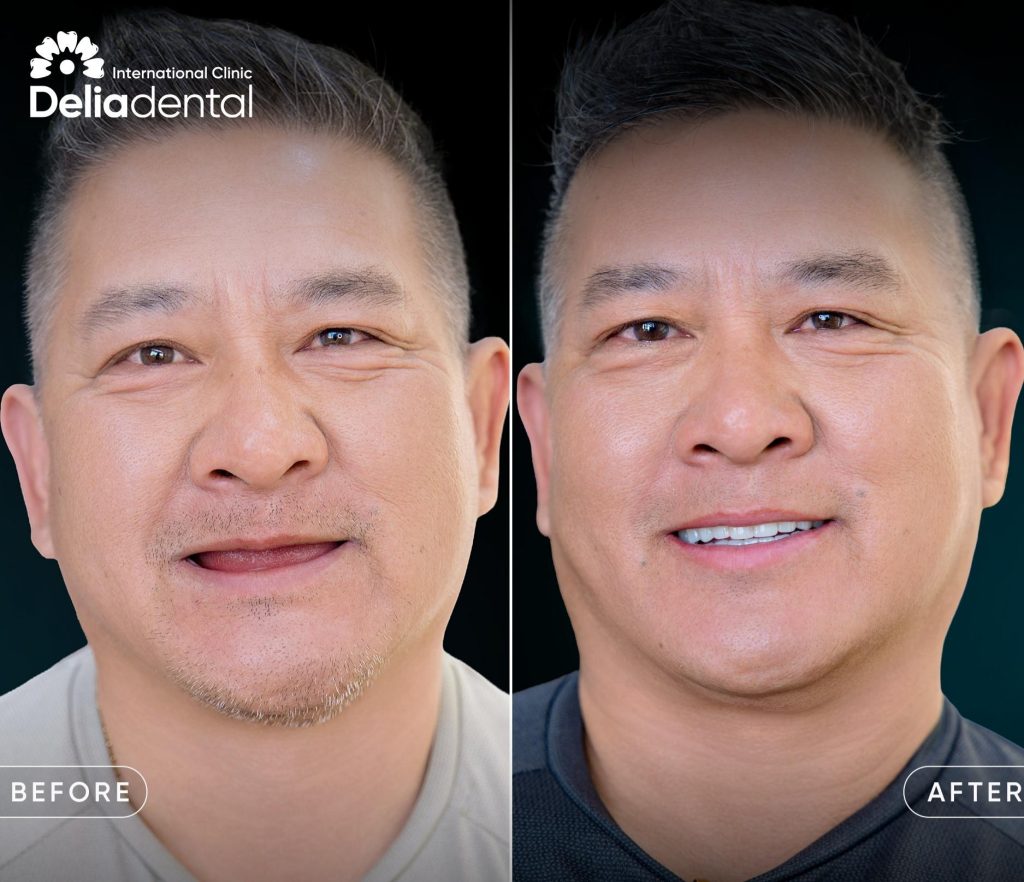
Does Healing Take Longer When Both Jaws Are Treated?
Not necessarily in a simple “twice as long” sense, but the two arches should not be assumed to heal identically.
Healing and readiness for the restorative stage may be affected by:
- Upper versus lower jaw anatomy
- Bone condition at each implant site
- Primary implant stability
- Extractions performed at the same visit
- Bone grafting or other additional treatment
- Placement and loading protocol
- Smoking and medical factors
- Condition of the provisional prosthesis
- Clinical findings during follow-up
Both arches can heal during the same calendar period when they are treated together. However, one arch may require a different loading decision, additional review or a longer interval before its definitive prosthesis is fitted.
The guide to how long to stay in Vietnam for dental implants explains the difference between time spent at the clinic and the longer biological healing period.
Does Treating Both Jaws Double The Cost?
There is no reliable fixed multiplier.
Two implant-supported arches require more implants, prosthetic work and clinical treatment than one arch. However, the total is determined by the actual components and procedures included for each jaw, not by automatically multiplying a one-arch price by two.
A useful quote should separate the upper and lower plans and identify:
- Number and brand of implants per arch
- Abutments and other components
- Extractions
- Bone grafting or additional surgery
- Provisional restoration for each arch
- Definitive prosthesis for each arch
- Prosthetic material and framework
- Diagnostic records and surgical planning
- Medication and follow-up
- Warranty terms
- Number and expected duration of treatment trips
The existing guide to full-mouth dental implant cost in Vietnam explains these pricing variables in more detail.
Planning One or Two-Jaw Treatment Before Travelling to Vietnam
A preliminary remote review can help an international patient understand whether the concern appears limited to one arch or may involve both. However, photographs and uploaded imaging cannot always confirm which teeth should be retained, whether immediate loading is possible or exactly how the final bite should be rebuilt.
Before booking, request an arch-by-arch preliminary plan showing:
| Planning question | What the document should clarify |
| Which jaw is being treated? | Upper, lower or both |
| What happens to the existing teeth? | Teeth proposed for retention, treatment or extraction |
| How many implants are being considered? | Preliminary number and distribution for each arch |
| Are provisional teeth planned? | Fixed, removable, delayed or still dependent on surgical findings |
| What are the final teeth? | Material, framework and method of retention |
| Are additional procedures possible? | Grafting, extractions or treatment of active disease |
| How many trips may be required? | Purpose and estimated stay for each stage |
| What remains unconfirmed? | Findings requiring clinical examination, updated imaging or assessment during surgery |
Patients can also review what an X-ray can confirm before an implant trip to Vietnam to understand the limits of remote planning.
How Delia Dental Clinic Handles One And Two-Arch Cases
Before travelling to Delia Dental Clinic in Hanoi or Ho Chi Minh City, patients can send recent dental X-rays, CBCT files when available, clear dental photographs, previous treatment records or an existing quote via WhatsApp or Messenger.
These records can support an initial review of:
- Which arch appears to require treatment
- Whether remaining teeth may need closer assessment
- Possible implant-supported options
- Additional imaging or records required
- Whether provisional teeth may be considered
- A preliminary treatment and travel timeline
- Which decisions must wait for the in-person examination
After arrival, the proposed plan must be checked against the clinical examination, appropriate imaging, gum condition, bite and current tooth prognosis. If both arches are involved, the treatment plan should identify the implant and prosthetic approach for each jaw rather than grouping everything under one “full-mouth implant” package.
Patients should also receive a clear explanation of the provisional stage, healing period, final restorative stage and what follow-up may be needed after returning home.
FAQ
Are full-arch and full-mouth dental implants the same?
Not exactly. Full-arch implant treatment generally describes restoration of one complete upper or lower arch. Full-mouth dental implant treatment commonly refers to treating both arches, although full-mouth rehabilitation can also retain and restore some natural teeth.
Does full-mouth treatment always mean All-on-4 on both jaws?
No. All-on-4 is one complete-arch implant concept. One arch may be planned with four implants and the other with a different number or design. Some full-mouth cases also retain natural teeth or use other types of implant-supported restoration.
Can both jaws receive implants during the same surgery?
Selected patients may have both arches treated during the same surgical stage. Other cases are staged because of surgical complexity, additional procedures, general health, transitional function or restorative planning. The appropriate sequence must be determined individually.
Will I receive fixed temporary teeth on both jaws immediately?
Not automatically. Immediate fixed provisional teeth depend on implant stability, bone condition, implant distribution, bite forces and the overall loading protocol. The written plan should explain what provisional option is expected and what could change during surgery.
How do I eat while both jaws are healing?
The answer depends on whether fixed provisional bridges, removable temporary teeth or another transitional option is used. Even with fixed provisional teeth, patients are commonly given a modified diet to reduce excessive loading during early healing. Follow the case-specific instructions from the treating team.
Does treating both jaws take twice as long?
Not necessarily. If both arches are treated during the same stage, much of the healing can occur concurrently. However, surgical time, prosthetic work and follow-up are greater, and the two arches may not be ready for their final restorations at exactly the same time.
Can CBCT confirm whether I need one jaw or both treated?
CBCT provides important three-dimensional information for implant planning, but it does not replace a clinical examination or determine tooth prognosis by itself. The final decision should combine imaging with examination of the teeth, gums, bite, medical history and treatment alternatives.
Final Thoughts
The useful distinction between full-arch and full-mouth dental implants is not merely one jaw versus two. It is the difference between designing a restoration against an existing opposing arch and rebuilding the relationship between two treated arches.
Each jaw needs its own diagnosis, implant and prosthetic plan. When both are involved, the dentist must also coordinate the bite, provisional teeth, loading approach and restorative sequence across the whole mouth.
Send your dental photos, recent X-rays, CBCT files, treatment records or existing quote to Delia Dental Clinic via WhatsApp or Messenger. The international patient team can provide an initial arch-by-arch review and help estimate the treatment stages required at the Hanoi or Ho Chi Minh City location before you arrange your trip.


