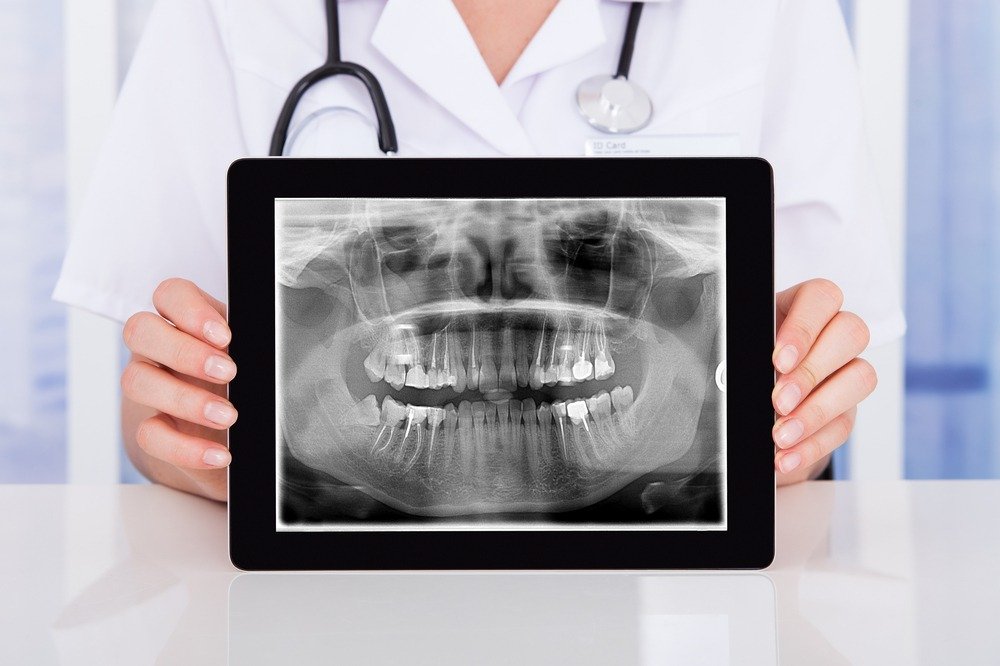
Sending dental photos and recent X-rays before travelling can help a dentist understand a single missing-tooth case and provide an initial treatment direction. However, the amount that can be assessed depends on the type, date, quality, and coverage of the records provided.
A close-up photo shows the visible gap, gum appearance, and neighbouring teeth. A periapical or panoramic X-ray may provide two-dimensional information about the proposed implant site and surrounding roots. An existing CBCT may provide more detailed three-dimensional information if the files are recent, diagnostically adequate, and relevant to the treatment area.
Remote review is useful for screening, travel planning, and producing an initial cost range. It does not replace the clinical examination needed to assess the gums, bite, tooth mobility, restorative space, medical risk factors, and final implant position.
This guide explains what a dentist may be able to assess before you fly, which conclusions must remain preliminary, and which decisions need to wait until you arrive in Vietnam.
Quick Answer
A recent X-ray may help a dentist identify the missing-tooth site, surrounding roots, obvious pathology, and whether an implant consultation appears reasonable. It cannot by itself confirm final implant suitability, three-dimensional bone dimensions, gum condition, bite, exact grafting needs, implant position, treatment timeline, or the complete treatment price.
What a Dentist May Be Able to Assess Before You Travel
Different records provide different types of information. A dental photo should not be treated as equivalent to an X-ray, and a two-dimensional X-ray should not be treated as equivalent to a CBCT scan.
| Record provided | What it may help assess | Important limitation |
| Close-up dental photo | Visible gap, neighbouring teeth, gum appearance, swelling, or obvious damage | Does not show the jawbone, roots, infection depth, or bite |
| Full-smile photo | Position of the missing tooth within the smile and the visible aesthetic concern | Cannot determine implant position or final crown design |
| Periapical X-ray | Local roots, nearby teeth, retained root fragments, and selected bone features around one site | Two-dimensional and covers a limited area |
| Panoramic X-ray or OPG | General overview of both jaws, missing teeth, major pathology, and surrounding anatomy | Does not provide reliable cross-sectional ridge width |
| Existing CBCT files | Three-dimensional information about the selected area when current and diagnostically adequate | Still requires clinical examination and review by the treating dentist |
| Previous treatment plan or quote | What another clinic proposed and which cost components were included | Does not confirm that the same treatment plan is appropriate |
The quality of the remote assessment depends on the quality of the records. A cropped screenshot, blurred photo, or image without a capture date may still support an initial discussion, but it should not be treated as sufficient for definitive implant planning.
Identifying the Missing-Tooth Site and Surrounding Teeth
A suitable X-ray may help the dentist identify the missing-tooth site, adjacent roots, retained root fragments, visible bone loss, or other findings that could affect the initial discussion.
The dentist may also be able to see whether:
- a tooth root remains in the site;
- a neighbouring tooth has a large filling or root canal;
- there is visible bone loss around nearby teeth;
- the missing space appears narrow;
- there is an obvious lesion or area of concern;
- the tooth was recently extracted or has been absent for longer.
This depends on the X-ray covering the correct area and being clear enough to interpret.
When sending the image, patients should explain:
- which tooth is missing;
- when it was removed or lost;
- whether there is currently pain or swelling;
- whether a temporary tooth, denture, or bridge is being worn;
- whether previous infection or grafting occurred in the area.
This additional context helps the dentist interpret the image more accurately than reviewing an isolated X-ray without any history.
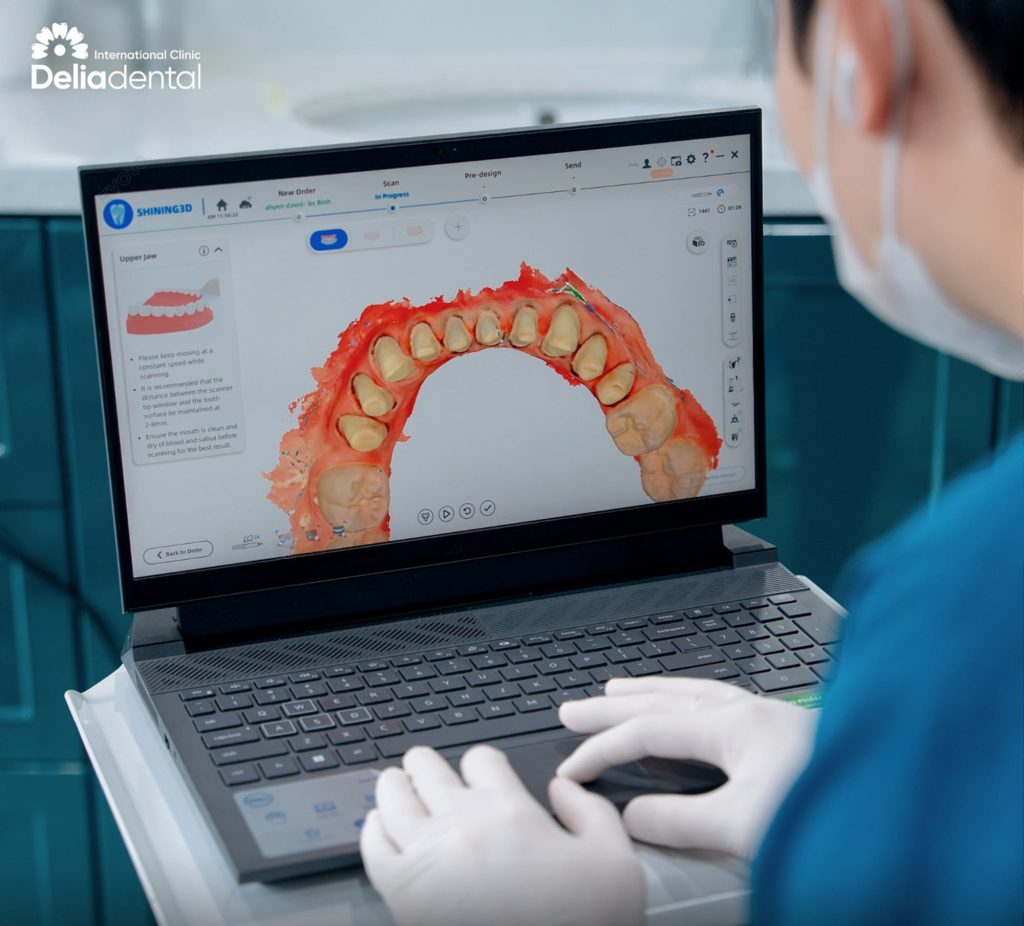
Whether an Implant Consultation Appears Reasonable
Remote records may suggest that implant replacement is worth assessing or that the case could require additional investigation.
They may also reveal an issue that needs attention first, such as:
- a retained root;
- a visible infection;
- an adjacent tooth affecting the available space;
- a previous extraction site that appears irregular;
- possible bone loss around neighbouring teeth;
- another tooth that may need to be assessed before implant treatment.
This is not confirmation that an implant can be placed.
Final suitability depends on several factors that cannot be confirmed from a remote X-ray alone, including:
- the condition of the gums;
- three-dimensional bone anatomy;
- the patient’s bite;
- the space available for the final crown;
- medical history and medications;
- smoking or vaping;
- the condition of the neighbouring teeth;
- whether the patient can maintain the implant long term.
The remote review should therefore produce an initial treatment direction, not a final diagnosis.
An Initial Single-Tooth Implant Cost Range
A clinic may provide an initial single tooth implant cost in Vietnam based on a set of stated assumptions.
For example, the estimate may assume:
- one missing tooth;
- one implant fixture;
- one abutment;
- one final implant crown;
- no major bone grafting;
- no sinus procedure;
- no additional extraction;
- no active infection requiring separate treatment;
- no temporary bridge or removable tooth;
- a standard two-stage implant timeline.
The estimate should clearly state what is included and which findings could change the total.
The phrase “dental implant price” is not used consistently across clinics. One quote may include only the implant fixture, while another includes the fixture and abutment. A third may also include the final crown.
At Delia Dental Clinic, published implant brand prices refer to the implant fixture and abutment. They should not automatically be interpreted as the complete cost of replacing a tooth.
A complete single-tooth implant quote may also include:
- CBCT imaging;
- extraction;
- bone grafting;
- sinus-related treatment;
- temporary restoration;
- final implant crown;
- medication;
- follow-up appointments;
- treatment records;
- written warranty documentation.
For detailed pricing, patients should review the separate guide to single tooth implant cost in Vietnam rather than comparing only the lowest advertised implant price.
What Cannot Be Confirmed from a Remote X-Ray Alone?
A remote X-ray review cannot normally confirm:
- the three-dimensional width of the ridge;
- soft-tissue thickness;
- the amount of keratinised gum around the site;
- periodontal pocket depths;
- tooth mobility;
- how the upper and lower teeth meet;
- the exact space available for the final implant crown;
- whether immediate implant placement is suitable;
- the exact implant length, diameter, position, or angulation;
- whether grafting is definitely required;
- whether grafting can be completed at the same appointment;
- the final number of treatment stages;
- the complete treatment timeline;
- the confirmed treatment price.
A CBCT may provide additional three-dimensional information when clinically indicated, but imaging is only one part of implant planning.
The treating dentist must also assess:
- the gums;
- bite relationship;
- restorative space;
- neighbouring teeth;
- medical history;
- current medication;
- smoking status;
- oral hygiene;
- the patient’s expectations for the final crown.
For a more detailed explanation of how three-dimensional findings affect cost, see the separate guide to why an online dental implant quote may change after a CBCT scan.
Is a Single-Tooth Implant Easier to Assess Remotely?
A single-tooth case involves fewer implant sites than a multi-tooth or full-arch case, but that does not automatically make it straightforward.
A missing back tooth may require assessment of:
- available bone height and width;
- the position of adjacent roots;
- bite forces;
- the mandibular nerve;
- the maxillary sinus;
- the available space for the implant crown.
A missing front tooth can require detailed planning of:
- facial bone thickness;
- gum position;
- the visible smile line;
- implant position;
- temporary tooth design;
- crown shape and shade;
- symmetry with the adjacent teeth.
Factors that can make a single-tooth case more complex include:
- a tooth that has been missing for several years;
- previous infection;
- traumatic extraction;
- gum recession;
- a thin gum profile;
- limited space between neighbouring roots;
- reduced bone width;
- a high or visible smile line;
- an existing temporary bridge or denture;
- grinding or heavy bite forces;
- an adjacent tooth that may also require treatment.
Remote records can help flag some of these concerns, but they cannot confirm the final implant and crown plan.
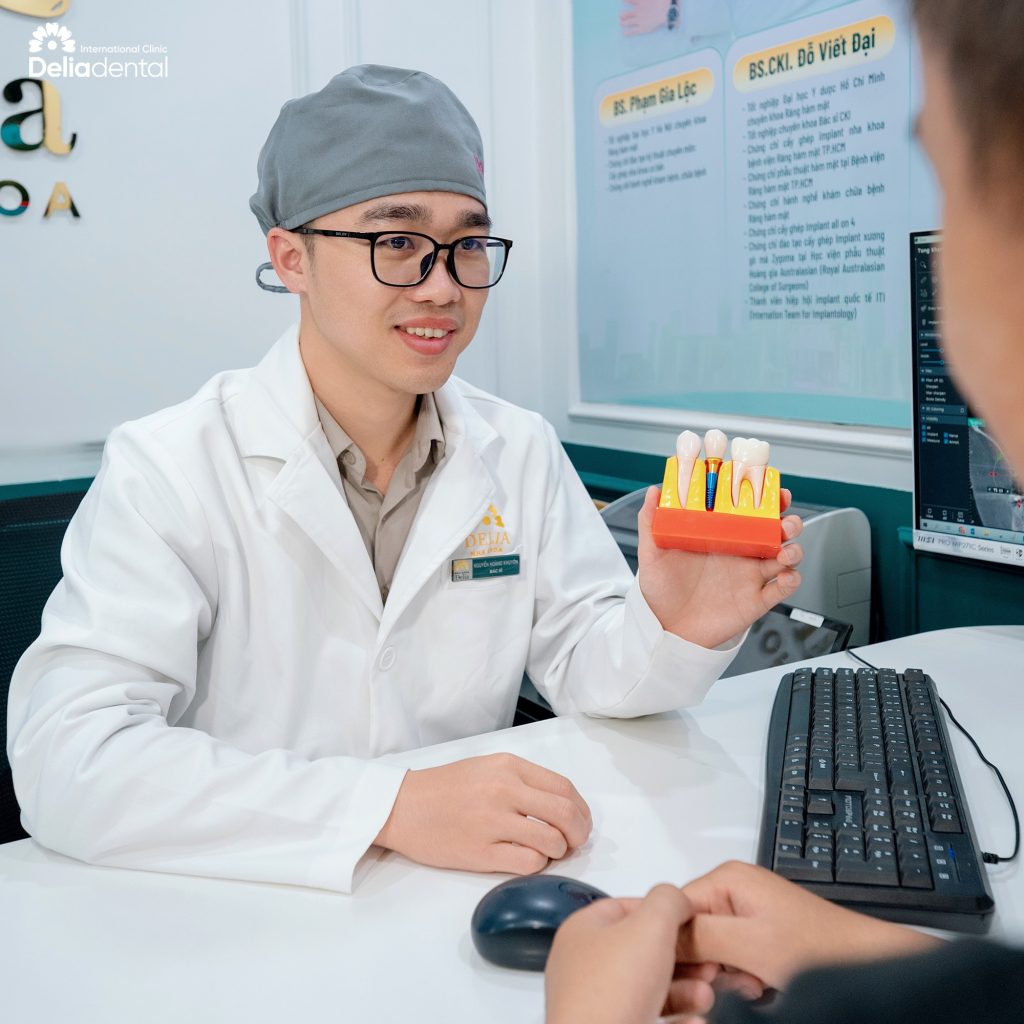
Front-Tooth and Back-Tooth Implant Assessments Are Different
The location of the missing tooth changes what the dentist needs to assess.
Front-Tooth Implant
For a front-tooth implant, the treatment must restore both function and appearance.
The dentist may need to assess:
- gum symmetry;
- the amount of bone on the facial side;
- the shape and shade of neighbouring teeth;
- the position of the implant within the smile;
- whether a temporary tooth is required;
- whether the final crown can emerge naturally from the gumline.
A photo can help show the visible concern, but it cannot confirm the underlying bone and gum conditions needed for final aesthetic planning.
Back-Tooth Implant
For a molar or premolar implant, bite forces and nearby anatomy may be more important.
The dentist may need to assess:
- available chewing space;
- opposing teeth;
- adjacent tooth roots;
- maxillary sinus anatomy in the upper jaw;
- mandibular nerve anatomy in the lower jaw;
- the force placed on the implant crown;
- whether one implant can support the proposed restoration.
The remote assessment should therefore reflect the tooth location rather than treating every single-tooth implant case in the same way.
What to Send for a More Useful Remote Implant Review
Send as many of the following as are available:
- A clear full-smile photo.
- A close-up photo of the missing-tooth area.
- A photo showing the opposing teeth when biting.
- A recent periapical or panoramic X-ray.
- Original CBCT DICOM files if a CBCT has already been taken.
- The date each image was taken.
- The tooth number or a description of its location.
- The date the tooth was removed or lost.
- Details of current pain, swelling, bleeding, discharge, or numbness.
- Information about previous infection, extraction, grafting, or root canal treatment.
- Current medical conditions.
- Current medications.
- Smoking or vaping status.
- Information about diabetes, blood thinners, heart conditions, or previous radiotherapy where relevant.
- An existing dental treatment plan or quote.
- Your proposed travel dates.
- Whether a second trip is possible.
Do not edit, filter, or compress diagnostic images where avoidable. Original image files generally provide more useful information than screenshots sent from a phone.
Questions to Ask During an Online Implant Consultation
Before booking a flight, ask:
- What can you assess from the records I have sent?
- Which parts of the plan remain preliminary?
- Do my records cover the correct implant site?
- Is my X-ray recent enough to support an initial estimate?
- Do you need the original CBCT DICOM files?
- Does the price include the implant fixture?
- Is the abutment included?
- Is the final crown included?
- Is CBCT included or charged separately?
- Which findings could increase or reduce the estimate?
- Could the treatment require bone grafting?
- Could I need a temporary tooth?
- Is one trip likely, or should I plan for two?
- How many days should I leave in Vietnam?
- When will the final itemised quote be confirmed?
A clinic should be able to distinguish clearly between what is visible in the remote records and what still needs to be confirmed after arrival.
How Delia Dental Clinic Reviews Single-Tooth Implant Records Before Travel
Delia Dental Clinic has branches in Hanoi and Ho Chi Minh City and provides international patients with an initial implant review before they book their flights.
Patients can send dental photos, recent X-rays, existing CBCT files, treatment records, or another clinic’s quote to Delia via WhatsApp or Messenger.
Based on the available information, the team can help identify:
- which implant site is being considered;
- whether additional records may be needed;
- possible preliminary treatment;
- the implant systems and cost components being discussed;
- an initial one-trip or two-trip treatment direction;
- which parts of the plan still require in-person confirmation.
After the patient arrives at Delia’s Hanoi or Ho Chi Minh City branch, the dentist examines the gums, bite, neighbouring teeth, available restorative space, and medical history.
Existing imaging is reviewed, and additional imaging is taken when clinically required for the proposed treatment.
The final implant position, need for grafting, treatment sequence, timeline, and itemised quote are confirmed before surgical treatment begins.
Patients can also read Delia Dental Clinic reviews to understand how other international patients describe the clinic’s pre-travel communication, treatment planning, and support.
FAQ
Can a Dentist Confirm the Exact Implant Cost from an X-Ray Alone?
Usually not. A suitable X-ray may support an initial cost range, but the confirmed price depends on the clinical examination, available three-dimensional information where required, the implant system, final crown, and any extraction, grafting, temporary restoration, or additional treatment.
Is It Worth Sending an X-Ray Before Booking?
Yes. A recent X-ray can help the dentist understand the proposed implant site, identify obvious concerns, and provide a more useful initial discussion than photos alone.
It may also help the clinic tell you which additional records are required before you book.
Why Can’t a Dental Photo Show the Jawbone?
A dental photo records visible teeth and soft tissue. It does not image the internal jawbone.
A panoramic or intraoral X-ray can show selected bone features in two dimensions, while CBCT can provide three-dimensional anatomical information when clinically indicated.
Does a Single-Tooth Implant Need Less Remote Assessment Than Multiple Implants?
It involves fewer sites, but it still requires assessment of the bone, gums, bite, neighbouring roots, restorative space, medical history, and final crown design.
A front-tooth implant may be particularly demanding because the gumline and crown must integrate with the visible smile.
What if My X-Ray Is Old?
Send it with the date it was taken. An older X-ray may still provide useful background information, but it may not represent the current site after extraction, infection, bone change, or recent treatment.
The treating dentist will decide whether updated imaging is required.
Can I Send an Existing CBCT Before Travelling?
Yes. Ask the imaging centre for the original DICOM files rather than only screenshots or a printed image.
The treating dentist can review whether the scan covers the correct area and is recent and clear enough for the proposed treatment. An additional scan may still be required if the existing files are incomplete, outdated, or unsuitable.
Can an X-Ray Confirm Whether I Need Bone Grafting?
Not always. A two-dimensional X-ray may suggest that bone loss or limited bone height could be present, but it cannot reliably confirm the full three-dimensional ridge width.
The need for grafting is confirmed after appropriate imaging and clinical examination.
Can the Final Price Be Lower Than the Initial Estimate?
Yes. Further assessment may show that a procedure initially considered possible, such as grafting or extraction, is not required.
A transparent clinic should revise the itemised quote when treatments are removed as well as when additional procedures are added.
Final Thoughts
Dental photos and X-rays can make a pre-travel implant consultation more useful, but each type of record answers a different set of questions.
A remote review may help identify the proposed site, visible concerns, surrounding roots, possible preliminary treatment, and an initial cost range. It cannot by itself confirm final implant suitability, three-dimensional anatomy, gum condition, bite, exact implant position, grafting requirements, timeline, or complete price.
Send your dental photos, recent X-rays, existing CBCT files, treatment records, or another implant quote to Delia Dental Clinic via WhatsApp or Messenger before booking your flight. The team can provide an initial single-tooth implant review for treatment at Delia’s Hanoi or Ho Chi Minh City branch.
The final treatment plan, timeline, and itemised quote will be confirmed after an in-person assessment and any clinically required imaging.


