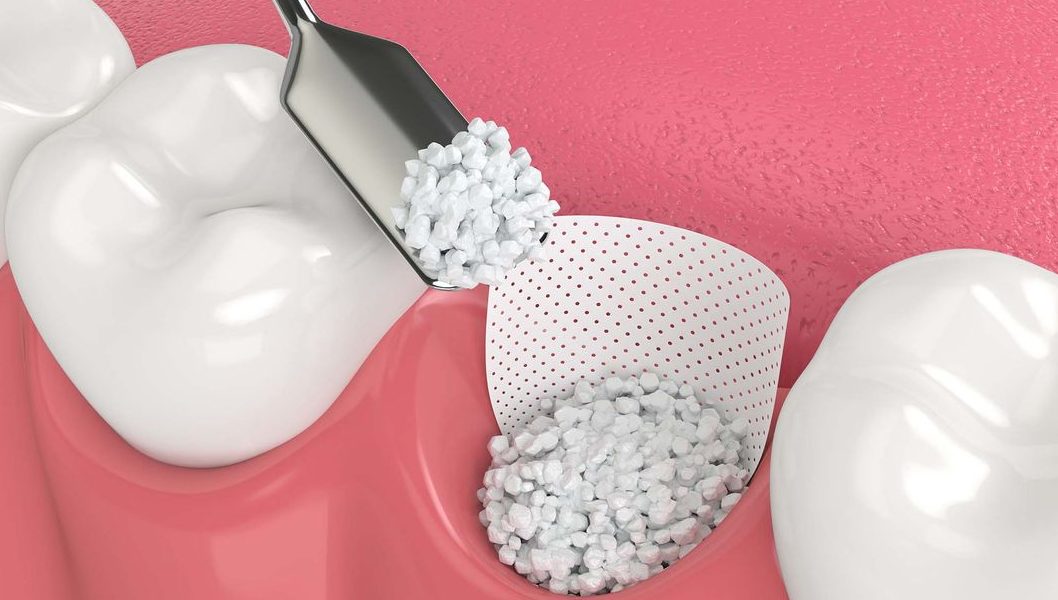
Roughly 40 to 50 percent of patients who need a dental implant actually have insufficient bone to place one safely without help first. Bone grafting is not a hidden upsell. It is a separate treatment step with its own cost, and this guide explains exactly how it adds to your total implant cost in Vietnam and why you cannot get an accurate final number until a CBCT scan confirms whether you need it.
If you have been quoted a price for a single implant and are now wondering why some patients pay more, bone grafting is usually the answer.
What you must know about how grafting affects your implant costs
When a tooth is lost, the surrounding jawbone begins resorbing almost immediately, a process called alveolar ridge atrophy. Patients can lose 25 to 30 percent of bone width at the site within the first year, and up to 50 percent within three years. An implant needs a minimum amount of bone width and height to achieve primary stability, the mechanical grip that allows osseointegration to happen successfully. Without it, placing an implant directly carries a significantly higher failure risk.
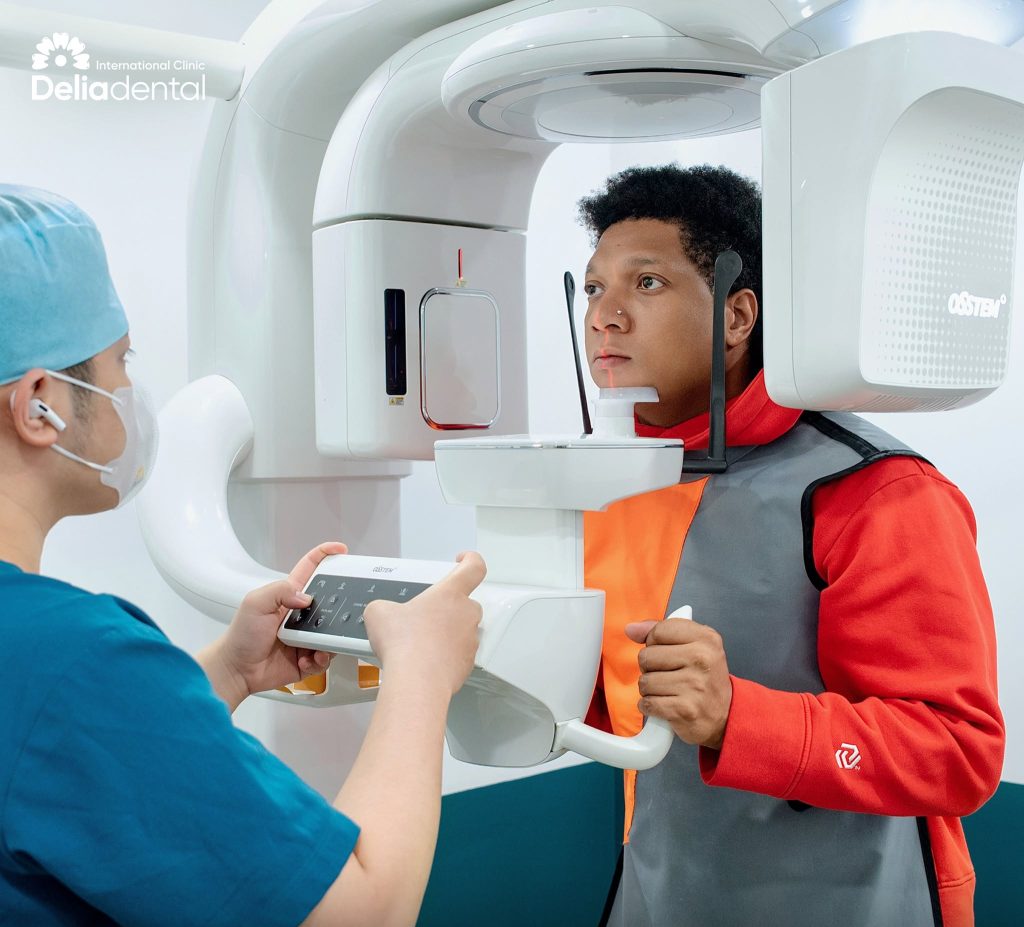
This is why a CBCT 3D scan, not a flat photo or panoramic X-ray, is the only reliable way to know in advance whether your case needs grafting. A scan taken on arrival at the clinic measures bone width, height, and density with sub-millimetre accuracy, which is also why an initial remote quote based on photos alone cannot be treated as final.
Horizontal vs vertical bone deficiency
A narrow ridge, generally under 6 to 7mm in width, needs horizontal augmentation, usually through guided bone regeneration. Insufficient vertical height, under roughly 8 to 10mm, is a more demanding problem and typically requires a block graft or staged vertical augmentation. Horizontal deficiency is far more common and is usually the easier of the two to correct.
When the sinus is the limiting factor
In the upper jaw, the maxillary sinus often sits close enough to the ridge that there is not enough bone height for an implant in the molar region. Roughly 35 to 45 percent of patients needing implants in the upper back teeth require a sinus lift, a procedure that raises the sinus membrane and packs the resulting space with graft material to create usable bone height.
What bone grafting and sinus lift actually add to your case
Bone grafting and sinus lifts are priced separately from the implant itself. At Delia International Dental Clinic, both procedures sit well below typical Western pricing, generally in the range of 65 to 80 percent less than equivalent treatment in Australia, the US, or the UK, using the same categories of graft material used internationally.
Bone graft pricing by type
Graft material falls into four categories. Autograft uses the patient’s own bone, harvested from a nearby site, and is the gold standard for larger defects because it contains living bone cells. Allograft is processed donor bone from a certified tissue bank, used for socket preservation and moderate defects without requiring a second surgical site. Xenograft, most commonly bovine-derived, resorbs very slowly and is the standard choice for sinus lifts where long-term volume stability matters most. Alloplastic graft is a synthetic substitute, useful for smaller defects or combined with other materials to extend volume. Which material is used depends on the size and location of the defect, not on price alone, and the clinical team will specify this in your treatment plan once a CBCT confirms what you actually need.
Sinus lift: crestal vs lateral window
A crestal sinus lift is the less invasive option, performed through the implant site itself, and is typically combined with implant placement in the same visit when the residual bone height allows it. A lateral window sinus lift is used when there is less residual bone to work with and a larger volume gain is needed. It is more involved, usually requires its own healing period before implant placement, and costs more than the crestal approach. Both are well-established techniques with success rates in the mid-90s to high-90s percent range in published literature.
How grafting changes your total implant cost and timeline
This is the part most patients researching implant pricing in Vietnam do not account for, because the answer genuinely depends on the individual case.
Simultaneous protocol: lower added cost, similar timeline
When a patient has only a minor deficiency, a crestal sinus lift or a small graft can often be placed at the same time as the implant itself. This keeps the case to the standard two-visit implant protocol: surgery and graft placement on Visit 1, final crown on Visit 2 after healing. The added cost in this scenario is the smallest, since no extra trip or extended healing period is required.
Staged protocol: full added cost and an extra visit
When the deficiency is larger, a lateral window sinus lift or a substantial graft needs to heal on its own, typically 4 to 9 months, before the implant itself can be placed. This adds a third visit to Vietnam and pushes the total timeline out by several months. The cost impact is also larger, since the graft procedure is billed as its own treatment, in addition to the implant and crown.
To put this in concrete terms: a single Osstem implant with no grafting required runs from $700 at Delia’s standard promotional pricing. The same case requiring a lateral window sinus lift adds a separate procedure fee plus an extra trip’s worth of accommodation and flights, but the resulting total still typically lands well below the cost of the same combined treatment in a Western country, even after the additional visit is factored in.
Vietnam vs Western pricing for bone grafting specifically
Independent of the implant itself, bone grafting and sinus lift procedures in Vietnam run consistently lower than equivalent treatment in Australia, the United States, or the United Kingdom, typically in the range of 65 to 80 percent below Western pricing for the same graft material and technique. The gap is largest for sinus lift procedures, where Western pricing tends to run several times higher than the equivalent procedure in Vietnam, reflecting differences in clinic overhead and labour cost rather than any difference in the graft material itself, which is sourced from the same international suppliers used by Western clinics.
Does grafted bone reduce implant success?
No, not meaningfully. Published 10-year survival data shows implants placed in properly grafted bone perform close to implants placed in native bone, generally in the 94 to 97 percent range for both. The factor that actually moves the needle on implant failure risk is smoking, which roughly doubles or triples graft failure risk regardless of which country the procedure happens in. The extra time and cost that grafting adds is not a compromise on the eventual outcome. It is what makes the eventual outcome possible at all in a case that would otherwise have an unacceptably high implant failure risk.
Who needs bone grafting?
This is genuinely impossible to determine from a photo or a description of how long ago a tooth was lost. Patients who have worn dentures for several years, lost teeth more than two or three years ago, or have a history of gum disease are more likely to need grafting, but the only way to know for certain is the CBCT scan taken at the start of Visit 1. This is why any initial treatment plan sent before you travel should be described as a working estimate, with final pricing confirmed once bone volume is measured directly. A clinic that quotes a single fixed implant price without flagging this possibility either has not seen your bone structure or is leaving out a step you will discover once you arrive.

How Delia Dental Clinic handles bone grafting cases
Every implant case at Delia International Dental Clinic begins with a CBCT 3D scan before any surgical plan is finalised, which is what allows the clinical team to confirm whether grafting is needed and recommend the right technique if it is. Graft materials used follow internationally recognised standards for biocompatibility and clinical documentation, matched to the size and location of the defect rather than defaulting to the cheapest option. Patients are walked through whether their case fits the simultaneous protocol or the staged protocol before booking flights, so the number of trips required is known in advance rather than discovered mid-treatment.
Send your current X-rays or OPG scan via WhatsApp and you will receive a written treatment plan with fixed USD pricing within 48 hours, including a note on whether bone grafting is likely based on what is visible, with final confirmation at your CBCT scan.
Book a free online consultation here.
Final thoughts
Bone grafting is not a hidden cost sprung on patients after they arrive. It is a predictable part of total implant cost for the roughly half of patients who need it, priced separately, and confirmed precisely through a CBCT scan rather than guessed at from a photo. Skipping it to save money upfront when your bone genuinely does not support an implant is the more expensive choice in the long run, since a failed implant means starting over. For most patients comparing implant cost in Vietnam against the same treatment at home, even a case requiring grafting and an extra visit still comes in well below Western pricing for the equivalent combined procedure.


