For many Australians, the cost of full-arch dental implants at home puts the procedure out of reach. An All-on-4 restoration at a private Australian clinic typically costs between AUD 35,000 and AUD 55,000 per arch, and neither Medicare nor most private health funds covers the implant component. That gap has pushed a growing number of patients to look at Vietnam, where the same procedure is available at a fraction of the price.
This guide explains how All-on-4 actually works, who it suits, what the procedure looks like for an international patient, and how costs in Vietnam compare to what you would pay back home.
Quick Answer
All-on-4 uses four implants per arch to support a fixed bridge, and in Vietnam the treatment normally runs over two trips with a healing period of about 3 to 6 months in between. Package prices vary mainly by implant brand and final bridge type, and sinus lift, bone grafting and sedation are billed separately. Suitability is confirmed only after a 3D CBCT scan at the clinic, not from photos or X-rays alone.
What All-on-4 Is And How It Works?
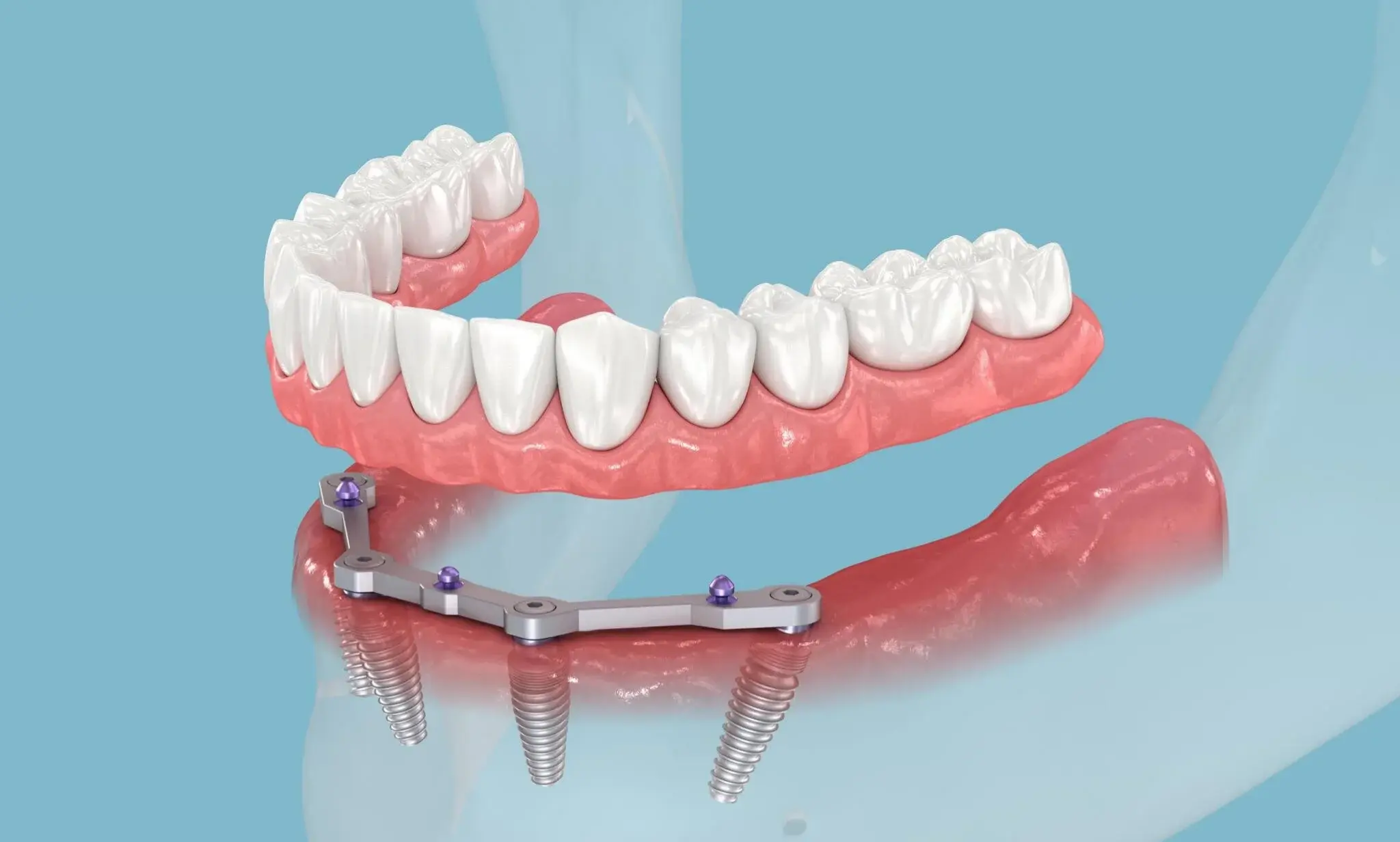
All-on-4 is a full-arch restoration technique that uses just four implants to support a complete set of fixed teeth. The name comes from the number of implants used: two placed straight at the front of the arch, and two angled at 30 to 45 degrees toward the back.
The angled placement is what makes the design efficient. By tilting the rear implants, the surgeon can anchor them in denser bone further forward in the jaw, away from the areas where bone loss tends to be greatest. Depending on the case, this may allow some patients with bone loss to avoid grafting first, which can reduce cost and treatment time, although the CBCT scan decides whether that applies to you.
The result is a fixed bridge, commonly covering around 10 to 12 teeth, held in place on the implants. Unlike a removable denture, the patient does not take it out. After surgery an immediate temporary bridge is fitted so you leave with fixed teeth, and the final bridge follows once the implants have integrated with the bone. The temporary bridge protects the healing implants and is not built for full chewing strength, so a soft diet is part of the early plan.
Who All-on-4 Is Designed For
All-on-4 suits patients who have lost most or all of their teeth in one or both arches, or who have multiple failing teeth that need to be removed. It is also a common alternative for people managing with removable dentures who want a fixed, stable option.
The technique was designed with some degree of bone loss in mind, which is common when teeth have been missing for a while. Mobile teeth with bone loss around them typically need extraction, and gum disease has to be treated before implants are placed. A patient who lost teeth many years ago may still be a candidate, but grafting becomes more likely and the extent is decided case by case.
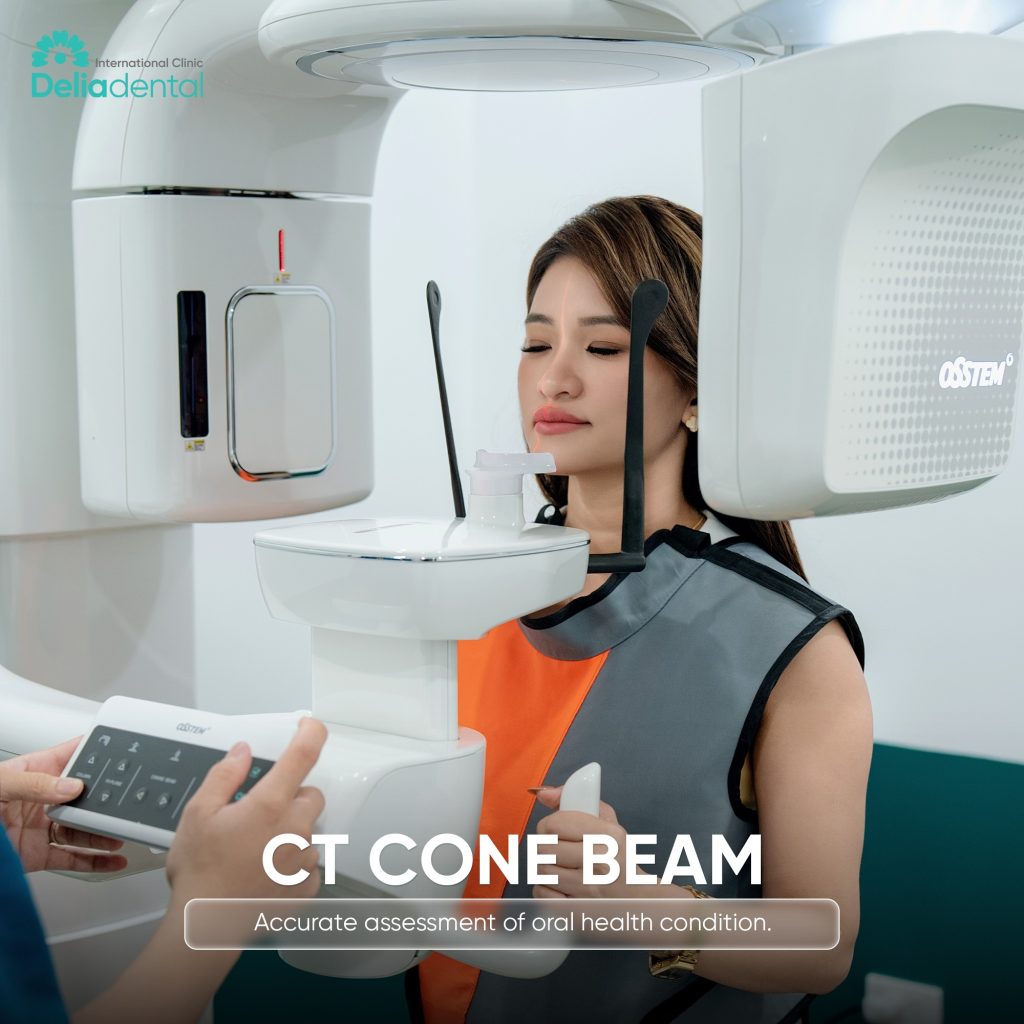
Whether All-on-4 is right for you depends on a 3D cone beam CT scan, not a general assessment. The scan maps bone density and volume across the arch and shows the surgeon where implants can be placed safely and whether any preparatory work is needed. A clinic that recommends a specific protocol before reviewing a scan has not yet assessed your case.
The All-on-4 Procedure For International Patients
For Australians traveling to Vietnam, treatment usually spans two visits separated by a healing period of about 3 to 6 months. Cases that need bone grafting may need additional healing time and an extra trip.
Before You Fly
The first step happens before you book anything. Send your existing X-rays or OPG panoramic scan to the clinic through WhatsApp or Messenger. The team at Delia Dental Clinic reviews the case, suggests a preliminary treatment direction and provides a written treatment plan with pricing. This lets you see the likely schedule before committing to travel, but the final plan is confirmed only after examination and CBCT at the clinic.
Entry requirements depend on nationality and length of stay and can change, so check Vietnam’s official e-visa portal or your airline before booking.
First Visit: Surgery And Temporary Bridge
The first trip commonly runs around 10 to 14 days. It covers consultation and a 3D CT scan to finalize the plan, extraction of any failing teeth and placement of the implants. All-on-4 uses four implants per arch, and your dentist may recommend five or six (All-on-5 or All-on-6) depending on your bone and bite. Surgery is done under local anesthesia, and sedation is available at an additional cost.
An immediate temporary bridge is fitted after surgery. You leave Vietnam with fixed temporary teeth, and your dentist will give instructions on diet and activity for the healing period.
Healing At Home
Osseointegration, the process of bone fusing to the implant surface, happens over the following months while you are back in Australia. Your dentist advises a soft diet during this time. Your Australian dentist can monitor progress using the treatment records and implant documentation supplied at the end of treatment.
Second Visit: Final Bridge
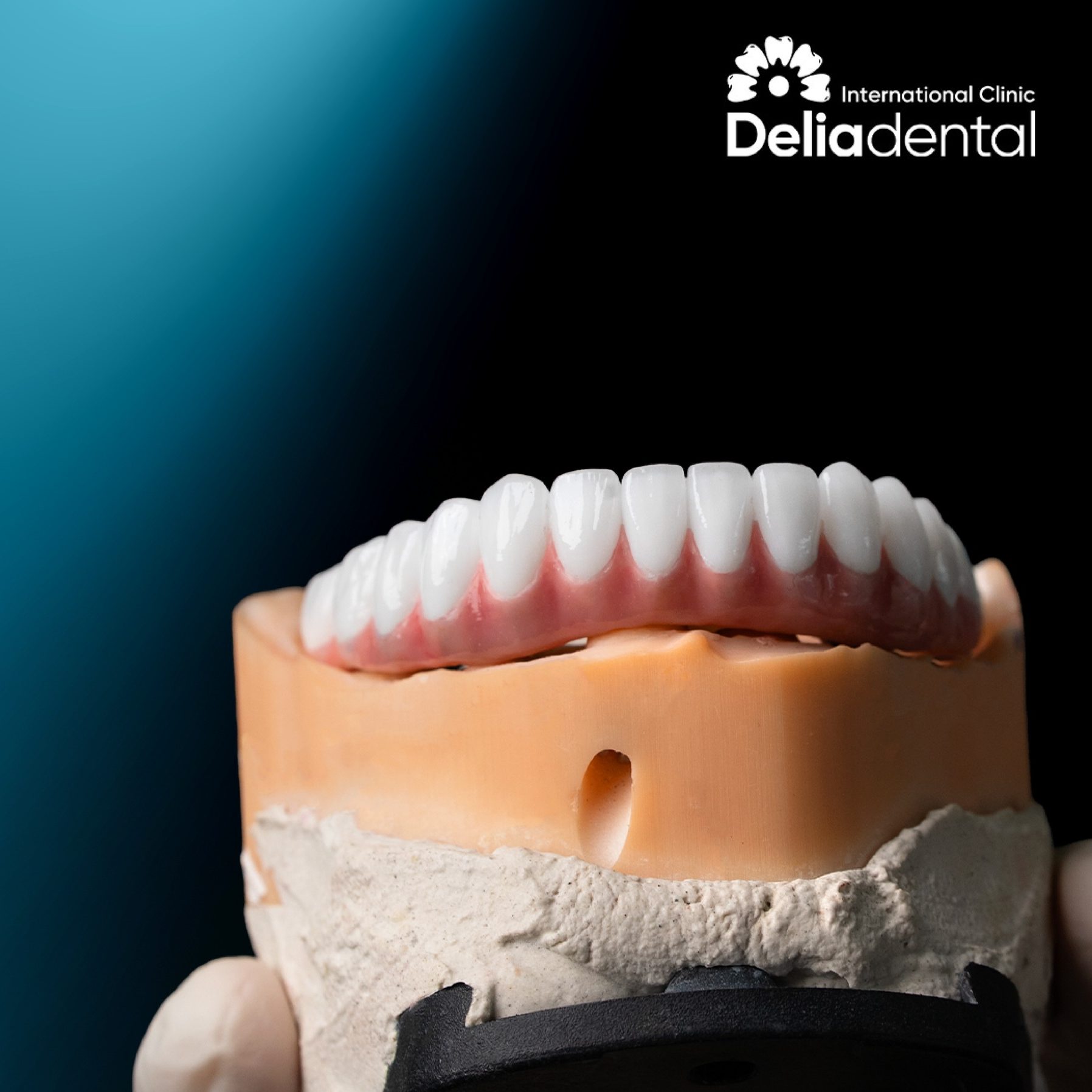
The return trip covers a review of healing and fitting of the final prosthesis. Delia Dental Clinic offers two formats: a full ceramic bridge fixed on a titanium bar, or separate zirconia crowns set on a titanium framework. Written warranty documentation is issued at the end of treatment. Your coordinator confirms the length of this trip, and the date can usually be adjusted if you give advance notice.
All-on-4 Cost In Vietnam
Understanding All-on-4 cost requires looking beyond the price of a single implant. A transparent package should state what it includes, which at Delia Dental Clinic is the implants, the matching abutments, the immediate temporary bridge, the final prosthesis, a CT cone beam scan, a blood test and a specialist consultation.
The table shows starting prices for one arch by implant system. Prices are converted to Australian dollars for comparison. Charges are set in USD, so the AUD figure is an estimate that moves with the exchange rate on the day you convert.
| Implant system | Origin | Published warranty | All-on-4 per arch (AUD est, from) |
|---|---|---|---|
| Osstem | South Korea | 10 years | 6,313 |
| Dentium | USA | 15 years | 6,875 |
| HIOSSEN | USA | 30 years | 7,813 |
| ETK | France | 30 years | 8,125 |
| SIC | Switzerland | 30 years | 9,063 |
| Straumann SLA | Switzerland | Lifetime | 12,188 |
| Straumann SLActive | Switzerland | Lifetime | 13,125 |
Warranty terms apply to the implant component, not to the whole treatment. Sinus lift, bone grafting, sedation and any other additional procedure found during treatment are not included and are billed separately once the case is reviewed.
What Affects The Total Cost
The brand is one variable, and the table shows how much it moves the starting price. The final prosthesis format, the number of implants (four, five or six per arch), any extractions and any grafting or sinus lift also change the total. For patients treating both arches, the same factors apply to each.
Travel adds to the budget, since the two trip structure means two sets of flights and accommodation. Compare a written, itemized Vietnam quote against your Australian quote for the same scope, including extractions, grafting and the final prosthesis, before deciding whether the trip makes sense for your case.
What To Check Before Choosing An All-on-4 Clinic
The outcome of All-on-4 depends on a few points worth confirming before you commit:
- The exact implant brand and model planned for your case
- Whether a 3D CT scan is included in the assessment or charged as a separate add on
- Written warranty documentation that separates the implant, abutment, bridge and exclusions
- Clear English communication through consultation, treatment and aftercare
A reputable clinic names the implant system and provides written documentation with the implant details at the end of treatment, because your Australian dentist will need it for future maintenance. You can also ask to see the unopened implant box and check its codes on the manufacturer’s website. For a procedure that depends on precise bone mapping, the CBCT scan is not optional.
How Delia Dental Clinic Plans All-on-4 Cases For Australian Patients
Delia Dental Clinic treats full arch implant cases in Ho Chi Minh City and Hanoi, with scheduling built around international patient travel windows. The process starts with a remote consultation, where you send scans or photos and receive a written treatment plan and cost estimate before flights are booked.
On arrival, a 3D cone beam CT scan is taken before any surgical plan is confirmed, and the implant system is chosen from the scan findings and your clinical situation. The English speaking team handles airport pickup, hotel coordination near the clinic, appointment scheduling and remote follow up through WhatsApp after you return home. Your treatment records and implant documentation go with you, so your Australian dentist has what is needed to monitor healing.osen from the scan findings and your clinical situation. The English speaking team handles airport pickup, hotel coordination near the clinic, appointment scheduling and remote follow up through WhatsApp after you return home. Your treatment records and implant documentation go with you, so your Australian dentist has what is needed to monitor healing.
book a free online consultation here.
Frequently Asked Questions
Does All-on-4 Always Avoid Bone Grafting?
No. The angled rear implants are designed to use denser bone further forward, which may let some patients with bone loss skip grafting. Whether that applies depends on the CBCT scan, since bone volume and density vary along the arch. A patient who lost teeth many years ago may still be a candidate, but grafting becomes more likely and the extent is decided case by case. Sinus lift and bone grafting are not included in the package price and are billed separately when a case needs them. Cases that need grafting may also need extra healing time, which can add a third trip to the usual two. Ask for a preliminary view on grafting during the remote consultation, and expect it to be confirmed only after scanning at the clinic.
What Is The Difference Between The Two Final Bridge Options?
Delia Dental Clinic offers two final prosthesis formats at slightly different prices. The first is a full ceramic bridge fixed on a titanium bar, which works as one connected unit. The second uses separate zirconia crowns set on a titanium framework, so the teeth are individual units rather than a single fused bridge. Which suits you depends on your bite, the space available, the look you want and your dentist’s assessment. Ask which format a quoted figure refers to, since the two are priced differently. It is also worth asking how each option would be maintained or repaired over time, because that depends on the design and the case.
What Should I Send Before Booking Flights?
Send whatever you already have, since gaps can be worked around but a missing file set cannot. The most useful items are a recent OPG panoramic X-ray or other X-rays, any existing CBCT or DICOM files, clear photos of your teeth and smile, and your current Australian quote. Add a short medical history with your medication list, because conditions such as uncontrolled diabetes, or smoking, may affect planning. Include your proposed travel dates so the coordinator can judge whether the schedule is realistic. A 2D panoramic image supports only a preliminary plan, since bone density and volume are measured by CBCT at the clinic. The reply you receive is a direction and an estimate, and the final plan is confirmed after examination.
What Happens If My Second Trip Dates Need To Change?
The second trip date can usually be adjusted if you tell the coordinator in advance. The trip happens after osseointegration, which commonly takes 3 to 6 months, so a modest delay to fit work or flights is often workable. Changes are easier to arrange when they are raised early, because appointment availability and your healing both matter. Your dentist may still want to review progress first, and a case with grafting may need longer healing than a standard one. Avoid booking flights you cannot change until the coordinator has confirmed the window. If the temporary bridge gives you any problem while you wait, contact the team and see a local dentist for anything urgent.
Does A Lifetime Warranty Mean The Whole Bridge Is Covered For Life?
No. Published warranty terms apply to the component they name, and for the implant systems in the table that is the implant. The abutment, the crown or bridge, biological complications and maintenance conditions are separate items, so a long figure on one component does not extend to the rest. Ask for written documentation that lists each component, its term, what is excluded and what upkeep is required. Maintenance conditions may apply, so confirm the exact wording. Keep the paperwork with your treatment records for your local dentist.
Can I Still Have All-on-4 If I Have Gum Disease Or Loose Teeth?
Often yes, but gum disease usually has to be treated first. Periodontal disease needs to be brought under control before implants are placed, because infection around the gums can affect healing. Loose teeth with bone loss around them typically need extraction, which is where All-on-4 is commonly considered, since it replaces the arch after the failing teeth are removed. The extent of bone loss decides whether grafting is also needed. Your medical history, including smoking, is part of the same assessment. Only the clinical examination and CBCT can confirm whether you are suitable and in what order treatment should happen.
Planning The Next Steps After Comparing All-on-4 Options
Once you understand the procedure and cost, these articles cover the safety checks, city choice and recovery questions that usually come next.
- What Can You Eat with Temporary Teeth: All-on-4 or All-on-6?
- How to Clean an All-on-4 or All-on-6 Bridge Overseas
- Speech Changes After All-on-4 or All-on-6: What’s Normal
- All-on-4 vs All-on-6 Dental Implants in Vietnam: Which Is Right for You?
Final Thoughts
The right All-on-4 clinic for an Australian patient names its implant brand, takes a 3D scan before confirming a plan and hands over written warranty documentation. Those three checks matter more to the outcome than the country of treatment. Send your OPG or recent X-rays, any existing CBCT files and your Australian quote via WhatsApp or Messenger so Delia Dental Clinic can suggest a preliminary direction and outline the two trip schedule.


