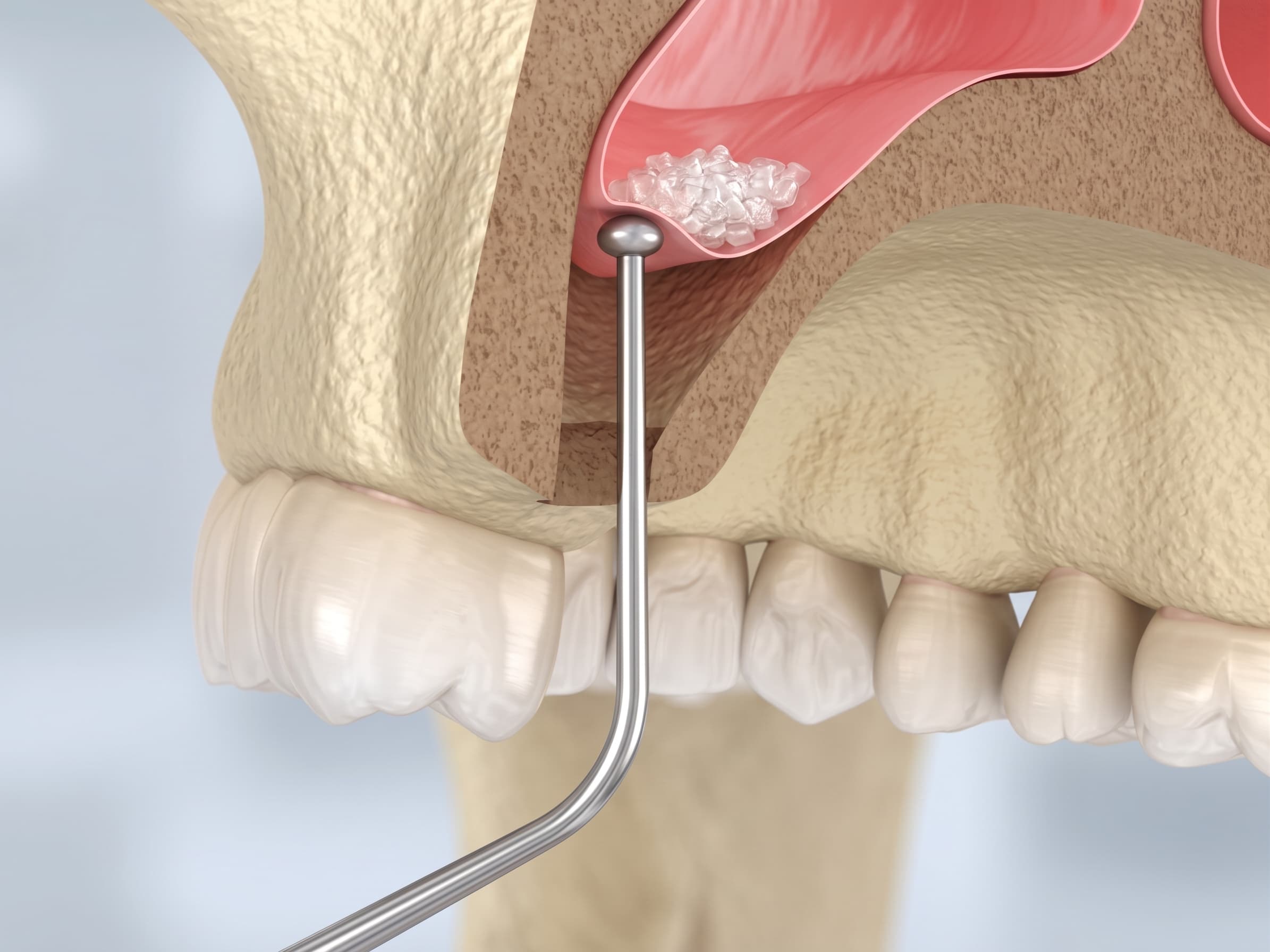
A sinus lift is not a default step for every upper jaw implant. It becomes necessary only when there is not enough bone height beneath the maxillary sinus to hold an implant securely, usually in the molar or premolar region. Whether a specific case needs one cannot be judged from a photo, a panoramic X ray, or how long ago a tooth was lost. It comes down to a measurement taken from a CBCT scan.
This distinction matters because many patients researching upper jaw implants assume grafting is automatic, or assume the opposite, that their case will be simple because they feel fine and have no pain. Neither assumption is reliable. Some patients with teeth missing for decades still have adequate bone. Others who lost a molar just a year ago already have a sinus sitting too close to the ridge for an implant to go in directly.
This article explains why the upper back jaw loses bone height in the first place, what actually decides whether a sinus lift is required, and what recovery from the procedure genuinely involves day by day, since that timeline affects how a trip to Vietnam gets planned.
Quick Answer
A sinus lift is needed when there is not enough bone height beneath the maxillary sinus, usually in the upper molar or premolar area, to support an implant safely. This can only be confirmed with a CBCT scan. Recovery from the procedure itself commonly takes several months before an implant can be placed.
Why the Upper Back Jaw Runs Out of Bone Height
Two things happen at the same time once an upper back tooth is lost. The jawbone around the empty socket begins to resorb, a normal biological response once there is no tooth root stimulating it. At the same time, the maxillary sinus, an air filled cavity that sits directly above the roots of the upper molars and premolars, tends to expand downward into the space the tooth root used to occupy. This second process is called sinus pneumatization.
The result is that the layer of usable bone between the top of the ridge and the floor of the sinus gets thinner over time. In some patients this happens quickly. In others the sinus barely moves and there is still plenty of bone years later. Genetics, how the tooth was lost, and prior gum disease all play a role, which is exactly why this cannot be predicted from general rules of thumb about time since extraction.
An implant needs a minimum amount of bone height to achieve primary stability, the mechanical grip that allows the bone to fuse around it during healing. When the sinus has moved down far enough that this minimum is not there, placing an implant directly carries a meaningfully higher risk of failure.
What Decides If You Need a Sinus Lift
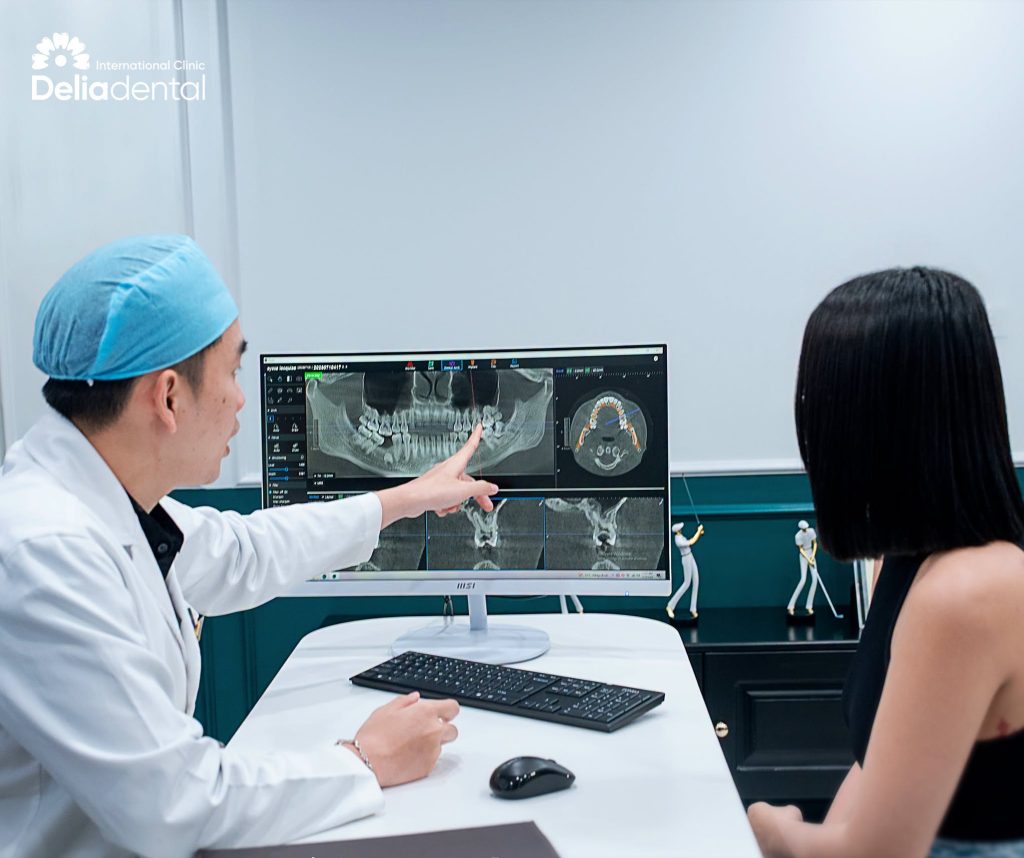
The only reliable way to know is a CBCT scan, a three dimensional X ray that measures bone height, width, and density at the exact planned implant site. A flat panoramic X ray can suggest that the sinus is close, but it does not give the precision needed to plan surgery, and it commonly overestimates or underestimates the actual gap.
As a general guide, when the remaining bone height beneath the sinus falls below roughly 8 to 10 millimetres, a sinus lift is typically recommended before or alongside implant placement. Above that range, an implant can often be placed directly, sometimes with a shorter implant chosen specifically to avoid the sinus rather than lifting it. This threshold is a clinical guideline, not a fixed rule, since bone density and the angle of the sinus floor also factor into the decision.
This is also the point where it is worth separating sinus lift from bone grafting in general. A sinus lift addresses vertical height specifically in the sinus region. A narrow ridge elsewhere in the jaw is a different problem, usually corrected with a different technique, and priced differently. If cost and graft type are the main question, that is covered in detail in the bone grafting cost guide
Crestal or Lateral Window: What Decides Which Type
There are two established approaches, and the choice depends on how much of a gap needs to be closed. A crestal sinus lift is done through the implant site itself and is the less invasive option. It is generally suitable when the remaining bone height is only modestly short of what is needed, and it can often be combined with implant placement in the same procedure.
A lateral window sinus lift involves a different surgical access point and is used when the deficiency is larger. It allows more bone volume to be added but is more involved, and the graft typically needs to heal fully before an implant goes in, rather than being placed at the same time. Neither approach is inherently better. Which one applies to a specific case is a decision made after the CBCT, not before it.
What Recovery Actually Involves
Most of what gets asked about sinus lift online is really a question about recovery, since this is the part patients cannot picture in advance. Below is a general pattern based on the typical clinical course. Individual healing varies, and swelling or discomfort outside what feels manageable should always be checked by a dentist rather than assumed to be normal.
Day by Day: What Recovery Feels Like
In the first day or two, mild to moderate swelling on the treated side of the face is common, along with some bruising in more involved cases. Nasal congestion or a sensation of pressure similar to a mild sinus cold is normal in this window, since the sinus membrane itself was lifted during the procedure. Bleeding is usually light and settles within the first day.
Through the first one to two weeks, swelling steadily reduces and any bruising fades. This is also the period where nasal precautions matter most. Blowing the nose forcefully, sneezing with the mouth closed, or anything that creates strong pressure inside the sinus should be avoided, since it can dislodge the graft material before it has had time to stabilise. Sneezing with the mouth open, and gentle nose care if needed, is the safer approach during this stage.
By weeks three to eight, most day to day symptoms have resolved and normal activity, including flying, is generally possible, though this should be confirmed with the clinic rather than assumed on a fixed date. What is still happening beneath the surface is early bone formation within the grafted space, which is not something the patient feels.
The graft continues maturing from around month three through month six to nine, depending on the size of the graft and the technique used. This is the period the implant is often waiting on if the case required a staged approach rather than same visit placement. There is typically nothing to feel during this stage. It is simply the biological time the graft needs before it can reliably support an implant.
Same Visit or a Separate Trip for the Implant
For a smaller crestal lift, many cases proceed with implant placement in the same visit, keeping the trip to the standard implant protocol of one visit for surgery and a second visit later for the final crown. For a lateral window lift addressing a larger deficiency, the graft usually needs to heal on its own first, which adds a third visit to the trip once the graft has matured enough to support an implant. Knowing in advance which category a case falls into is one of the main reasons a CBCT is done before flights are booked rather than after arrival.
Signs That Need Prompt Attention
A sinus lift involves the sinus cavity directly, so the warning signs to watch for are somewhat different from a routine tooth extraction. Persistent nosebleeds beyond the first day, fluid coming through the nose when drinking, a fever, or pain and swelling that gets worse rather than better after the first week are signs that should be checked promptly rather than waited out. These point toward possible sinus membrane perforation or infection, both of which are manageable when caught early but should not be self diagnosed from symptoms alone.
How Delia Dental Clinic Confirms Sinus Lift Candidacy Before You Travel
Delia Dental Clinic, with branches in Hanoi and Ho Chi Minh City, confirms sinus lift candidacy through a CBCT scan taken at the start of the first visit, before any surgical plan is finalised. This is the same standard used for every implant case that involves the upper back jaw, not an extra step reserved for complex cases.
Photos or a panoramic X ray sent before travel can give the clinical team a preliminary sense of whether a sinus lift is a realistic possibility, which helps set expectations for the trip. This preliminary read is not a substitute for the CBCT, and the final decision on whether a sinus lift is needed, and which type, is only confirmed once bone height is measured directly. Patients are told before booking flights whether their case looks likely to need the simultaneous protocol or the staged protocol, so the expected number of visits is known in advance.
Frequently Asked Questions
Can a sinus lift be predicted from a photo of my teeth or gums?
No. A photo shows the visible gum and tooth area, not the bone height beneath the sinus, which sits well above what is visible in the mouth. Only a CBCT scan measures this accurately.
Is sinus lift recovery more painful than a tooth extraction?
Most patients describe it as somewhat more involved than a routine extraction, mainly because of the sinus pressure and congestion in the first week, rather than severe pain. Discomfort is generally managed with standard pain relief and settles within the first one to two weeks.
How common is sinus lift failure?
Published outcomes for sinus lift procedures are generally strong, with graft success rates in the mid to high 90 percent range in clinical literature. Smoking is one of the clearest factors that increases the risk of complications, regardless of where the procedure is performed.
Can I avoid a sinus lift by choosing a shorter implant instead?
In some cases, yes. When the bone height shortfall is small, a shorter implant designed to sit clear of the sinus can be an alternative to lifting it. Whether this is a safe option depends on bone density and the angle of the sinus floor, which is assessed at the same time as sinus lift candidacy.
Does a sinus lift cause long term sinus problems?
Not typically when performed correctly and healing goes as expected. Some patients experience a self limited period of adjustment as the sinus adapts, but chronic sinus issues from a properly performed lift are uncommon.
If I need a lateral window lift, does that mean two separate trips just for the graft?
It usually means the graft is placed on one visit and the implant is placed on a later visit once the graft has matured, which typically adds a visit to the overall treatment compared to a case that does not need grafting at all.
Final Thoughts
Whether a sinus lift is needed comes down to a specific measurement, not general assumptions about age, time since tooth loss, or how the gum looks. Once a CBCT confirms the case, the recovery process follows a fairly predictable pattern, which makes it possible to plan a trip around it with reasonable confidence rather than guessing at timing.
Send your current X rays or a recent panoramic scan to Delia Dental Clinic via WhatsApp or Messenger. The international patient team can give a preliminary read on whether a sinus lift looks likely for your case and outline the probable visit structure, with final confirmation made through a CBCT scan at the clinic in Hanoi or Ho Chi Minh City.


