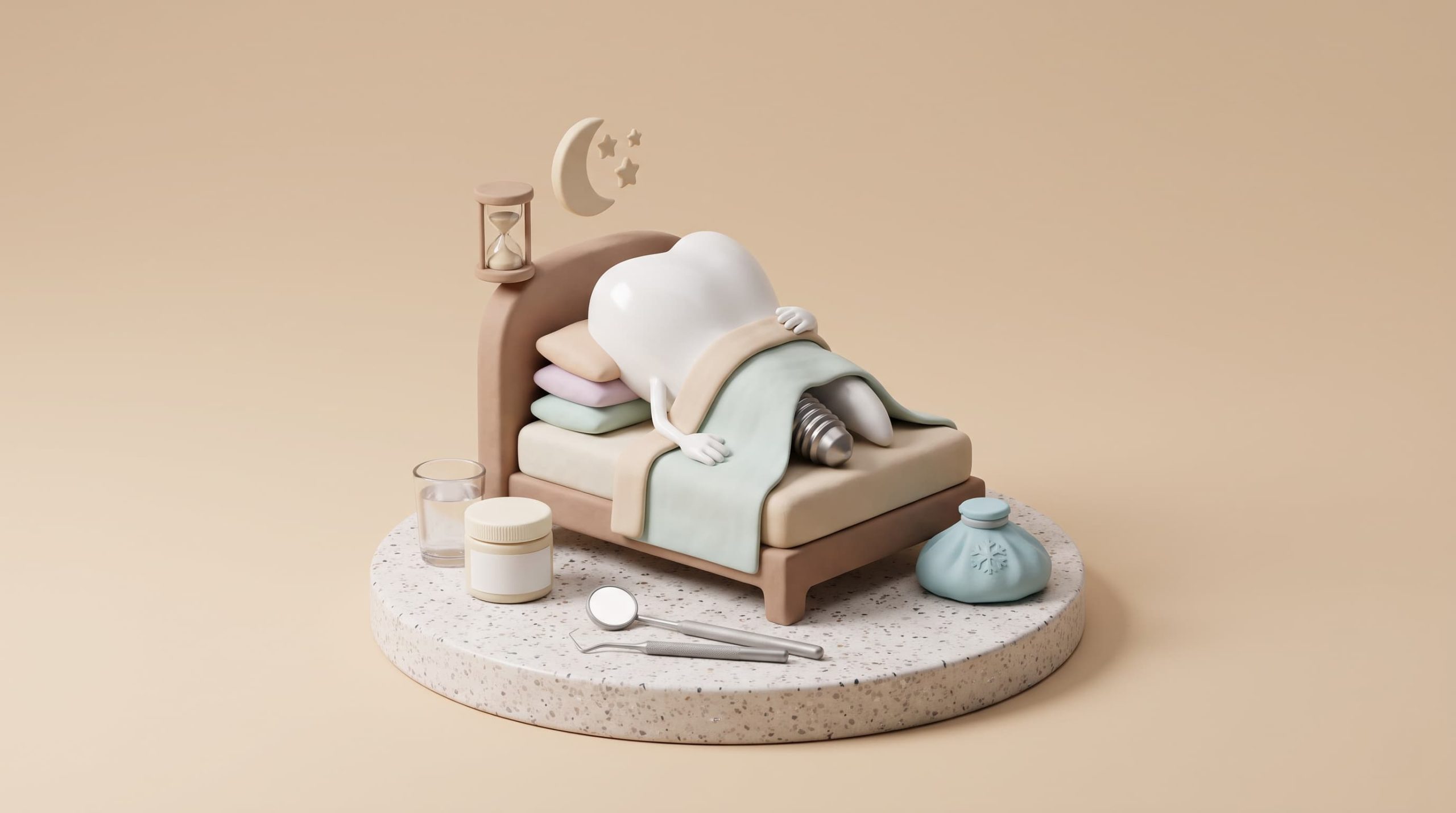
The first night after implant surgery rarely goes the way patients imagine. The numbness has worn off, the cheek feels tight, and every time you roll over you wonder whether you are pressing on something that should be left alone. Most of that worry comes down to one question: how should you lie down?
For most patients, the safest approach to sleeping after dental implant surgery is to lie on your back with your head raised above your heart, using two or three pillows or a wedge, for the first few nights. Elevation helps limit swelling, and a stable position stops your face from pressing into the pillow while you are asleep and unaware of it. If you prefer sleeping on your side, the side opposite the surgery is the usual choice.
This guide covers the positions that work, how to set up your bed or hotel room, what to do when swelling or oozing wakes you up, and the signs that mean you should message the clinic instead of waiting until morning. It applies to single implants, multiple implants and full arch treatment such as All-on-4 or All-on-6, and the differences between them are noted where they matter.
Quick Answer
Sleep on your back with your head raised on two or three pillows or a wedge for the first two to three nights after implant surgery. If you must turn, use the side opposite the surgery and avoid your stomach. Contact your dentist if bleeding or swelling keeps worsening.
Why Sleeping Position Matters After Implant Surgery
Lying flat lets blood and fluid settle in the face, which tends to make swelling more noticeable when you wake up. Raising your head encourages that fluid to drain away from the surgical area. This is the main reason dentists commonly recommend sleeping propped up for the first nights, and it is a simple measure that costs nothing.
Position also protects the surgical site mechanically. During sleep you cannot control how much pressure you put on your jaw, and a cheek pressed hard into a pillow can irritate fresh stitches or disturb the early blood clot around the implant. A clot that stays undisturbed supports normal healing, so the aim of your sleeping setup is to keep your face off the pillow and your head stable.
Swelling after implant surgery commonly builds over the first two to three days before it settles, so the second night can feel worse than the first. That pattern is usual and does not mean something has gone wrong. How long it lasts depends on how many implants were placed and whether bone grafting was involved, and your dentist will give you a more specific expectation after your procedure.

Best Sleeping Positions After Dental Implant Surgery
On your back with your head elevated
This is the position to aim for. Stack two or three pillows so your head and upper back sit at a gentle incline, often described as roughly 30 to 45 degrees, or use a foam wedge if you have one. The aim is a slope rather than a sharp bend at the neck, which can leave you stiff by morning.
Back sleeping keeps both sides of your face free of pressure, which makes it the safest option for full arch cases where implants and a temporary bridge sit on one or both jaws. If you do not normally sleep on your back, expect the first night to feel unnatural and plan for some broken sleep.
On your side, away from the surgery
If you cannot settle on your back, lie on the side opposite the surgical site and keep your head raised. With implants on both sides, you may need to stay on your back, because neither side is free of pressure. A rolled towel or pillow behind your back stops you from drifting onto the treated side in your sleep.
Reclined in an armchair or on a sofa
Many patients find a recliner more comfortable for the first night, especially after multiple implants or a full arch. The slope keeps your head naturally above your heart and makes it harder to roll onto your face. If your hotel room has an armchair, it is a reasonable fallback when a pillow stack does not work for you.
What to avoid
Do not sleep on your stomach or with your face pressed into the pillow. Avoid lying completely flat, and avoid the treated side. If you wake up in one of these positions, simply reposition. A single moment of pressure is unlikely to cause harm.
Setting Up Your Bed for the First Night
A little preparation before you return from the clinic makes the evening easier. You will probably feel tired and slightly foggy, so it helps to have everything ready in advance.
- Two or three firm pillows, or a wedge, arranged before you lie down
- A dark towel over the pillowcase to catch light oozing or saliva tinged with blood
- A cold pack wrapped in cloth, used as your dentist instructs
- Water within reach, since dry mouth is common after surgery
- Your prescribed medication, and the international patient team’s WhatsApp or Messenger chat open on your phone
If you had sedation, follow the clinic’s instructions about having someone with you that night. If you are staying in a hotel during treatment, ask reception for extra pillows when you check in rather than after surgery, and choose a room with a chair or sofa if you can. Planning your meals ahead also helps, and our guide to soft foods after dental implants in Vietnam covers what to eat before you lie down for the night.

Sleeping With Swelling, Oozing and Discomfort
Some swelling, mild bruising and light oozing are normal in the first days. Swelling is often most noticeable on waking, then eases as you spend time upright. A cold pack on the cheek in the first 24 to 48 hours, if your dentist has recommended it, may help during the day. Follow the timing in your own aftercare instructions rather than leaving ice on through the night.
Light pink saliva on the towel is common during the first night. Bleeding that soaks the towel quickly or does not slow with gentle pressure from clean gauze is different, and you should contact the clinic. Avoid rinsing hard, spitting forcefully or poking the area with your tongue if you wake up, since these can disturb the clot.
Discomfort usually settles with the pain relief your dentist prescribed or recommended. Take it at the times they advised, including a dose before bed if that is part of your instructions, so you are not woken by pain at 3 a.m. Do not add extra medication or alcohol without checking first, since your dentist knows what suits your health history.
What Changes With Full Arch and Sinus Cases
Patients having All-on-4 or All-on-6 treatment usually leave the clinic with a fixed temporary bridge, and the same sleeping rules apply with a few extra points. Sleeping on your back with your head raised matters more, because pressure from a pillow or from clenching can stress the bridge while the implants are still integrating with the bone. Our article on temporary and final full arch teeth explains why the temporary stage needs this extra care.
Swelling is often wider after a full arch procedure, and bruising can spread along the jaw and neck by day two or three. This can look dramatic and is a common pattern, though your dentist should still hear about anything that feels out of proportion. Drink water before bed, and expect your mouth to feel dry if you breathe through it while asleep.
Upper jaw implants near the sinus, and sinus lift procedures in particular, usually come with extra instructions such as avoiding nose blowing, and a longer period of sleeping propped up may apply. Follow the instructions from the surgeon who performed the procedure rather than the general advice in this guide.
How Many Nights Should You Sleep Propped Up?
There is no single number that fits everyone. Many dentists suggest keeping your head elevated for the first two to three nights, then returning to your usual position once swelling has clearly peaked and begun to settle. If swelling is still increasing or your face feels tight and hot, stay elevated longer and mention it to your dentist.
A single implant with no grafting usually asks less of you than multiple implants, a sinus lift or a full arch. If you are unsure when to lie flat again, ask at your follow up visit or message the clinic with a photo of your face and a description of how you feel.
When to Contact Your Dentist During the Night
Most nights after surgery are uncomfortable but uneventful. A few signs need prompt attention, and waiting to see whether they improve is the wrong approach.
- Bleeding that continues after 20 to 30 minutes of steady pressure with clean gauze
- Swelling that keeps increasing after the third day, or spreads quickly
- Fever, chills or a bad taste with pus around the site
- Severe pain that does not respond to the prescribed medication
- Difficulty breathing, swallowing or opening your mouth, which needs urgent medical care
For anything severe, an emergency service is the right first call. For less urgent questions, a photo and a short description sent to your treating clinic helps the team judge whether it fits normal healing, though a photo cannot replace an examination.
Sleeping Support From Delia Dental Clinic for International Patients
International patients at Delia Dental Clinic in Hanoi and Ho Chi Minh City are supported from the first consultation through treatment, recovery and the return home. Because the first night after surgery usually happens in a hotel rather than at home, preparation matters, and the team explains what to arrange in your room, how long to expect to stay propped up for your type of treatment and which symptoms to report.
If you have already sent X-rays or a CBCT scan for review, the same conversation can cover your recovery plan, including how many implants are planned and whether a temporary bridge is part of the treatment. Our guide on what an X-ray can confirm before an implant trip explains what the team can and cannot tell you before you travel. Your final plan, including aftercare instructions specific to your procedure, is confirmed after your in person examination.
After surgery, you can message the international patient team on WhatsApp or Messenger with questions or photos at any point during your stay. The team can help you judge whether what you describe fits normal healing and arrange a review while you are still in Vietnam. A remote message does not replace an examination, and anything severe needs urgent care.
Frequently Asked Questions
Can I sleep flat on the first night after implant surgery?
It is better not to. Lying flat allows swelling to build more easily around the surgical area, and you are also more likely to roll onto your face during the night. Keeping your head raised for the first two or three nights is the usual advice, and your dentist may suggest a different length of time depending on how complex your surgery was. If you wake up flat, simply prop yourself up again.
Is it safe to sleep on my side after dental implants?
Yes in most cases, as long as you lie on the side away from the surgery and keep your head elevated. If implants were placed on both sides, sleeping on your back is safer, because neither side is free of pressure. A rolled towel behind your back stops you from drifting onto the treated side. Avoid the treated side for the first few nights, or for as long as your dentist advises.
Should I wear my night guard the first night after surgery?
Only if your dentist has told you to. A guard made before surgery may not fit over fresh stitches or a temporary bridge, and forcing it on can cause damage. A guard is normally made after the final restoration is fitted, when the shape of the teeth is settled. Our guide on night guards after implants or crowns explains who needs one and when it is fitted.
Why does my swelling look worse on the second or third day?
Swelling after implant surgery commonly peaks around the second or third day before it begins to settle, so a worse look on day two is often part of the normal pattern. Bruising can also appear later and spread along the jaw or neck as it moves under the skin. What matters is the overall direction: swelling that has not eased by around day four or five, or that comes with fever or pus, should be checked.
Is it normal to wake up with blood on my pillow?
A small amount of pink or red staining on the towel is common in the first night or two, since saliva mixed with a little blood can seep while you sleep. Heavy bleeding that soaks gauze quickly, or staining that grows rather than fades over the first couple of days, is a reason to contact your clinic. A dark towel over the pillowcase makes it easier to judge how much there is.
Can I sleep on the flight home after implant surgery?
You can usually sleep on a plane once your surgeon has cleared you to fly, but a seat is a poor substitute for an elevated bed. A neck pillow and a reclining seat help, and sleeping upright suits swelling better than lying flat. Bleeding or worsening swelling is also harder to manage in the air than near your clinic. Our article on how soon you can fly after dental implant surgery explains how to plan the departure date.
Getting Through the Rest of Recovery
Once the first nights are behind you, a few more guides cover what comes next in your trip and your healing.
- How to Maintain Dental Implants Placed in Vietnam
- Dental Implant Length of Stay in Vietnam
- Dental Implant Failure Causes in Vietnam
- Exercise and Gym After Dental Implant Surgery
Final Thoughts
The first two or three nights after surgery are part of the treatment, and the setup you arrange before you leave the clinic decides how they go. Expect them to be a little awkward, and treat any change that worries you as a reason to message the team rather than wait.
Planning dental implants in Vietnam and want to know what recovery will look like for your case? Send your recent X-rays or CBCT scan, along with a short description of the treatment you are considering, to Delia Dental Clinic on WhatsApp or Messenger before you book flights. The international patient team can review the information, suggest a preliminary treatment direction and explain the likely recovery and travel timeline for Hanoi or Ho Chi Minh City. The final treatment plan and quote are confirmed after an in person examination.


