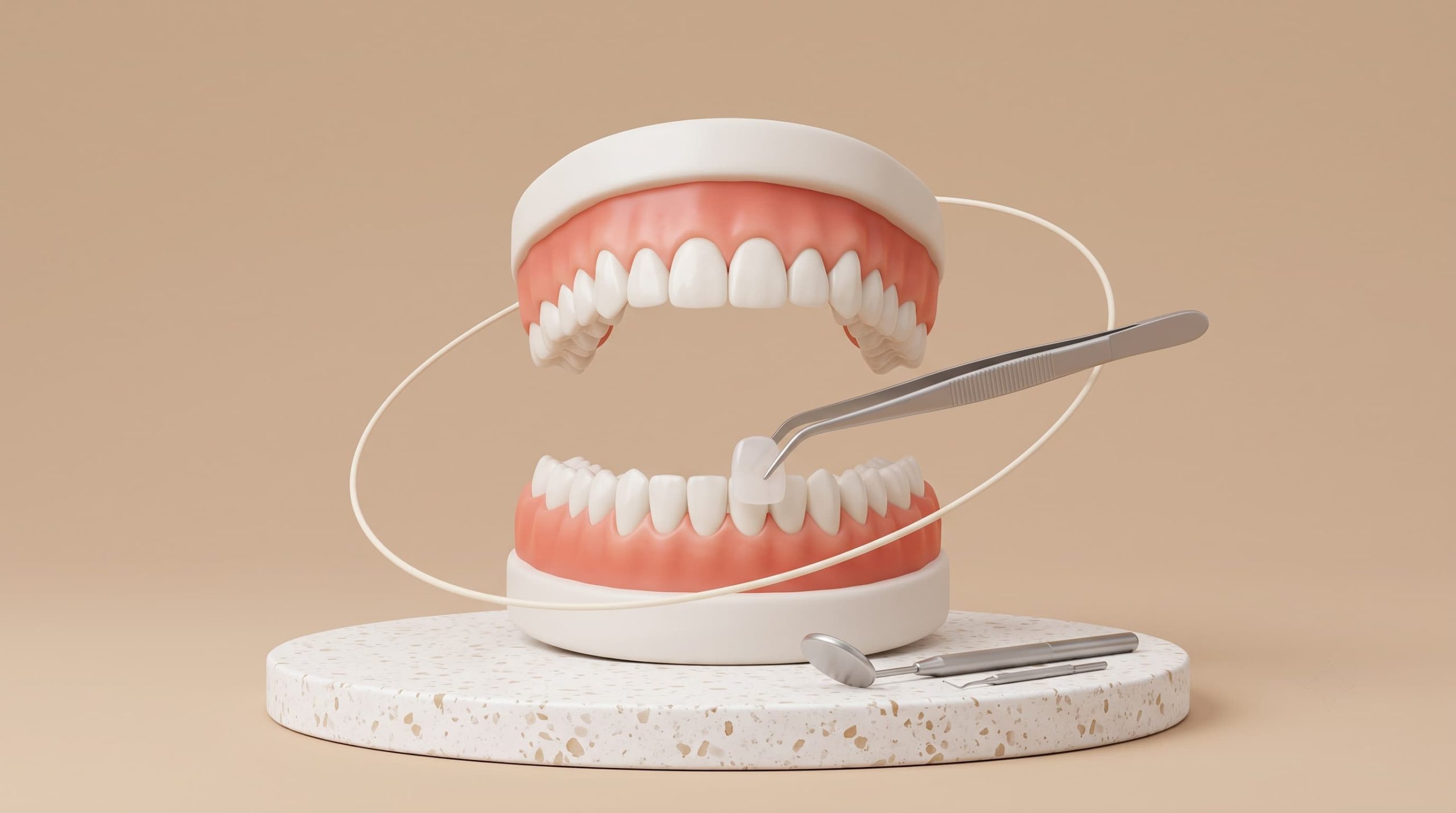
The steps are the same, but the margins are tighter. Veneers on the lower front teeth follow the same sequence as upper veneers: consultation, smile design, light preparation, temporary veneers, try in and bonding. What changes is how much room the dentist has to work with. Lower teeth veneers incisors are the smallest teeth in the mouth, their enamel surface is limited, and they meet the upper teeth in a different way.
Clinical data on lower veneers has also been thinner than for upper ones, and a dentist will often ask whether another option fits the tooth better before recommending porcelain. That does not mean lower veneers fail more. It means the decision rests more heavily on tooth size, bite and what you want the lower teeth to look like next to the upper ones.
This guide explains how lower veneers differ, when they are a reasonable choice, what the bite has to do with it, and what to send a clinic before you travel for treatment in Vietnam.
Quick Answer
Lower teeth veneers follow the same steps as upper veneers, but smaller teeth and a different bite call for more careful planning. One 36 month study of pressed ceramic veneers found comparable survival in both jaws. Many lower cases suit bonding, whitening or alignment better, and an assessment decides which fits.
How Lower Veneers Differ From Upper Veneers
The practical differences come down to size, visibility and contact with the upper teeth. The table summarises them.
| Factor | Upper front teeth | Lower front teeth |
|---|---|---|
| Tooth size | Larger, more surface to work with | Smallest teeth in the mouth, narrow and thin |
| Visibility | Main part of most smiles | Shown less in many smiles, more when speaking or laughing |
| Bite contact | Their back surfaces take the contact from the lower edges | Their cutting edges close against the back of the upper teeth |
| Common goal | Shape, colour, symmetry | Evening out edges, matching the upper shade, fixing wear or chips |
| Common alternatives | Bonding, crowns | Bonding, whitening, clear aligners |
Size matters because a ceramic veneer has a minimum workable thickness, whatever tooth it sits on. On a small, thin lower incisor, that thickness leaves less room before the tooth starts to look wide or bulky. Light preparation is still the usual approach, but the margin for error is smaller.
Visibility is the other reason many people never need lower veneers. In a typical smile the upper front teeth do most of the work, so the lower teeth only come into the plan when they are worn, chipped, discoloured or uneven enough to show.

Do Lower Veneers Work As Well As Upper Veneers?
In a suitable case, they appear to. A retrospective study by Rinke and colleagues in the Journal of Esthetic and Restorative Dentistry, reported by DrBicuspid, followed 130 heat pressed ceramic veneers on the front teeth of 37 patients, all placed by one dentist. Of these, 76 were on upper teeth and the remaining 54 on lower teeth. After 36 months the overall survival rate was 95%, and the authors found survival and success comparable between the two jaws. Veneers with more than half of the preparation area in exposed dentin needed clinical intervention more often.
The study was small, came from a single dentist and ran for 36 months. It also excluded teeth with signs of grinding, so it says little about patients who clench or grind. It is reassurance, not a guarantee. What it does show is that lower veneers are not an inferior option by default, and that tooth condition matters more than which arch a veneer sits on.
What the Bite Has to Do With Lower Veneers
Lower veneers are a bite decision as much as a cosmetic one. The edges of the lower front teeth meet the back surfaces of the upper front teeth when you close and when you slide the jaw. Anything placed on those edges takes that contact every time you chew.
Three bite patterns change the risk:
- An edge to edge bite, where upper and lower front teeth meet end to end.
- A deep overbite, where the lower edges press into the back of the upper teeth.
- Grinding or clenching, which adds heavy repeated load to any ceramic edge.
None of these rules veneers out. They are the reason a dentist checks how the arches meet before planning, and the reason a nightguard may be discussed for people who grind. The night guard guide for implants and crowns covers how guards protect restorations. If your bite is the reason the lower teeth are worn, veneers alone will not fix it, and the plan may need to address the bite first.
When Lower Veneers Make Sense
A lower veneer is usually a good fit when the tooth has enough healthy enamel and the problem is surface appearance or edge wear, not position.
- Chipped or worn edges on otherwise healthy lower front teeth.
- Staining that whitening has not improved.
- A shade mismatch after upper veneers, where natural lower teeth now look darker beside brighter upper ones.
- Small irregularities in shape or length that you notice when you smile or speak.
The shade point is worth planning early. If the upper teeth are being veneered in a brighter shade, the lower teeth will look darker next to them. Some patients whiten the lower teeth to close the gap, and some veneer a few lower teeth so both arches match. The teeth whitening before veneers guide explains why whitening comes before the shade is chosen. The porcelain veneers patient guide also lists matching the lower teeth as a point to settle during design.

When Another Option Fits Better
Several situations push the recommendation away from porcelain on the lower arch.
Crowding or rotation is the most common. Veneers change the look of a tooth, not where it sits, and placing them on crowded or overlapping lower teeth can leave them looking bulky. Mild crowding is often better handled with braces or clear aligners first. Very thin enamel, active decay, gum disease and heavy grinding also weigh against veneers.
For a small chip, composite bonding is often considered because it generally needs less enamel removal and can be done in fewer visits. The trade is durability, since bonding material tends to stain or wear sooner than ceramic. Whitening alone may be enough when colour is the only concern. Each of these is a legitimate answer, and a good consultation should name them instead of defaulting to veneers.
What Lower Veneers Cost in Vietnam
Delia Dental Clinic’s standard international prices are $300 per tooth for an E.max Press veneer and $550 per tooth for a LiSi veneer. These prices include consultation, scan or impression, mock-up, temporary restorations and try in. Treatment found during assessment, such as root canal treatment, core buildup or gum treatment, can affect the final quote.
The lower arch has six front teeth from canine to canine, so a full lower set is a short calculation. These are illustrations, not recommended packages.
| Lower veneers | E.max Press at $300 | LiSi at $550 |
|---|---|---|
| 2 teeth | $600 | $1,100 |
| 4 teeth | $1,200 | $2,200 |
| 6 teeth | $1,800 | $3,300 |
Most people with lower veneers also have upper veneers. For pricing by material across both arches, see the veneers in Vietnam cost guide, and for time, the how many days veneers take in Vietnam article lists upper and lower smile design cases at roughly 10 to 14 days.
How Delia Dental Clinic Reviews Lower Teeth Before Recommending Veneers
At Delia Dental Clinic, the lower teeth are assessed as part of the whole smile, not as an add on. The dentist reviews tooth structure, enamel, gum health, existing fillings, bite and whether you grind, then explains which teeth suit veneers and which may be better treated with bonding, a crown or orthodontics first.
Digital Smile Design and a mock-up let you preview how the lower teeth will look beside the upper ones before anything is prepared, which matters when small teeth can end up too wide or too uniform. Temporary veneers are worn between visits, and a try in comes before final bonding, so shape, length and shade can still be reviewed. Treatment takes place at the Hanoi or Ho Chi Minh City branch.
A remote review can suggest a direction from photos, but it cannot measure bite contact or enamel thickness. Those are confirmed in person, and the final plan and price follow the examination.
Frequently Asked Questions
Can I get veneers on only my lower teeth?
Yes, it is possible, and some patients have a clear lower concern such as a chip or wear. The dentist still checks how the lower teeth meet the upper ones, because lower veneers sit in the path of the bite. If the upper teeth are worn or discoloured, a lower only plan can make the contrast between arches more noticeable.
Are lower veneers more likely to chip?
Not necessarily. In the 36 month study, survival and success were comparable between upper and lower veneers. That study excluded teeth with signs of grinding, so it does not show how lower veneers hold up in heavy grinders. Edge to edge contact, a deep overbite and grinding all raise load on the lower edges, so a bite check before treatment, and a nightguard if you grind, are the usual precautions.
Is bonding better than veneers for lower teeth?
For a single small chip, bonding is often considered first because it generally removes less enamel and needs fewer visits. Porcelain tends to hold its colour and surface longer, so veneers are usually preferred when several teeth are involved or when stain resistance matters. Your dentist can weigh both against the condition of each tooth.
Can veneers fix crooked lower teeth?
They can hide minor irregularities in shape, but they do not move teeth. Crowded or rotated lower teeth that are veneered without realignment can look bulky. Mild crowding is often better corrected with aligners first, and veneers can follow if shape or colour is still a concern.
Will I need to whiten my lower teeth if I get upper veneers?
Possibly. Natural lower teeth can look darker beside new upper veneers, and some patients whiten the lower arch or veneer a few lower teeth to match. Whitening should be settled before the veneer shade is chosen, because veneers do not change colour afterwards.
How many days do upper and lower veneers take in Vietnam?
Cases that include upper and lower smile design are usually planned at around 10 to 14 days. A small case of one to five veneers is generally planned at around 5 to 9 days, depending on the number of teeth and lab timing. In either case, leave a buffer after the final fitting in case the bite or shade needs a small adjustment.
Getting the Rest of the Smile Plan Right
Lower veneers are rarely decided alone, so these guides cover what usually comes next in the plan.
- Veneer Try-In: What Can Still Change Before Cementation
- Replacing Old Veneers in Vietnam
- Can You Combine Veneers and Crowns in One Treatment Plan?
- What to Do If a Crown or Veneer Chips Months After You Return Home
Final Thoughts
Lower veneers are not a lesser version of upper veneers, but they leave less room for error. The tooth is smaller, the bite meets it differently, and the better answer is sometimes bonding, whitening or alignment. A plan that names those options and explains why is a sign the lower teeth were assessed properly.
Send close up photos of your lower front teeth, a smile photo with your lips relaxed, a photo of your bite and any recent X-rays to Delia Dental Clinic via WhatsApp or Messenger before you book flights. The international patient team can review your case, suggest a preliminary direction for the lower teeth and estimate the likely cost and stay. The final plan and quote are confirmed after an in person examination.


