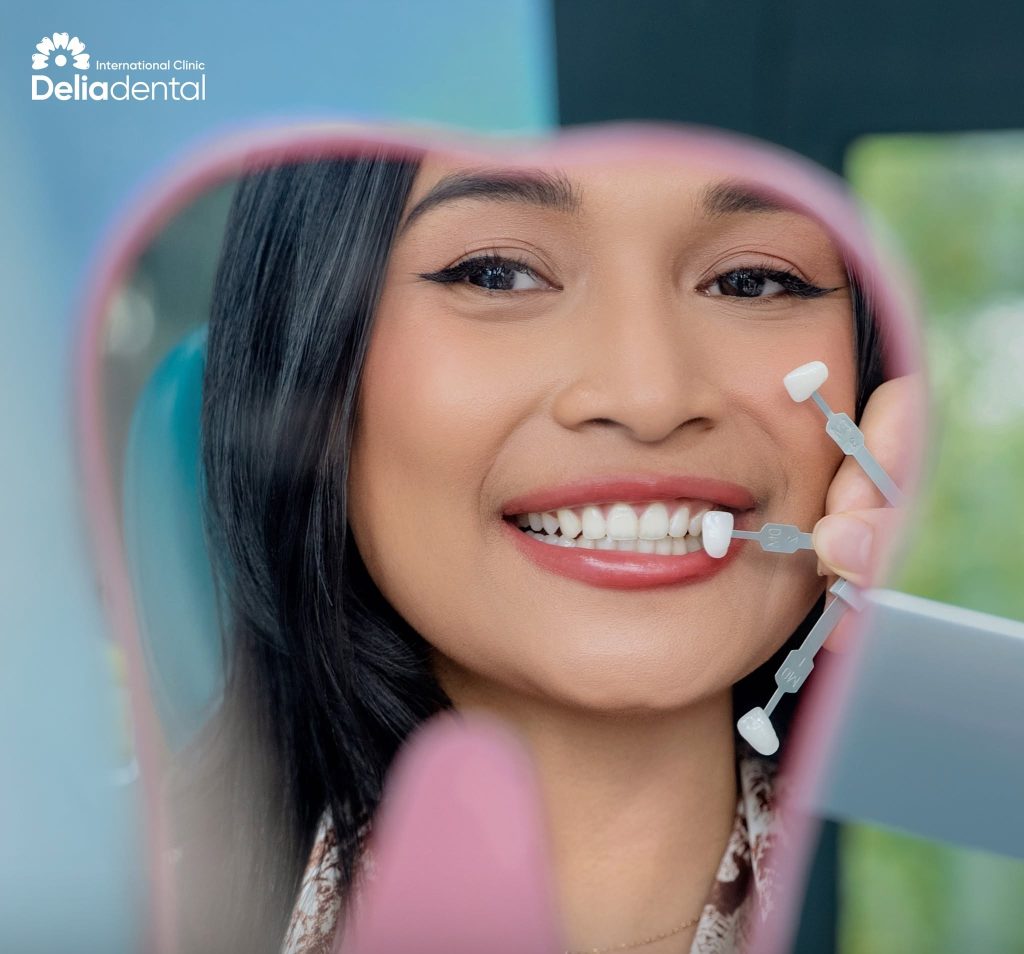
Rean had 16 veneers placed at a different clinic before coming to Delia Dental Clinic. The shape and color looked artificial, and she wanted a smile that matched her natural facial features rather than a uniform, obviously cosmetic result. The clinical team redesigned her smile from scratch, replacing the old veneers with new custom porcelain restorations.
Her situation is a common one. Patients who already have veneers often come back asking the same question: can this be fixed, and how much of it can actually be corrected. The honest answer depends on more than picking a better shade or a more natural shape this time. It depends on what is left underneath the old veneers, since that is what sets the real boundaries for any redesign.
This article explains what an evaluation for replacing old veneers actually checks, what can usually be corrected, and what cannot always be fully undone once the original veneers come off.
Quick Answer
Replacing old veneers can usually correct shape, color and proportion issues, but what happens underneath the veneer, particularly how much natural enamel remains, sets the real limits. Once enamel has been reduced for the original veneers, that structure does not grow back, which is why an evaluation of the remaining tooth, the bite and the gum line comes before any new veneer is designed.
What Made Rean’s Old Veneers Look Unnatural
Rean’s 16 veneers were placed at another clinic before she found Delia Dental Clinic. The shape and color of the restorations looked artificial rather than blending with her natural features. The clinical team at Delia Dental Clinic redesigned the smile using new custom porcelain veneers built to match her facial characteristics.
This is the starting point for most replacement cases: the patient is not unhappy with having veneers, they are unhappy with how these particular veneers turned out. That distinction matters, because it means the goal of a redesign is rarely to remove the idea of veneers altogether. It is to correct what went wrong with the specific execution, which requires understanding what is fixable purely at the design stage and what is limited by the tooth structure left behind.

Why Old Veneers Often Need More Than A Simple Swap
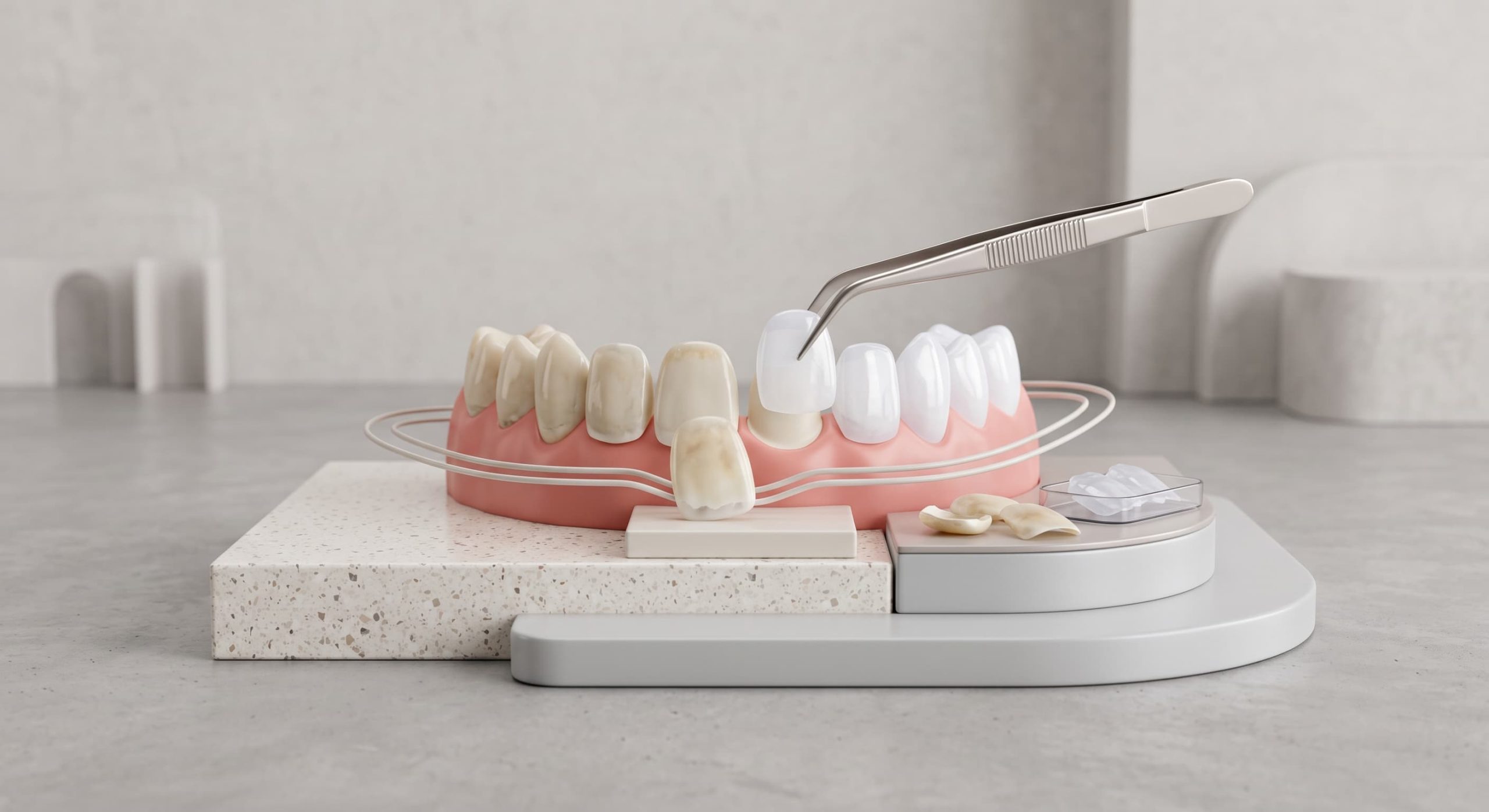
Replacing an old veneer is rarely a matter of removing one shell and bonding on a better looking one. The tooth underneath has already been altered by the first procedure, and that history shapes what options remain.
Veneers are thin, typically around 0.3 to 0.5 millimeters, and are designed to cover the front surface of a tooth for cases involving mild spacing or crowding, light surface wear, chips affecting less than about a third of the crown, or discoloration that has not responded well to whitening. When a case is more severe than this, or when the original preparation removed more enamel than a standard veneer procedure requires, a crown may become the more suitable option at the replacement stage, since a crown addresses a deeper level of the tooth surface than a veneer is designed to cover.
Poor original work can also leave behind specific problems that a new veneer alone will not solve. Restorations that do not fit closely against the gum line can cause ongoing gum inflammation. Overly aggressive tooth preparation can intrude on the biological width around the tooth, leading to sensitivity or, in more significant cases, effects on the pulp. An uneven bite from the original veneers can also persist if it is not corrected before the new restorations are designed. None of these issues are solved by changing the shade or shape of the veneer itself, which is why they need to be identified before any new design work begins.
What Gets Evaluated Before Old Veneers Come Off
| Evaluation | Why it matters |
|---|---|
| Remaining enamel | Enamel removed during the original procedure does not regenerate, which affects the material and thickness that can be used for the new veneer |
| Condition of the existing bonding | Poor bonding can leave the old veneer loose, discolored at the margin, or with visible gaps that need to be addressed before new restorations are placed |
| Gum line | An uneven gum line affects how proportional the new teeth will look and needs to be assessed before the new design is finalized |
| Bite | If the original veneers altered the bite, that needs to be confirmed and stabilized before committing to a new design |
Removing Old Veneers: What The Process Involves And Its Limits
Removing old veneers requires a careful technique aimed at avoiding unnecessary additional loss of enamel, but it cannot undo the structural changes already made during the original procedure. This is why an evaluation of the remaining enamel comes before any promise about what the final result will look like. What can be corrected at the design stage and what remains limited by the tooth underneath are two different questions, and a patient considering a redo should understand both before committing to treatment.
What Can Usually Be Corrected
- Shape and proportion that look unnatural or disproportionate to the rest of the smile
- Color that does not match the natural teeth or appears dull, opaque or artificial
- Margins that are visible or have discolored over time
- Veneers that do not follow the smile line or suit the shape of the face
What Cannot Always Be Fully Corrected
- Enamel lost during the original preparation, since that structure does not return to its original thickness
- Structural damage to the tooth caused by the original bonding, which may mean a crown becomes a more appropriate option than a thin veneer
- A bite that has been misaligned for an extended period, which may require separate correction before new veneers are designed rather than a change in material alone
Delia Dental Clinic’s Approach To Redesigning A Failed Veneer Case
Delia Dental Clinic can review photos of a patient’s current veneers along with a description of what looks or feels wrong to give an initial sense of the case. The condition of the remaining enamel, the quality of the existing bonding, the gum line and the bite can only be confirmed through an in person examination at the Hanoi or Ho Chi Minh City clinic.
Rean’s outcome reflects her own tooth structure and treatment plan, not a guaranteed result for every case, since the starting condition of each patient’s teeth is different.
Frequently Asked Questions
Can Old Veneers Always Be Replaced With New Ones?
In most cases, yes, but the design and material of the replacement depend on how much enamel remains and the condition of the underlying tooth. A case with significant enamel loss or structural damage from the original procedure may be better suited to a crown than another veneer.
Will My Teeth Need To Be Prepared Again If I Replace My Veneers?
This depends on the case. Some replacements can work with minimal additional preparation if the existing tooth surface is suitable, while others require further adjustment, particularly if the original preparation was uneven or if a different material is being used for the new restoration.
How Do I Know If My Old Veneers Are The Problem Or My Natural Teeth Are?
An examination is needed to separate these two possibilities. Shape and color issues are usually related to the veneer itself, while sensitivity, gum inflammation or bite discomfort can point to problems with the underlying tooth structure or the original preparation.
Can Veneers Be Replaced With Crowns Instead If Too Much Enamel Is Gone?
Yes, this is one of the more common outcomes when significant enamel has already been removed. A crown covers more of the tooth surface than a veneer and may be a more suitable option when the remaining structure cannot reliably support a thin restoration.
How Long Do Old Veneers Typically Last Before Replacement Is Considered?
This varies by case and depends on the material used, how well the original bonding was done and how the veneers have been maintained. Discoloration at the margins, chipping, or a shape that no longer suits the patient’s preferences are common reasons patients consider replacement, regardless of how many years have passed.
Final Thoughts
Replacing old veneers can almost always improve how a smile looks, but a durable result depends on what is left underneath once the old restorations come off. This is why evaluating the remaining enamel, the existing bonding, the gum line and the bite always comes before any new design is finalized, rather than treating the replacement as a simple swap of one veneer for another.
Send photos of your current veneers, including a close up and a smiling shot, along with a short description of what looks or feels wrong, via WhatsApp or Messenger. Delia Dental Clinic can give an initial sense of what is likely correctable and what may need a closer look. The enamel condition, bite and final plan are confirmed after an in person examination in Hanoi or Ho Chi Minh City.


