
Porcelain veneers in Vietnam are often chosen by international patients who want to improve tooth shape, colour, spacing, minor chips, or smile symmetry. This guide explains what happens during the veneer process, from the first consultation and smile design to tooth preparation, temporary veneers, final fitting, and aftercare.
Unlike a cost guide, this article focuses on the treatment experience itself. It explains how dentists decide whether veneers are suitable, how much natural tooth may be prepared, what patients should approve before final bonding, and how to avoid a result that looks too white, bulky, or artificial.
At Delia Dental Clinic, patients can send photos of their current smile before travelling. This helps the team review whether porcelain veneers may be suitable and what should be discussed during the consultation before treatment begins.
Quick answer
A porcelain veneer case in Vietnam usually takes around 7–10 days, depending on the number of teeth, smile design process, lab schedule, and whether any dental issues need to be treated first.
The process usually includes consultation, smile analysis, shade and shape discussion, tooth preparation if needed, temporary veneers, lab fabrication, try-in, final bonding, and bite adjustment.
Most veneer cases require only a thin layer of enamel to be prepared from the front surface of the tooth, but the exact amount depends on tooth position, enamel thickness, bite, and the final shape being designed. Veneers should not look uniformly white, bulky, or oversized. A natural-looking result depends on material choice, shade selection, translucency, tooth proportion, gum line, lip line, and careful approval before final bonding.
What “natural-looking” porcelain veneers actually means
Patients often ask for natural-looking veneers, but a natural result is not only about choosing a less-white shade. It comes from how the veneers work with the rest of the face, lips, gums, and remaining natural teeth.
A natural-looking veneer case usually considers:
| Design factor | Why it matters |
| Shade | Veneers should not look too white compared with the rest of the mouth, skin tone, or facial features |
| Translucency | Natural enamel has light transmission, especially near the biting edge |
| Tooth proportion | Length and width should match the patient’s face, smile line, and lip movement |
| Edge shape | Soft, slightly varied edges often look more natural than identical square edges |
| Surface texture | Real teeth are not completely flat; subtle texture helps avoid a plastic look |
| Gum line | Uneven or inflamed gums can make veneers look less natural |
| Bite relationship | Veneers must look good and function safely when the patient bites and speaks |
A good veneer consultation should spend time on these details before any tooth preparation begins. The goal is not simply to make teeth whiter, but to design a smile that still looks like it belongs to the patient.
The consultation and smile design process
The consultation starts with understanding what the patient wants to change. Some patients want a brighter smile, while others want to correct uneven edges, small gaps, old bonding, worn teeth, or asymmetry.
Before recommending porcelain veneers, the dentist should check whether the teeth are suitable. This includes reviewing tooth structure, enamel, gum health, bite, existing fillings, decay, old restorations, and whether the patient grinds their teeth.
In many cases, the dentist may use a mock-up, trial smile, or digital smile design to preview the proposed shape and length. This step is important because it allows the patient to comment on the look before permanent changes are made.
During this stage, patients should discuss:
- Preferred shade and how white they want the veneers to be
- Whether they want a natural, soft, or more glamorous smile
- Tooth length and edge shape
- Whether the veneers should match lower teeth or existing natural teeth
- How many teeth should be included in the smile design
- Whether whitening is needed before choosing the final shade
- Whether gum treatment, orthodontics, bonding, or crowns may be better for some teeth
The consultation should end with a clear explanation of what the patient can realistically expect, what needs to be confirmed in person, and whether the case can fit into the planned travel schedule.
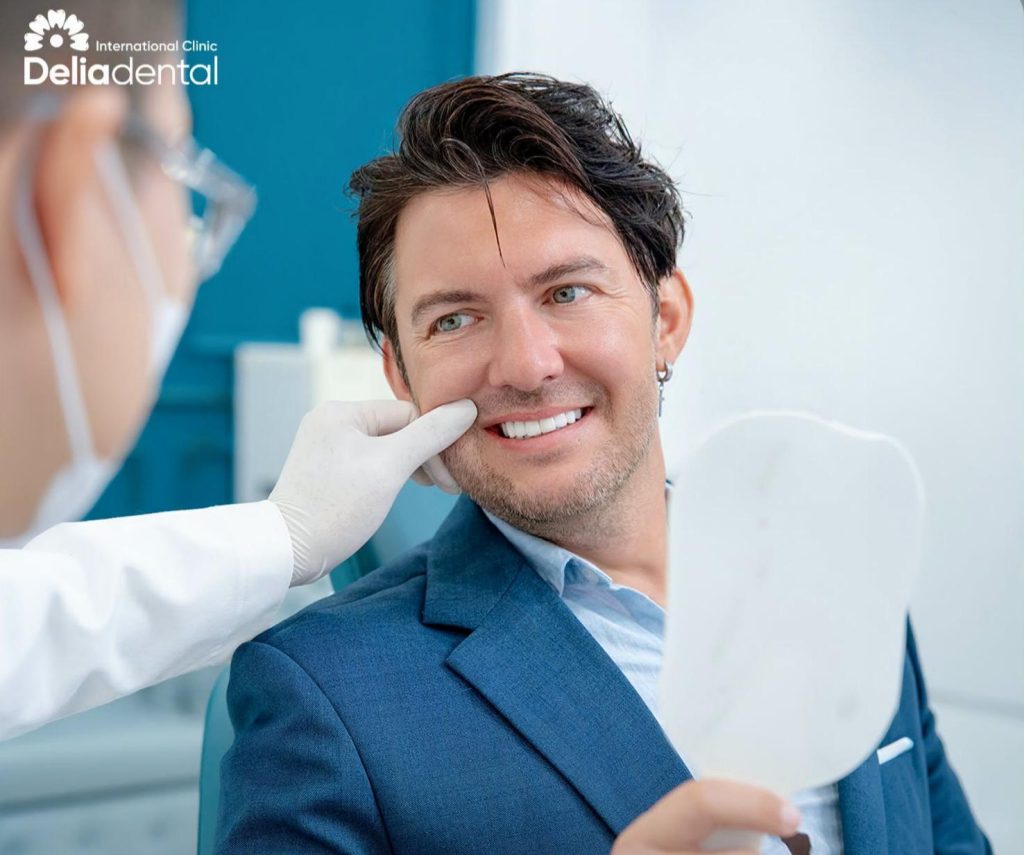
Step-by-step porcelain veneer timeline in Vietnam
Most porcelain veneer cases are not completed in one appointment. International patients should usually allow around 7–10 days so there is enough time for consultation, design, lab work, try-in, and final adjustment.
| Stage | What happens | Why it matters |
| Online review before travel | Patient sends smile photos, close-up dental photos, and records if available | Helps the clinic give an initial direction before flights are booked |
| In-person consultation | Dentist checks teeth, gums, bite, and smile goals | Confirms whether veneers are suitable |
| Smile design or mock-up | Shape, length, shade, and smile line are discussed or previewed | Helps avoid veneers that look too bulky, white, or unnatural |
| Tooth preparation | A thin layer of enamel may be prepared where needed | Creates space for the veneer and improves fit |
| Impression or digital scan | The prepared teeth are scanned or impressed for the lab | Allows the lab to make the final veneers |
| Temporary veneers | Temporaries may be placed while the final veneers are made | Protects prepared teeth and previews shape |
| Try-in appointment | Final veneers are tested before bonding | Patient and dentist check shade, shape, fit, and bite |
| Final bonding | Veneers are bonded once the patient approves the result | This is the permanent placement stage |
| Final adjustment | Bite, comfort, and aftercare instructions are reviewed | Reduces discomfort and early chipping risk |
Patients should avoid booking their return flight immediately after the final fitting. A small adjustment appointment may be useful before travelling home.
How much tooth is removed for porcelain veneers?
This is one of the most common concerns international patients have. In many conventional porcelain veneer cases, the dentist removes a thin layer of enamel from the front surface of the tooth to create space for the veneer. The exact amount varies by case, but it is often around a fraction of a millimetre.
Minimal-prep veneers may require less enamel reduction, while no-prep veneers may be possible only in selected cases where the teeth are already well aligned and do not need much shape correction.
Veneer preparation is different from crown preparation. A veneer usually covers the front surface of the tooth, while a crown covers most or all of the tooth. This means a crown normally requires more tooth reduction than a veneer.
The safest approach is to ask the dentist before treatment:
- How much enamel is expected to be removed
- Whether the preparation will stay mostly within enamel
- Whether minimal-prep veneers are realistic for the case
- Whether any tooth would be better treated with bonding or a crown instead
What patients should approve before final bonding
The try-in stage is one of the most important parts of porcelain veneer treatment. Before veneers are bonded permanently, patients should take time to check the result carefully.
Patients should review:
- Shade under natural and clinic lighting
- Tooth length and edge shape
- Overall smile symmetry
- Whether the veneers look too thick or too flat
- How the veneers match the lower teeth and side teeth
- Bite comfort
- Speech comfort
- Whether the gum line looks balanced
Minor adjustments can often be made before final bonding. Larger changes in shade, shape, or length may require the veneers to go back to the lab. This is why patients should not feel rushed during the try-in appointment.
What to expect right after placement
After porcelain veneers are bonded, mild sensitivity to cold, heat, or pressure can happen for a few days. Some patients also notice that their bite, speech, or lip position feels slightly different at first because the tooth shape has changed.
This adjustment period is usually temporary. Patients should avoid very hard or sticky foods immediately after placement and should not use their teeth to open packaging, bite nails, or chew hard objects.
If the bite feels high, uneven, or uncomfortable, the patient should return for adjustment before leaving Vietnam. Small bite issues are easier to correct early and may help reduce the risk of chipping or discomfort later.
What affects the final look
Material choice matters, but so does the skill of the dentist doing the shade selection and shape design, and the quality of the lab making the veneers. Two patients using the identical material can get very different results depending on how much attention went into matching translucency, proportion, and the way the veneers relate to the gum line and lip line. This is why the consultation and mock-up stage is worth taking seriously rather than rushing to preparation.
Aftercare and maintaining veneers
Porcelain veneers don’t need special products, but a few habits protect them. Avoid using teeth to open packaging or bite fingernails, since this is a common cause of chipping. A nightguard is worth discussing if the patient grinds their teeth at night, since grinding is one of the more common reasons veneers fail early. Regular brushing and flossing still apply, veneers don’t decay, but the natural tooth margin underneath still can. Routine dental check-ups after returning home help catch any early issues before they become bigger problems.

What to check before choosing a clinic in Vietnam
| What to check | Why it matters |
| Mock-up or trial smile process | Confirms shape and proportion before permanent preparation |
| Material and prep amount explained clearly | Helps you understand exactly what’s being done to your teeth |
| Written warranty terms | Confirms what’s covered if a veneer chips or debonds |
| English-speaking support | Reduces the risk of misunderstandings about shade or shape |
| Documentation to bring home | Shade and material records help with future touch-ups |
| Realistic timeline | Rushed cases across too few days can affect fit and finish |
How Delia Dental Clinic helps patients plan porcelain veneers in Vietnam
For international patients, porcelain veneer treatment should start before the flight is booked. Photos can help the clinic understand the patient’s smile goals, but the final plan still needs an in-person examination.
At Delia Dental Clinic, patients can send smile photos, close-up dental photos, and any recent dental records before travelling. The team can review whether porcelain veneers may be suitable, what issues need to be checked in person, and how many days the patient may need to stay in Vietnam.
For veneer cases, Delia Dental Clinic focuses on smile design, material selection, tooth preparation planning, try-in, final bonding, and aftercare guidance. Patients can discuss shade, shape, number of teeth, and expected timeline before treatment begins.
| What patients need to plan | How Delia can help |
| Whether veneers are suitable | Review smile photos and explain what must be confirmed in person |
| Natural-looking result | Discuss shade, shape, tooth proportion, and smile design |
| Travel timeline | Estimate whether the case may fit into a 7–10 day schedule |
| Try-in and approval | Check fit, shade, and shape before final bonding |
| Aftercare after returning home | Provide treatment records, warranty information, and care instructions |
Delia Dental Clinic has branches in Ho Chi Minh City and Hanoi, with English-speaking support for international patients. The clinic has completed more than 5,000 restorative and cosmetic cases across both branches and provides written warranty documentation for eligible veneer and crown work.
FAQ
Do porcelain veneers look fake? Not when the shade, translucency, and proportion are planned properly. Overly white or oversized veneers are usually a sign of rushed shade selection or a design that didn’t account for the rest of the smile, not a limitation of the material itself.
How much tooth is removed for veneers? Conventional veneers remove about 0.5mm of enamel from the front surface. Minimal-prep options reduce this to around 0.3 to 0.5mm, and no-prep veneers are possible in select cases with well-aligned teeth.
Does getting veneers hurt? Tooth preparation is usually done with local anesthetic if needed, and most patients report mild sensitivity for a few days afterward rather than significant pain.
Can veneers be adjusted after they’re made? Minor adjustments to fit and bite are normal at the try-in stage. Significant shape or shade changes usually mean going back to the lab, which is one reason a mock-up earlier in the process is worth doing properly.
How many days does the whole process take? Most cases run 7 to 10 days from consultation to final fit, allowing time for lab fabrication between preparation and bonding.
Final thoughts
Porcelain veneers in Vietnam can be a good option for international patients who want to improve tooth shape, colour, spacing, or smile symmetry. The best results come from careful planning, not from rushing to preparation.
Before starting treatment, patients should understand whether veneers are suitable, how much enamel may be prepared, what the mock-up or try-in process includes, and what happens if the shape or shade needs adjustment.
If you are considering porcelain veneers in Vietnam, send your smile photos or recent dental records to Delia Dental Clinic via Whatsapp or Messenger before booking your trip. The team can review your case, explain what may be realistic, and help you plan the consultation-to-final-fit timeline


