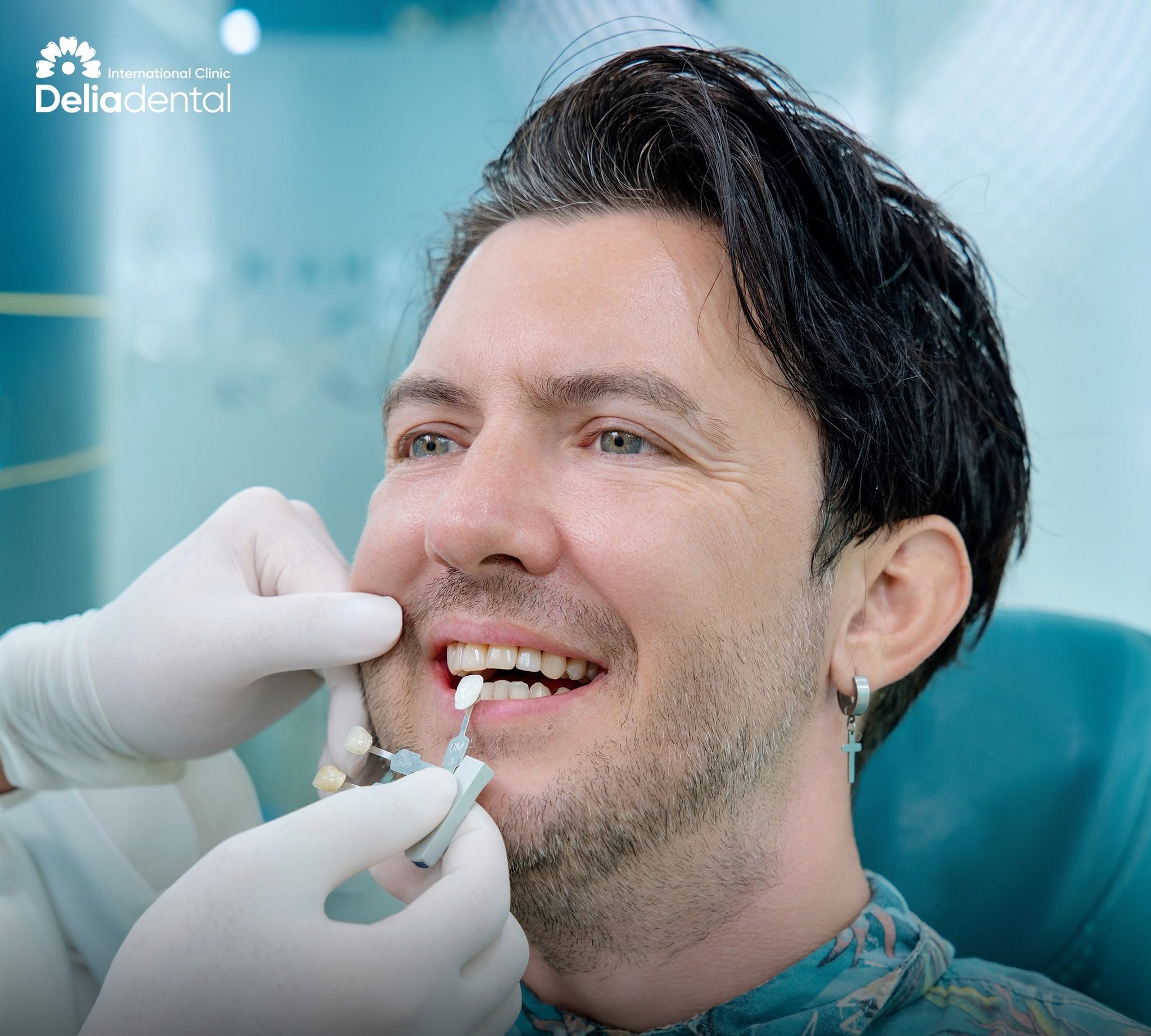
Veneers in Vietnam can vary in cost depending on the material, number of teeth, smile design requirements, and clinic planning process. This guide explains what international patients should expect, what may be included, and how to request a case-based quote before traveling.
It covers pricing by material, how veneers compare with alternatives such as crowns or bonding, how long they typically last, and what to check before booking treatment.
At Delia Dental Clinic, patients can send photos of their smile and any relevant dental records before travelling, so the material choice and price range can be discussed before a trip is booked.
Quick answer
Veneers in Vietnam cost mainly depends on the veneer material, number of teeth, smile design process, and how much tooth preparation is needed. At Delia Dental Clinic, Emax Press veneers start from $300 per tooth, while Lisi veneers start from $550 per tooth.
Most veneer cases can be completed in one trip of around 7–10 days, depending on the number of teeth, lab schedule, trial fitting, and whether any dental problems need to be treated first.
A price list can give a starting point, but it cannot confirm the final cost. International patients should request a case-based quote after sending smile photos, dental photos, and any recent dental records. The final plan depends on tooth condition, bite, gum health, aesthetic goals, and whether veneers are truly the right option.
What affects the cost of veneers in Vietnam
A few factors drive the final price more than anything else.
Material. Different ceramic systems have different strength, translucency, and cost. This is usually the biggest single driver of price per tooth.
Number of teeth. A single veneer and a full smile set of 6 to 10 upper teeth are priced very differently, and per-tooth cost sometimes drops slightly when more teeth are done together.
Smile design process. Cases that involve digital smile design, mock-ups, or a trial smile before final preparation usually take more planning time and may cost more than a straightforward single-tooth case.
Amount of tooth preparation. Minimal-prep or no-prep veneers require less enamel removal and different lab work than conventional veneers, which can affect both price and the number of visits needed.
Veneers in Vietnam cost by material
At Delia Dental Clinic, veneer prices are usually quoted per tooth. The table below focuses on veneer options, not crowns.
| Veneer type | Delia price from | Best for |
| Emax Press veneer | $300 per tooth | Patients who want a thin ceramic veneer for cosmetic smile improvement |
| Lisi veneer | $550 per tooth | Patients who want a premium veneer option with high aesthetic expectations |
These are starting prices. A confirmed quote depends on the number of teeth, smile design requirements, tooth condition, bite, gum health, and how much preparation is needed.
Patients should also understand that crowns and veneers are not the same. Some ceramic crowns may start from a lower price, but a crown covers more of the tooth and usually requires more tooth reduction. A veneer is mainly used to improve the front surface of a tooth when the tooth is still structurally healthy.
Example veneer cost by number of teeth
The table below gives a simple planning range using Delia’s veneer starting prices. It is not a final quote.
| Number of veneers | Emax Press veneer from $300/tooth | Lisi veneer from $550/tooth |
| 1 veneer | from $300 | from $550 |
| 2 veneers | from $600 | from $1,100 |
| 6 veneers | from $1,800 | from $3,300 |
| 8 veneers | from $2,400 | from $4,400 |
| 10 veneers | from $3,000 | from $5,500 |
| 20 veneers | from $6,000 | from $11,000 |
Many smile makeover cases focus on 6–10 upper front teeth, but some patients may need fewer or more depending on smile width, tooth visibility, bite, and whether lower teeth are also treated.

How veneer materials compare
Different veneer materials can affect cost, appearance, strength, and how much tooth preparation is needed. Not every clinic offers every material, so patients should ask which system is being recommended for their case.
| Material type | Strength | Aesthetics | Tooth preparation | Notes |
| Emax / lithium disilicate | Strong for thin ceramic restorations | Very good translucency | Minimal to conventional prep depending on case | Common choice for cosmetic veneer cases |
| Lisi / lithium disilicate-based ceramic | Strong aesthetic ceramic option | High aesthetic potential | Case-dependent | Often used for premium veneer cases |
| Feldspathic porcelain | More technique-sensitive | Excellent natural translucency | Usually requires very precise planning | Not always offered by every clinic |
| Zirconia-based ceramic | Very strong | More opaque than Emax in many cases | Usually more suitable for crowns than classic thin veneers | May be considered when strength is the priority |
For many cosmetic cases, Emax or Lisi veneers are chosen because they balance aesthetics, strength, and tooth preservation. The final material should be selected after checking tooth colour, enamel thickness, bite, smile line, and patient expectations.
How long do veneers in Vietnam last?
Porcelain veneers can last many years when the case is planned well, bonded properly, and maintained with good oral hygiene. A 2021 systematic review of porcelain laminate veneers reported an estimated 10-year cumulative survival rate of about 95.5%, but results vary by material, bonding surface, bite, patient habits, and follow-up care.
In practical terms, many patients can expect porcelain veneers to last around 10–15 years, and sometimes longer. However, veneers are not permanent. They may eventually need repair or replacement due to chipping, debonding, gum changes, decay around the margin, bite issues, or wear over time.
Patients who grind their teeth, bite nails, chew hard objects, or have untreated bite problems may have a higher risk of veneer damage. In these cases, the dentist may recommend a night guard, bite adjustment, orthodontic treatment, or a different restoration such as a crown.
Veneers vs crowns: why the cheaper option is not always a veneer
When comparing dental veneers in Vietnam, patients may also see lower prices for ceramic crowns. These should not be treated as the same procedure.
A veneer covers mainly the front surface of the tooth. It is usually used for cosmetic changes such as shape, colour, small gaps, minor chips, or smile symmetry. A crown covers the whole tooth and is usually recommended when the tooth needs more structural support.
| Option | Covers | Tooth reduction | Usually best for |
| Veneer | Front surface of the tooth | Minimal to moderate | Cosmetic improvement on healthy teeth |
| Crown | Most or all of the tooth | More than a veneer | Weak, cracked, heavily filled, or root-canal-treated teeth |
| Composite bonding | Small selected areas | Minimal | Minor chips, small gaps, lower-budget cosmetic changes |
A lower crown price does not mean it is the better choice for a veneer case. The right option depends on enamel condition, bite, tooth strength, existing fillings, and cosmetic goals.
Veneers vs alternative treatments
| Option | Tooth structure removed | Typical longevity | Best for |
| Porcelain veneer | Minimal to moderate | 10 to 15+ years | Shape, color, and minor alignment changes on healthy teeth |
| Composite bonding | Minimal | 5 to 7 years | Smaller budget, minor chips or gaps, reversible in most cases |
| Full crown | More than a veneer | 10 to 15+ years | Teeth with more damage or needing more structural support |
| Professional whitening | None | Fades over time | Color only, no shape or alignment change |
Veneers sit between bonding and crowns in terms of both cost and how much natural tooth is removed, which is why they’re often chosen for cosmetic cases where the tooth itself is otherwise healthy.
The veneer treatment process in Vietnam
Most veneer cases in Vietnam are planned across several appointments, not completed in one rushed visit. International patients should usually allow around 7–10 days, depending on the number of veneers and lab schedule.
| Step | What happens |
| Online review before travel | Patient sends smile photos, dental photos, and records if available |
| In-person consultation | Dentist checks teeth, gums, bite, and whether veneers are suitable |
| Smile design discussion | Patient and dentist discuss shape, shade, smile line, and expected result |
| Tooth preparation | Minimal or conventional preparation is done if needed |
| Impression or digital scan | The clinic sends the case to the dental lab |
| Temporary veneers | Temporary restorations may be placed while final veneers are made |
| Trial fitting | Shape, shade, and fit are checked before final bonding |
| Final bonding | Veneers are bonded and adjusted |
| Final check | Bite, comfort, and aftercare instructions are reviewed |
Patients should avoid booking flights too close to the final fitting. Small adjustments may be needed before returning home.

Who is a good candidate for veneers
Veneers work best on teeth that are structurally healthy but have cosmetic concerns, discoloration that doesn’t respond to whitening, minor chips, uneven edges, small gaps, or slightly irregular shape. They aren’t a substitute for orthodontic treatment on teeth that are significantly misaligned, and they aren’t recommended on teeth with active decay or gum disease that hasn’t been treated first. A proper case review, not just photos, is needed to confirm suitability.
Who may not be suitable for veneers?
Veneers may not be the right choice for every patient. In some cases, another treatment should be done first, or a crown may be more appropriate.
Veneers may not be suitable for patients with:
- Active tooth decay
- Untreated gum disease
- Very weak or heavily filled teeth
- Severe tooth misalignment
- Large bite problems
- Heavy teeth grinding without protection
- Not enough healthy enamel for bonding
- Unrealistic expectations about colour, shape, or “perfect” symmetry
For these patients, the dentist may recommend gum treatment, orthodontics, whitening, bonding, crowns, implants, or a night guard before or instead of veneers.
What to check before choosing a clinic in Vietnam
| What to check | Why it matters |
| Digital smile design or mock-up process | Helps confirm the shape and shade before final preparation |
| Material transparency | Confirms which ceramic system is used and why it fits your case |
| Written warranty terms | Confirms what’s covered, for how long, and under what conditions |
| English-speaking support | Reduces the risk of misunderstandings about shade, shape, or timeline |
| Documentation to bring home | Shade and material records help with future touch-ups back home |
| Realistic timeline | Rushed preparation across too few days can affect fit and finish |
What to prepare before booking
Useful things to have ready before an online consultation: clear photos of your current smile and teeth, any concerns about shape, color, or alignment you want addressed, a recent dental exam if you have one, whether you have any active decay or gum issues, your main goal, subtle correction or a fuller smile makeover, and your travel flexibility in case the case needs more chair time than expected.
Why patients choose Delia Dental Clinic for veneers
For international patients, the biggest risk is booking a veneer trip before knowing whether veneers are actually suitable. Some patients may need veneers, while others may be better suited to whitening, bonding, crowns, orthodontics, or gum treatment first.
Delia Dental Clinic helps patients review the case before travelling. Patients can send smile photos, close-up dental photos, and any recent dental records for an initial review. The team can then suggest whether veneers may be suitable, which material options may fit the case, and how many days the patient should plan to stay in Vietnam.
For veneer cases, Delia focuses on smile design, material selection, tooth preparation planning, and final fitting. Patients can discuss shape, shade, number of teeth, and budget before treatment begins.
| What patients need to decide | How Delia can help |
| Veneer or crown | Review whether the tooth is healthy enough for a veneer |
| Number of veneers | Estimate whether the smile goal needs 1, 2, 6, 8, 10, or more teeth |
| Material choice | Compare Emax Press veneer and Lisi veneer options |
| Treatment timeline | Estimate whether the case fits into a 7–10 day trip |
| Follow-up after travel | Provide records, warranty documents, and aftercare instructions |
Delia has branches in Ho Chi Minh City and Hanoi, with English-speaking support for international patients. The clinic has completed more than 5,000 restorative and cosmetic cases across both branches and provides written warranty documentation for eligible veneer and crown work.
FAQ
How much do veneers cost in Vietnam?
Prices vary by material, starting from around $190 per tooth for entry-level ceramic options and rising for premium pressed-ceramic or zirconia-based veneers. A full smile case needs a case-based quote based on the number of teeth involved.
How long do veneers last?
Well-placed porcelain veneers commonly last 10 to 15 years or longer, based on published long-term studies. Longevity depends on the material, bonding technique, and how the patient cares for them afterward.
How many teeth do veneers usually cover?
This depends on the goal. Some patients need just one or two veneers to fix a chip or discoloration, while a full smile makeover often involves 6 to 10 upper teeth.
How many days does a veneer case take in Vietnam?
Most cases fit into 7 to 10 days, covering preparation, temporary veneers, lab fabrication, and the final fitting.
Are veneers better than crowns?
Neither is universally better. Veneers preserve more natural tooth structure and suit cosmetic cases on otherwise healthy teeth, while crowns are usually chosen when a tooth needs more structural support.
Do veneers damage natural teeth?
Veneers usually require some enamel preparation, although the amount depends on the case. When veneers are planned properly, the goal is to preserve as much natural tooth structure as possible. However, veneer treatment is usually not fully reversible, so patients should only proceed after a proper consultation and smile design review.
Are veneers in Vietnam safe for international patients?
Veneers in Vietnam can be safe when the case is planned carefully and the clinic uses proper examination, material selection, tooth preparation, bonding, and aftercare protocols. Patients should check material transparency, dentist experience, smile design process, warranty terms, and whether the clinic provides records to bring home.
Final thoughts
Veneers in Vietnam cost depends mainly on material, number of teeth, smile design requirements, and whether the patient is truly suitable for veneers. At Delia Dental Clinic, Emax Press veneers start from $300 per tooth, while Lisi veneers start from $550 per tooth.
Patients should avoid choosing veneers based only on the lowest price. A proper plan should consider tooth health, enamel condition, bite, gum health, smile goals, material choice, and whether veneers or crowns are more appropriate.
If you are considering dental veneers in Vietnam, send your smile photos, dental photos, or recent dental records via Whatsapp or Messenger to Delia Dental Clinic before booking your trip. The team can review your case, suggest an initial material direction, and help estimate whether your veneer case can fit into a 7–10 day treatment schedule.


