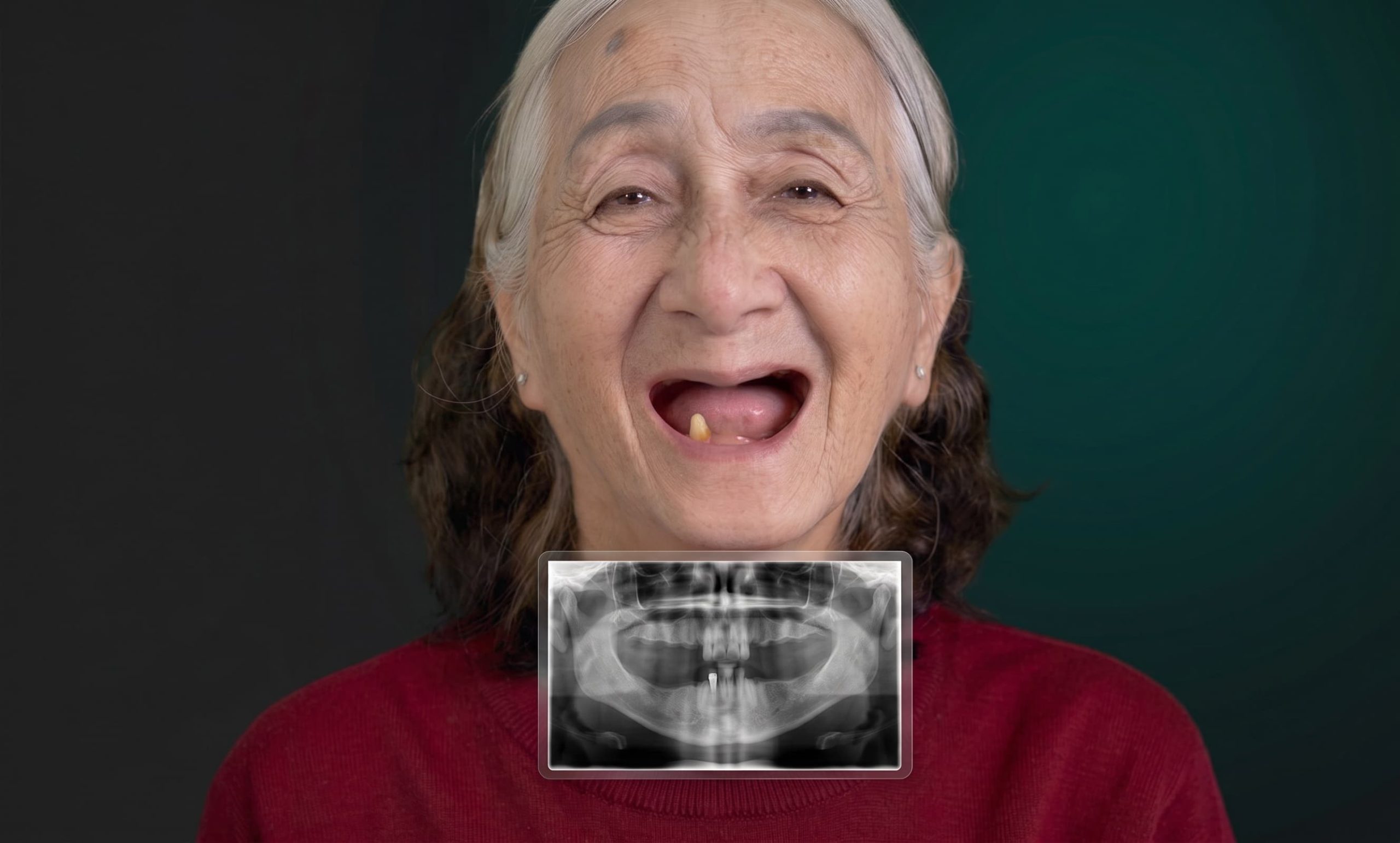
After suffering from extensive missing teeth, Ms. My Vo from the USA found that her single remaining tooth was so loose that eating and speaking were becoming increasingly difficult. She chose All-on-4 implants for her lower jaw at Delia Dental Clinic and a temporary removable denture for the upper jaw, and today describes a smile that feels more comfortable, stable, and natural.
Many people in a similar position assume that years without teeth have closed the door on implants. Usually they have not. What the years change is the amount of preparation, because the jawbone keeps shrinking once the teeth are gone, and the plan has to be built around the bone that is left.
This guide covers what happens to the jaw over time, how a CBCT scan shows whether implants are still possible, when grafting or a sinus lift comes in, and what that means for your trips. It describes common patterns and is not a diagnosis.
Quick Answer
Years without teeth rarely make implants impossible, but they often change the plan. Bone shrinks in height and width after tooth loss, so some cases need grafting, a sinus lift or a different implant layout. A CBCT scan, not the number of years, shows which applies.
What Happens to the Jaw After Years Without Teeth
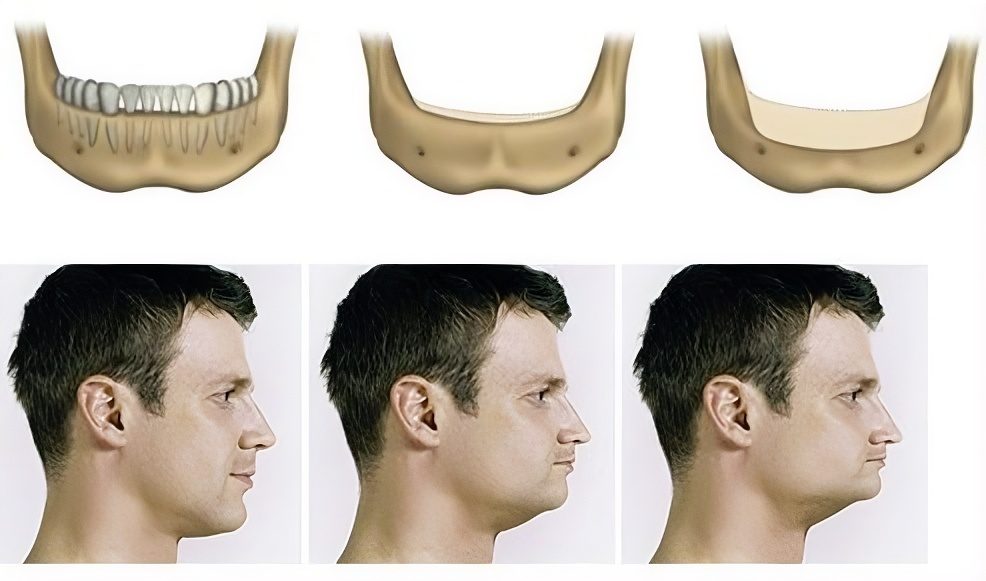
The jawbone shrinks after teeth are lost because chewing no longer stimulates it through the roots. A systematic review of human studies by Tan and colleagues found horizontal bone loss of 29 to 63 percent and vertical bone loss of 11 to 22 percent within six months of an extraction. Shrinkage commonly continues more slowly after that, which is why a gap that has been open for twenty years rarely looks like the bone did on the day the tooth came out.
Bone Height and Width
Width is usually lost faster than height. A ridge that was once broad enough for a standard implant can become narrow, and the jaw as a whole can lose vertical depth. This is the main reason a dentist asks for a scan before quoting anything for a long term gap, because a photo or a flat X-ray cannot show how thick the ridge really is.
Sinus and Nerve Position
In the upper jaw at the back, the space between the ridge and the sinus floor can become small after years without teeth. In the lower jaw, the nerve canal sits closer to the top of the ridge as bone height drops. Both limit how long an implant can be and how safely it can be placed. When the sinus is the limit, a sinus lift before upper jaw implants may be discussed.
Neighbouring Teeth and Bite
Teeth beside a gap can tilt toward it, and teeth opposite can slowly move out of their sockets looking for something to bite against. A badly loose tooth, like the one in Ms. My Vo’s case, is judged on its own merits, and the dentist decides tooth by tooth after imaging.
What the years do not decide is your ability to heal. General health, bone condition and gum health matter more than age, and long term tooth loss usually changes the plan rather than ending the option. The guide to implants for older patients and the records to prepare covers what to gather first.
Is It Too Late? How Bone Loss Changes the Plan
It is rarely too late, because implants are planned around the bone that remains, not the bone you used to have. The more useful question is which route your scan points to, and the table below shows the common ones. These are general patterns, not a menu to pick from, and the dentist confirms the route after examination.
| What the CBCT shows | Common direction | Effect on your travel plan |
|---|---|---|
| Enough height and width | Implants placed directly | Usual staged pattern, often two trips |
| Enough height, narrow ridge | Narrower implants or a graft to widen the ridge | May add healing time |
| Low height in the lower jaw near the nerve | Shorter implants or a different implant position | Plan set after measurements |
| Low height under the sinus | Sinus lift, sometimes at the same surgery as the implants | Case dependent, can add months |
| Severe upper jaw bone loss | Zygomatic implants in the cheekbone or extensive grafting | Specialist planning, longer timeline possible |
| Very little bone across a full arch | A different number or position of implants, or a temporary removable option for now | Decided jaw by jaw |
Grafting is surgery, and it adds healing time, but the evidence on outcomes is reassuring. A consensus review by Klein and Al-Nawas found a high level of evidence that implants placed in augmented areas survive at rates comparable to implants in natural bone. A pooled analysis of sinus floor elevation studies described implants placed with a sinus lift as a predictable treatment with high survival rates. Results still vary between patients and techniques, which is one more reason the plan starts with a scan.
A Real Case: Lower Jaw First, Temporary Denture Above
Ms. My Vo’s plan treated each jaw differently. Her lower jaw received All-on-4 implants, and her upper jaw was fitted with a temporary removable denture. Her case shows that a plan after long tooth loss does not have to be the same for both jaws.
What a CBCT Scan Shows About Bone Density and Volume
A CBCT scan is a three dimensional X-ray that shows bone height, bone width, the nerve canal and the sinus floor, along with an impression of bone quality. A panoramic X-ray is a flat image that gives a useful first look, but it cannot measure how thick the ridge is. For a long term gap, the CBCT is the record that decides the route.
What a CBCT can tell you:
- How tall and how wide the bone is at each planned implant site
- Where the nerve canal and sinus floor sit relative to the ridge
- The general quality of the bone, which affects how stable implants are likely to feel
- Whether remaining teeth have roots or bone around them that make them worth keeping
What it cannot confirm on its own is the final implant position, the exact grafting needed or the final cost. Bone density seen on a scan is an estimate, and the dentist confirms it in person and at surgery. A remote review of a scan supports a preliminary direction, and the examination turns it into a plan.
What Else Affects Healing After Long Term Tooth Loss
Bone is the main variable, but a few other factors can change the plan. Tell the dentist about all of them before treatment:
- Smoking, which can slow healing and affect how well implants and grafts integrate
- Diabetes and how well it is controlled
- Osteoporosis or bone related medications, which need to be discussed with both the implant dentist and the prescribing doctor
- Gum disease in remaining teeth, which usually needs treatment first
Never stop a prescribed medication on your own because of an implant plan. Any change has to come from the doctor who prescribed it.
Bone Grafting and Sinus Lift: What the Extra Steps Mean for Your Trips
A graft or sinus lift adds healing time and sometimes an extra stage, and whether it happens at the same surgery as the implants or before them depends on how much bone is left. Implants without grafting commonly need a healing period of around three to six months before final teeth are fitted, and many cases follow a two trip pattern with healing at home in between.
| Route | What it adds | Likely effect on trips |
|---|---|---|
| Implants without grafting | Standard healing of the implants | Often two trips |
| Graft or sinus lift at the same surgery as the implants | Graft heals alongside the implants | Healing can take longer, case dependent |
| Graft first, implants later | An extra healing stage before implant surgery | Can add a trip |
These are travel planning patterns, not completion dates. Slower healing, infection treatment or a staged graft can add visits. At Delia Dental Clinic, bone grafting and sinus lift are not part of the standard full arch package prices and are quoted separately once the scan has been reviewed, so it helps to know early whether your case points that way.
Replacing One Tooth, Several Teeth or a Full Arch After Many Years
The same bone loss affects each case differently, and the starting question changes with the size of the gap.
One Tooth or Several Teeth
A gap that has been open for years raises the question of whether the ridge is still wide and tall enough for each implant, and bone loss often varies along the jaw, so one side may be straightforward and the other may need grafting. A molar adds the sinus or nerve question. The guide to a missing molar tooth and your replacement options covers that case in detail.
A Full Arch
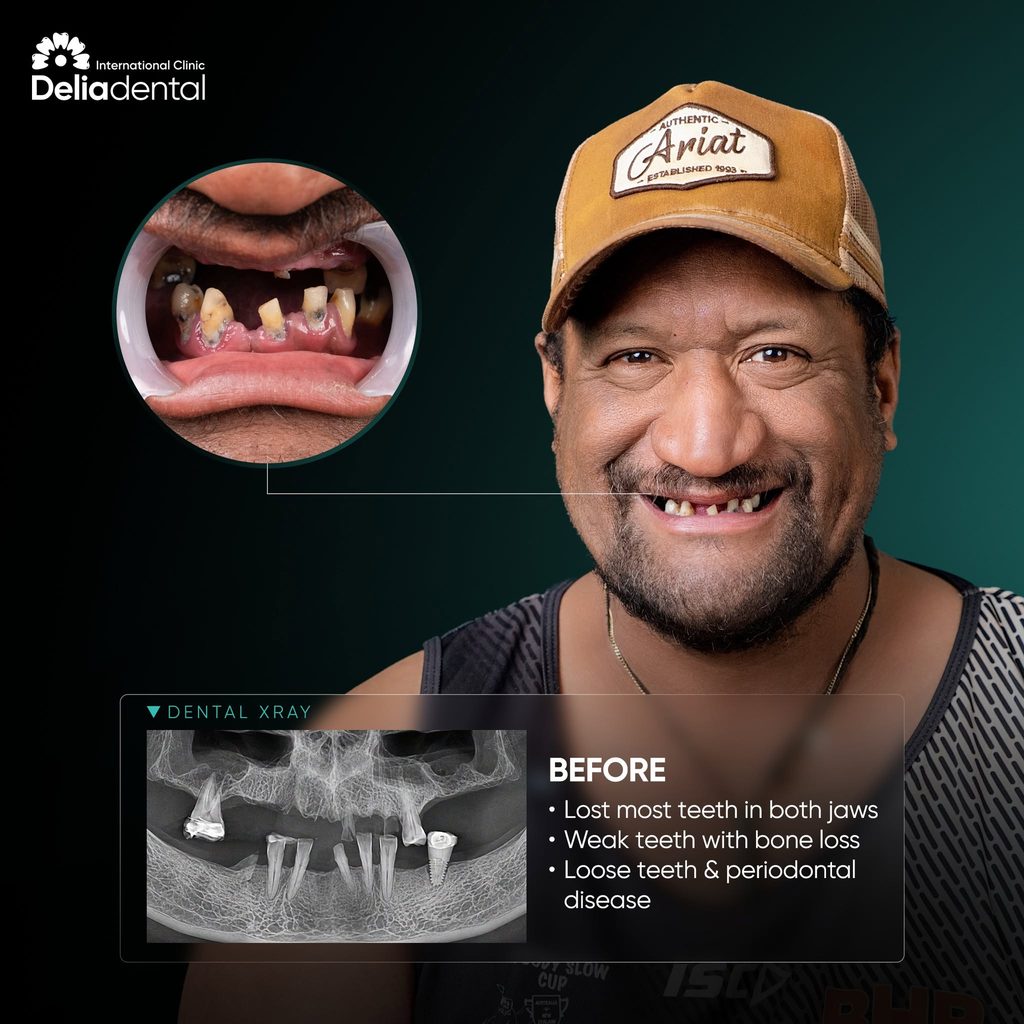
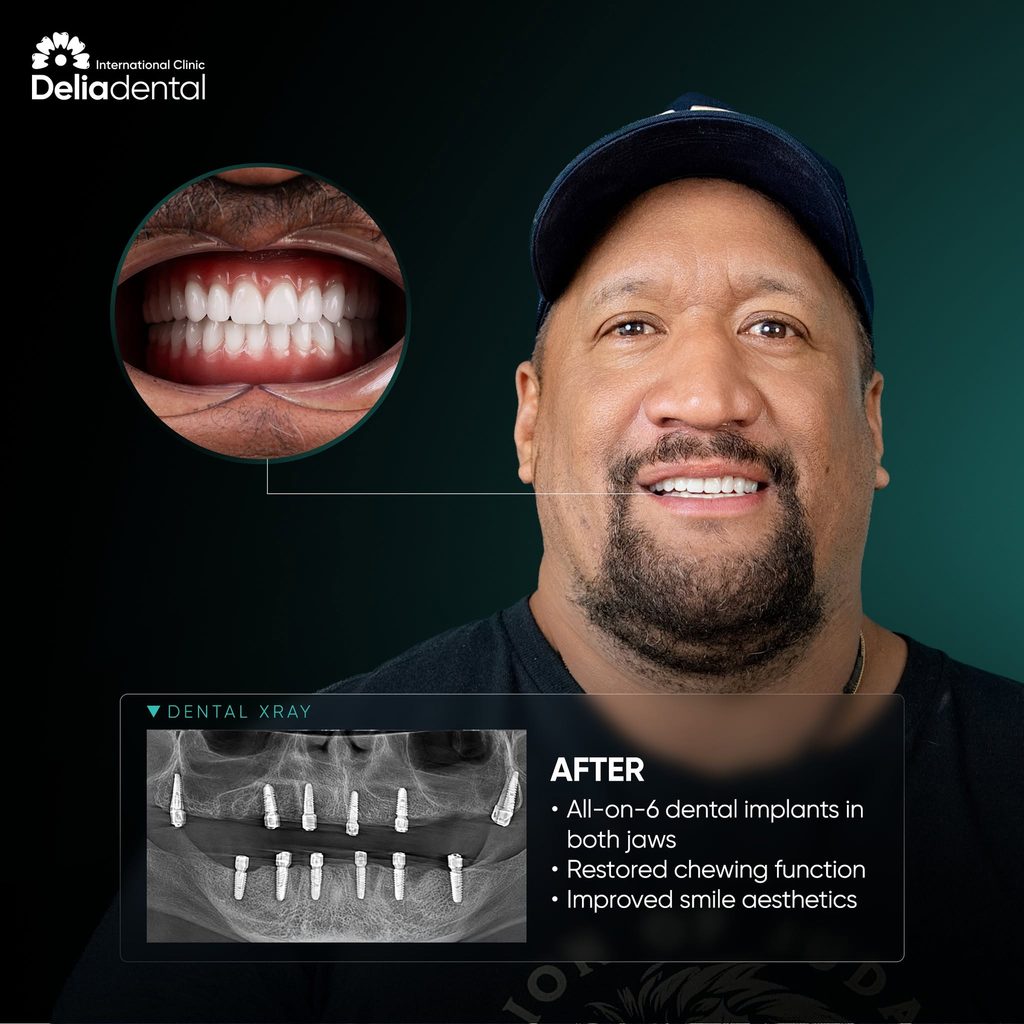
When almost all teeth in a jaw are gone, a fixed full arch plan such as All-on-4 uses four implants to support a bridge, and an All-on-6 plan uses six. More implants do not automatically make a plan better, and the choice depends on bone volume, jaw shape and bite forces. Patients who have worn dentures for years face the same bone questions, and the guide to switching from dentures to fixed implants looks at that group.
How Delia Dental Clinic Reviews Long Term Missing Teeth Cases
The international patient team at Delia Dental Clinic can review your records before you book a flight, and suggest a preliminary direction, an estimated cost and the likely number of trips for your case at the Hanoi or Ho Chi Minh City branch. The most useful record is a recent CBCT scan, because the plan depends on how much bone is left.
A remote review has limits. Photos and a panoramic X-ray show the general picture but cannot confirm bone volume, implant positions or the final cost. The scan taken on site and the in person examination confirm whether implants can go straight in, whether grafting or a sinus lift is needed, or whether a different layout fits better. The final treatment plan and quote are confirmed after that examination.
Useful records to send:
- A recent CBCT scan or panoramic X-ray, in its original format if you have it
- Photos of your smile and of the areas where teeth are missing
- How many years each gap has been open and whether you have worn a denture
- Any medical conditions and medications you take
- Any quote or treatment plan you have already received
Frequently Asked Questions
Can Implants Be Placed 20 Years After Losing a Tooth?
In many cases yes. After twenty years the ridge is often narrower and shorter, so grafting is more likely, but the scan decides, not the calendar. Some patients still have enough bone for a direct placement.
Will I Definitely Need a Bone Graft?
No. Some long term gaps still have enough bone, and some cases need only a sinus lift in one area or a narrower implant. Others need a graft before or during implant placement. Only imaging shows which group you are in.
Can I Get Implants If I Never Wore Dentures?
Yes. A denture is not a requirement for implants. Without any replacement, bone and neighbouring teeth change in the gap, so the length of time since the extraction can matter more than whether a prosthesis was ever worn. The CBCT shows the current position.
Does Treatment Take Longer Than After a Recent Extraction?
It can, mainly when grafting or a sinus lift is added. Without those steps, the staged pattern of surgery, healing at home and final teeth is similar to other implant cases. Extra healing stages are the part that stretches the timeline, which is worth knowing before you book flights.
What Happens If a Bone Graft Does Not Take?
The dentist reviews the area, and depending on what is found may wait for healing and graft again or change the plan. Swelling, persistent pain or a loose graft site should be reported to the clinic rather than left to settle. Sending photos and a description early helps the team decide whether a local check is needed.
Planning Grafting, Scans and Trips Around Your Case
Once bone is clearly the deciding factor, the next questions are usually what grafting adds to the cost, which scan to bring and how long to stay.
- Bone Grafting and Dental Implant Cost in Vietnam
- Is a CBCT Scan Required Before Every Dental Implant in Vietnam?
- How Long Should You Stay in Vietnam for Dental Implants?
- Are You Too Old for Veneers? What Changes After 60
Final Thoughts
The number of years you have been without teeth is a starting point for the conversation, not the answer. The scan shows how much bone remains, and that decides whether the plan is a direct placement, a grafting case or a different layout.
Send your CBCT scan or panoramic X-ray, photos of your smile and the missing areas, the number of years each gap has been open, and any existing quote via WhatsApp or Messenger so Delia Dental Clinic can suggest a preliminary direction and estimate cost and trip timing before you book a flight. The final treatment plan and quote are confirmed after an in person examination in Hanoi or Ho Chi Minh City.


