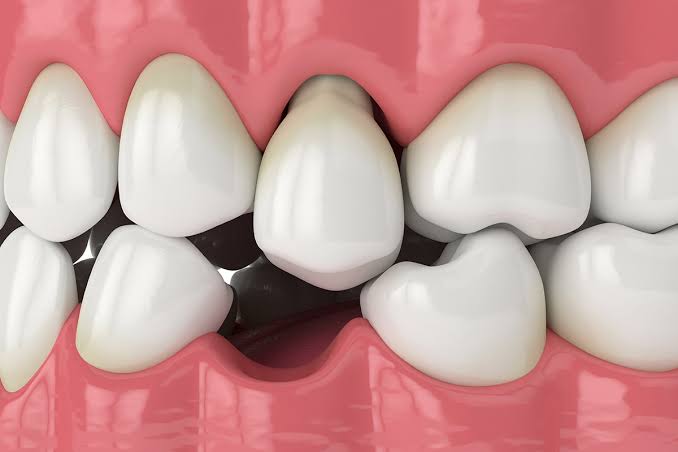
A missing molar tooth rarely hurts once the socket has healed, which is exactly why so many people leave it alone for years. The tooth is at the back, it does not show when you smile, and everyday life goes on without it. The problem is that the jawbone underneath does not stay the same while you wait. It starts to shrink, the teeth around the gap begin to shift, and the longer this continues, the fewer treatment options remain simple.
Molars account for a large share of the teeth people lose as adults, since they do most of the grinding work and take the most bite force over a lifetime. That makes a missing molar one of the most common gaps dentists see, and also one of the easiest to underestimate. A front tooth gets noticed immediately. A back tooth gets postponed.
This guide walks through what actually happens if a missing molar is left in place, the three main ways to replace it, and a simple way to think about your case based on how long the tooth has already been gone.
Quick answer
If a molar has been missing for less than six months, most people can choose freely between a dental implant, a bridge, or a partial denture, since the jawbone has not lost significant volume yet. Past six months, bone loss accelerates, and after a year or two, a bone graft may be needed before an implant is possible. A dental implant is generally the option that best protects the jawbone long term, a bridge is faster and does not require surgery, and a partial denture is the lowest cost but least stable choice. There is no single best answer. It depends on how long the tooth has been missing, the condition of the surrounding teeth, and what you are trying to prioritise between cost, speed, and long term bone health.
Why an empty molar space does not stay empty for long
A molar root sits deep in the jawbone, and the bone around it depends on that root for stimulation every time you chew. Once the tooth is gone, that stimulation stops, and the bone begins to resorb. This process is gradual, but it is continuous, and it does not pause just because the gap is not causing pain.
At the same time, the teeth next to the gap are no longer held in place by a neighbour on that side. Over months, they can tilt or drift toward the empty space. The tooth directly above or below the gap, which no longer has anything to bite against, can also begin to over erupt, meaning it slowly moves further out of its socket looking for contact. Neither of these movements reverses on its own.
The combined result is a bite that gradually shifts out of alignment, food that gets trapped more easily around tilted teeth, and a jawbone that offers less support with each passing year. None of this is dramatic day to day, which is exactly why it goes unnoticed until someone finally looks into their options and finds the case more complex than it would have been earlier.
Your three main options
There are three standard ways to replace a missing molar, and each one solves a different part of the problem.
Dental implant
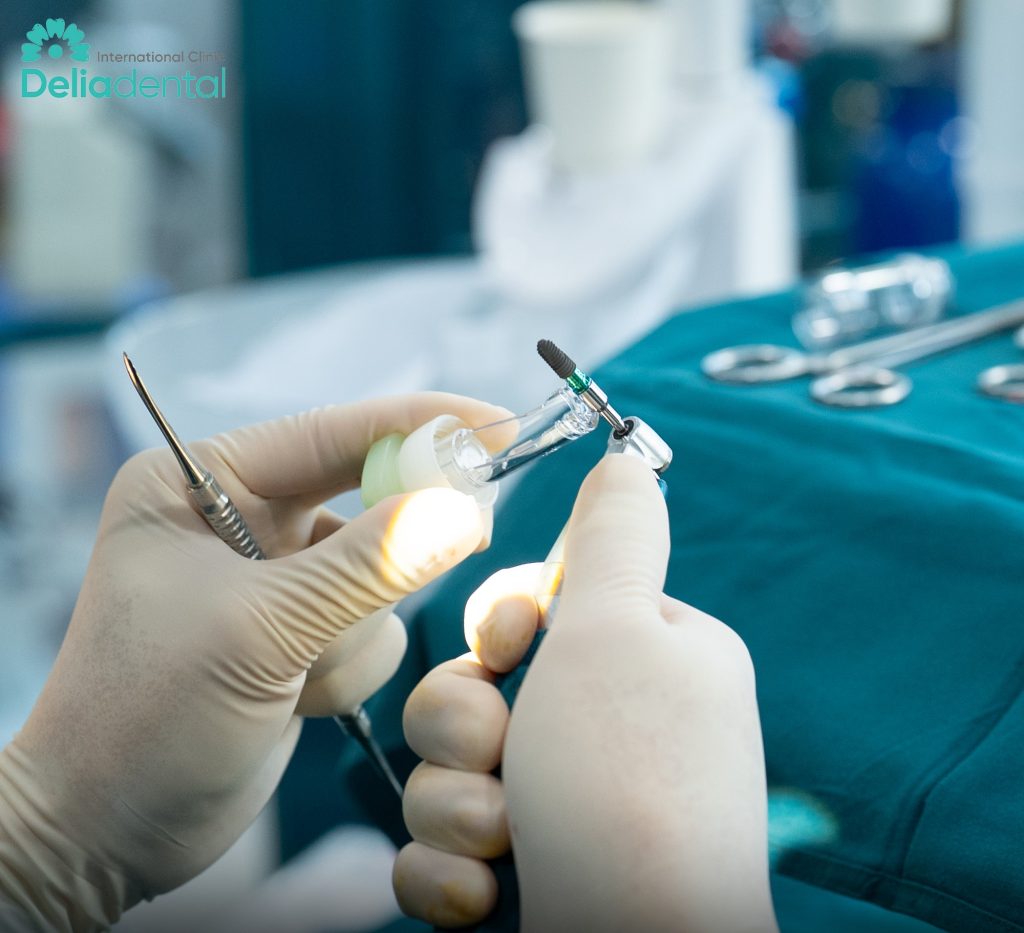
A titanium post is placed into the jawbone to act as an artificial root, and a crown is fitted on top once the post has integrated with the bone. This is the only option among the three that stimulates the jawbone the way a natural root does, which means it is also the option most likely to prevent further bone loss at that site. It does not rely on the neighbouring teeth for support, so nothing needs to be reshaped or reduced.
The trade off is time. An implant usually needs a healing period before the final crown can be placed, and if bone loss has already progressed, a bone graft may need to happen first, which extends the timeline further.
Dental bridge
A bridge fills the gap using a false tooth anchored to crowns placed on the two teeth next to it. It restores the appearance and much of the chewing function without surgery, and it is typically finished faster than an implant.
The trade off is that the two supporting teeth need to be shaped down to hold the crowns, even if they were previously healthy. A bridge also does nothing to stimulate the bone underneath the gap, so bone loss at that site can continue quietly behind the bridge.
Removable partial denture
A partial denture replaces one or more missing teeth with a removable appliance that clips onto nearby teeth. It is the fastest and lowest cost of the three options, and it can be adjusted or added to later if more teeth are lost.
The trade off is stability. A partial denture is not fixed in place, it needs to be removed for cleaning, and many patients describe it as feeling less secure when chewing tougher foods. Like a bridge, it does not prevent bone loss underneath it.
How long the tooth has been missing changes your options
This is the part most general guides skip, and it matters more than people expect.
- Missing less than 6 months. Bone loss at this stage is usually minimal. All three options are typically available with no additional preparation, and this is the easiest window to plan treatment in.
- Missing 6 months to 2 years. Some bone loss has usually occurred by this point. An implant may still be possible without a bone graft, but this depends on the individual case and needs to be checked with imaging rather than assumed either way.
- Missing more than 2 years. Bone loss is often more advanced, and a bone graft is frequently needed before an implant can be placed. A bridge or partial denture can usually still be fitted without a graft, since neither relies on bone volume at the gap itself.
These are general patterns, not a fixed rule for every patient. Bone loss speed varies with age, overall bone density, and whether the extraction was straightforward or complicated. The only way to know where a specific case actually stands is a CT scan and an in person or remote assessment, not the calendar alone.
Do you always need to replace a missing molar
Not always. If the missing tooth is a wisdom tooth, or the very last molar in the row, and there is no opposing tooth left to bite against, replacement is sometimes unnecessary since there is nothing left for the gap to disrupt. The decision in these cases should still come from an exam and imaging rather than a guess, since a seemingly stable bite can still be masking slow movement elsewhere.
For every other missing molar, where a neighbouring tooth or an opposing tooth is still present and functional, leaving the gap untreated usually means dealing with a more complex case later rather than avoiding treatment altogether.
What replacement actually costs
Costs for all three options vary widely by country, by the materials used, and by whether a bone graft is needed first, so there is no single number that applies to every case. As a general pattern, dental implants tend to be the most expensive of the three upfront, mainly because of the surgical placement and the healing period involved, while bridges and partial dentures usually cost less initially but may need replacement or adjustment sooner.
Patients who compare prices across countries often find a significant gap between what the same implant, from the same material, costs at home versus in countries where dental tourism is established, including Vietnam. That gap is one reason more people are now getting a treatment plan reviewed abroad before deciding locally, especially when a bone graft would add meaningfully to the home country price.
If you want a specific estimate for your own case, the most accurate way is to send a recent X ray or CT scan for review rather than compare general price ranges, since the presence or absence of bone loss changes the plan and the cost significantly.
What to ask before you decide
Before committing to any of the three options, it helps to have clear answers to a few questions.
- Ask whether imaging shows any bone loss at the site, and if so, how much.
- Ask whether a bone graft would be needed for an implant, and if that graft would add to the treatment timeline.
- Ask what the plan is for the neighbouring and opposing teeth if you choose a bridge or partial denture instead.
- Ask what happens if you wait another year before deciding, since that answer alone often clarifies which option makes the most sense for your situation.
How Delia Dental Clinic assesses a missing molar case
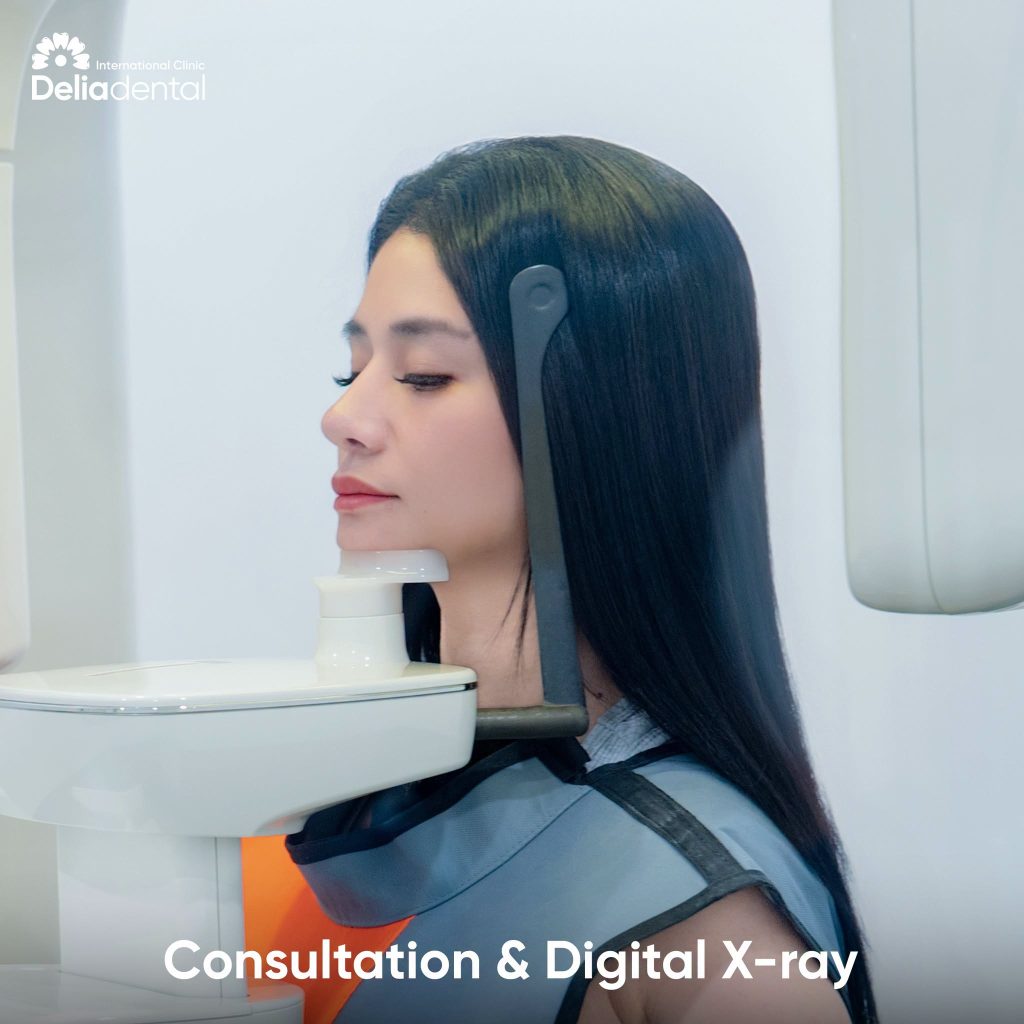
Delia Dental Clinic at Hanoi and Ho Chi Minh city reviews a missing molar case starting with a CBCT scan, which shows the actual bone volume and density at the gap rather than relying on a visual exam alone. This is what determines whether an implant can proceed directly, whether a bone graft is needed first, or whether a bridge or partial denture is the more practical route for that specific case.
For international patients, this assessment can often begin remotely. Sending existing X rays or a recent CT scan via WhatsApp or Messenger allows the clinical team at Delia Dental Clinic to give an initial read on complexity before you travel, so you arrive with a working treatment plan rather than starting the evaluation from zero. A final decision is always confirmed in person once the CBCT scan is taken on site, since a remote review is a starting point for planning, not a final diagnosis.
FAQ
Can a missing molar cause problems even if it does not hurt?
Yes. Pain is not a reliable signal for what is happening underneath a missing tooth. Bone loss and the gradual shifting of neighbouring and opposing teeth both happen silently, often for years before any discomfort appears. By the time a patient notices tightness, a changed bite, or difficulty chewing on that side, the underlying changes have usually been progressing for a while already.
Is it too late to get an implant if a molar has been missing for years?
Not necessarily. A bone graft can often restore enough volume for an implant even after several years, though it does add time and cost to the process. The only way to know for certain is a CT scan, since bone loss varies significantly between patients and cannot be judged accurately from how long the tooth has been gone alone.
Which option lasts the longest?
A well placed and properly maintained implant is generally the most durable of the three, since it is not dependent on the condition of neighbouring teeth the way a bridge is. A bridge typically needs replacement after a decade or more, depending on how well the supporting teeth hold up. A partial denture usually needs adjustment or replacement sooner, and may also need modification if more teeth are lost from the same arch later.
Can I replace just one molar, or do I need a full arch treatment?
A single missing molar is almost always treated as a single tooth case, not a full arch case. Full arch treatments like All on 4 are reserved for patients missing most or all of the teeth in one jaw, which is a different clinical picture entirely from one missing back tooth.
Does a missing molar affect other teeth even on the opposite side of the mouth?
It can, though less directly than the neighbouring teeth. When chewing shifts away from a missing molar toward the other side of the mouth, that side can take on more bite force than it normally would. Over time, this uneven load can contribute to extra wear on the opposite side, though this effect develops more slowly than the changes at the gap itself.
Final Thoughts
A missing molar is easy to ignore because it rarely announces itself with pain, but the bone underneath it and the teeth around it keep changing whether or not you notice. The earlier the case is reviewed, the more options stay realistically on the table, and the simpler the eventual treatment tends to be.
If you have a missing molar and want to know where your case actually stands, send your X ray or CT scan via WhatsApp or Messenger for an initial review from Delia Dental Clinic before deciding between an implant, a bridge, or a partial denture.


