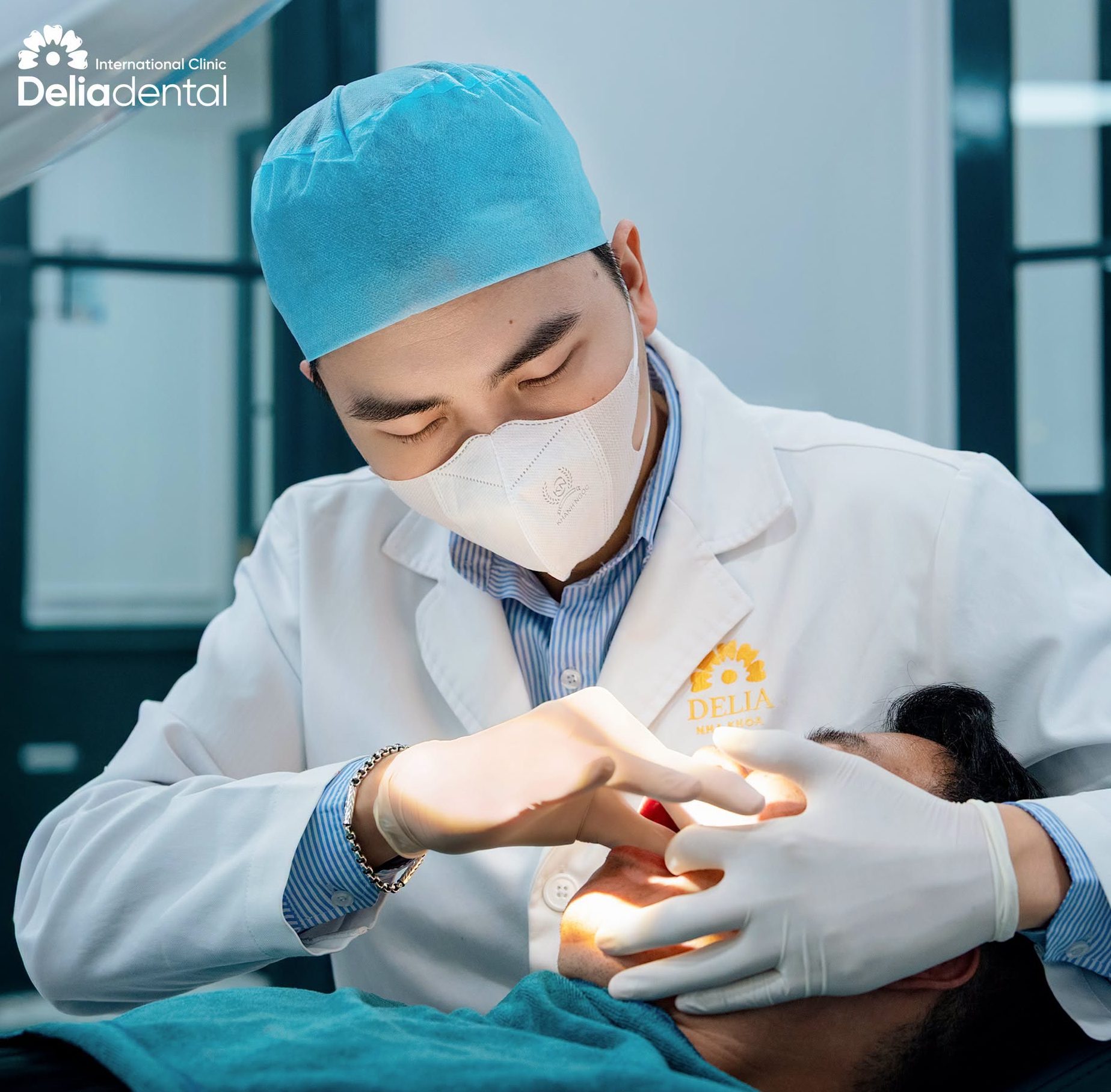
Choosing a dental implant specialist in Vietnam for a complex case requires more than comparing years of experience, association logos or a large number displayed on a clinic website. The more useful questions are whether the dentist has personally treated cases similar to yours, what role they played and how clearly they can explain the proposed treatment.
This becomes especially important when you are assessing a dentist from another country. You may need to decide whether to send records, book flights or pay a deposit before meeting the treating dentist in person. Most of the evidence available at that stage comes from professional profiles, remote consultations, case documentation and the answers the clinic provides.
No single certificate or clinical volume guarantees a good result. The strongest assessment combines a valid professional licence, relevant implant training, dentist-specific case experience, documented comparable cases and a treatment plan that acknowledges what cannot yet be confirmed.
Quick Answer
To evaluate a dental implant specialist in Vietnam, check the dentist’s licence, training and personal experience with cases comparable to yours. Ask how clinical volume is counted, who will perform each treatment stage and what evidence supports the proposed plan. Membership logos and before-and-after photographs are useful context, but not proof on their own.
What Experience Matters for a Complex Implant Case?
The number of years a dentist has practised is relevant, but it does not reveal what they have been doing during those years. A dentist may have extensive experience with single implants while having limited involvement in full-arch reconstruction, severe bone loss or failed implant revision.
Experience should therefore be matched to the procedure being considered. A patient replacing one missing molar does not need the same evidence as someone considering All-on-4, All-on-6, a sinus lift, extensive bone augmentation or a combined surgical and restorative rehabilitation.
Full-arch cases are a useful example. Placing the implant fixtures is only one part of the treatment. The dentist or coordinated clinical team must also consider the remaining teeth, available bone, implant distribution, immediate-loading suitability, bite relationship, temporary bridge and design of the final prosthesis. A high number of routine implant placements does not automatically demonstrate experience across all these decisions.
When a clinic provides a clinical volume, clarify what the number represents. These statements are not equivalent:
- The clinic has placed 10,000 implants.
- One dentist has treated 1,000 implant patients.
- A dentist has placed 1,000 implant fixtures.
- A dentist has completed 200 full-arch restorations.
One patient may receive several fixtures, while a clinic-wide total may combine the work of multiple dentists over many years. Ask whether the figure belongs to the treating dentist or the entire organisation, whether it counts patients, fixtures or arches, and how many cases were genuinely comparable to yours.
There is no universal minimum number that identifies an experienced dental implant dentist in Vietnam. Relevance matters more than the largest headline figure. A smaller but clearly documented group of cases involving the same anatomical and restorative problems may tell you more than an impressive total with no context.
How Should You Read AAID, ICOI and Other Implant Credentials?
Professional education can strengthen a dentist’s qualifications for dental implants, but patients need to read the wording carefully. Membership in an implant organisation and an advanced credential awarded by that organisation are not necessarily the same achievement.
The American Academy of Implant Dentistry, for example, distinguishes general membership from its Associate Fellow and Fellow credentials. According to the AAID’s published requirements, an Associate Fellow must be a licensed dentist, complete at least 300 hours of implant-related postdoctoral or continuing education and have at least one year of implant experience. The Fellow pathway requires at least 400 hours of education, five years of experience and broader knowledge of both surgical and restorative implant care.
The International Congress of Oral Implantologists also lists Fellowship, Mastership and Diplomate as separate advanced credentials. Its website provides a searchable directory that allows users to filter these levels. Therefore, an ICOI membership logo should not automatically be interpreted as Fellowship, Mastership or Diplomate status.
When reviewing a professional profile, look for the exact description:
- “Member of AAID” indicates membership.
- “AAID Associate Fellow” identifies a specific credential.
- “ICOI Diplomate” identifies a different credential level.
- “Completed an implant training course” describes education but not necessarily independent credentialing.
This distinction does not mean that a member is unqualified or that a credentialed dentist is automatically suitable for every case. It simply prevents a broad association with an organisation from being presented as a specific qualification that has not been established.
A credential can confirm that defined educational, experience or assessment requirements were met. It cannot independently tell you how recently the dentist performed a procedure like yours, whether they personally completed every case attributed to the clinic, how they currently plan treatment or how complications are managed. It should be treated as one layer of evidence rather than the final answer.
What Clinical Evidence Should You Ask to See?
Comparable cases are more informative than a general gallery of attractive smiles. If you have severe posterior bone loss, for example, a straightforward front-tooth implant does not show how the dentist handles your clinical problem. If you require a full-arch restoration, isolated implant crowns are not the closest comparison.
Ask whether the clinic can show two or three anonymised cases involving similar treatment needs. Useful documentation may include the initial condition, relevant diagnostic images, the reason for the chosen implant distribution, whether grafting was required, the temporary restoration and the final result after healing.
Patient confidentiality must still be protected. You do not need a person’s name, face or full medical record. What matters is whether the case is authentic, clinically comparable and attributable to the dentist being evaluated.
Before-and-after photographs can support this evidence, but photographs mainly show the visible appearance of the teeth and smile. They cannot establish implant position, bone integration, bite balance, hygiene access beneath a bridge or the condition of the tissues over time. A photograph taken immediately after treatment also provides less information about follow-up than a documented result after the healing and restorative stages.
If a clinic describes a particular case as evidence of a dentist’s experience, ask what that dentist personally did. In multidisciplinary treatment, one clinician may plan the surgery, another may place the implants and another may design or fit the prosthesis. Team-based care can be appropriate, but the division of responsibility should be clear.
Can the Dentist Explain the Plan Before You Travel?
A remote consultation cannot provide every final answer, but it can reveal how the dentist reasons and communicates.
With recent X-rays, CBCT files where available, dental photographs and treatment records, a dentist may be able to discuss the likely treatment direction, possible alternatives and information still missing. A responsible preliminary assessment should distinguish what is visible in the submitted records from what requires updated imaging or an in-person examination.
For example, the dentist should be able to explain why separate implants, an implant bridge or full-arch treatment is being considered. If bone grafting or a sinus procedure may be needed, the explanation should connect that possibility to the available anatomy rather than presenting it as a standard addition for every patient.
The assessment should also address the likely number of treatment stages, whether temporary teeth may be used, when the final restoration could be fitted and whether one or two trips to Vietnam may be required. For international patients, these are clinical decisions as well as travel-planning details.
A preliminary plan should remain conditional. Be cautious if a clinic guarantees immediate loading, rules out grafting or confirms a final price from smile photographs alone. Bone dimensions, gum condition, bite, infection, implant stability and other findings may change the plan after examination.
Before choosing a dentist abroad, ask the treating dentist these seven questions:
- How many cases comparable to mine have you personally completed?
- Is that number counted by patients, arches or implant fixtures?
- Who will plan the case, place the implants and design the final teeth?
- What is the exact name and level of each relevant implant credential?
- Can I review anonymised cases with similar bone and restorative needs?
- What findings could change the preliminary plan after I arrive?
- How will complications and follow-up be handled after I return home?
The quality of the answers matters as much as the claims themselves. A dentist who explains uncertainty, alternatives and decision points clearly may provide more useful evidence than someone who gives confident but unsupported assurances.

How to Compare Two Dentists Without Relying on “Best Dentist” Claims
There is no objective online ranking that can identify the best dentist for dental implants abroad for every patient. The better comparison is between the evidence each dentist provides for your particular diagnosis.
| Evidence | Stronger answer | Weaker answer |
| Clinical volume | Dentist-specific figures for comparable cases | One large clinic-wide total |
| Credential | Exact title, issuing organisation and verifiable level | Association logo without a credential level |
| Case documentation | Similar complexity with planning and follow-up context | Selected smile photographs only |
| Remote assessment | Conditional direction based on suitable records | Guaranteed treatment based on photos |
| Responsibility | Named clinician for each major stage | An unspecified “specialist team” |
| Complication planning | Clear local and remote follow-up process | A success-rate claim without a process |
This comparison also helps identify questions that remain unanswered. A professional profile may show relevant education but no comparable cases. A case gallery may be strong, while responsibility for surgery remains unclear. The purpose is not to reduce the decision to one score; it is to find gaps before they become problems during treatment.
How Delia Dental Clinic Approaches Complex Implant Assessment
Delia Dental Clinic publishes the education and implant-related experience of individual clinicians on its medical staff page, allowing patients to review more than a general claim about the clinic’s team.
The wording of these profiles should still be read precisely. Dr. Nguyen Quoc Thang is listed as an AAID Member, with more than 12 years of experience and over 1,000 prosthetic cases completed annually. The page does not describe him as an AAID Associate Fellow or Fellow, so membership should not be converted into either credential.
Master Dr. Do Viet Dai is listed as a Level-I Dentistry Specialist and ITI member with more than 12 years of implant experience. His published training includes certificates in implant surgery, maxillofacial surgery, All-on-4 treatment and zygomatic implants. These details are more useful than a general “implant expert” label because patients can compare the stated training with the demands of their own case. They should still ask how many similar cases he has personally completed and what role he would perform in their treatment.
Other Delia Dental Clinic profiles show different areas of implant training, including digital implant surgery, restoration, full-arch treatment, sinus lifting and bone augmentation. This makes the identity of the proposed dentist important. The presence of several experienced clinicians within one organisation does not mean every dentist has the same training or will be available at both locations.
Before travelling, international patients can send dental photographs, recent X-rays, existing CBCT files, treatment records or another clinic’s quote to Delia Dental Clinic via WhatsApp or Messenger. The team can use the available records to provide a preliminary treatment direction, identify information still needed and discuss a likely timeline and cost range for treatment at the Hanoi or Ho Chi Minh City clinic.
After arrival, the proposed plan is confirmed through an in-person examination and clinically appropriate imaging. Delia Dental Clinic’s published implant quote process states that a new CBCT may be needed when previous records are unavailable, outdated, incomplete or insufficient. Before surgery, the itemised plan should identify the implant system, number of implants, abutments, temporary and final restorations, additional procedures, expected trips and applicable warranty.
For a complex case, patients should also ask Delia Dental Clinic to confirm the treating dentist, the clinician responsible for each major stage and the experience most relevant to the proposed procedure. This turns a general clinic profile into information that can support an individual decision.
Send your recent X-rays or CBCT files, clear dental photographs, previous treatment records and any existing implant quote to Delia Dental Clinic via WhatsApp or Messenger. The international team in Hanoi or Ho Chi Minh City can arrange an initial review and explain the likely treatment direction, timeline and questions that still require an in-person examination.
Frequently Asked Questions
What qualifications should a dental implant dentist have?
A dental implant dentist should hold a valid licence for the work they perform and have appropriate training in the surgical, restorative or combined phases relevant to the case. For complex treatment, review procedure-specific education, personally completed comparable cases and the dentist’s role in planning, surgery and restoration. An association membership alone does not establish all these qualifications.
Does an implant dentist need to be an oral surgeon?
Not in every country or for every implant procedure. General dentists, oral and maxillofacial surgeons, periodontists and prosthodontists may be involved in implant treatment, depending on local licensing rules and their training. The title alone is less informative than the dentist’s permitted scope, relevant experience and responsibility within your case.
How many implant cases should an experienced dentist have completed?
There is no universal threshold. A case number becomes meaningful only when you know whether it refers to patients, implant fixtures or arches; whether the work was performed personally; and how closely those cases resemble yours. For complex treatment, comparable-case experience is more useful than a large unqualified total.
How can I verify an AAID or ICOI credential?
Ask for the dentist’s full name and exact credential, such as AAID Associate Fellow, AAID Fellow, ICOI Fellow, Master or Diplomate. Then check the organisation’s online directory or contact the organisation directly. Do not search only for membership, because membership and advanced credentialing may appear separately.
Can a dentist evaluate my complex implant case online?
A dentist may provide a preliminary assessment when suitable photographs, X-rays, CBCT files and treatment records are available. This can help identify possible options, treatment stages and travel requirements. Final diagnosis, implant suitability and the confirmed treatment plan generally require an in-person examination and any clinically necessary updated imaging.
Final Thoughts
Choosing a dental implant specialist in Vietnam for a complex case is not about finding the dentist with the longest list of memberships or the largest number on a clinic website. It is about establishing whether the dentist’s training, recent clinical experience and role in treatment are relevant to the condition shown in your own records.
A credible dentist should be able to explain what they can assess before you travel, what remains uncertain and which findings could change the preliminary plan. They should also be transparent about who will perform the surgery, manage the restorative stages and provide follow-up if a problem develops after you return home.
Certificates, clinical volumes and before-and-after photographs can all support a decision, but none should be considered in isolation. The strongest choice is usually the dentist who provides verifiable, case-specific evidence and a clear treatment rationale, not simply the most confident promise.


