A fixed All-on-4 or All-on-6 bridge has surfaces beneath the prosthesis that a standard toothbrush cannot fully reach. The amount of space between the bridge and the gum varies with its design, but food debris and plaque can still collect around the tissue-facing surface and implant access areas. When you live overseas after treatment, knowing exactly where and how to clean becomes especially useful because follow-up with the original clinic requires more planning.
The good news is that cleaning an All-on-4 or All-on-6 bridge properly doesn’t require special equipment beyond what fits in a washbag. It does require a different routine than brushing natural teeth, because the goal is reaching the underside of the bridge and the gum tissue beneath it, not just the visible surface.
This guide walks through why the space under the bridge needs specific attention, the tools and order that work best, and what to watch for that would justify seeing a dentist near you rather than waiting to reach out to Delia.
Quick answer
To clean an All-on-4 bridge, brush the accessible surfaces twice a day and clean beneath the prosthesis daily using the aids selected for its design, such as a water flosser, superfloss or a correctly sized interdental brush. Do not force a tool into a tight space. Ask your dentist to show you the correct access points before you travel home.
Why this bridge is harder to clean than natural teeth
With natural teeth, floss slides between each tooth and against the gum line on both sides. An All-on-4 or All-on-6 bridge is a single fixed piece sitting above the gum tissue, connected to the implants underneath rather than growing out of it like a natural tooth root. That design leaves a gap between the underside of the bridge and the gum, wide enough for food debris and plaque to collect but too enclosed for a toothbrush bristle to reach on its own.
Left uncleaned, plaque in that gap can lead to inflammation of the gum tissue around the implants, sometimes called peri-implant mucositis, which can progress to more serious bone-level issues if it continues untreated. This is not unique to Delia’s work. It’s a known maintenance requirement for any full-arch implant bridge, regardless of where it was placed, and it’s the reason dentists recommend a specific cleaning routine rather than treating the bridge like a normal set of teeth.
The daily cleaning routine
Water flosser first
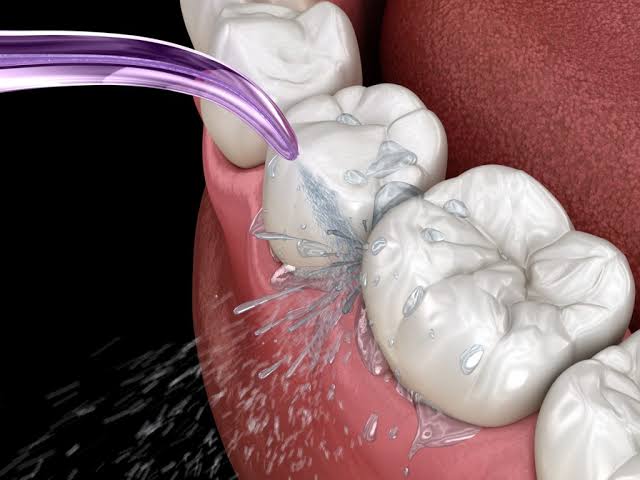
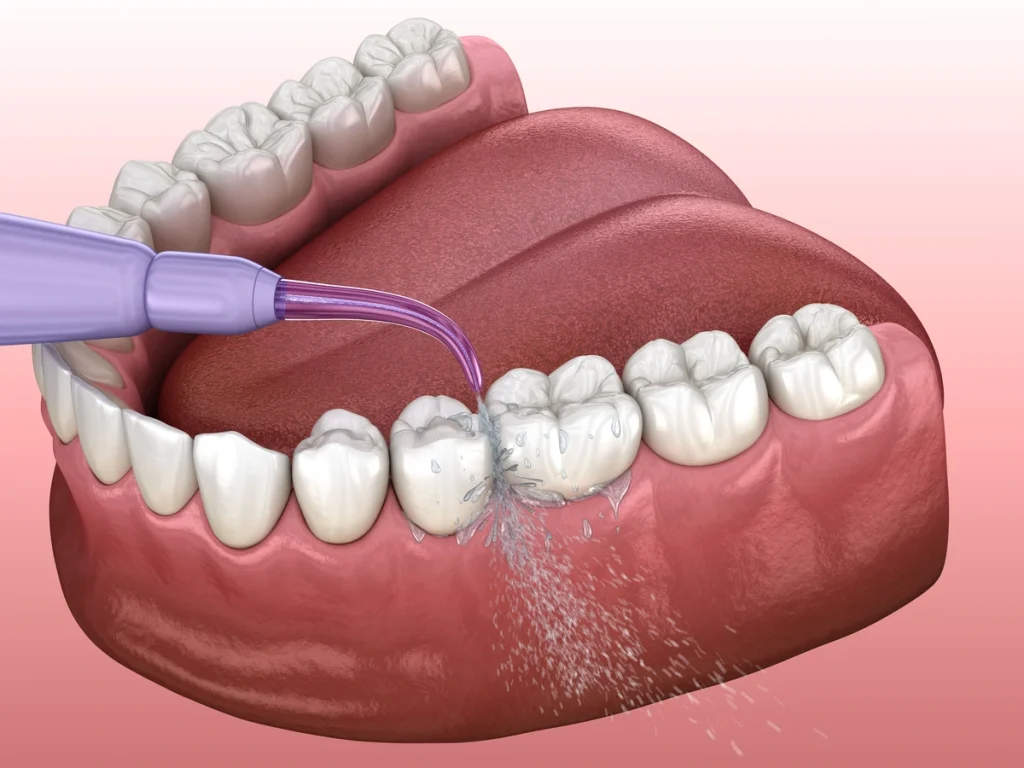
Aim the water flosser tip along the gum line where the bridge meets the tissue, moving slowly across the entire arch rather than blasting one spot. This flushes out loose debris before you try to physically clean the space, and it’s the single most useful tool for reaching the areas a brush can’t.
Floss threader or superfloss next
Thread the floss under the bridge at each implant site and gently work it back and forth against the gum-facing surface. Superfloss, which has a stiffened end built for exactly this kind of threading, is usually easier to manage than a plain threader and standard floss.
Interdental brush for the gaps
A small interdental brush, sized to fit snugly, clears the space between the underside of the bridge and the gum tissue itself. This is the step that catches what the water flosser rinses loose but the threader can miss.
Regular brushing for the visible surface
A soft-bristled brush, electric or manual, still handles the outer and biting surfaces of the bridge the same way it would natural teeth.
Doing all four steps daily takes longer than a standard brushing routine, usually 5 to 8 minutes, but it’s what keeps the gum tissue under the bridge healthy without needing a professional cleaning to catch up on it.
The best combination depends on the contours of the bridge, the size of the cleaning spaces and your hand dexterity. If a threader or interdental brush no longer passes through an area that was previously accessible, do not force it. Ask Delia Dental Clinic or a local dentist to check whether the tissue or bridge fit has changed.
Daily vs weekly routine
| Frequency | What to do |
| Twice daily | Brush the visible bridge surfaces and the gum line with a soft-bristled manual or electric toothbrush |
| Daily | Clean beneath the bridge using the water flosser, superfloss, bridge threader or correctly sized interdental brush recommended for your bridge |
| After meals, when needed | Rinse or use a water flosser to remove trapped food, without treating this as a replacement for the full daily routine |
| Every 2–6 months, or as advised | Arrange professional implant maintenance based on gum health, cleaning access, smoking history, previous periodontal disease and other risk factors |
| Whenever access or fit changes | Contact Delia Dental Clinic and arrange a local examination if a tool suddenly stops passing through or the bridge feels different |
Build your bridge-care kit before flying home
| Take home | Why it matters overseas |
| The exact interdental-brush size demonstrated by the clinic | Buying an incorrect size may make the brush ineffective or difficult to pass |
| Superfloss or compatible bridge threaders | The preferred product may not be stocked locally |
| A compact water flosser and compatible charging adaptor | Makes it easier to keep the routine consistent while travelling |
| Implant and bridge records | Helps a local dentist understand the restoration if an examination is required |
| Delia Dental Clinic’s WhatsApp or Messenger contact | Gives you a direct route for questions after returning home |
Signs it’s time to see a dentist near you
A few signs mean it’s worth booking a local check rather than waiting to sort it out remotely. Persistent bad breath that doesn’t improve with the routine above, gums that bleed regularly when cleaning rather than occasionally, visible swelling or redness around the implant sites, or a bridge that feels like it’s shifting or fitting differently than before are all reasons to get seen in person. None of these are things a remote review can properly diagnose, and a local dentist can examine the gum tissue and check probing depths directly.
How Delia Dental Clinic handles this
Patients leave Delia Dental Clinic with a walkthrough of this exact routine, including which specific tools fit their bridge design, before they travel home. For ongoing questions once you’re back overseas, Delia is reachable through WhatsApp or Messenger. Send a description of what you’re noticing, or a photo if it’s something visible like swelling or discoloration, and the team can help you judge whether it fits normal maintenance or points to something that needs an in-person look.
That said, remote review through photos or messages is guidance, not a substitute for a hands-on exam. If any of the warning signs above show up, seeing a dentist near you first is the safer move, and Delia’s team at Hanoi and Ho Chi Minh city can help you think through what to ask them if useful.
FAQ
Can I use a regular toothbrush instead of these extra tools?
A toothbrush alone reaches the visible surface of the bridge but not the gap underneath it, so it isn’t enough on its own. The water flosser and threader or interdental brush are what actually reach the space that causes problems if left uncleaned.
What if superfloss or an interdental brush will not pass under the bridge?
Do not push the tool through with force. The access space may require a different brush size or entry point, and swelling can also make an area feel tighter than before. Send a clear photo and description to Delia Dental Clinic, then arrange a local examination if the change persists.
Does the bridge need to be removed during every professional cleaning?
Not automatically. A full-arch bridge may be cleaned and assessed without removal when access is adequate. Removal may be considered when professional cleaning cannot be completed properly or when there is a biological or mechanical concern.
What if I don’t have access to a water flosser overseas?
A floss threader or superfloss combined with an interdental brush still covers the essential cleaning, though a water flosser makes the daily routine noticeably faster and easier to keep up with consistently.
Does this routine differ between All-on-4 and All-on-6?
The cleaning principle is the same for both, since the gap under the bridge exists regardless of whether it’s supported by four or six implants. The main difference is simply covering more implant sites with the threader and interdental brush on an All-on-6 arch.
Final thoughts
The routine that keeps an All-on-4 or All-on-6 bridge healthy isn’t complicated, but it does need to happen daily and it does need the right tools, since a toothbrush alone leaves the space under the bridge untouched. Living overseas just raises the stakes on staying consistent, since there’s no quick clinic visit to catch something that’s been building up quietly.
If anything feels off, from persistent bad breath to a bridge that seems to be shifting, send a description or photo to Delia Dental Clinic via WhatsApp or Messenger, and the team can help you figure out whether it’s routine maintenance or worth a local dental visit.


