
You wake up with a tight jaw, a dull ache near your temples, and a partner who says they can hear you grinding. Then you start researching veneers and find one forum thread after another saying ceramic and teeth grind do not mix.
The honest answer is more nuanced. Grinding, known clinically as bruxism, does not automatically rule out porcelain veneers, but it does change how a dentist should plan them. The question is not simply whether you grind. It is how heavily, how much wear your teeth already show, and whether the plan includes protection once the veneers are in place.
This guide explains why grinding puts extra load on ceramic, who may still be a good candidate, how the treatment plan usually changes, and what international patients should send to Delia Dental Clinic before booking a flight to Hanoi or Ho Chi Minh City.
Quick Answer
Many people who grind their teeth can still have ceramic veneers, but the plan needs adjusting. A dentist should assess wear, bite and jaw symptoms first, choose the material and tooth preparation carefully, and usually recommend a night guard once the veneers are bonded. Heavy, uncontrolled grinding may call for stabilising the bite before any cosmetic work.
Why grinding puts ceramic veneers at risk
Ceramic is hard but brittle. A veneer is a thin shell bonded to the front of a tooth, typically around 0.3 to 0.5 millimetres thick, and it performs well under normal chewing forces. Grinding and clenching are different. They apply sustained pressure and sideways movement, often for hours each night, and the edges of front teeth take most of it.
In people who grind, the usual problem with ceramic is a chipped edge or a fracture near the biting surface. Research on crowns in bruxers points the same way: layered porcelain chips more often in people who grind, while monolithic materials such as zirconia and lithium disilicate hold up better. Veneers are a different restoration, so those findings are a pointer rather than proof, but they explain why material choice and edge design matter in a grinder.
There is a second concern that runs in the other direction. If your teeth are already worn flat, there is less enamel to bond to and less natural shape to work with, which affects both the design and the long term outlook. Planning veneers on top of untreated, active wear is where problems tend to start. Many people who grind are unaware of it, which is why a bite assessment matters more than self reporting.
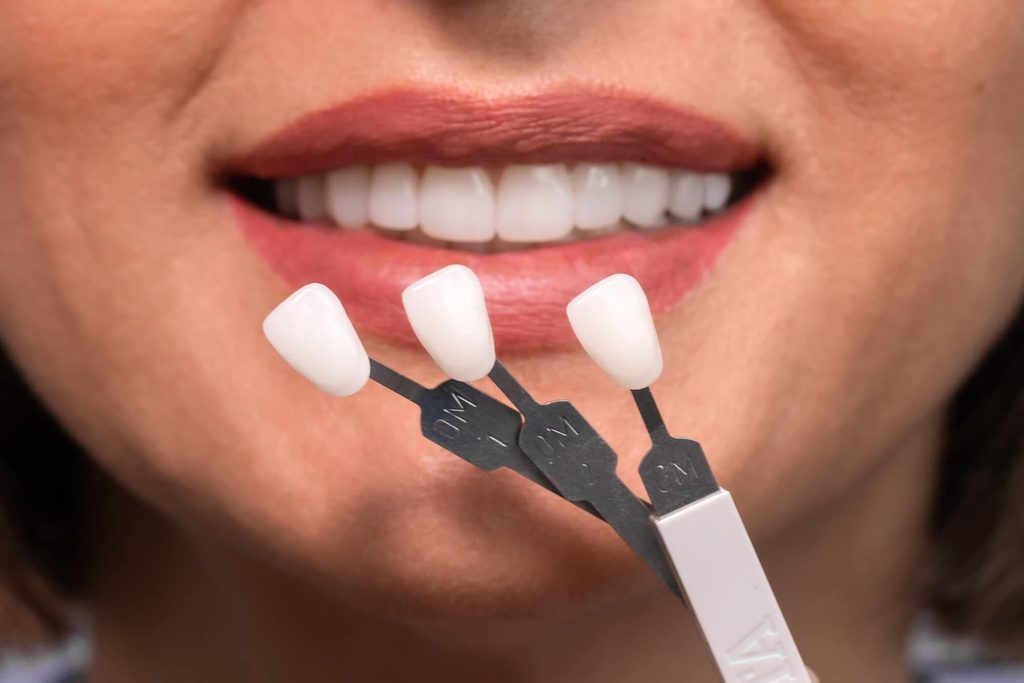
Who may still be a good candidate, and who should wait
Suitability sits on a spectrum. The table below shows how dentists commonly think about it. It is a general guide, not a diagnosis, and only an in person examination can place you on it.
| Situation | Usual direction |
|---|---|
| Mild or occasional grinding, little visible wear, healthy bite | Veneers are often possible, with a night guard recommended afterwards |
| Moderate grinding, some flattened edges, no jaw pain | Veneers may be possible with adjusted design, material choice and a protection plan |
| Heavy grinding, clear wear, chipped teeth, jaw muscle pain | Stabilise the bite first, then reassess; crowns or a different restorative plan may be discussed |
| Active jaw joint problems or frequent morning headaches | Joint and muscle symptoms usually need assessment before any cosmetic work |
If your main goal is cosmetic and your teeth are structurally sound, veneers can still be on the table. If grinding has already worn teeth down or cracked them, the conversation often moves toward protecting structure first. Our guide on veneers versus crowns in Vietnam explains when a tooth needs more coverage than a thin veneer can give.
How the treatment plan changes when you grind
The assessment comes before the design
A dentist planning veneers for a grinder looks beyond the front teeth. They check for wear facets, flattened or chipped edges, small cracks, gum recession near the neck of the teeth, and tenderness in the jaw muscles. They also look at how your teeth meet in different jaw positions, because veneers can change contact points. Photos, X-rays and a clinical bite check all contribute, and none of them alone gives the full picture.
Material and thickness are chosen with load in mind
Not every ceramic behaves the same under stress, and the right choice depends on the tooth, the bite and how much enamel remains. Delia Dental Clinic’s current offer price is $270 per tooth for E.max Press veneers (list price $380) and $310 per tooth for LiSi veneers (list price $550). Both carry a published warranty period of 10 years, subject to the written conditions. The price includes consultation, scan or impression, mock-up, temporary restoration and try-in, while case-dependent extras such as root canal treatment, core buildup or gum treatment are quoted separately. The material is not picked from a price list. It is decided tooth by tooth after the examination, with grinding history as one of the factors. For the cost side, see our breakdown of veneer prices in Vietnam.
A night guard is part of the plan
A night guard is a custom fitted cover for your teeth that absorbs and spreads grinding forces. It does not stop you from grinding, but it takes load off the ceramic and the natural teeth. Because a guard is moulded to the surface it covers, it is made after the final restorations are in the mouth, not over temporary ones. Ask early whether it will be made during your stay or by a dentist at home, because a guard that is delayed for weeks leaves new veneers unprotected. Our article on whether you actually need a night guard after implants or crowns covers the evidence and the fitting process in more detail, and the same logic applies to veneers.
Design and bite adjustments reduce stress on the edges
Veneer length, edge thickness and the way the upper and lower front teeth guide each other all influence how much stress lands on the ceramic. A mock-up lets you and the dentist test the proposed shape before anything permanent happens. At the try-in stage, minor bite contacts can still be corrected chairside, while length and shape are fixed during fabrication, so raise any concern about edge length at the mock-up rather than waiting.

Signs you might be grinding without knowing
Many people only find out from a dentist or a partner. These signs are worth mentioning at your consultation:
- Waking with a sore or tight jaw, or headaches around the temples
- Teeth that look shorter, flatter or more translucent at the edges than they used to
- Small chips on edges that no single accident explains
- Sensitivity to cold that comes and goes without obvious decay
- Indentations on the sides of your tongue or ridges inside your cheeks
- A partner who hears grinding or clicking at night
None of these confirms bruxism on its own, since each has other possible causes. They are the patterns that make a bite assessment worthwhile before veneers rather than after a chip.
What to send before you fly
Because grinding affects the plan, the remote review is more useful when it includes more than a smile photo. Before booking flights, send:
- Clear photos of your front teeth from straight on and from the side, with your teeth together and slightly apart
- Close photos of any chipped, flattened or worn edges
- Recent X-rays if you have them
- A note on jaw pain, headaches, clicking, or a partner’s report of grinding
- Any night guard or splint you already use
How Delia Dental Clinic assesses grinding before veneers
At Delia Dental Clinic, the veneer process starts with a review of your photos and records, followed by an examination at the Hanoi or Ho Chi Minh City clinic. Grinding history, visible wear and bite findings feed into whether veneers are suitable, which teeth they suit and whether another restorative route makes more sense. Extra treatment found during assessment is quoted separately. Offer prices follow the clinic’s current terms, so ask for the conditions and the promotion period in writing when you request your quote.
A night guard is prescribed case by case, based on what the dentist finds at the final bite review, such as wear patterns, jaw tenderness or an uneven bite. It is not added to every case, so mention grinding when you first send photos and it can be raised at the planning stage.
Grinding also touches the written warranty. For crowns and veneers, the conditions include periodic checkups, typically every six months, good oral hygiene, following post treatment instructions and using a night guard or other protective device when prescribed. The exclusions include teeth grinding or clenching without protective measures. Ask for the written terms for your specific treatment before it starts, and keep records of any checkups completed at home.
A remote review can suggest a preliminary direction, but it cannot confirm your bite or how much load your teeth carry. Anything involving grinding stays preliminary until you have been examined.
Frequently asked questions
Will veneers break if I grind my teeth?
Not necessarily, but the chance of chipping is higher than for someone who does not grind. Risk depends on how heavily you grind, how much wear your teeth already have, the material used and whether you wear a night guard. A well planned case with protection can last, while an untreated heavy grinder may see chips or cracks at the edges. A bite assessment tells you where you sit far better than a general rule.
Do I need to stop grinding before getting veneers?
Most people cannot simply stop, because grinding usually happens during sleep and is not under conscious control. What dentists look for is whether the grinding is active and damaging or mild and manageable. In heavy cases, the dentist may stabilise the bite before starting cosmetic work. In milder cases, veneers and a night guard can often be planned together.
Do I really need a night guard with veneers?
If you grind or clench, a night guard is commonly recommended even when the veneers are well made. It protects the ceramic edges and your remaining natural teeth from repeated load. It is made after the veneers are bonded, so confirm the timing before travel. If you already own a guard, send photos, because new veneers can change how it fits.
Are crowns better than veneers for grinders?
Sometimes, but not as a blanket rule. Crowns cover more of the tooth and may suit teeth that are already worn, cracked or heavily restored. Veneers remove less tooth structure and suit teeth whose main problem is cosmetic. The choice is made tooth by tooth, and a grinder can end up with a mix of both.
Can veneers fix teeth that grinding has already worn down?
Veneers can sometimes rebuild the shape of worn front teeth, but only when the grinding is under control and enough healthy tooth remains. If wear is advanced, a larger restorative plan may be needed, and the dentist may recommend addressing the bite first. A photo review shows visible wear, but the depth of the problem needs an examination.
What if a veneer chips after I return home?
A small chip does not always mean the whole veneer has failed, but it should be looked at, since chips can grow or catch the bite. Send clear photos to Delia Dental Clinic through WhatsApp or Messenger with the treatment date and what happened. Under the written warranty process, you notify the clinic promptly and the clinic determines the cause and whether a claim applies. Cracking or fracture under normal usage is covered, natural wear and grinding without protection are excluded, and a local dentist may be able to smooth the edge in the meantime.
Planning the rest of your veneer trip
If grinding is one of several questions you are weighing, these articles cover the decisions that tend to come next.
- Veneer Try-In: What Can Still Change Before Cementation
- Replacing Old Veneers in Vietnam: What Can and Cannot Be Corrected?
- How Many Days Do Veneers Take in Vietnam?
Final thoughts
Grinding is a planning factor, not an automatic no. The patients who run into trouble are usually the ones whose bite was never assessed, not the ones who were honest about the habit. Raising it at the first consultation gives the dentist what they need to choose the material, shape the edges sensibly and build protection into the plan.
If you grind or suspect you do, send your smile photos, close photos of any worn or chipped edges, recent X-rays and a short note about jaw symptoms to Delia Dental Clinic through WhatsApp or Messenger before booking your flight. The international patient team can review what you send, suggest a preliminary direction and help estimate the likely cost and travel timeline for Hanoi or Ho Chi Minh City. The final treatment plan and quote are confirmed after an in person examination.


