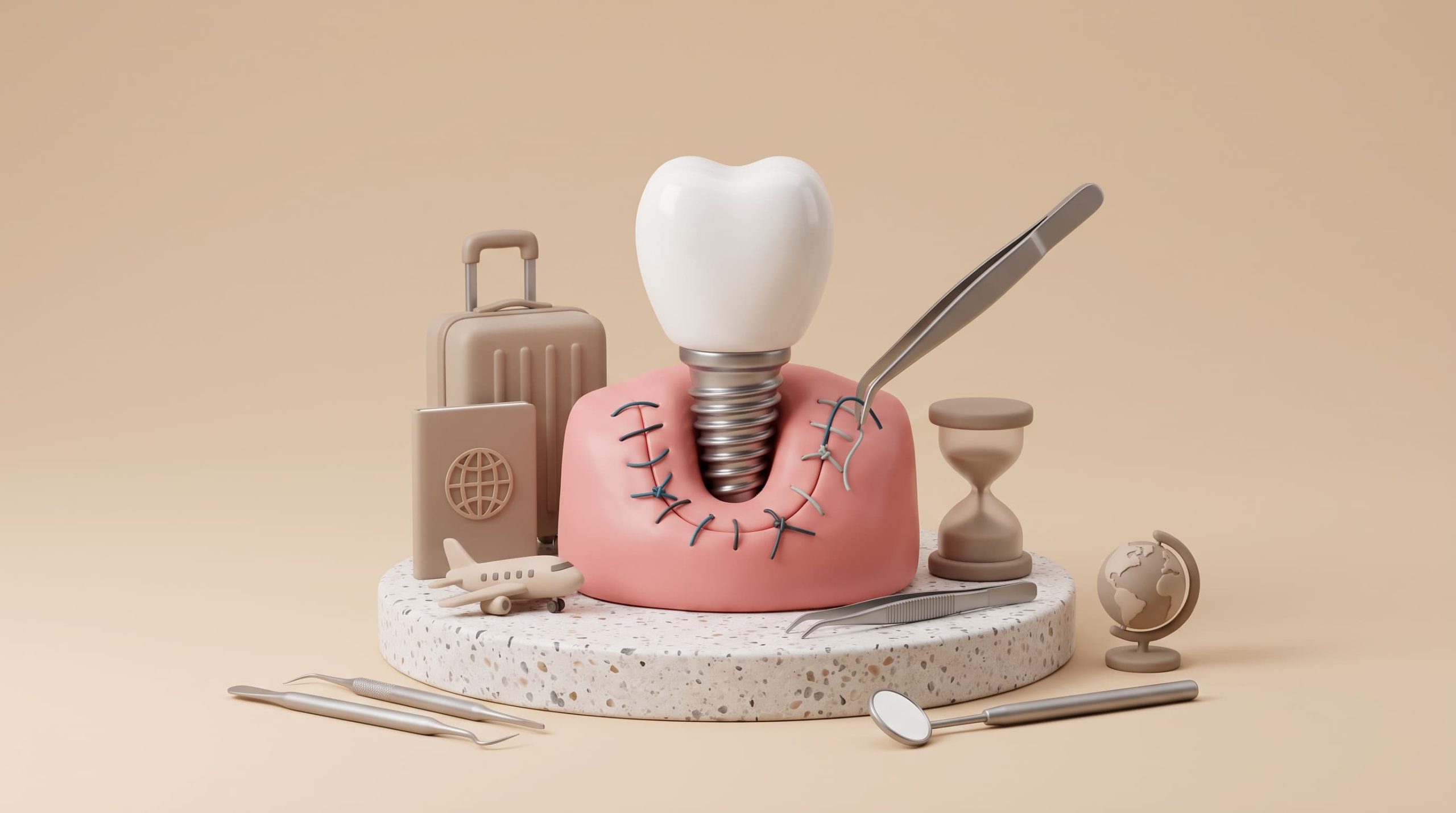
It is day four after implant surgery. You are in a hotel room, running your tongue over the surgical site, and you feel a loose thread where there was a firm knot yesterday. Or you find a short piece of thread on the pillow. The first thought is usually that something has gone wrong with your implant stiches.
In most cases it has not. Stitches after implant surgery are temporary by design. They leave the mouth in one of two ways: they dissolve on their own, or the dentist removes them. A stitch that loosens or falls out early is common and often harmless, but what the gum looks like underneath decides whether it matters.
This guide explains which type of stitch you probably have, how long each type stays, what normal loosening looks like compared with a wound that has opened, and what to do whether you are still in Vietnam or already back home.
Quick Answer
Most implant stitches are dissolvable and break down within roughly one to three weeks, depending on the material. Non-absorbable stitches are usually removed by the dentist at around 7 to 14 days. A stitch that comes loose early is often not a problem if the gum edges still meet and bleeding is light. An open wound, exposed graft material, worsening swelling, pus or fever needs a prompt dental review.
Which type of stitch do you have?
There are two types, and the difference decides the rest of your plan.
Dissolvable (absorbable) stitches are made of material the body breaks down gradually. They soften, fray and drop away over about one to three weeks, and some slower materials can last longer. You do not need an appointment to remove them. Finding a short piece of thread in your mouth during this window is a normal part of the process.
Non-absorbable stitches stay until a dentist takes them out, usually at a follow-up visit about one to two weeks after surgery. They are sometimes chosen when a wound needs firmer support, for example after bone grafting or when the gum has been repositioned.
You cannot reliably tell the type by looking at the thread. The dependable method is to ask before you leave the clinic: which type was used, how many stitches are in the mouth, and on what date they should be gone or removed. Write the answer in your phone. This matters most if you are flying home soon, because it decides whether you need a removal appointment in your home country.
What is normal while stitches dissolve
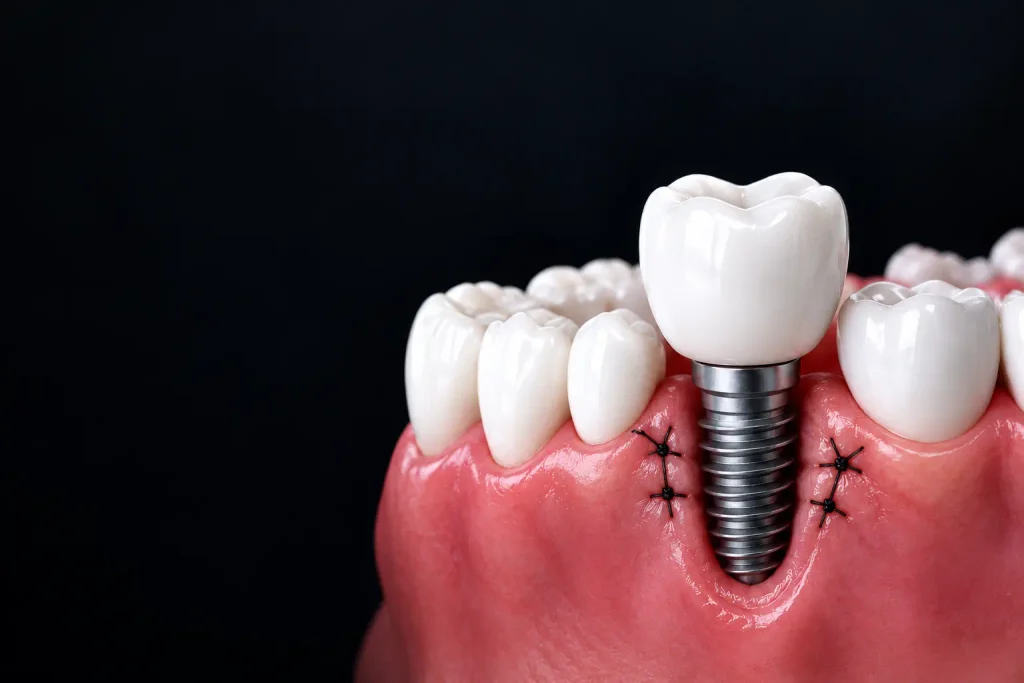
During the first week the stitched area can feel tight, slightly sore and a little rough under the tongue. Threads may look frayed or whitish. That is the material softening, not infection.
A stitch can loosen or fall out earlier than expected for ordinary reasons. Eating, speaking, tongue movement and swelling going down all pull on the thread. If the gum edges still sit together, bleeding is limited to a faint pink in your saliva, and pain is easing rather than increasing, a lost stitch usually does not change the outcome. The stitches only hold the gum in position while the first layer of healing forms, so one lost stitch is rarely the deciding factor.
When stitches need to be removed
If your stitches are non-absorbable, set the removal date before you book your return flight. A removal visit is short, usually a few minutes, and involves gently clipping and lifting the thread. It is not repeat surgery and normally needs little or no anesthetic.
For patients on a staged implant plan, the removal date also limits how soon you can leave Vietnam. The wider schedule for healing and the return visit is covered in the guide on how long to stay for dental implants in Vietnam.
If the stitches are still in place when you are already at home, a local dentist can usually remove them. Bring the date of surgery, the type of stitch if known, and a short message from the treating clinic. Be clear with the local dentist that you are asking for suture removal only, not an assessment of the implant.
What to do if a stitch comes out early
Check three things before doing anything else.
First, look at the gum in a clean mirror with good light. If the edges still meet and the area looks pink and slightly swollen, the wound is closed. If you see a visible gap, white or grey material in it, or something that looks like a membrane, take a photo and contact the clinic.
Second, check bleeding. Light oozing in the first day or two is normal. If bleeding is steady, press clean gauze firmly on the area for about 30 minutes without lifting it to check. If it continues after that, it needs prompt attention.
Third, check how you feel. Pain that is easing, swelling that peaks around day two to three and then falls, and no fever all point toward normal healing.
Do not pull, cut or tie a stitch yourself, and do not push the thread back into the wound. Brush away from the surgical site, use the rinse your dentist recommended, and avoid chewing on that side until you are told otherwise. If a lost stitch or swelling makes you unsure about your flight, the guide on flying after dental implant surgery covers the timing question.
Stitches after bone grafting
Bone grafting changes the picture. When graft material or a protective membrane sits under the gum, the stitches have a bigger job, and an early opening can expose the graft. Exposed material can irritate the site and raise the risk of infection. A few small granules in your mouth during the first days are not unusual. A visible gap, a membrane showing through, or a steady flow of granules should be reported to the clinic the same day.
Grafting also adds time and cost to a case. The article on bone grafting dental implant cost in Vietnam explains when it is needed and what changes the quote.
Signs that need a prompt dental review
Contact the clinic or a local dentist promptly if you notice any of these:
- The wound has opened and the gap is visible, or graft material or a membrane is showing
- Bleeding that does not stop after about 30 minutes of firm pressure
- Swelling that keeps increasing after day three instead of settling
- Pus, a persistent bad taste or a foul smell from the area
- Fever, or pain that is getting worse rather than easing
- Difficulty opening your mouth, breathing or swallowing, which needs urgent medical care
A single loose thread with none of these does not belong on the list. The pattern across symptoms matters more than any one sign.
How Delia Dental Clinic supports implant patients after surgery
Delia Dental Clinic treats implant patients at its Hanoi and Ho Chi Minh City clinics. Many implant plans are staged, so international patients often return home between visits. That makes the stitch question one to settle before departure rather than from a distance.
Before you fly, ask the team which stitches were used, when they should dissolve or be removed, and whether a local dentist will need to remove anything. If you are already home, you can send photos of the area, the date of surgery and a description of your symptoms through WhatsApp or Messenger. The international patient team can look at what you send and suggest whether it looks consistent with normal healing or needs a local check.
A photo review is a first read, not a diagnosis. It cannot confirm how deeply the wound has healed or rule out infection, so a persistent concern still needs an in-person examination. The wider workflow for sending images and records is described in the guide on what an X-ray and remote review can confirm before an implant trip.
Frequently asked questions
How long do dissolvable stitches take to disappear after implant surgery?
Most break down within about one to three weeks, depending on the material and how much saliva and movement the area gets. Some pieces drop away early and others linger as a soft thread. A thread still present after three weeks should be mentioned to your dentist so they can check it is not irritating the gum.
Is it normal to see a small piece of thread in my mouth?
Yes, especially in the second week. Dissolving thread frays and sheds small pieces. If the gum underneath looks pink and closed, this is expected. A thread that causes pain, catches on food or looks embedded in swollen gum should be checked rather than pulled out at home.
Can I remove my own stitches if they feel annoying?
No. A loose end can be irritating, but cutting or pulling can open the wound, introduce bacteria or remove part of a stitch that is still holding tissue together. If a thread bothers you, ask a dentist to trim it.
What if my stitches fall out the day after surgery?
Losing a stitch in the first 24 to 48 hours matters more than losing one in the second week, because the wound has had less time to seal. Check whether the gum edges still meet and whether bleeding is under control, then send a photo to the clinic. If the wound has opened or graft material is exposed, get it reviewed promptly.
Will a local dentist remove stitches placed by a clinic in Vietnam?
Most dentists can remove sutures, since it is a routine task. Bring the surgery date, the stitch type if you know it and a short message from the treating clinic, and say clearly that you are asking for removal only.
Should I brush the area while the stitches are in?
Usually you avoid brushing the stitched area directly for the first days and brush the rest of your mouth as normal. Your dentist may recommend a rinse and a date to begin gentle cleaning of the site. Follow the instructions you were given, since they depend on whether grafting or a gum flap was involved.
Getting through the rest of your recovery
Stitches are one part of a longer healing process, and these guides cover what usually comes next.
- What Causes Dental Implant Failure and How to Avoid It
- Can a Home Dentist Maintain Dental Implants Placed in Vietnam?
- How Painful Is Dental Implant Surgery? A Day by Day Timeline
- Exercise and Gym After Dental Implant Surgery
Final Thoughts
A stitch that dissolves, frays or falls out is usually the body and the material doing what they were designed to do. What matters is the gum underneath: closed edges, light bleeding and easing pain point to normal healing, while a visible gap, exposed graft material, pus or growing swelling needs a dentist soon. Find out your stitch type and date before you leave the clinic, and keep that information with you when you travel.
Send clear photos of the surgical area in good light, your surgery date, the type of treatment you had and a short note on any pain, bleeding or swelling to Delia Dental Clinic via WhatsApp or Messenger. The team can advise on the next step, including whether to see a dentist near you. Any final decision on a stitch problem is made after an in-person examination.


