
Veneers for gap teeth can close a space between the front teeth within a single trip, but they only suit gaps that are mainly a matter of tooth size and shape. If the gap exists because the teeth have drifted or the tissue under the lip is holding them apart, veneers cover the problem without fixing its cause, and the space can look different again later.
That distinction matters more than the veneer itself. A gap between the two upper front teeth, called a midline diastema, can come from teeth that are narrow for the space available, a low frenum attachment, or teeth that have moved over time. Each cause points toward a different fix, and a good plan starts by working out which one applies.
This guide explains how diastema closure works with veneers, when bonding or braces make more sense, what the work costs at Delia Dental Clinic, and what international patients should send before booking a flight to Hanoi or Ho Chi Minh City.
Quick Answer
Veneers can close a gap between the front teeth by adding width to the teeth on each side, and they work best when the gap is a size issue rather than a tooth movement or gum tissue issue. Bonding, aligners or a gum assessment may suit other gaps. A clinical examination confirms which option fits.
What causes a gap between the front teeth, and why the cause decides the fix
A gap between the front teeth usually comes from one of four sources: teeth that are narrower than the space available, a frenum (the band of tissue under the upper lip) that sits low and holds the teeth apart, teeth that have drifted because of gum disease or habits such as tongue thrusting, or small or peg shaped side teeth that leave spare room. Many gaps involve more than one of these at once.
This is why the same photo of a gap can lead to two very different plans. A gap caused by narrow teeth can be closed by making the teeth wider. A gap caused by teeth that have moved is a movement problem, and a restoration placed over moving teeth does not stop the movement. A gap held open by a thick frenum is usually assessed for that tissue first, because closing the space without addressing it can leave the teeth under tension.
It helps to know whether the gap has always been there or appeared recently. A gap that has stayed the same width since adolescence is more likely to be a size issue. A gap that has opened or widened in adulthood is worth a gum and bite check before any cosmetic work, since it can point to gum disease or a changing bite.
How veneers close a diastema
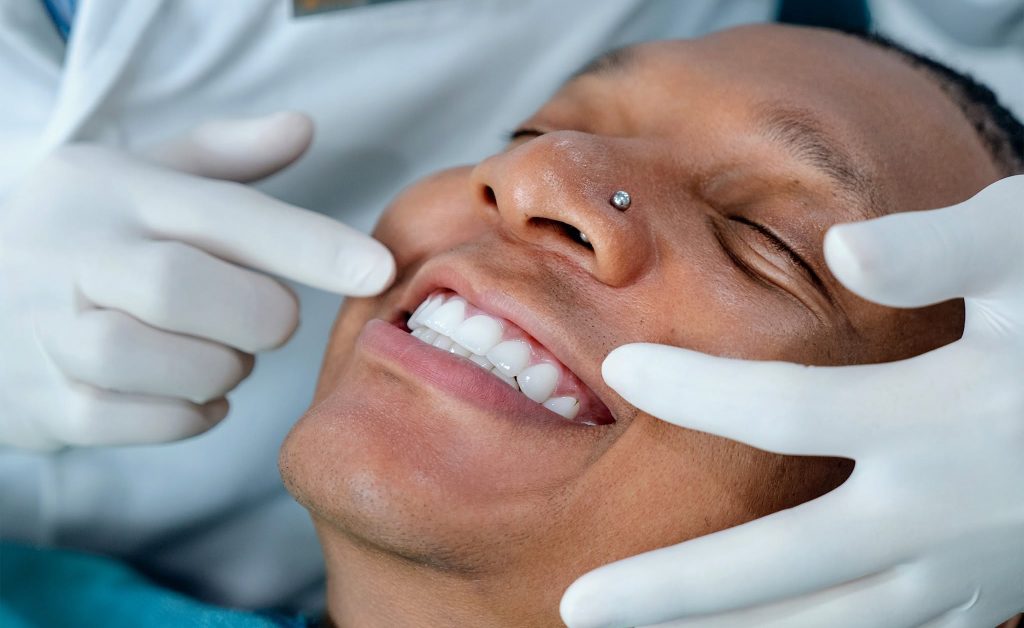
Veneers are thin ceramic shells bonded to the front surface of a tooth. To close a gap, the dentist designs each veneer slightly wider on the side facing the space, so the two teeth meet without a visible opening. The change is added to the tooth edges rather than achieved by moving anything.
Because both teeth grow wider, the proportion of the smile changes. If only one tooth is widened, it can look noticeably broader than its neighbour, so the added width is usually shared across the two central teeth and sometimes across four or six teeth. This keeps the front teeth in a natural width to height ratio. A gap of a couple of millimetres is often manageable with two veneers, while a wider space may need a larger plan or it risks producing teeth that look square and oversized.
Black triangles are the other common concern. If the teeth are narrow near the gum and wider at the edge, closing the gap can leave a small dark space at the gum line. A mock-up shows this before anything is permanent, and the design can be adjusted by changing how the teeth are shaped near the gum.
Veneers do not move teeth, and they do not prevent natural movement later. A patient whose teeth are still drifting may find the veneered teeth shifting along with them, which is one more reason the cause of the gap needs to be understood first.
Which option fits which gap
Veneers are not the only way to close a gap, and for some patients they are not the right one. Delia Dental Clinic’s aesthetic dentistry guide lists composite bonding, gum contouring and clear aligners alongside veneers, each quoted case by case. The table sets out the main options and the type of gap each tends to suit.
| Option | Best suited to | Main limit |
|---|---|---|
| Porcelain veneers | Gaps from narrow teeth, or gaps combined with shape, colour or chipped edges | Do not move teeth, and a thin layer of enamel is usually reshaped |
| Composite bonding | Small gaps where the patient wants a minimal option | Stains and chips sooner than ceramic, and may not suit heavy bite forces |
| Clear aligners or braces | Gaps caused by tooth movement, or wide gaps where veneers would look oversized | Generally takes longer than a short dental trip and needs follow up |
| Gum assessment or contouring | Gaps where the gum line or the tissue between the teeth is part of the problem | Minor contouring and surgical crown lengthening have different healing needs |
| Combination plan | Wide gaps with mixed causes | Longer, and the order of treatment matters |
A low frenum attachment is a separate question. It is worth raising during consultation so it can be assessed, but this guide does not assume that every clinic treats it in the same way, and the plan for any frenum involvement is confirmed after examination.
For an international patient the trade off is practical as much as clinical. Veneers can often be completed within one trip, while aligners need months of regular adjustment that a visitor cannot easily attend. A patient whose gap clearly needs tooth movement may do better arranging orthodontics at home and returning to Vietnam later for veneers if they still want a cosmetic finish.
What gap closing with veneers costs at Delia Dental Clinic
Delia Dental Clinic’s standard international veneer prices are listed per tooth, which makes a gap closure easy to estimate once the number of teeth is known.
| Veneer type | Standard price per tooth | Two teeth | Four teeth | Six teeth |
|---|---|---|---|---|
| E.max Press veneer | $300 | $600 | $1,200 | $1,800 |
| LiSi veneer | $550 | $1,100 | $2,200 | $3,300 |
These totals are illustrative calculations from the per tooth price, not a quote. The per tooth price includes the consultation, a scan or impression, a mock-up, a temporary restoration and a try-in. Additional work can change the final figure, such as gum disease treatment, a filling or root canal on a tooth that needs it, or gum contouring. Bonding, gum contouring and aligners do not have a published standard price, so each is quoted after assessment. The final itemised plan is confirmed after an in person examination.
The number of teeth is the main variable. A small diastema might be treated with two veneers, while a patient who also wants the surrounding teeth to match in shape and colour may choose four or six. The extra veneers are a design decision about proportion, and the dentist should be able to explain why each tooth is included.
How long to stay and whether one trip is enough
A small gap closed with one to two veneers commonly fits into around 5 to 7 days when the teeth and gums are healthy, with a safer planning window of about 7 days. Four to six veneers usually need closer to 8 to 10 days. Our guide on how many days veneers take in Vietnam gives the full breakdown by case size.
Gap cases have two specific reasons to plan extra time. If gum treatment is needed first, healing may have to happen before veneers are placed, which can turn one trip into a staged plan. If the gap involves tooth movement, orthodontic treatment would come first and would not fit into a short visit. Sending photos and X-rays before booking, rather than after, spares most patients from planning the wrong trip.
Why the mock-up matters more for a gap than for most veneer cases
For a gap closure, the width of the finished teeth is the whole point, and width is fixed when the veneers are fabricated. Changes to shape or proportion at the try-in stage generally mean sending the veneers back to the lab, which is covered in our article on what can still change at veneer try-in. Shade is more flexible, but width is not.
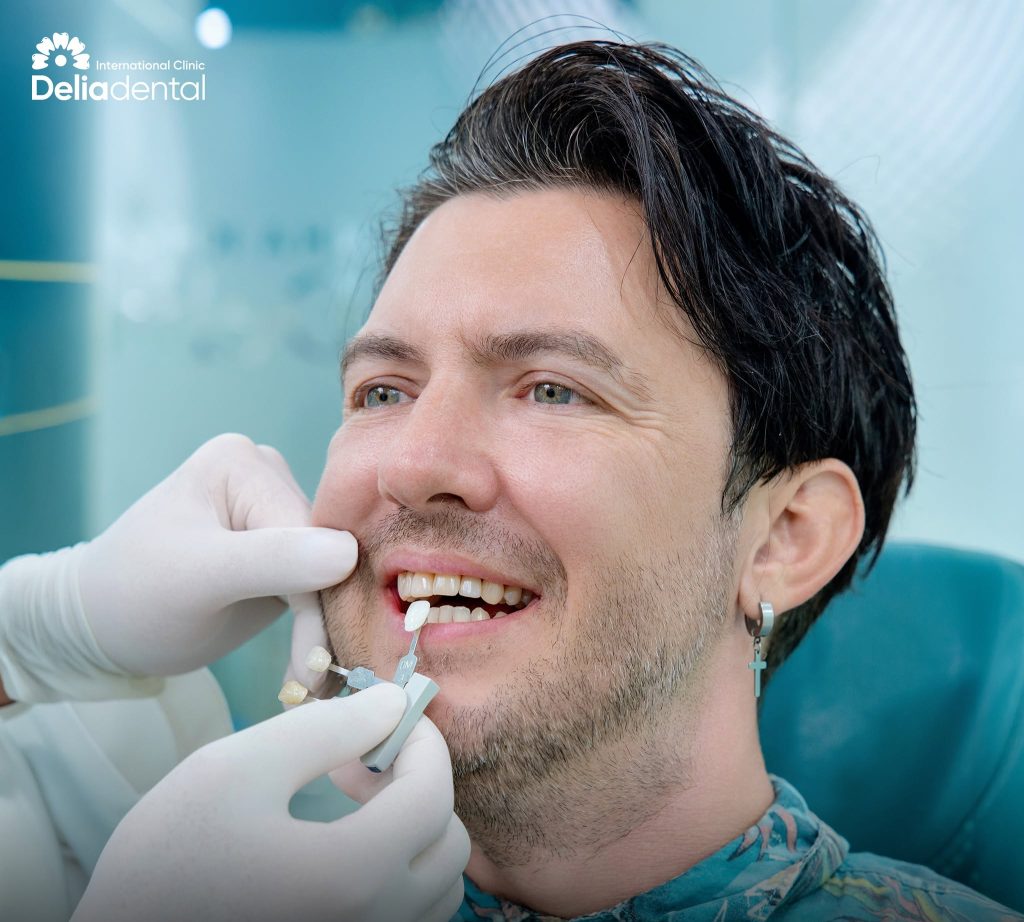
This makes the mock-up the stage to examine closely. Delia Dental Clinic uses Digital Smile Design and a mock-up so the patient can see the proposed width, length and shape of the front teeth before the final restorations are made. For a gap case, it is worth checking three things at that point: whether the two central teeth look balanced after the space closes, whether a dark space appears near the gum, and whether the smile looks natural while speaking rather than only when posing.
How Delia Dental Clinic assesses a gap before recommending veneers
At Delia Dental Clinic in Hanoi and Ho Chi Minh City, a gap is treated as a diagnosis question before it becomes a veneer question. The team looks at the width of the space, the size and shape of the teeth on either side, the health of the gums, the position of the frenum and how the teeth meet when the patient bites.
Before travel, international patients can send close up photos of the gap, a clear smile photo and any recent X-rays. The international patient team can review these and suggest a preliminary direction, such as whether veneers look suitable, whether bonding could be compared for a small gap, whether the gap may involve tooth movement, or whether the gums need a closer look. A remote review is a starting point only. It cannot confirm whether the frenum is involved, how the bite loads the front teeth or the final number of veneers, which are settled after an in person examination.
If a gap would be better handled with orthodontic movement or a gum assessment first, the plan should say so rather than place veneers over a problem that will return. Patients who prefer fewer veneers or a more conservative approach can raise that during consultation.
Frequently asked questions
Can veneers close a large gap between front teeth?
Sometimes, but there is a limit. Closing a wide space with veneers means adding a lot of width to the teeth, which can make them look broad and squared off. A common solution is to spread the extra width across four or six teeth so each one changes only a little. Where the space is too wide for that to look believable, moving the teeth first with braces or aligners usually gives a better result. A mock-up shows which approach looks right before any irreversible step.
Will the gap come back after veneers?
The veneers fill the space, so the gap does not reappear unless a veneer is lost or the teeth keep moving. If the original cause was tooth movement or gum disease, those processes can continue under and around the veneers. A frenum that held the teeth apart should be assessed, since unresolved tension can affect long term stability. Regular dental checks at home help catch changes early.
Is bonding a better choice than veneers for a small gap?
For a small gap, bonding can be a reasonable option, especially for patients who want to remove less tooth structure. Composite resin generally stains and wears sooner than ceramic, so it tends to need repair or replacement more often. Veneers cost more upfront but usually hold their colour and surface better over time. Delia Dental Clinic quotes bonding case by case, so a small gap is worth raising at the first consultation to compare both options.
Do veneers for gaps damage the natural teeth?
Most porcelain veneers involve reshaping a thin layer of enamel, and that step is not reversible. The amount depends on tooth position and how much width is being added. A gap closure sometimes needs very little reduction on the front surface because most of the change happens at the sides. It is reasonable to ask how much tooth will be reshaped and to compare the answer with the alternatives before committing.
Can I get veneers for a gap if I clench or grind my teeth?
It depends on how heavily you grind. Ceramic veneers can chip or crack under strong grinding forces, and front teeth are especially exposed because they guide the jaw during movement. Dentists commonly recommend a night guard for patients who grind, and may adjust the design or material to protect the restorations. Mention grinding at the first consultation, since it shapes the plan rather than ruling veneers out automatically.
Can I complete the whole treatment in one trip to Vietnam?
For a small gap closed with a few veneers, one trip is often realistic once the plan is confirmed. Treatment involving the gums or orthodontic movement usually takes longer and may be staged. Sending photos before booking lets the team flag this early, so you do not plan a short stay for a case that needs more time.
Planning the rest of your smile decision
If you are still deciding how many teeth to include or how a gap closure fits into a wider smile plan, these articles cover the next questions most patients ask.
- Veneers in Vietnam Cost: 2026 Guide for International Patients
- How to Get Natural-Looking Porcelain Crowns in Vietnam
- Smile Makeover in Vietnam: Cost, Timeline and Treatment Options
- What to Do If a Crown or Veneer Chips Months After You Return Home
Final Thoughts
Veneers can close a gap neatly when the gap comes from tooth size, and they are one of the faster routes to a finished result for a visitor with limited time. The decision that matters most is not which veneer to choose but whether the gap is a size problem, a movement problem or a tissue problem, because that determines whether veneers are the right first step.
If you are considering veneers for a gap between your front teeth, send a close up photo of the gap, a clear smile photo and any recent X-rays to Delia Dental Clinic through WhatsApp or Messenger before booking your flight. The international patient team can review what you send, suggest a preliminary treatment direction and help estimate the likely cost and travel timeline for Hanoi or Ho Chi Minh City. The final treatment plan and quote are confirmed after an in person examination.


