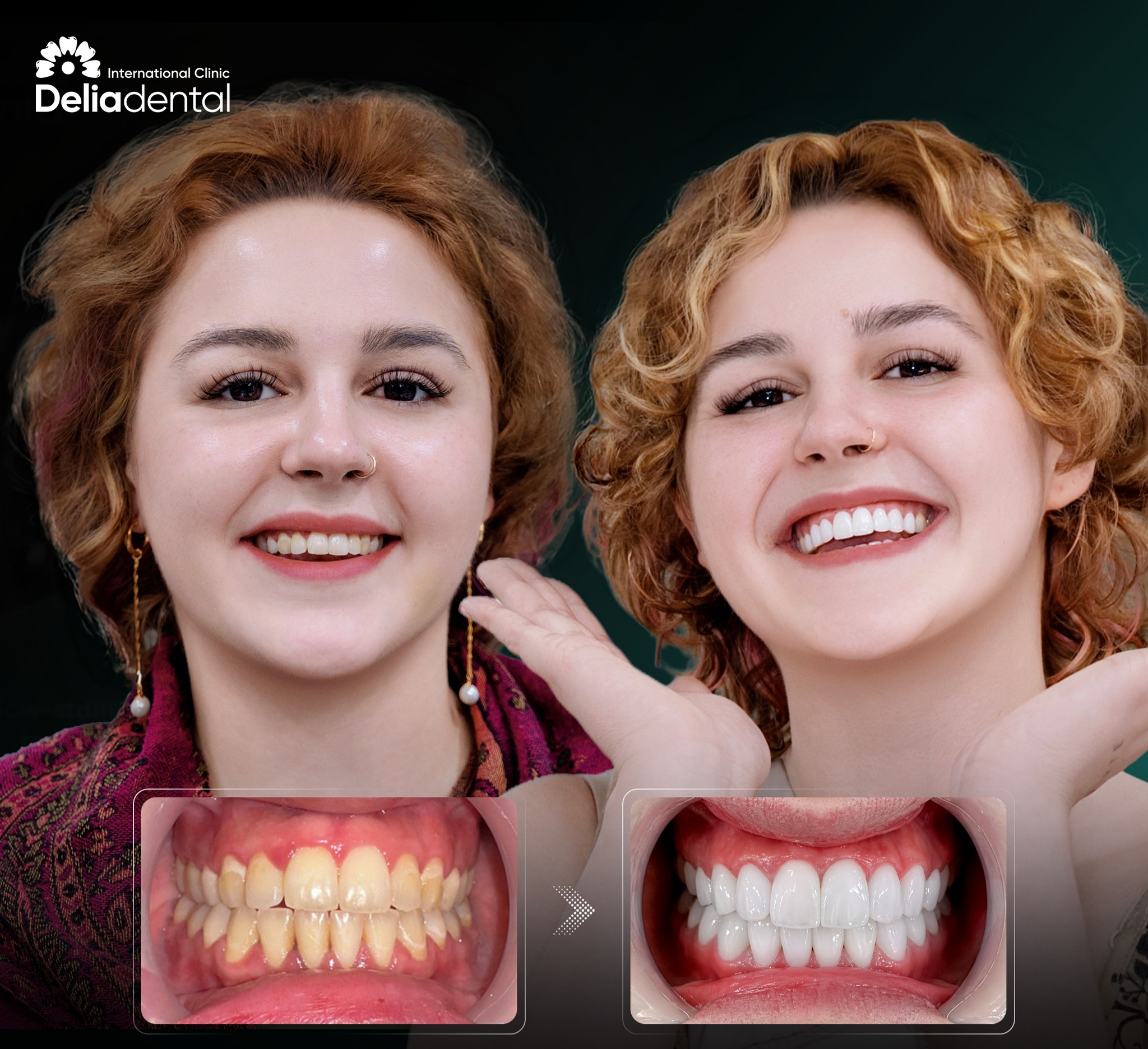
If you are considering porcelain crowns and your first question is whether they will look fake, that is a fair concern and one of the most common searches before booking. Poorly made crowns do look artificial, but the cause is rarely the country. It usually comes down to the material, the shade selection and whether the clinic runs a proper trial step before bonding anything permanently.
This guide explains what makes a porcelain crown look natural, how the porcelain crown procedure in Vietnam works at a reputable clinic, and what to check when choosing where to get a porcelain crown in Vietnam.
Quick Answer
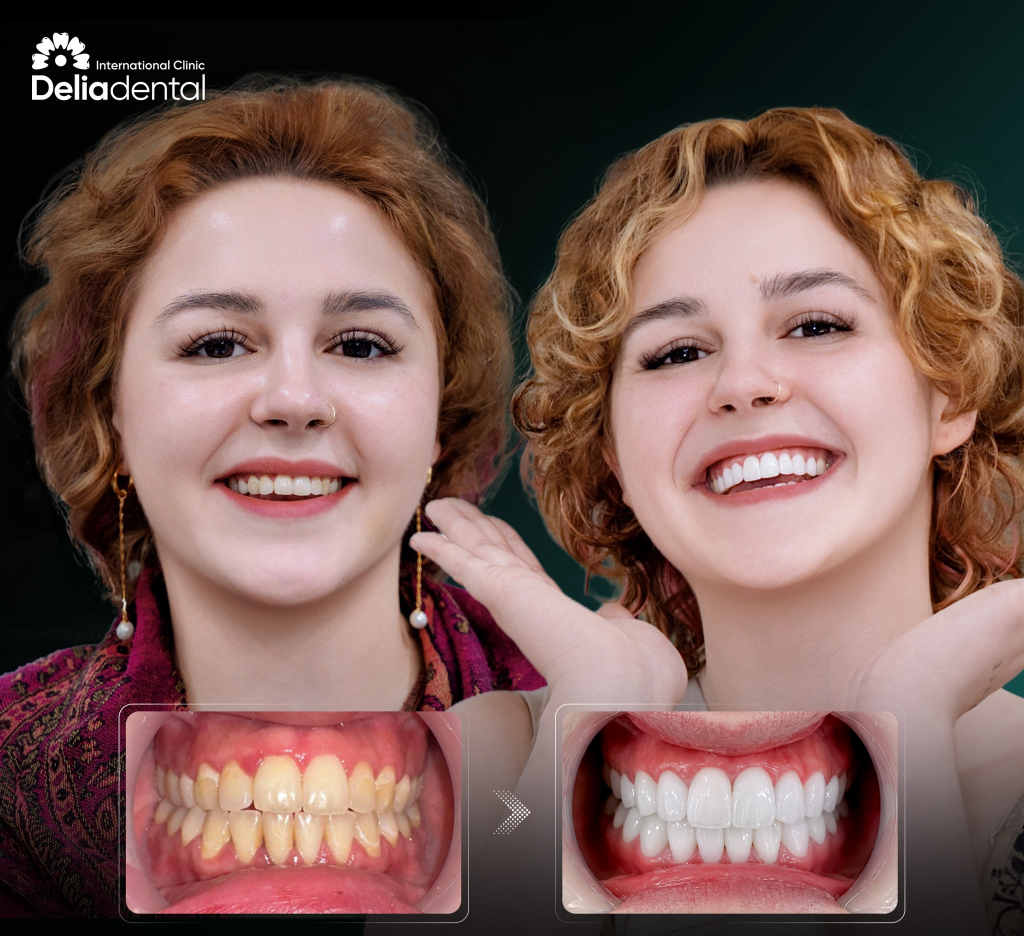
Natural looking porcelain crowns in Vietnam depend on four things: a material matched to the tooth position, a shade chosen under natural daylight, a shape planned with the lab and a trial fitting before permanent cement. A single crown commonly takes two to three appointments across four to five days, depending on the case. At Delia Dental Clinic, standard prices start from $190 per tooth for Ceramill and $290 for Emax, with the final material confirmed after examination.
What Makes a Porcelain Crown Look Natural
A natural looking crown is not just a white shade. It comes from the combination of translucency, shade layering, surface texture and shape, and a mistake in any one of them can leave the crown looking too bright, too flat or too bulky.
Translucency
Natural enamel lets light pass through and reflect from inside the tooth, which gives teeth a subtle depth. A crown that blocks light looks flat and dull even when the color is technically correct. This is the main visual difference between older metal ceramic crowns and modern all ceramic materials such as Emax and Lava Plus Zirconia, which let light move through in a way that closely resembles natural enamel. On a front tooth sitting beside natural neighbors, that difference is often the first thing a viewer notices.
Shade Layering
Natural teeth are not a single color from top to bottom. They tend to be slightly more opaque near the gumline and more translucent toward the tip, and a good shade match accounts for that gradient. Shade selection is commonly done under natural daylight before preparation begins, because tooth color can look different under dental clinic lighting. A shade that looks right under a bright overhead lamp, for example, may appear too gray or too yellow once the patient walks outside.
Surface Texture
Natural enamel has fine surface variation that scatters light instead of reflecting it straight back. A crown that is too smooth can catch light in a way that draws attention to it. Getting this texture right depends on the ceramist’s skill and on clear instructions from the dentist, so it is reasonable to ask a clinic to show finished crowns beside natural teeth.
Shape
Teeth differ in size and contour, and a good crown follows the proportions of the patient’s own mouth. A contour that is too square, too thick or too symmetrical can look artificial because it changes how the crown sits within the whole smile. This is why communication between the dentist and the lab matters: the final contour should be planned before the crown is made, not corrected afterwards.
The porcelain crown procedure in Vietnam, step by step
At a well equipped clinic, each step of the porcelain crown procedure in Vietnam feeds into how natural the final crown looks.
1. Consultation, Digital Smile Design and Scan
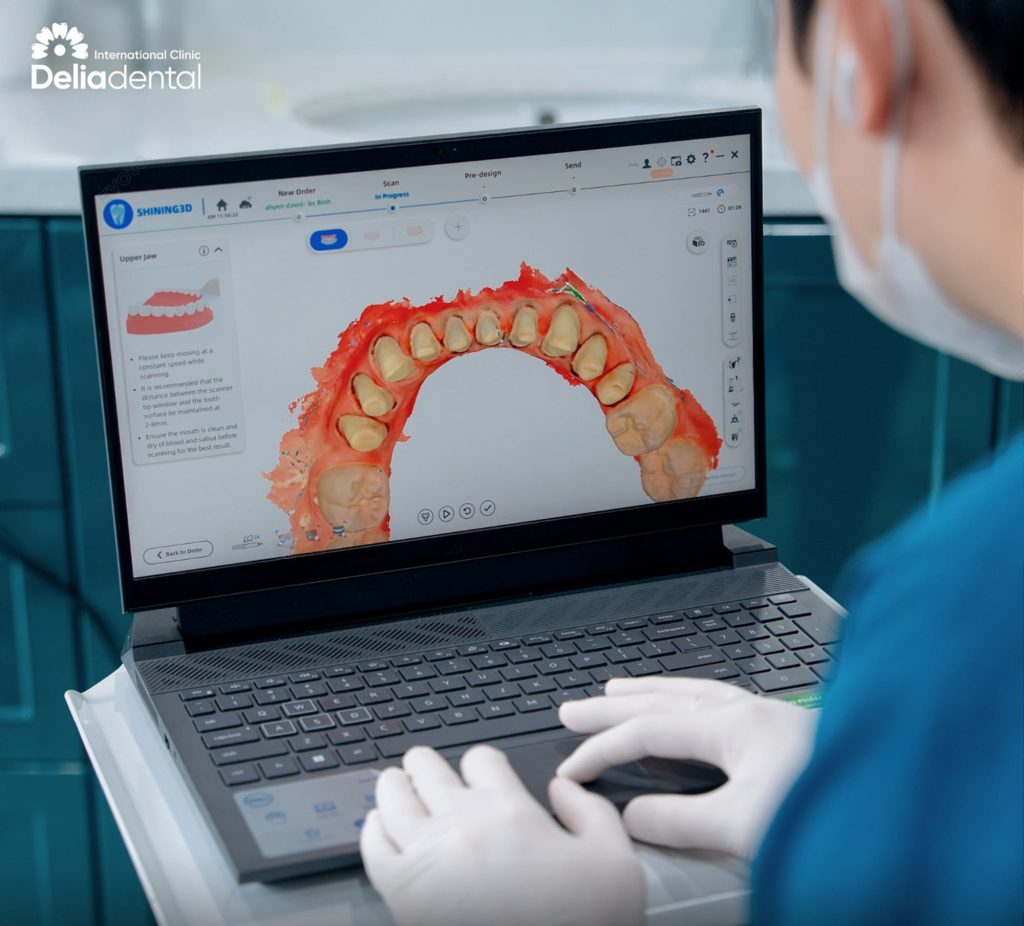
At the first appointment, your dentist photographs your teeth and uses Digital Smile Design software to plan the result. You can preview the plan on screen and give feedback on shape, length or color before treatment starts. Shade selection also happens at this stage, under natural light where possible. An intraoral scanner then records a digital model of your teeth, including bite alignment, and that data is used to design and mill the crown and to plan how much tooth reduction is needed.
2. Tooth Preparation
The outer surface of the tooth is reduced to make space for the crown. A reputable dentist keeps this reduction to what the chosen material and the tooth require, and the amount varies by material and case. Local anesthesia is used during preparation, and some clinics apply a topical gel first and check allergy history beforehand. Some sensitivity afterward can occur, and it is worth telling the dentist if it persists.
3. Temporary Crown Fitting
Once preparation is complete, a temporary crown protects the tooth while the permanent crown is made in the lab. For patients traveling from abroad, it also lets you judge how the shape, bite and feel work in daily life before the final fitting. Any adjustments you notice during this phase can still be passed on to the lab.
4. Trial Fitting and Final Placement
When the permanent crown is ready, it is first seated without permanent bonding so the dentist can check fit, bite and shade under more than one light source, including natural daylight. You review the result in a mirror and can raise concerns before anything is fixed in place. This trial step is arguably the most important quality checkpoint in the whole procedure, since a crown cemented before the patient is satisfied can be difficult to change afterwards.
Choosing the right porcelain material for a natural result
Material sets the ceiling for how natural a crown can look. Three options are commonly offered at well equipped clinics in Vietnam, and the dentist chooses between them based on tooth position, bite force and the color of the underlying tooth.
Emax (lithium disilicate) is commonly chosen for front teeth because its crystal structure allows translucency that closely resembles natural enamel, and it is strong enough for many biting positions. If the underlying tooth is very dark, the dentist assesses whether Emax is suitable or whether another material would mask the color better. At Delia Dental Clinic, Emax crowns start from $290 per tooth.
Lava Plus Zirconia is a high translucency zirconia that transmits more light than standard zirconia and is generally harder and more fracture resistant than Emax. That makes it a common choice for back teeth or full arch cases where bite force is higher, and newer zirconia looks more natural than older generations. Lava Plus crowns start from $350 per tooth at Delia Dental Clinic.
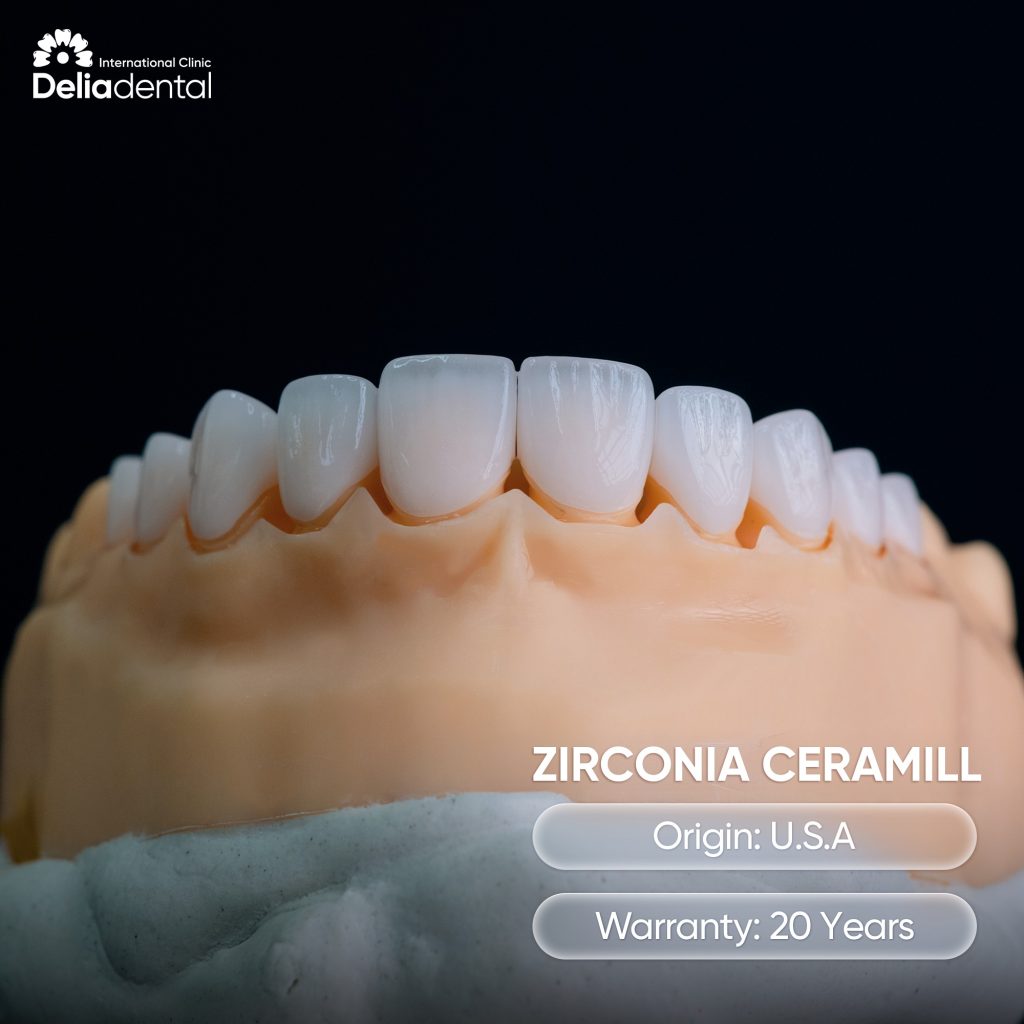
Ceramill is an entry level all ceramic option. It is more opaque than Emax and Lava Plus but still a step up from older porcelain fused to metal crowns, which makes it a practical choice for patients who need several restorations on a tighter budget. Ceramill crowns start from $190 per tooth at Delia Dental Clinic.
These are standard prices per tooth in USD. Root canal treatment, core buildup or gum treatment depend on the case and are billed separately if needed.
What to Expect When Getting Porcelain Crowns in Vietnam
For international patients, timeline and communication are usually the practical questions. A single porcelain crown commonly takes two to three appointments across four to five days, covering Digital Smile Design, preparation, fabrication, trial fitting and final placement. Cases with several teeth, infection, gum problems or root canal needs usually take longer, so the dentist confirms the schedule after examination.
Consultations, treatment planning and aftercare instructions are handled in English, and you review the final result with your dentist before permanent bonding. Delia Dental Clinic also coordinates hotel and appointment timing, so patients do not need to plan accommodation separately around treatment. Written warranty documentation is provided after treatment, and warranty terms differ by component, so ask what the crown warranty covers. Patients can also look through real cases on the before and after page before deciding.
How Delia Dental Clinic Checks a Crown Before It Is Cemented
Delia Dental Clinic treats crown patients at its Ho Chi Minh City and Hanoi branches. The plan starts with a scan, X-ray and 3D design, and a provisional crown is made for trial. It is held with temporary cement while the patient reviews shape and color, including with family if they wish, and permanent cement is used only after the patient approves.
The clinic also describes a material check. Patients can view the original packaging of the ceramic material before preparation begins, sign a confirmation and receive photos or video from the lab while the crown is made. Warranty cards include a QR code that patients can use to look up product details online.
Delia Dental Clinic has completed more than 5,000 restorative and cosmetic cases across its Hanoi and Ho Chi Minh City branches, and the client review page shows real patients. Experience matters most when a shade that matches the guide on paper still looks wrong beside the surrounding teeth or the patient’s skin tone, which is why the trial step carries so much weight.
Frequently Asked Questions
What Happens if I Do Not Like the Shade at the Trial Fitting?
Raise it at the trial stage, because that is when changes are easiest. Before permanent cement is used, the dentist can discuss shade, shape and length, and depending on the case and the clinic’s policy the lab may adjust or remake the crown. Once a crown is permanently cemented, changing it may mean removing and remaking it, which can add time and cost. Patients on a short trip should review the crown in daylight and, if possible, show photos to family or a partner before approving. Small surface adjustments can often be made chairside, while a real shade change usually needs the lab. Ask before treatment starts how many days are allowed for a possible remake.
Does Tooth Preparation for a Porcelain Crown Hurt?
Preparation is done under local anesthesia, so patients commonly feel pressure rather than sharp pain, though experience varies. Delia Dental Clinic can apply a topical anesthetic gel before the injection, checks allergy history first and has an alternative anesthetic available if a patient reacts to the usual one. Some sensitivity to hot, cold or biting is common for a few days afterward, particularly on a tooth that was already sensitive. Sensitivity that gets worse, or pain that wakes you at night, should be reviewed rather than waited out. Tell the dentist about any past reaction to dental anesthetic before the first appointment. A crown also does not remove the need for a full examination of the tooth underneath it.
Can My Dentist at Home Look After Crowns Made in Vietnam?
Many home dentists will examine and maintain crowns made abroad, but some may decline responsibility for work done by another clinic, so it helps to ask early. Before leaving Vietnam, ask for X-rays, itemized invoices, the crown material used, treatment notes and written warranty documents. These records let a local dentist see exactly what was placed and which material to match if a repair is needed. A clinic can review photos or X-rays remotely to suggest a next step, though it cannot diagnose a problem from images alone. A loose or fractured crown, swelling or fever needs prompt local assessment rather than waiting for a reply from abroad. Read the warranty terms as well, since coverage may exclude damage from accidents or missed maintenance.
How Many Days Do I Need in Vietnam for Several Crowns?
A single crown commonly fits into four to five days, but several crowns usually need more time because each extra tooth adds preparation, lab work and bite checking. Estimates for multiple crowns often fall between five and ten days, depending on how many teeth are treated and whether the bite needs adjusting after the trial fitting. Root canal treatment, infection, gum disease or a core buildup can extend the schedule. Full mouth cases are planned separately and may need staged visits. Share your travel dates and scans with the clinic before booking flights, so the plan can be checked against your schedule. The dentist confirms the final timeline after examination, not from photos.
Is It Worth Travelling to Vietnam for One Porcelain Crown?
On its own, usually not, because flights, accommodation and time away from work often outweigh what one crown saves compared with treatment at home. It becomes more worthwhile when the crown is part of a larger plan, such as several crowns, crowns with veneers or crown work alongside an implant. A patient already planning a trip to Vietnam for another reason is the main exception. Bundling treatments into one trip is usually what changes the maths. If you are weighing the trip, ask the clinic for an itemized quote and compare it with your local quote for the same material. Sending scans first lets you judge the trip before committing.
Checking the Clinic and the Cost Before You Book
Once you know how a natural looking crown is made, the next questions are usually whether the clinic can be trusted and what the full trip will cost.
- Is Dental Care in Vietnam Safe? What International Patients Should Know
- Affordable Dental Treatment in Vietnam: Why It Can Be a Smart Choice
- Why International Patients Choose Delia Dental Clinic Vietnam
Final Thoughts
A natural looking porcelain crown depends less on the country than on the material, the shade selection and a genuine trial step before bonding. A clinic that treats those three as fixed parts of the process gives you a better chance of a result a dentist at home would also judge well, though no clinic can promise an identical outcome for every mouth.
Send your smile photos and recent X-rays via WhatsApp or Messenger so Delia Dental Clinic can suggest an initial treatment direction and review whether your case fits one trip.


