A crown loosens three weeks after you land back in the UK. Or a gum near a new implant starts to swell on a Sunday night. The first thing many patients ask is whether the NHS will deal with it, because the clinic that did the work is half a world away.
The answer has two parts. NHS dental services in England will assess and stabilise an urgent problem, even when the original treatment was paid for privately abroad. They are not set up to redo, repair or rebuild that treatment, and NHS policy expects you to go back to the provider who did the work first.
This article explains where that line sits, which symptoms need help the same day, what a UK dentist will ask you for, and what to arrange before you fly so the question does not catch you out. It covers England. Scotland, Wales and Northern Ireland run their own dental services, so check the arrangements for your nation.
Quick Answer
NHS dental services in England will assess and stabilise urgent problems after private treatment abroad, usually through NHS 111. NHS policy expects you to contact the original provider first, and care the NHS does not routinely fund, such as implants and complex fixed work, is not usually replaced. Patients who hold their records, implant details and written warranty find it much easier to get help from a UK dentist.
What will the NHS do after treatment abroad?
NHS England has a published clinical policy for patients who paid privately, in the UK or overseas, and later need NHS care because of a complication or a sudden problem. Under the NHS England policy on self-funded dental treatment requiring NHS intervention, these patients are entitled to NHS dental care for assessment and to stabilise their condition. They can present directly to a dental or medical setting or go through 111.
In practice, that covers pain, infection, swelling, bleeding and trauma. It does not mean the NHS takes over the treatment plan. The same policy says anything beyond stabilisation is assessed on complexity and need, under normal NHS acceptance criteria. It also says self-funded care that the NHS would not routinely fund is not usually offered or replaced once the patient is stable. Advanced fixed appliances and implants are named as examples of complex work not routinely available.
The policy also sets an expectation: patients should first seek support from the provider who carried out the treatment, who is responsible for post treatment issues within a reasonable timeframe.
A GP cannot treat teeth or gums. For urgent dental symptoms, NHS 111 can book an emergency dentist appointment if you have significant facial swelling, uncontrolled bleeding, severe dental pain or a dental injury. NHS charges may apply unless you are exempt.

Why do some NHS dentists decline to take over the work?
Stabilising a problem and managing someone else’s treatment plan are different jobs. A UK dentist who adjusts or repairs overseas work can end up answerable for an outcome they did not plan, using materials they did not choose, from X-rays they have never seen.
Unknown components make this harder. If the implant brand is not recorded, matching replacement parts is difficult. If there are no records, the dentist is working from what is visible in the mouth and on a fresh X-ray.
None of this is specific to Vietnam. The same hesitation applies to work done in Turkey, Hungary or Thailand, and some private dentists feel it too. Patients who arrive with paperwork get help more easily than those who arrive with a story.
Which problems need help in the UK and which need the original clinic?
Urgent symptoms should never wait for an overseas reply. Slower functional problems are usually better handled by the clinic that did the work, with a UK dentist covering any urgent need in between.
| Situation | First call | Why |
|---|---|---|
| Facial swelling that spreads, or trouble breathing or swallowing | A&E or 999 | Possible spreading infection |
| Severe pain, pus, bad taste, fever | NHS 111 or an emergency dentist | Assessment and stabilisation |
| Uncontrolled bleeding after surgery | NHS 111, A&E if heavy | Immediate control |
| Loose, broken or lost crown without severe pain | Your local dentist, then message the treating clinic | Often a repair or recementing decision |
| Bite feels uneven, or speech changes after a new bridge | The treating clinic, with photos or video | Adjustment usually needs the original plan |
| Implant crown or screw feels loose | The treating clinic, plus a local dentist if it worsens | Needs the right components and records |
| Mild gum tenderness, no swelling | Local dentist or the treating clinic | Often a hygiene or fit check |
The NHS route exists for emergencies. Everything else is a coordination question between the clinic abroad and a dentist near you.
What does a UK dentist need from you?
A local dentist is more likely to help when the file is complete. Ask your treating clinic for these before you leave, not after something goes wrong:
- A written treatment plan with the tooth numbers or implant sites treated
- The implant brand, size and component details, plus any card or sticker supplied
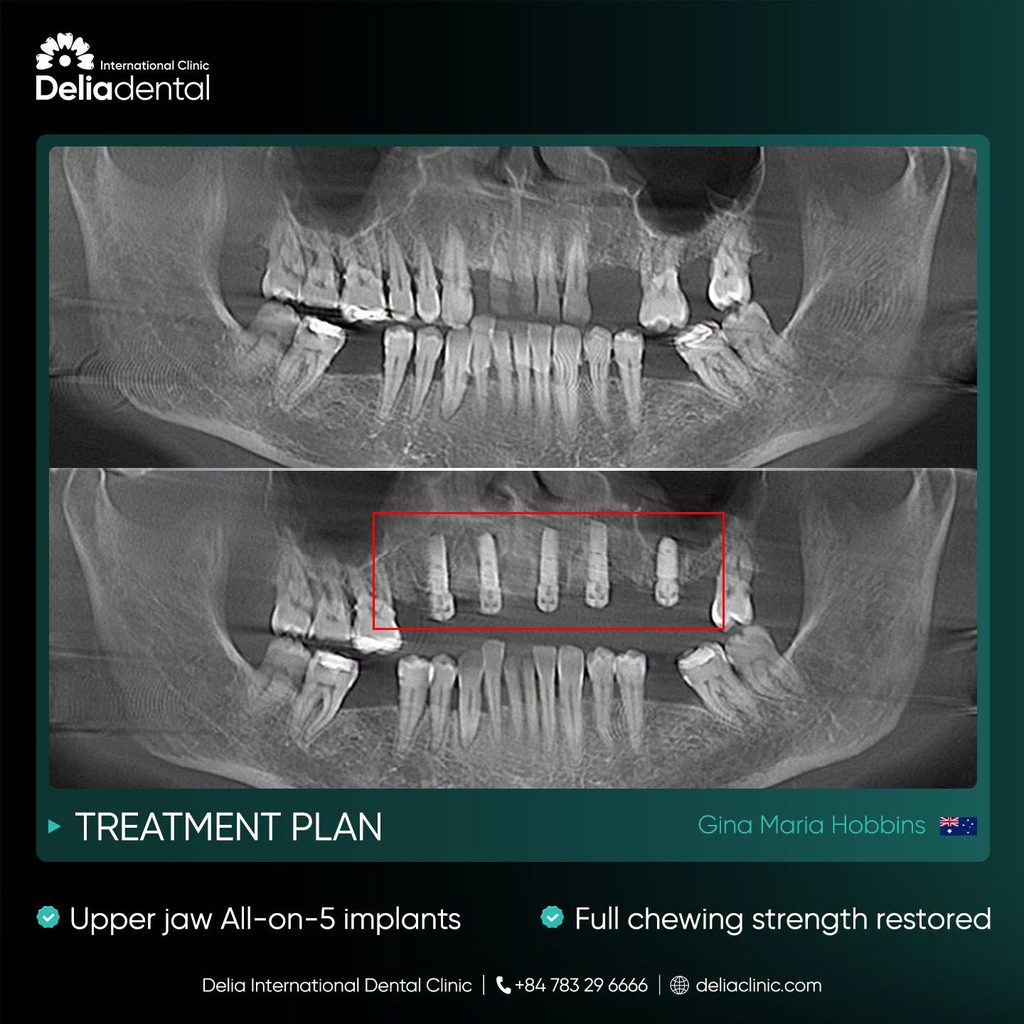
- Pre treatment and post treatment X-rays, and the CBCT scan if one was taken
- The dates of surgery and of final fitting
- Materials used for crowns, veneers or the full arch prosthesis
- Written warranty terms, with implant, abutment and prosthetic coverage separated
- A direct contact for the clinic and the best way to reach the treating dentist
If the brand is missing, a UK dentist can sometimes narrow it down from an X-ray, but not reliably. Having it on paper removes the guesswork.
How should you plan before you travel from the UK?
Most of the risk sits in how the trip is structured, not in the flight home. Four decisions before booking make a real difference.
Agree a follow up route in writing. Ask what the clinic will do if a problem appears after you return, how you should send photos or videos, and what response time to expect. Ask whether a second trip is part of the plan, which is common for implant and full arch cases.
Check what the warranty covers. Implant fixture cover, abutment cover and prosthetic cover are different things with different conditions. The guide on implant warranty versus prosthetic warranty explains how to read them.
Find a local dentist for maintenance before you leave, not once there is a problem. Some practices will provide routine checks and hygiene while declining repair work, and it is better to know that in advance than to find out in the middle of an emergency.
Buy travel insurance and read the dental clause. Cover for emergency dental treatment is often limited and may not extend to planned treatment or to complications after you return. Our dental tourism guide for UK patients covers the trip from the UK side.
How Delia Dental Clinic handles records and problems after you return to the UK
Delia Dental Clinic treats patients at its Hanoi and Ho Chi Minh City clinics, and UK patients can start by sending existing X-rays, photos or a UK quote before booking anything. The team reviews what is sent and gives a preliminary direction, with the final plan confirmed after an in person examination and any imaging needed.
For aftercare, the useful question is what you will hold when you leave. Patients should ask Delia Dental Clinic for their written treatment plan, X-rays, implant and material details and warranty documents so that a local dentist has something concrete to work from. If a symptom appears after you are home, send photos or a short video with the date of treatment through WhatsApp or Messenger. The team can tell you whether it looks like something to monitor, something a local dentist should check, or something that needs a return visit. A remote review cannot diagnose a problem. It helps decide the next step.
Frequently asked questions
Can I go to A&E for a dental problem?
Only for serious symptoms such as swelling that affects breathing or swallowing, uncontrolled bleeding or facial trauma. A&E may not have a dentist available and can end up stabilising you and referring you on. For severe pain or infection without those signs, NHS 111 is the quicker route to an emergency dental appointment.
Will an NHS dentist refuse me because I had treatment abroad?
NHS policy says where you had your earlier treatment does not affect your eligibility for NHS care, so an urgent assessment should not be refused for that reason. Whether the practice then repairs or takes over the work is a separate question and depends on NHS acceptance criteria. If one practice says no, call 111 or try another. Arriving with X-rays and treatment details makes a yes more likely.
Does the NHS pay to redo failed implants or crowns?
Generally no. The NHS England policy covers urgent assessment and stabilisation, and says self-funded care the NHS would not routinely fund is not usually replaced afterwards. Complex work such as implants and advanced fixed appliances is named as not routinely available. If rebuilding is needed, the realistic routes are returning to the treating clinic or paying a private UK dentist.
Can my UK dentist adjust a bridge or crown made in Vietnam?
Some will, especially for a simple adjustment or recementing. Others will not touch work they did not plan. It helps to ask your regular dentist before you travel whether they will do routine maintenance on treatment done abroad, and to bring the records with you.
Does travel insurance cover problems after I am home?
Often not. Many travel policies cover emergencies during the trip and exclude planned treatment or complications that appear after returning. Read the dental clause and the exclusions before you buy, and do not assume cover continues once you are back in the UK.
How long after treatment can problems appear?
Some issues appear within days, such as a loose temporary crown or a gum that stays sore. Others show up months later, including bite changes, a loose implant crown or gum inflammation around an implant. That is why a long term maintenance plan matters as much as the first fortnight.
Staying covered between the trip and the follow up
Once you know who handles what, the next questions are usually about what to check at home and when a symptom matters.
- Night Guard After Implants or Crowns: Do You Actually Need One?
- Can a Home Dentist Maintain Dental Implants Placed in Vietnam?
- What Causes Dental Implant Failure and How to Avoid It
- Implant Stitches: When They Dissolve or Come Out Abroad
Final Thoughts
The NHS is a safety net for urgent problems, not a warranty for treatment done elsewhere. Treat it that way and the planning gets simpler: sort the follow up route, the paperwork and a willing local dentist before you fly, and keep 111 in mind for anything urgent.
Send your X-rays, dental photos and any UK quote through WhatsApp or Messenger before you book flights, and Delia Dental Clinic can outline a preliminary treatment direction, the likely number of trips and the records you would receive for your UK dentist. If you are unsure what to send, read how remote X-ray assessment works for implant cases first.


