
Dental implants are generally possible for patients taking osteoporosis medication, but the type of drug, the way it is given and how long it has been taken change how carefully the case is planned. Oral tablets such as alendronate sit at the low end of documented risk, while intravenous bisphosphonates, denosumab injections and cancer doses need a closer conversation.
Patients who take an osteoporosis drug and need implants tend to ask the same question in the same words: “I take alendronate, can I still get implants abroad?” The published evidence gives a more useful answer than a simple yes or no. An international task force reviewing the literature in 2025 found no association between osteoporosis drugs and implant failure, and also found a small but real increase in a jaw healing complication linked to long-term bisphosphonate use.
This guide explains that complication, how risk differs between drug types, which questions belong with the prescribing doctor, and what can and cannot be assessed before a flight to Vietnam is booked. No dental clinic should ask a patient to stop or change a medication on its own.
Quick Answer
Dental implants are commonly placed in patients taking osteoporosis medication. The 2025 International Task Force on Osteonecrosis of the Jaw suggests these drugs need not be stopped first, noting a small added jaw osteonecrosis risk with long-term bisphosphonates. Drug type, dose and duration shape the plan, and any medication change belongs to the prescribing doctor.
Can You Get Dental Implants While Taking Osteoporosis Medication?
Yes, in most cases implants are considered rather than refused outright, although “considered” is not the same as “guaranteed.” The International Task Force on Osteonecrosis of the Jaw, whose 2025 consensus statement in Endocrine Practice reviewed the implant evidence, suggested that antiresorptive therapy for osteoporosis does not need to be stopped before implant placement. The task force graded this a weak recommendation supported by very low quality evidence, which is the honest framing to carry into any conversation with a clinic.
The American Association of Oral and Maxillofacial Surgeons recommends in its 2022 position paper that osteoporosis patients be informed about the risk of early and late implant failure before any procedure. It cautions against implants in cancer patients treated with these drugs, a different situation this article does not cover.
The research question has two halves: whether the implant itself fails, and whether the jaw develops a healing complication called osteonecrosis. The evidence differs for each, and “possible” still depends on how long the medication has been taken, the state of the gums, other health conditions and what a CBCT scan shows.

How Does the Type of Osteoporosis Drug Change the Risk?
The type of osteoporosis drug matters because each class works differently and carries a different documented risk profile. Grouping every osteoporosis drug into one “dangerous for implants” category is the most common mistake in patient-facing content, and it leads to unnecessary alarm in some patients and false reassurance in others.
| Drug group | Common examples | How it is given | What the evidence says | Question to raise with the prescribing doctor |
|---|---|---|---|---|
| Oral bisphosphonates | Alendronate, risedronate, ibandronate tablets | Daily, weekly or monthly tablets | Lowest documented risk group, though risk may rise with years of use | How many years have I taken it, and is my treatment plan due for review? |
| Intravenous bisphosphonates | Zoledronic acid infusion | Yearly or less frequent infusion | Stronger and longer acting, needs closer discussion | How many infusions have I had, and when is the next one due? |
| Denosumab | Prolia | Injection every six months | Risk reported as low in osteoporosis dosing, but the drug has a rebound effect when stopped | Should surgery be timed around my injection schedule, and what happens if a dose is delayed? |
| Anabolic and other agents | Teriparatide, romosozumab, raloxifene | Injection or tablet | Different mechanism, with less data on jaw outcomes | Does my drug class change the plan compared with a bisphosphonate? |
Oral bisphosphonates
Oral bisphosphonates such as alendronate are the most common osteoporosis drugs in patients aged 55 and over, and they sit at the low end of documented jaw risk. The American Dental Association notes that the highest reliable estimate of medication-related osteonecrosis of the jaw is low, approximately 0.10%, in patients receiving drug doses intended to treat or prevent osteoporosis. That figure comes from an older expert panel report on osteoporosis patients generally, not implant patients specifically, so it is background context and not a personal risk figure.
Intravenous bisphosphonates and denosumab
Intravenous bisphosphonates and denosumab need a more careful conversation because they act for longer or more intensely. A 2025 scoping review cites an analysis of osteoporosis patients on low dose denosumab for up to 10 years, reporting MRONJ in 0.68% after an invasive dental procedure such as extraction or implant surgery. The same review notes that the true risk after implant placement remains unknown, which is a limit of the evidence and not a reason for alarm or reassurance.
Denosumab has one feature that changes how any discussion of stopping it should go. The 2025 task force statement advises against stopping denosumab because cessation has been associated with rebound bone loss and an increased risk of multiple vertebral fractures. A 2026 Asia-Pacific consensus statement adds that invasive dental procedures are ideally performed three to four months after the last injection, when the drug’s effect begins to wane. That timing is a matter for the prescribing physician, since it involves fracture risk.
Other osteoporosis drugs
Teriparatide, romosozumab and raloxifene work differently. The Asia-Pacific consensus prefers anabolic agents where MRONJ is a concern and invasive treatment is planned, though romosozumab may still carry some risk. Patients should give the clinic the exact drug name, not only “an osteoporosis injection.”
What Is Medication-Related Osteonecrosis of the Jaw and How Likely Is It After Implants?
Medication-related osteonecrosis of the jaw, abbreviated MRONJ, is a condition in which an area of jawbone becomes exposed and fails to heal. AAOMS defines it as exposed or probeable bone persisting for more than eight weeks in a patient treated with an antiresorptive drug, with no history of jaw radiation or metastatic disease in the jaws. Typical signs include persistent jaw pain, swelling, gum infection, loosening teeth and bone that stays visible in the mouth.
The best available numbers for osteoporosis patients come from the systematic review and meta-analysis prepared for the 2024 International Task Force update, published in Endocrine Practice in 2025. It identified 186 MRONJ cases in implant recipients and reported a pooled MRONJ rate of 0.5% following implantation in patients exposed to antiresorptive therapy, drawn from 21 cohorts. A single risk-adjusted report in the same review found that bisphosphonates increased MRONJ by 3 cases per 1000 patients, with moderate certainty.
The same review found, across nine studies with 655 patients, a very uncertain association between antiresorptive therapy and implant failure, and its sensitivity analysis suggested osteoporosis doses may protect against failure, though certainty was very low. The drugs relate more to a rare healing complication than to implants failing to hold.
What Raises the Picture Beyond the Drug Itself
The drug is rarely the only factor. A 2025 Romanian retrospective study of 72 bisphosphonate-related cases identified tooth extraction as the primary triggering event, and the AAOMS position paper notes that tobacco use approached statistical significance as a risk factor in a case-control study. Diabetes and long-term steroid use are commonly cited alongside them, which is why implant planning looks at the whole health picture. A patient with diabetes should also read the guide on dental implants with diabetes.
What Should You Ask the Doctor Who Prescribes the Drug?
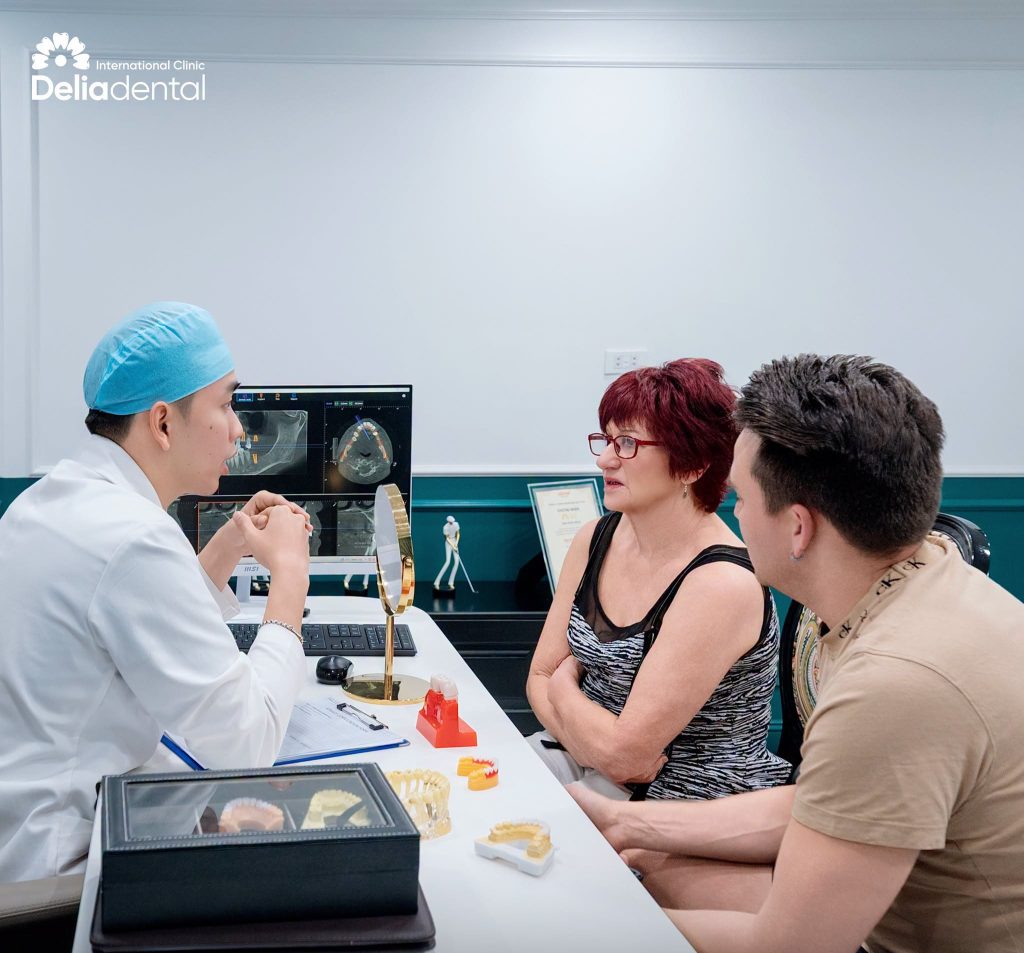
The prescribing doctor, not the dentist, decides whether an osteoporosis drug continues, pauses or changes. A drug holiday, a planned break from the medication around dental surgery, is often presented online as a standard step. The evidence does not support that.
The 2025 task force statement found no evidence that stopping bisphosphonate or denosumab therapy improves implant survival or reduces the development of MRONJ. The 2026 Asia-Pacific consensus statement cites a systematic review and meta-analysis concluding that drug holidays do not reduce MRONJ risk and therefore cannot be recommended. The same consensus states that there is no agreement on prophylactic drug holidays, that risks and benefits must be weighed for each patient, and that a holiday may be inappropriate for someone at high fracture risk.
That leaves an individual decision, so the questions to the prescribing doctor should be specific:
- What is the exact name, dose and route of my osteoporosis medication?
- How long have I taken it, including any earlier drug I used before switching?
- What is my fracture risk, and would pausing this drug increase it?
- Is my next infusion or injection due soon, and could it be scheduled around dental surgery?
- Would you be willing to speak with my implant dentist or write a short summary of my treatment?
- Which other medicines do I take that affect bone or healing, such as long-term steroids?
No one should stop or delay an osteoporosis medication on the advice of a clinic or a website. Where a physician recommends a change, bring it in writing.
How Does Bone Density Affect Implant Planning and Healing Time?
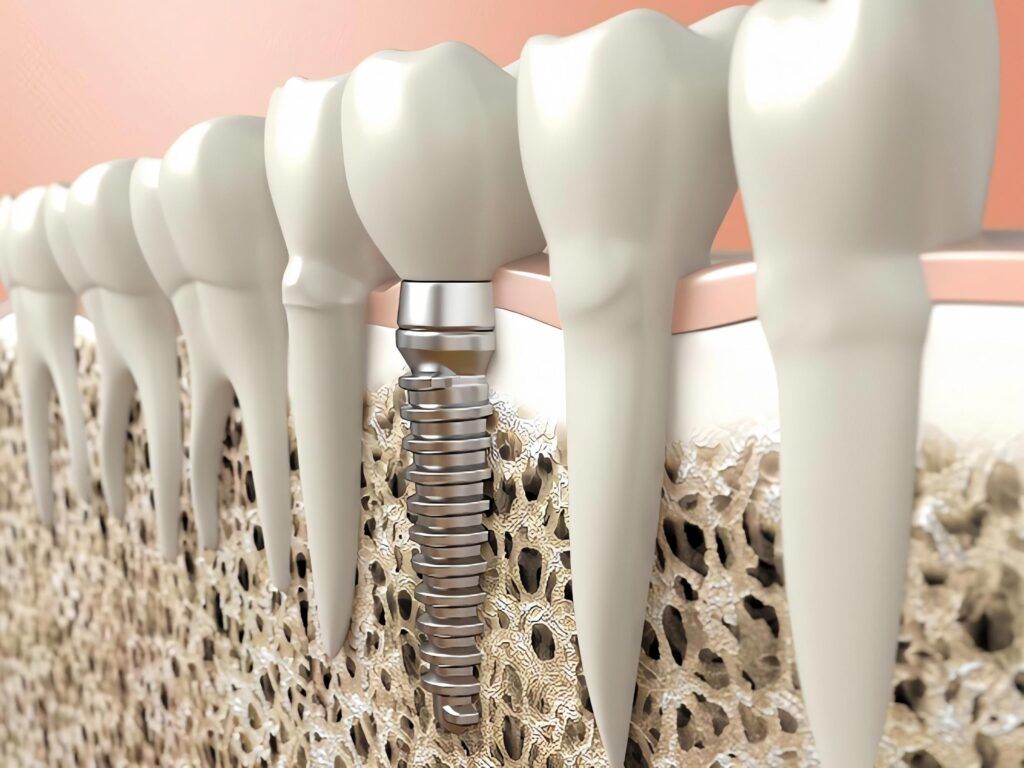
Osteoporosis affects implant planning through bone quality and healing time, which is a separate question from the medication. Osteoporosis lowers bone density across the skeleton, and the jawbone can be affected, particularly the softer upper jaw. Lower density bone can start with lower initial implant stability, so the dental team may allow a longer healing interval before a permanent restoration.
A spine or hip DEXA result helps the physician manage osteoporosis, but decisions about implant size, position and grafting come from three-dimensional imaging of the jaw itself. Imaging is covered in the guide on why a CBCT scan is standard before every implant, and general bone quality in the guide to implants for older patients.
What Can and Cannot Be Assessed Before You Travel?
A remote review can narrow the questions but cannot confirm that an implant plan is safe. Records can show which drug, dose and duration is involved and which items need a physician’s input. They cannot show bone density and volume, gum condition in person, or how the individual heals.
| Can be reviewed remotely | Cannot be confirmed remotely |
|---|---|
| Drug name, dose, route and duration | Final implant size, position and number |
| Recent DEXA result and date | Bone density and volume at the implant site |
| Existing panoramic X-ray or CBCT files | Whether grafting is needed |
| Other conditions and medicines that interact | Healing behaviour after surgery |
| Whether physician input is needed before booking | That treatment is safe for a specific patient |
Any written estimate before examination is preliminary. A plan and price presented as final from photographs alone, with an osteoporosis drug involved, is a warning sign.
How Delia Dental Clinic Reviews Implant Cases for Patients on Osteoporosis Medication
Delia Dental Clinic applies the same review process to every implant patient and does not run a separate protocol for osteoporosis drugs. Patients send records to the international patient team before travelling, including a medical history and current medication list, and the team gives a preliminary read on whether the case looks straightforward, staged or in need of clarification with the patient’s own doctor. That read is not a final treatment plan.
Every implant case at Delia Dental Clinic begins with an in-clinic CBCT scan, and a panoramic X-ray sent before travel is used only for preliminary planning. The patient’s health history and medications are reviewed again on arrival at the Hanoi or Ho Chi Minh City clinic, followed by an in-person examination, before the surgical plan is finalised. Where the medication picture calls for it, the patient can bring a letter or summary from their own physician, and a physician’s input may be requested before invasive treatment goes ahead.
Most implant cases follow a two-trip model, with assessment, surgery and a temporary restoration on the first trip and the final prosthesis on the second. The number of trips, the healing time and whether grafting is required are decided after the CBCT and examination, not before. The wider planning question is covered in the guide to how long to stay in Vietnam for dental implants.
Frequently Asked Questions
I have taken alendronate tablets for several years. Does that rule out implants?
It does not rule them out, but the number of years matters and should be reported accurately. The 2025 task force found long-term bisphosphonate use may be associated with a small increase in MRONJ risk, about 3 cases per 1000 patients in the one risk-adjusted report it cites. Whether that changes a specific plan depends on other risk factors and the dentist’s examination. The prescribing doctor should be involved if the medication plan itself is up for review.
Is Prolia different from alendronate when it comes to implants?
Yes, in ways that matter for planning. Prolia is a six-monthly injection whose effect wears off as the dose runs out, unlike a regularly taken tablet. The 2025 task force advises against stopping denosumab because of rebound bone loss and a higher risk of multiple vertebral fractures. The Asia-Pacific consensus suggests timing invasive dental work three to four months after the last injection, but that decision belongs to the patient’s physician.
What is a drug holiday and who decides whether I have one?
A drug holiday is a planned pause in a medication around dental surgery. Only the prescribing doctor can decide it, because stopping an osteoporosis drug can raise fracture risk. The task force found no evidence that stopping improves implant survival or lowers MRONJ, and the 2026 Asia-Pacific consensus reports no agreement on prophylactic drug holidays. A clinic can share its findings with the physician, but the decision stays with the prescriber.
Will I definitely need a bone graft if I have osteoporosis?
No. Osteoporosis does not automatically mean grafting, and grafting cannot be confirmed from records alone. The decision depends on bone volume and density at the specific implant site, which an in-clinic CBCT scan measures directly. Assuming grafting is or is not needed before that scan is unreliable either way.
I already have implants and have just started an osteoporosis drug. Should I worry?
Existing implants are not a reason to avoid an osteoporosis drug, and that decision belongs to the prescribing doctor. A 2026 systematic review on denosumab and implants distinguishes osteonecrosis triggered by surgery from osteonecrosis triggered by an implant’s presence, so the patient should tell both the prescriber and the dentist about the implants. Regular check-ups and good oral hygiene are what the task force emphasises for anyone on antiresorptive therapy.
Does a long flight after implant surgery matter more for osteoporosis patients?
The sources reviewed here do not describe a separate flight rule for osteoporosis, so the general guidance in the article on flying after dental implant surgery applies. Any question about fracture risk or mobility on a long trip belongs with the patient’s own doctor.
Questions to Settle Before You Book
Two further steps often sit alongside medication questions when a patient is planning implants abroad, and the guides below cover the pre-travel records and imaging that support them.
- Implant X-Ray Remote Assessment in Vietnam: What Can Be Confirmed Before You Fly
- Can a Dentist at Home Work on Implants Placed in Vietnam?
- Bone Grafting and Dental Implant Cost in Vietnam
- The Dental Tourism Medical Checklist: What Health Records to Prepare Before Your Trip to Vietnam
Final Thoughts
Osteoporosis medication changes how carefully an implant case is planned, but the evidence supports neither being turned away nor stopping a medication on your own. The useful move before travelling is to be precise about the drug, dose, route and years taken, and to ask the prescribing doctor what only that doctor can answer.
Send your medication list with doses and duration, your most recent DEXA result, and any existing X-rays or CBCT files to Delia Dental Clinic through WhatsApp or Messenger. The international patient team can give a preliminary read and flag what to clarify with your physician, and the confirmed plan follows the in-clinic CBCT scan and examination.


