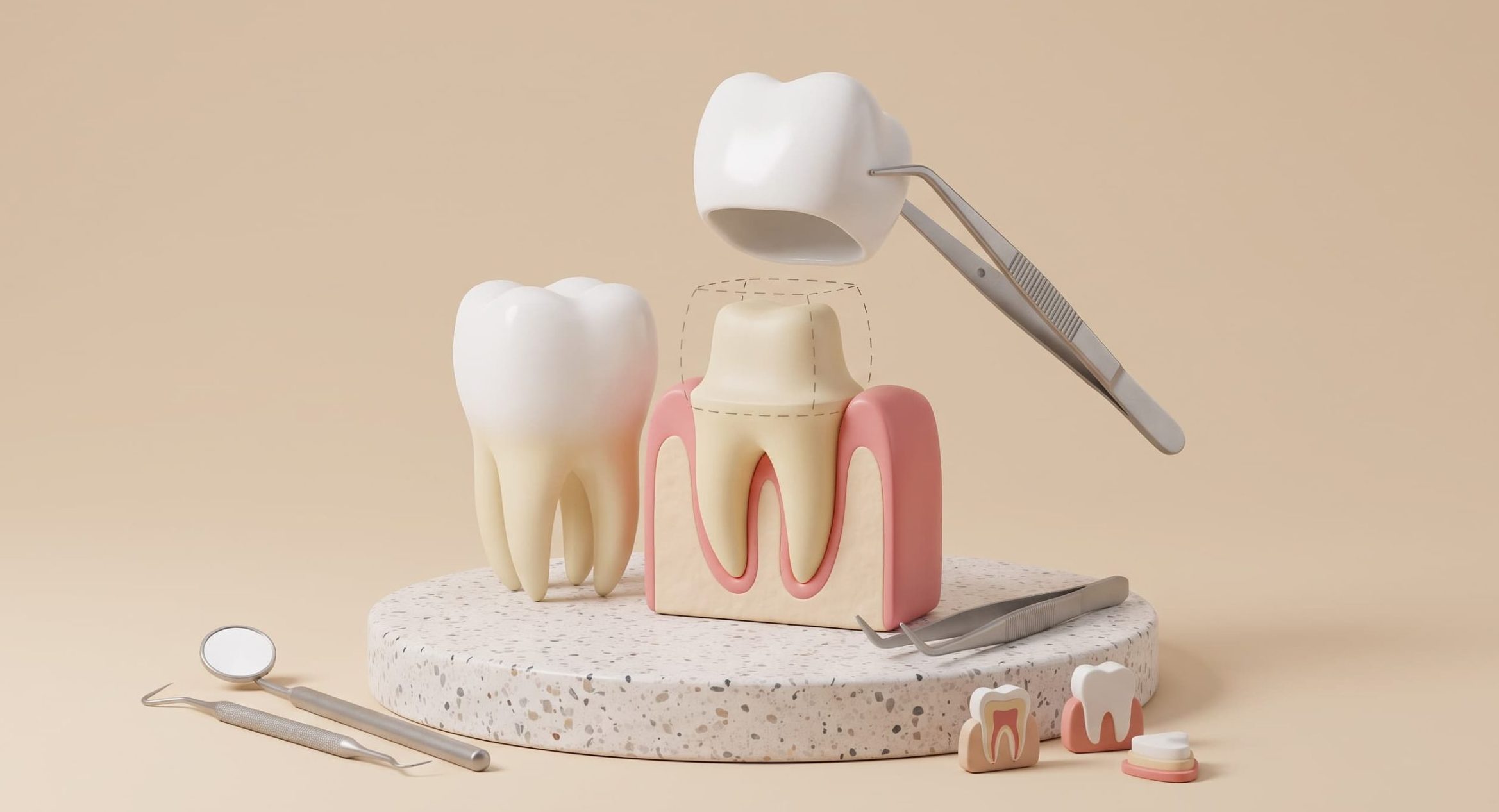
A crown cannot sit on top of a tooth that is the same size as before. The dentist has to make room for the material, and that room comes from your own tooth. Many patients hear this in one sentence, then receive a treatment plan with no number attached.
The amount is not fixed. It changes with the crown material, how much healthy tooth is left, and how the upper and lower teeth meet. Typical tooth reduction figures sit between roughly 0.5 mm and 2 mm per surface, but a tooth with a large old filling or heavy wear follows different rules from an intact one.
This article explains what those numbers mean in practice, why percentages quoted online sound far bigger than millimeters, what makes a preparation larger or smaller, and which questions are worth asking before any dentist, at home or abroad, starts shaping a tooth.
Quick Answer
A crown preparation usually removes about 0.5 to 1.5 mm from the sides of the tooth and 1 to 2 mm from the biting surface, depending on material. Zirconia generally needs the least, while e.max and porcelain fused to metal need more. The final figure depends on the tooth, the bite and the clinical findings.
How Many Millimeters of Tooth Does a Crown Take?
How much tooth is removed for a crown comes down to millimeters per surface. The sides of the tooth are usually reduced by about 0.5 to 1.5 mm, and the biting surface by about 1 to 2 mm. The exact figure depends mainly on how thick the chosen material must be to resist fracture under chewing forces. A thinner material needs less space, so it takes less tooth.
Published preparation guidelines show this pattern. A review in Oral Health Group lists 1 mm of side reduction and 1.5 mm of biting surface reduction for e.max, 0.5 to 1 mm of side reduction and 1.5 mm on the biting surface for monolithic zirconia, and 1.2 mm on the visible face for porcelain fused to metal (PFM). Guidance in Inside Dentistry adds that more translucent zirconia needs more preparation than high strength types, roughly 0.8 to 1 mm for 3Y zirconia and 1.2 to 1.5 mm for 5Y. For zirconia crown preparation thickness, the type of zirconia matters as much as the brand name on the price list.
| Crown material | Side walls | Biting surface |
|---|---|---|
| High strength zirconia (3Y) | About 0.5 to 1 mm | About 1 to 1.5 mm |
| Translucent zirconia (5Y) | About 1.2 to 1.5 mm | About 1.2 to 1.5 mm |
| Lithium disilicate (e.max) | About 1 to 1.5 mm | About 1.5 mm |
| Porcelain fused to metal (PFM) | About 1.2 mm on the visible face | About 1.5 to 2 mm |
These are general guideline ranges from published sources, not a promise for any single tooth. Manufacturers and clinicians also differ on exact figures, which is why two reputable sources can quote slightly different numbers. The same Oral Health Group review measured resin teeth prepared to these guidelines and found that zirconia preparations removed the least tooth, while PFM and e.max did not differ significantly from each other.
The edge of the preparation matters too. Inside Dentistry describes a finish line of roughly 1 mm, shaped as a rounded shoulder or a heavy chamfer, with smooth rounded internal corners so the ceramic is not stressed at sharp angles. That margin is part of the total amount removed, not an extra on top of the figures above.
To put the numbers in context, enamel on a molar is commonly described as up to about 2.5 mm thick at the cusps, and it thins toward the gum line. A 1.5 mm reduction on a chewing surface therefore removes a large share of the enamel there, and a conventional preparation also tapers the walls so the crown can slide on.
Why Percentages Sound Bigger Than Millimeters
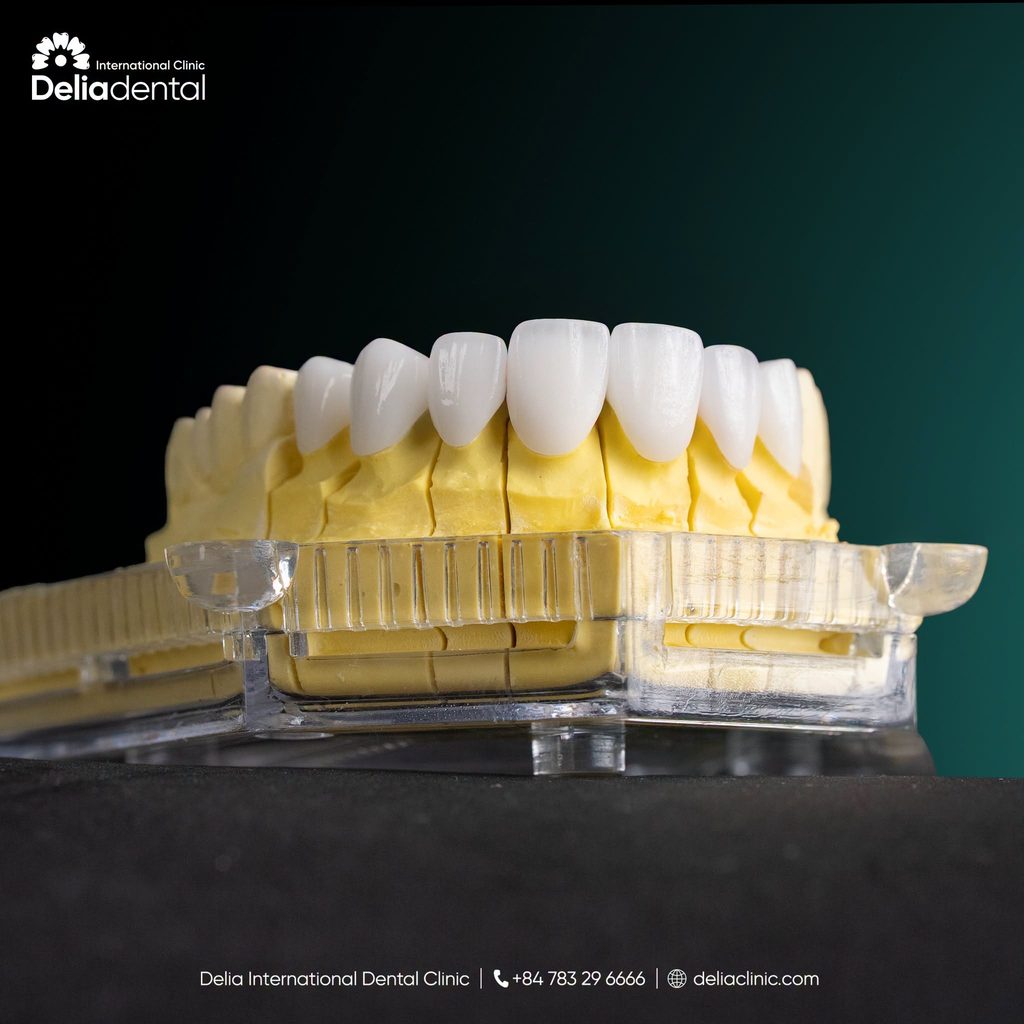
Online, you will often see figures like 60 to 70 percent of the tooth being removed. These come from laboratory studies that weigh the crown portion of a tooth before and after preparation. A widely cited study by Edelhoff and Sorensen, published in 2002, used resin teeth and reported that preparing anterior teeth for all ceramic and metal ceramic crowns removed roughly 63 to 72 percent of the coronal structure by weight.
A few millimeters taken from every surface of a small tooth adds up to a large share of the part above the gum. That is also why the percentage and the millimeter figure describe the same preparation from different angles, and neither contradicts the other.
Later work gives a more cautious picture. A 2022 study by Weber and colleagues found that the amount removed depended on tooth shape and on how it was measured, and that the detected values were below those described in earlier literature. The honest summary is that a full crown removes a substantial portion of the crown part of the tooth, and the exact share varies by tooth, design and study.
What Changes the Amount Removed
Material is only one input. Three other factors often matter just as much, and they explain why a friend’s crown story may not match yours.
Remaining Tooth Structure
A tooth with a large old filling, a crack or decay has less healthy structure to start with. The dentist may need to remove weak or decayed tissue and then rebuild the core with filling material before shaping it. After a root canal, the tooth may also need a core buildup, which is why root canal treatment before a crown changes both the plan and the quote.
Bite and Available Space
If the opposing tooth sits close, there is less room for the crown, and more reduction on the biting surface may be needed. If the bite is heavy or the patient grinds, the dentist may choose a stronger, thicker design rather than the thinnest possible one.
Height of the Tooth Above the Gum
Short teeth are harder to retain a crown on. Dentists commonly aim for a band of sound tooth, called the ferrule, of about 1.5 to 2 mm for the crown to grip. If that band is missing, the plan may include gum reshaping or a different approach, not simply more drilling.
When Less Preparation Is Possible
A full crown does remove a lot of tooth compared with an onlay or a filling, and it is not the only way to protect a weakened tooth. If one or two cusps are intact and the walls are sound, a partial coverage restoration such as an onlay may preserve more of the tooth. For teeth that only need a cosmetic change, a thin veneer is more conservative still, and how minimal prep veneers work is covered in its own guide.
An in vitro study in the Journal of Prosthodontic Research weighed and scanned 80 resin molars prepared with different designs. Metal ceramic crown preparations removed about 2.6 times more tooth than a table top preparation. A knife edge zirconia design was about 17.8 percent more conservative than the metal ceramic one, and a light chamfer lithium disilicate design about 21.5 percent more conservative, while shoulder designs in zirconia and lithium disilicate were among the more destructive. It is a laboratory study on resin models, so it shows the direction of the difference, not what happens in every mouth.
The trade-off is that partial coverage needs enough sound tooth and a suitable bite. When the walls are cracked or very thin, a full crown is often the safer clinical choice. Conserving tooth is a reason to ask about options, not a reason to refuse a crown the tooth truly needs.
Signs a Tooth May Have Been Prepared More Than Needed
Remote photos cannot prove how much was removed, and sensitivity after any crown preparation is common for a short period. Certain patterns, however, justify a clinical review:
- Cold or hot sensitivity that lingers rather than fading over the first weeks
- Throbbing or spontaneous pain without a trigger
- Pain on biting that does not settle after the bite has been checked
- A temporary or final crown that repeatedly loosens
None of these confirms over preparation. They can also come from a high bite, gum irritation or an inflamed pulp. The right step is an examination and an X-ray, not waiting indefinitely or guessing from a photo.
Questions to Ask Any Dentist Before a Crown
These questions apply anywhere, and a clear dentist should answer them without hesitation.
- Why does this tooth need a full crown instead of an onlay or a filling?
- Which material do you recommend for this tooth, and how much reduction does it need?
- How much healthy tooth remains, and will a core buildup be required?
- Could a root canal be needed, and how would that change the quote?
- Can I see the scan or X-ray of the prepared tooth before the final crown is made?
- What happens if the temporary crown loosens or the bite feels high?

How Delia Dental Clinic Plans a Crown Preparation
At Delia Dental Clinic in Hanoi and Ho Chi Minh City, the first visit starts with an examination, an X-ray where needed, and a digital scan or impression, and the dentist confirms whether the tooth is ready for a crown or needs treatment such as decay removal, a core buildup or a root canal first. Delia Dental Clinic offers crowns across several material tiers, from Ceramill at $190 per tooth to Orodent Innovation at $1,150 per tooth, so the material choice and the amount of reduction it needs are part of the same conversation.
For a straightforward case, the process commonly runs across two to three visits over about four to five days. Tooth preparation is done under local anesthesia, and when the crown has to wait for laboratory fabrication, a temporary crown protects the tooth in the meantime. At the second visit the permanent crown is tried in, and shape, bite and color are checked before it is cemented. The zirconia crown quality guide and the E.max crown procedure guide explain the two most common choices in more detail.
International patients can send photos and X-rays before travelling to get a preliminary direction on which teeth may need crowns. The confirmed plan and quote follow the in person examination, and additional treatment such as a root canal or core buildup is quoted separately when needed.\
Frequently Asked Questions
Does a Crown Always Mean Shaving the Tooth Down to a Peg?
No. The tooth is reshaped, but it should not be reduced to a thin peg unless the clinical situation requires it. The goal is to remove only what the chosen material needs for strength and fit, plus any weak or decayed tissue. A tooth that looks dramatically smaller after preparation is normal for a crown in many cases, and the temporary crown covers it until the final one is fitted.
Can Preparing a Tooth for a Crown Damage the Nerve?
It can irritate the pulp, which is the soft tissue inside the tooth. Most teeth tolerate crown preparation without lasting problems, but heat from drilling and the depth of reduction both play a role, and the risk is higher when the tooth was already inflamed, cracked or deeply decayed. Mild sensitivity in the first weeks is common. Lingering or spontaneous pain should be examined, because the tooth may need further treatment.
Is a Crown Without Any Drilling Possible?
For a true crown, some reduction is nearly always needed, because the crown must fit within the space the tooth occupies. Partial coverage options such as onlays remove less but still need preparation. Claims of a crown with no tooth removal should be treated with caution, and the dentist should explain what restoration is actually being offered.
Is Tooth Preparation for a Crown Painful?
Local anesthesia is normally used during preparation, so most patients feel pressure and vibration rather than sharp pain. Some sensitivity to temperature or biting can follow once the anesthetic wears off, and it usually settles gradually. Pain that is worsening, wakes you at night or lingers after hot or cold should be assessed rather than assumed to be normal recovery.
Is More Tooth Removed for a Root Canal Treated Tooth?
Not necessarily by the crown itself, but root canal treated teeth often have less structure left, so more of the final shape may be built from filling material. The crown usually protects such a tooth from fracture. Whether a post or core buildup is needed depends on how much solid tooth remains, which is judged on the X-ray and during examination.
Can a Dentist Tell How Much Tooth Is Left From a Photo or X-ray?
Partly. A photo shows the visible part of the tooth, and an X-ray can show the height of the crown portion, the depth of decay, existing fillings and the bone around the root. Neither shows whether the pulp is healthy or how your bite loads the tooth, which is why a remote review gives a preliminary direction on materials and number of crowns, not a confirmed plan. The final decision follows the in person examination.
Where to Go Next After Learning What a Crown Takes
If you are weighing crown options, these guides cover the decisions that usually follow.
- Can You Combine Veneers and Crowns in One Treatment Plan?
- What Affects Dental Crown Cost in Vietnam?
- Crown or Implant for a Badly Damaged Tooth?
- What to Do If a Crown or Veneer Chips Months After You Return Home
Final Thoughts
The right amount of tooth to remove is the smallest amount that still gives the crown enough strength and a secure fit. That depends on the material and on the tooth in front of the dentist, which is why a clear explanation matters more than a single number.
Send your recent X-rays and close up photos of the tooth, or your existing crown quote, to Delia Dental Clinic via WhatsApp or Messenger before booking travel. The team can suggest a preliminary direction on materials and the likely number of visits for Hanoi or Ho Chi Minh City, and the final plan and quote are confirmed after an in person examination.


