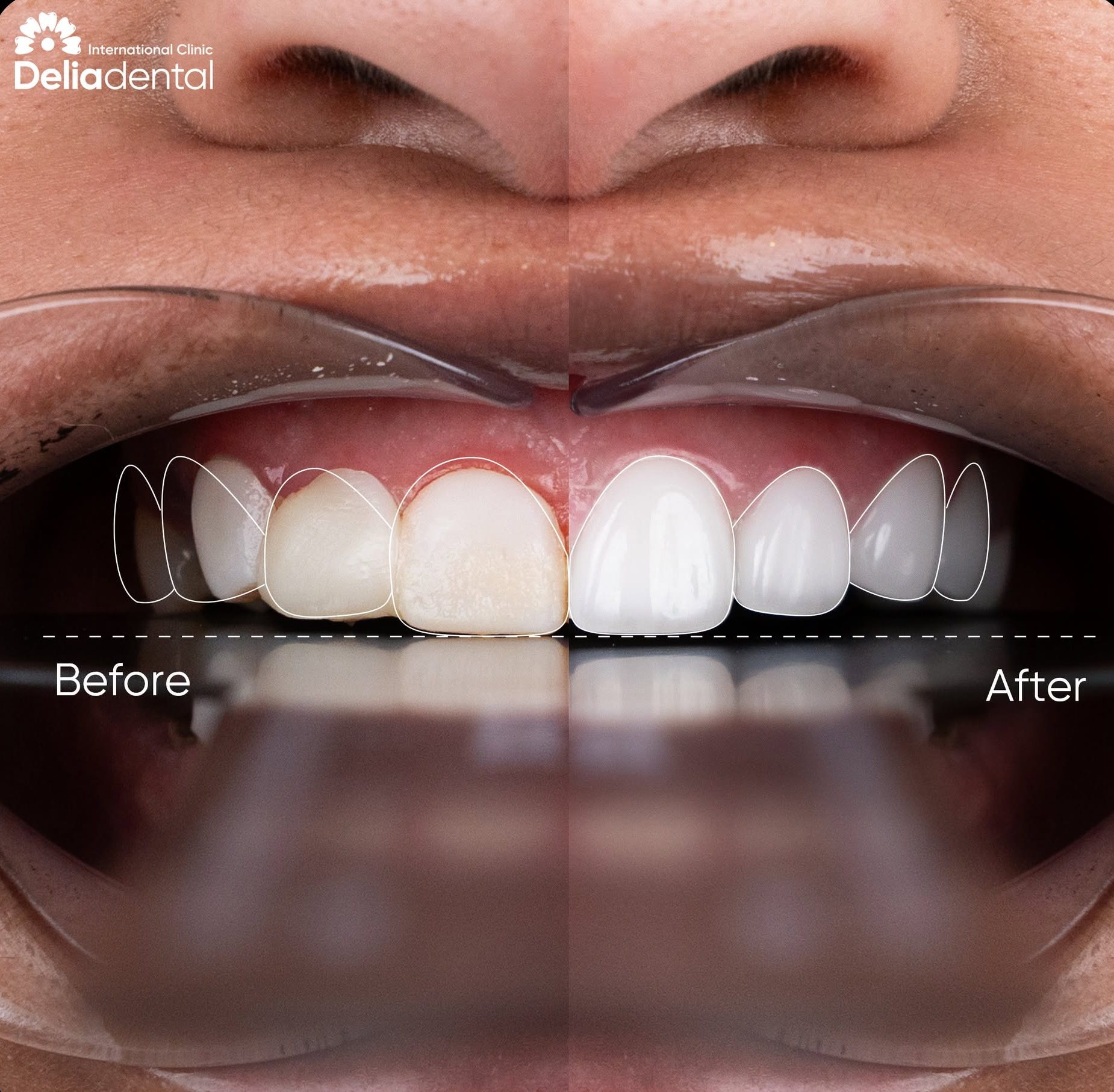
The phrase “Turkey teeth” has become a widely recognized media term across the United Kingdom, Australia, and North America, used to describe the viral trend of traveling abroad for rapid, low-cost smile makeovers that involve severe tooth reduction. Media reports and warnings from professional bodies, including the British Dental Association, have highlighted cases where young patients had healthy enamel ground down into small pegs, only to suffer from chronic nerve pain, premature failure, and severe dental infections.
This coverage has created legitimate anxiety for international patients researching cosmetic dentistry overseas. Many patients seeking affordable cosmetic treatment now find themselves asking a critical question before booking any flight: how can you improve your smile abroad without subjecting healthy teeth to irreversible, aggressive shaving?
The answer lies in understanding the clinical difference between aggressive crown preparations and conservative restorative dentistry. A minimal-prep porcelain veneer treatment in Vietnam represents a tissue-preserving alternative designed to enhance dental aesthetics while keeping natural enamel intact, preventing the biological complications associated with over-prepared teeth.
Quick Answer
Minimal-prep veneers in Vietnam offer a tissue-preserving alternative to aggressive tooth shaving by removing only 0.2 to 0.5 millimeters of outer enamel. This conservative technique maintains the natural tooth structure, protects nerve vitality, and provides high bond strength without the risks of severe sensitivity or premature root canals commonly linked to aggressive crown treatments.
What “Turkey Teeth” Actually Means
The widespread fear surrounding foreign cosmetic dentistry stems from a fundamental confusion between dental veneers and dental crowns. A porcelain veneer is a thin ceramic shell designed to bond exclusively to the front surface of a tooth, requiring minimal alteration to the underlying structure. In contrast, a full-coverage dental crown requires reducing the tooth on all sides by 60 to 70 percent, creating a small cylindrical core over which a cap is cemented.
In high-volume, discount cosmetic clinics, practitioners frequently grind down completely healthy, intact teeth to place full-coverage crowns because crowns can be fabricated and fitted rapidly without the meticulous, tooth-by-tooth enamel planning that true veneers require. While marketed to overseas consumers as “veneers,” these procedures are clinically classified as aggressive full-mouth crown preparations. The rapid removal of deep enamel and dentin on youthful, healthy teeth introduces immediate biological risks.
When healthy tooth structure is aggressively removed, the internal dental pulp, which houses the nerves and blood vessels, experiences severe thermal and mechanical trauma. Clinical studies indicate that heavily prepared teeth carry an elevated risk of irreversible pulpitis, often requiring root canal therapy within months or years of placement. Furthermore, once tooth structure is removed to that extent, the process is completely irreversible, locking the patient into a cycle of complex restorative replacements every ten to fifteen years for the rest of their life.
This complication pattern is not exclusive to any single country; it can occur in any clinic where commercial speed is prioritized over conservative biological principles. Recognizing the distinction between aggressive full-crown reduction and conservative porcelain veneer preparation is the most important step in protecting your long-term oral health.
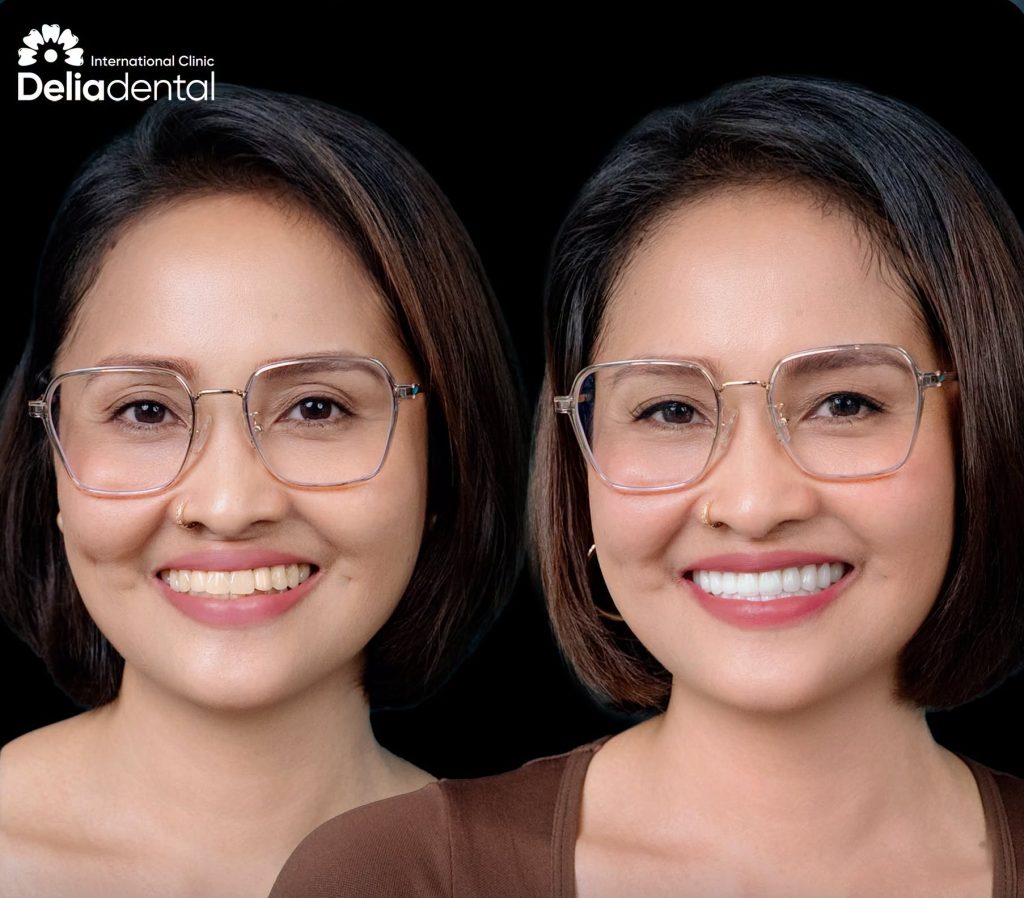
Minimal-Prep Veneers: The Direct Opposite of the Turkey Teeth Approach
Minimal-prep porcelain veneers are engineered specifically to avoid aggressive tooth reduction by working with the natural anatomy of the tooth rather than cutting it away. Fabricated from high-strength lithium disilicate or advanced glass-ceramics such as E.max Press and LiSi, these ultra-thin restorations possess remarkable tensile strength even at thicknesses as low as 0.2 to 0.5 millimeters.
The primary objective of a minimal-prep protocol is to remain entirely within the outer enamel layer. Enamel is the hardest tissue in the human body, and the chemical bond established between dental resin cement, etched porcelain, and natural enamel is significantly stronger and more durable than a bond made to underlying dentin. By preserving 80 to 90 percent or more of the original enamel shell, minimal-prep veneers provide high retention rates and virtually eliminate post-operative nerve sensitivity.
Choosing a minimal-prep approach transforms the patient experience both during the procedure and over the long term. Because preparation is confined to the superficial enamel layer, treatment is conservative, local anesthesia requirements are minimal, and the underlying tooth maintains its structural integrity and nerve vitality for decades.
| Clinical Feature | Aggressive “Turkey Teeth” Approach | Minimal-Prep Veneers in Vietnam |
| Restoration Type | Full-coverage crowns marketed as veneers | True ultra-thin laminate porcelain veneers |
| Enamel Reduction | 60% to 70% total tooth structure removed | 0.2 mm to 0.5 mm superficial enamel shaping |
| Tooth Appearance Underneath | Small, shaved pegs or “shark teeth” | Natural tooth shape preserved with minor contouring |
| Bonding Surface | Deep dentin, resulting in lower adhesive bond | Superficial enamel, yielding maximum bond strength |
| Pulp Vitality Risk | High risk of nerve trauma and future root canals | Minimal risk to dental pulp and nerve tissue |
| Post-Operative Sensitivity | Frequent, severe, and potentially permanent | Mild, temporary adaptation lasting only a few days |
| Long-Term Reversibility | Irreversible; requires lifetime crown maintenance | Conservative; preserves natural foundation for future care |

Not Every Case Can Avoid Preparation Entirely
While minimal-prep dentistry is the gold standard for conservative aesthetic treatment, patients should be cautious of clinics that advertise completely “no-prep” veneers for every single smile. Transparent clinical planning requires acknowledging that minor enamel modification is frequently necessary to achieve an aesthetically balanced and biologically healthy outcome.
Teeth that exhibit moderate crowding, significant rotational misalignment, or severe outward protrusion cannot simply be covered with porcelain without preliminary contouring. Placing veneers over misaligned teeth without preparation results in an over-contoured, bulky appearance that traps food, irritates gum tissue, and leads to chronic gingival inflammation. In such cases, selective enamel reduction is necessary to create a proper path of insertion and establish a flush margin at the gumline.
Similarly, teeth with severe intrinsic tetracycline discoloration or large, failing composite fillings require sufficient space for ceramic layering to block out dark underlying shades naturally. The key difference between legitimate clinical preparation and aggressive shaving lies in the intent and the depth of reduction. A conservative cosmetic dentist removes only the precise fraction of a millimeter required for structural harmony, whereas aggressive commercial practices grind teeth down universally for rapid assembly-line turnaround.
During an initial evaluation, your dentist should clearly explain why a specific tooth requires contouring and demonstrate the exact depth of reduction planned before any irreversible steps begin.
How Delia Dental Clinic Assesses This Before Any Tooth Is Touched
At Delia Dental Clinic, conservative tooth preservation serves as the foundational protocol for all cosmetic and restorative procedures at our facilities in Hanoi and Ho Chi Minh City. International patients seeking an aesthetic transformation are never subjected to blanket, aggressive preparation protocols. Every treatment plan begins with comprehensive digital diagnostics and diagnostic mock-ups designed to test and confirm the least invasive path forward.
The process begins before you board a flight. International patients can submit clear smile photographs and panoramic X-rays through WhatsApp or Messenger for a preliminary aesthetic assessment. Our clinical team reviews the tooth alignment, enamel thickness, and bite relationship to determine whether your aesthetic goals can be achieved through ultra-thin minimal-prep veneers, conservative alignment, or alternative restorative methods.
Upon your arrival at our clinic in Hanoi or Ho Chi Minh City, we utilize Digital Smile Design technology to map your facial symmetry, lip dynamics, and tooth proportions in three dimensions. Before any physical alteration of your natural teeth takes place, a physical resin mock-up is placed directly over your teeth. This diagnostic try-in stage allows you to see, feel, and evaluate the proposed tooth length, shape, and bite function in real time.
By utilizing high-translucency lithium disilicate materials like E.max Press and specialized ceramic finishing, Delia Dental Clinic achieves natural light diffusion and lifelike shade layering while removing only the absolute minimum amount of enamel required. Our international patient coordinators provide full written documentation of the materials and techniques used, ensuring complete transparency and peace of mind throughout your dental travel journey.
Frequently Asked Questions
What exactly is the “Turkey teeth” problem?
The “Turkey teeth” phenomenon refers to a pattern observed in high-volume medical tourism settings where patients seeking cosmetic smile improvements receive aggressive, full-coverage crown preparations on healthy teeth instead of conservative veneers. This process involves filing down up to seventy percent of the natural tooth structure into small pegs to fit standard porcelain-fused-to-metal or zirconia crowns quickly. Because healthy enamel and dentin are aggressively removed, patients frequently suffer from chronic nerve pain, pulp death requiring emergency root canals, and premature restoration failure. Professional dental organizations have warned against this aggressive approach because it causes irreversible biological damage to youthful teeth that could have been treated with far less invasive methods. Choosing a clinic that specializes in genuine minimal-prep porcelain veneers avoids these severe complications by preserving the natural tooth structure underneath.
Can minimal-prep veneers be reversed if I change my mind?
Minimal-prep veneers should generally be considered a permanent, irreversible cosmetic commitment, even though they remove only a tiny fraction of enamel. Because minimal preparation typically involves removing 0.2 to 0.5 millimeters of superficial enamel to create a smooth finish line and prevent bulky margins, the treated tooth will always require some form of protective restoration. However, unlike aggressive crown preparations that permanently destroy the structural core of the tooth, minimal-prep veneers preserve nearly all of your natural tooth volume, dentin, and nerve architecture. This means that if a veneer ever needs replacement in ten, fifteen, or twenty years, the underlying tooth remains strong, structurally sound, and fully capable of supporting a new conservative restoration. The goal of minimal-prep dentistry is not future removal, but the lifelong preservation of your natural biological tooth foundation.
Does minimal enamel preparation make the veneers less durable?
Minimal enamel preparation does not make porcelain veneers fragile; in fact, clinical evidence demonstrates that bonding veneers to intact enamel produces a significantly stronger and longer-lasting restoration than bonding crowns to dentin. Modern dental ceramics, particularly pressed lithium disilicate such as E.max Press, possess high flexural strength that resists normal biting and chewing forces once adhesively fused to enamel. The composite resin cements used in minimal-prep protocols create a micromechanical and chemical bond with etched enamel that effectively integrates the ceramic into the natural tooth structure. Studies tracking conservative porcelain veneers show survival rates exceeding ninety-five percent over ten to fifteen years when placed by experienced clinicians and properly maintained with routine oral hygiene. Durability depends on the quality of the adhesive bond and the patient’s bite alignment rather than the thickness of the ceramic layer alone.
How do I know if a clinic is planning aggressive shaving before I agree to treatment?
You can protect yourself from aggressive tooth preparation by asking specific diagnostic questions during your initial consultation and requesting clear written documentation before sitting in the dental chair. Ask the clinician explicitly whether they are planning full-coverage dental crowns or conservative laminate veneers, and request an exact estimate of the preparation depth in millimeters. A reputable clinic will always provide a 3D Digital Smile Design preview or a physical intraoral mock-up that allows you to see the planned outcome directly on your teeth before any enamel is touched. If a clinic refuses to show you a pre-treatment mock-up, uses vague terms like “full-prep veneers,” or suggests that all your teeth must be shaved down uniformly in a single short appointment, these are clear warning signs of an aggressive crown protocol. Legitimate conservative dentists will prioritize saving your enamel and will explain precisely why any minor reduction is necessary for each individual tooth.
Final Thoughts
A beautiful, confident smile should never come at the expense of your long-term oral health. The complications associated with aggressive tooth shaving are entirely avoidable when you choose conservative, minimal-prep cosmetic dentistry over high-speed, assembly-line procedures.
Before committing to any cosmetic treatment abroad, take control of your consultation by asking the right clinical questions. Confirm whether the proposed restorations are true laminate veneers or full crowns, ask for the planned depth of enamel reduction in millimeters, and ensure that a diagnostic mock-up is placed before any physical preparation begins. A reputable clinic will welcome your questions and provide clear, transparent answers that prioritize the preservation of your natural teeth.
If you are considering porcelain veneers and want an honest, conservative clinical evaluation, send your close-up smile photos and recent dental X-rays to Delia Dental Clinic via WhatsApp or Messenger. Our international patient team in Hanoi and Ho Chi Minh City will review your case, outline your minimal-prep options, and help you achieve a natural, durable smile without compromising your healthy tooth structure.


