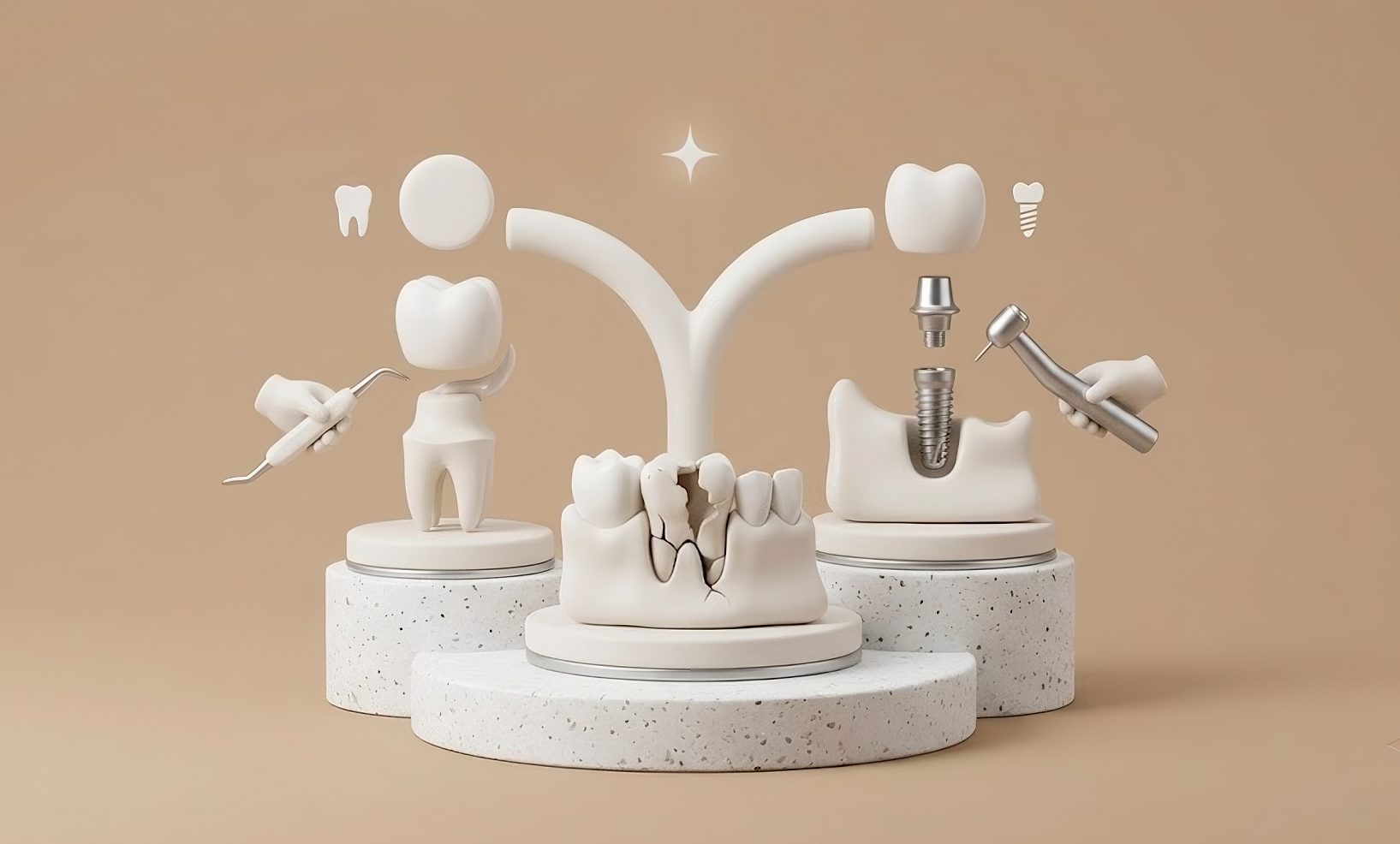
A badly damaged tooth is not automatically a lost tooth, and an implant is not automatically the safer answer. The right route depends on what is left of the tooth, how deep the damage runs and what the root and bone look like.
Research comparing a root canal treated tooth with a single implant finds similar survival for both. A systematic review by Iqbal and Kim concluded that the choice between saving a compromised tooth and replacing it with an implant should rest on factors other than survival figures. For a patient told a tooth is “too far gone”, the question becomes whether this particular tooth can still be restored.
Three findings carry most of the decision: how much sound tooth remains above the gum, where a crack or break runs, and the condition of the root and the bone around it. A root canal and crown is often the more conservative route when those findings allow it. Extraction followed by an implant makes more sense when they do not.
This guide shows how each finding shifts the decision, what each route involves trip by trip and what changes the cost. It describes common patterns and is not a diagnosis.
Quick Answer
A badly damaged tooth can often be kept with a root canal and crown when enough healthy tooth remains above the gum and the root is intact. An implant becomes the better route when a crack runs below the gum line, the root has fractured or too little bone support remains.
What Decides Whether a Damaged Tooth Can Be Saved?
A damaged tooth can usually be saved when three things hold: enough sound tooth remains for a crown to grip, any crack stays above the gum line, and the root and surrounding bone are healthy. If one of them fails, the case needs a closer look, and if the root itself is compromised, replacement is usually the more predictable plan.
How Much Healthy Tooth Remains Above the Gum
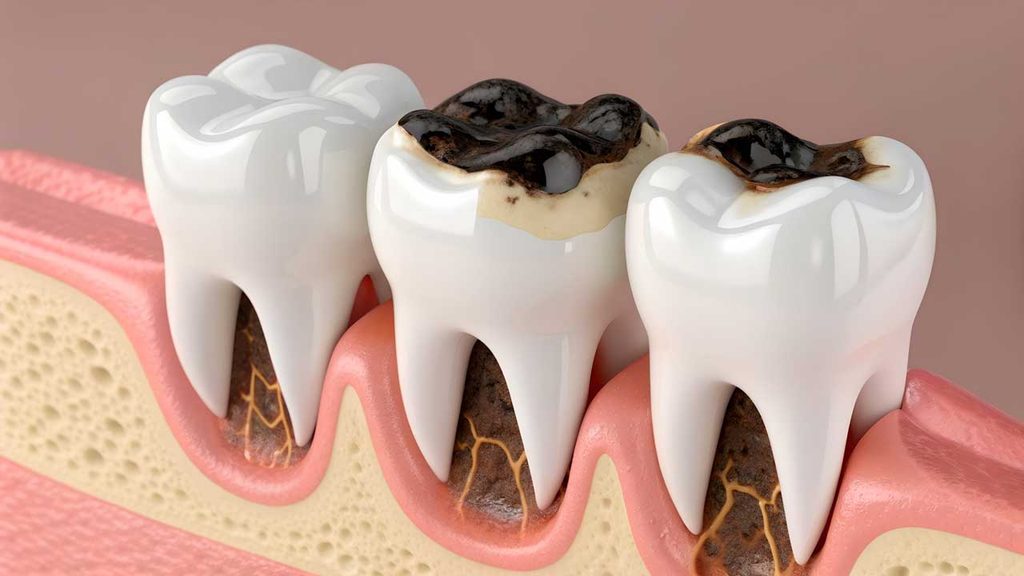
A crown works like a sleeve over the tooth, so it needs sound tooth structure to hold onto. Deep decay, a large broken section or an old filling that has undermined the walls can leave too little. A dentist can rebuild the core or sometimes treat the gum to expose more tooth, but each step adds cost, and when very little remains even after rebuilding, a crown is more likely to loosen or fracture later.
Where the Crack or Break Runs
The American Association of Endodontists describes five kinds of cracks, and the outlook differs sharply between them. Craze lines are shallow enamel cracks that need no treatment beyond appearance. A fractured cusp, where a corner of the chewing surface breaks away, is often restorable with a crown, sometimes after a root canal if the pulp is involved.
A cracked tooth has a crack running from the chewing surface toward the root. If it has reached the pulp, the tooth can still be treated with a root canal and a crown to stop the crack spreading, but if it extends below the gum line it can no longer be treated that way and the tooth needs to be extracted. A split tooth, the later stage of an untreated crack, cannot be saved intact, although part of it can sometimes be kept. A vertical root fracture begins in the root and is often found when the bone and gum around it become infected, and treatment may involve extraction.
Root, Bone and Previous Root Canal Condition
A tooth also depends on what holds it in the jaw. Infection around the root, or bone lost to gum disease, can leave a tooth loose, and a crown cannot restore support that has gone. A root canal treated tooth can still fracture later, and vertical root fractures are most often found in teeth that already had root canal treatment. Whether a root canal is needed at all depends on the pulp, a decision covered in do you need a root canal before a crown.
A root canal that has failed is a separate question. If the cause is remaining infection or a missed canal, a repeat procedure may be possible. If the cause is a fracture in the root, repeating the root canal does not repair it, and extraction becomes more likely.
Does a Saved Tooth or an Implant Last Longer?
Neither has a clear advantage in published survival data. The same review pooled studies of restored root canal treated teeth and single implants and found overlapping survival at every follow up period, which is why it concluded that the decision should rest on other factors.
The deciding factors are how restorable the tooth is, how many trips you can make and what each route costs. The two routes also fail in different ways. A saved tooth can still crack or develop new decay, while an implant fixture rarely fails once it has integrated and the repairs tend to happen in the crown or screw above it. A separate guide to how implants and bridges fail and what repairs cost over time covers that cycle for replaced teeth.
What the Findings Usually Point To
The table shows how common findings tend to steer the decision. It describes patterns, not diagnoses, and the last column shows what confirms each one.
| Finding | Usually points to | Why | What confirms it |
|---|---|---|---|
| Craze lines or a small chip | Monitoring or a filling | Damage is limited to enamel | Clinical examination |
| Fractured cusp, root healthy | Crown, with a root canal only if the pulp is involved | The break is above the gum and the root is intact | Examination and X-ray |
| Cracked tooth in the crown portion | Root canal if needed, then a crown | A crown can hold the tooth together, though the outlook varies | Examination and imaging |
| Crack running below the gum line | Extraction and replacement | The AAE describes this as no longer treatable | Examination and CBCT where indicated |
| Split tooth | Usually extraction, sometimes part of the tooth is saved | The segments have separated | Examination and imaging |
| Vertical root fracture | Extraction in most cases | The fracture starts in the root | Imaging and signs of infection around the root |
| Deep decay, sound root and bone | Root canal, core buildup and crown | The root is still well supported | X-ray or CBCT |
| Earlier root canal that failed | Repeat root canal or replacement, case by case | The cause of failure decides | X-ray or CBCT |
| Loose tooth with advanced bone loss | Replacement more likely | A crown cannot restore lost bone support | X-ray and a gum assessment |
| Heavy grinding | Either route needs protection | Bite force can break crowns and chip implant crowns | Examination |
If your dentist described the crack as reaching below the gum or the root as fractured, the realistic comparison is between replacement options. If the damage sits above the gum line, saving the tooth is still an open conversation.

What Each Route Involves, Step by Step and Trip by Trip
Saving the tooth is usually a one trip plan, while replacing it with an implant often needs two.
| Route | Typical steps | Trips |
|---|---|---|
| Save the tooth | Root canal if the pulp is involved, core buildup if needed, then a temporary and final crown | Often one trip when there is no major infection |
| Replace with an implant | Extraction, bone graft if needed, implant placement, a healing period, then the final crown | Often two trips, with healing at home in between |
The healing period for an implant commonly runs around 3 to 6 months, and patients generally do not stay in Vietnam while it passes. In selected cases an immediate implant can be placed at the time of extraction, but immediate placement does not mean immediate final teeth. A temporary tooth may be used while the implant heals, and the final crown follows later. These timelines are estimates, and infection or extra grafting can lengthen them.
What Changes the Cost of Each Route
Each route has its own add ons, so comparing a crown price with an implant price alone can mislead. The table shows Delia Dental Clinic’s standard prices for the main components.
| Item | Standard price (USD) | What it covers |
|---|---|---|
| E.max crown | $290 per tooth | Consultation, scan or impression, mock up, temporary restoration and try in |
| Lava Plus crown | $350 per tooth | Same as above |
| Osstem implant and abutment | $700 | Implant fixture and abutment only |
| HIOSSEN implant and abutment | $1,200 | Implant fixture and abutment only |
| Straumann SLA implant and abutment | $2,000 | Implant fixture and abutment only |
The implant figures are not the cost of replacing a tooth. The crown on top of the implant, any extraction, bone grafting and healing visits are separate lines. On the crown route, root canal treatment, core buildup and gum treatment can change the final quote. Those items are not part of the published standard price list, so they appear as separate lines in a case based quote.
For a fair comparison, ask for an itemised estimate of both routes for the same tooth and add up each one, including the number of trips. The guide to dental crown cost in Vietnam explains the factors behind crown pricing.
How Delia Dental Clinic Decides Between Saving and Replacing a Tooth
The international patient team at Delia Dental Clinic’s Hanoi and Ho Chi Minh City branches can review your X-rays or CBCT files and tooth photos before you travel, then suggest a preliminary direction for each route with an estimate of cost and trip timing. A CBCT scan shows the root, the bone around it and nearby structures in three dimensions, which helps judge whether the root and bone can still support a restored tooth or whether replacement is more predictable.
A remote review has limits. Some cracks and root fractures are hard to see on an X-ray, and the plan can change once the tooth is examined in person or the damaged part is removed. For that reason the final recommendation and quote are confirmed after an examination.
Useful records to send:
- Recent X-rays or CBCT files, in their original format if you have them
- Close up photos of the tooth from the chewing surface and from the side
- Your current dentist’s recommendation or quote, if you have one
- When the symptoms began and what triggers them, such as biting or hot and cold drinks
Frequently Asked Questions
Can a Cracked Tooth Be Saved With a Crown Alone?
Sometimes. A crack limited to the upper part of the tooth, with no sign that the pulp is inflamed, can be held together by a crown, and the tooth may never need a root canal. If the crack has reached the pulp, a root canal and crown can still protect the tooth, while a crack that extends below the gum line is no longer treatable that way. Cracks are often hard to see on an X-ray, so the depth is usually confirmed during an examination.
Is a Root Canal and Crown Cheaper Than an Implant?
It depends on the tooth and on what each route needs. The crown route can include a root canal and core buildup, while the implant route can include extraction, grafting, the implant, an abutment and a final crown. The standard prices above cover crowns and implant fixtures but not those extra steps, so neither list answers the question alone. An itemised estimate for both routes on the same tooth is the reliable comparison, and the trip count belongs in it because one route often needs two trips.
Can a Tooth With a Failed Root Canal Be Saved?
Sometimes. If the failure comes from remaining infection or a missed canal, a repeat root canal may be possible. If the cause is a fracture in the root, repeating the procedure does not repair it and extraction is more likely. Imaging, and sometimes a closer look during treatment, shows which situation applies.
If I Save the Tooth Now, Can I Still Get an Implant Later?
In most cases the implant option stays open. If a saved tooth later fractures or becomes infected, it can be extracted and replaced at that point. The risk of waiting is that long standing infection around a root can damage bone, which may add a graft to a later implant plan. A tooth with a doubtful outlook is therefore worth reviewing early instead of leaving until it hurts.
Can the Extraction and Implant Happen on the Same Trip?
Often the extraction and implant placement can be planned for the same trip, and in selected cases the implant is placed at the time of extraction. Whether that is possible depends on infection around the tooth and the amount of bone available. Immediate placement does not mean immediate final teeth, because a temporary crown may be used while the implant heals and the final crown follows after the healing period.
Is the Decision Different for a Front Tooth Than for a Molar?
Yes, in some ways. AAE material notes that deep cracks are found most often in back teeth, which carry the heaviest bite force, and a molar with several roots can sometimes keep its healthy roots when one is damaged. Front teeth face a different test, since appearance matters and matching an implant crown in the smile zone can be more demanding. For either tooth, the findings in the table above decide more than position does.
Checking the Details Around This Decision
Once you know which route fits, the next questions usually concern bone, grinding and warranty terms, and these guides cover them.
- Missing Molar Tooth: What Waiting Actually Costs You
- Bone Grafting and Dental Implant Cost in Vietnam
- Night Guard After Implants or Crowns: Do You Actually Need One?
- Implant Warranty vs Prosthetic Warranty: What’s Covered?
Final Thoughts
The most useful step is finding out which of the findings above describes your tooth, because that finding, not a general preference for saving or replacing, usually settles the route.
Send your X-ray or CBCT files, photos of the tooth and any existing recommendation via WhatsApp or Messenger so Delia Dental Clinic can suggest a preliminary direction and estimate cost and trip timing for both routes before you book a flight. The final treatment plan and quote are confirmed after an in person examination.


