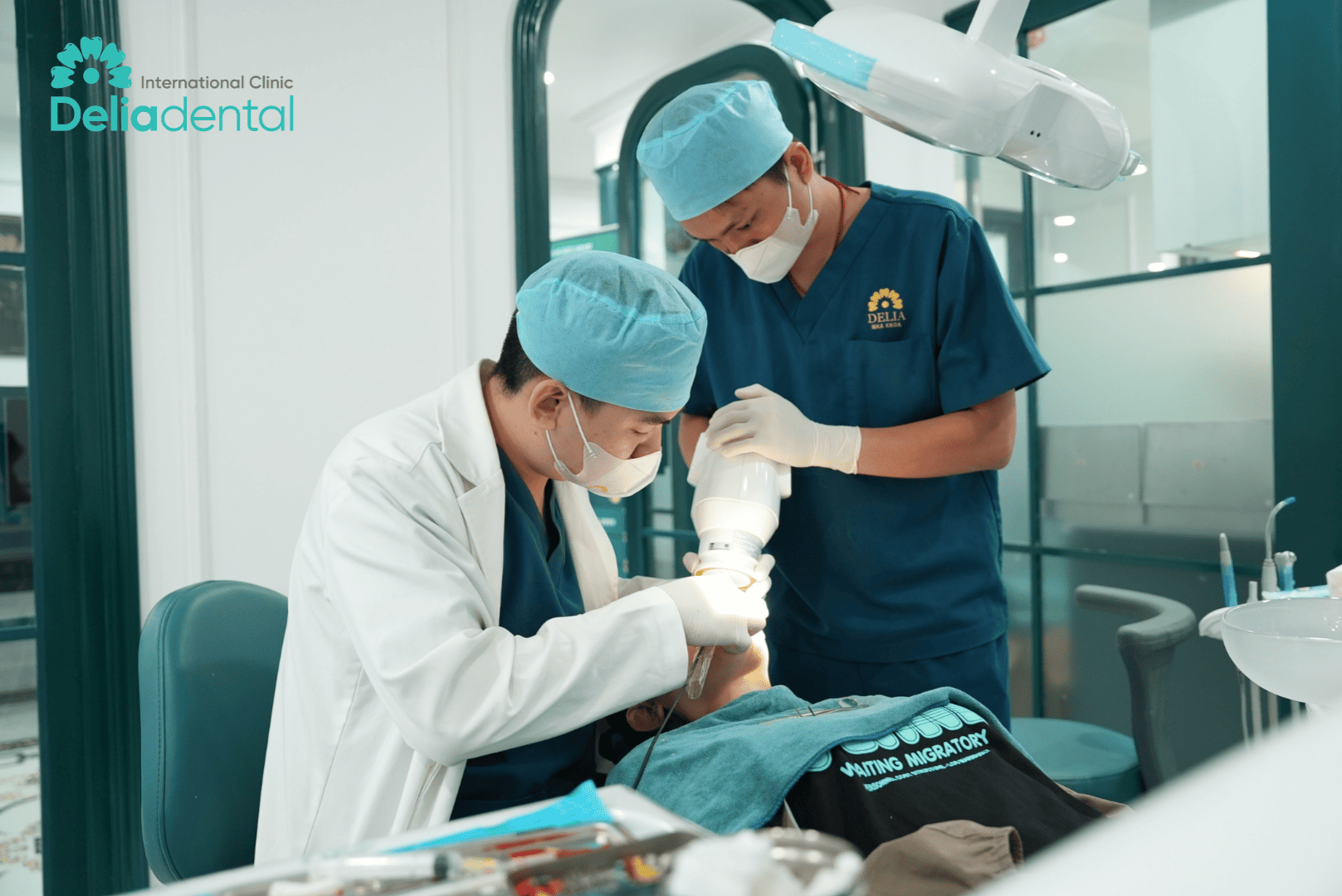
Immediate dental implants in Vietnam place the implant in the same appointment as the tooth extraction, which can remove one healing stage from the treatment compared with waiting for the socket to heal first. Whether this is possible depends on the bone at the extraction site and on the absence of active infection, and both are confirmed by a 3D scan.
For international patients on a short stay, fewer stages before placement can matter. Same day placement does not mean same day final teeth, though. The implant still needs time to integrate with the jawbone before the permanent crown is fitted.
This guide explains who may qualify, what changes the cost, and how Delia Dental Clinic plans these cases before you book a flight to Hanoi or Ho Chi Minh City.
Quick Answer
Immediate dental implants in Vietnam place the implant at the same appointment as the extraction, but only when a CBCT scan shows enough bone and no active infection. A temporary tooth is typically fitted within 24 to 72 hours, and the permanent crown follows at a second visit after about two to three months of healing. Final suitability and cost are confirmed after examination.
Immediate implants vs traditional implants
The difference between the two approaches is timing. An immediate implant goes in when the tooth comes out, while a traditional implant waits until the extraction site has healed. Immediate placement is not a faster version of the same procedure. It is a different protocol, and it needs enough bone in the socket to hold the implant from the first day. In selected cases the outcome may be comparable to a traditional implant while saving a healing stage. When the conditions are not met, delayed placement is usually the more predictable choice.
| Immediate implant | Traditional implant | |
|---|---|---|
| Placement | Same appointment as the extraction | After the extraction site has healed |
| Temporary tooth | Typically fitted within 24 to 72 hours, depending on the case | Often a temporary denture or flipper during healing |
| Best suited for | Adequate bone and no active infection | Limited bone, infection or cases that need grafting first |
A fractured tooth with a healthy socket and no infection is a more typical candidate than a tooth that was lost years ago. A 3D CBCT scan decides which route applies, not the patient’s preference or the clinic’s schedule.
Who May Be A Good Candidate For Immediate Implants
Suitability cannot be judged without imaging, but four conditions commonly decide it.
- Enough bone at the extraction site: The implant needs stable bone to anchor into at placement. A fresh socket with good volume is the most suitable case, while a site that has been empty for a long time may have lost bone, which makes immediate placement less predictable.
- No active infection or severe gum disease: Infection near the site raises the risk of implant failure. Teeth with deep decay or signs of infection around the root are assessed first to decide whether they can be kept or should be removed, and gum inflammation is managed before placement, which can delay the implant.
- Controlled general health: Conditions that affect healing, such as poorly controlled diabetes or autoimmune disorders, may influence how the implant integrates. Some medications, including certain bone density treatments, may need extra assessment. If a condition is not well controlled, the implant specialist at Delia Dental Clinic may postpone surgery until the patient’s physician confirms it is stable, since timing depends on medical assessment and healing capacity. Share your full medical history and medication list before the consultation, and never stop a prescribed medication without the prescriber’s advice.
- Non-smoker or willing to stop: Smoking reduces blood flow to healing tissue and is linked to a higher risk of implant failure. The treating dentist will advise how long to stop before and after placement.
At Delia Dental Clinic, a CBCT scan taken in the clinic is the first step before any immediate implant case is confirmed. It shows bone volume, density and anatomy that a standard 2D X-ray cannot measure.
What Changes The Cost Of Immediate Implants In Vietnam
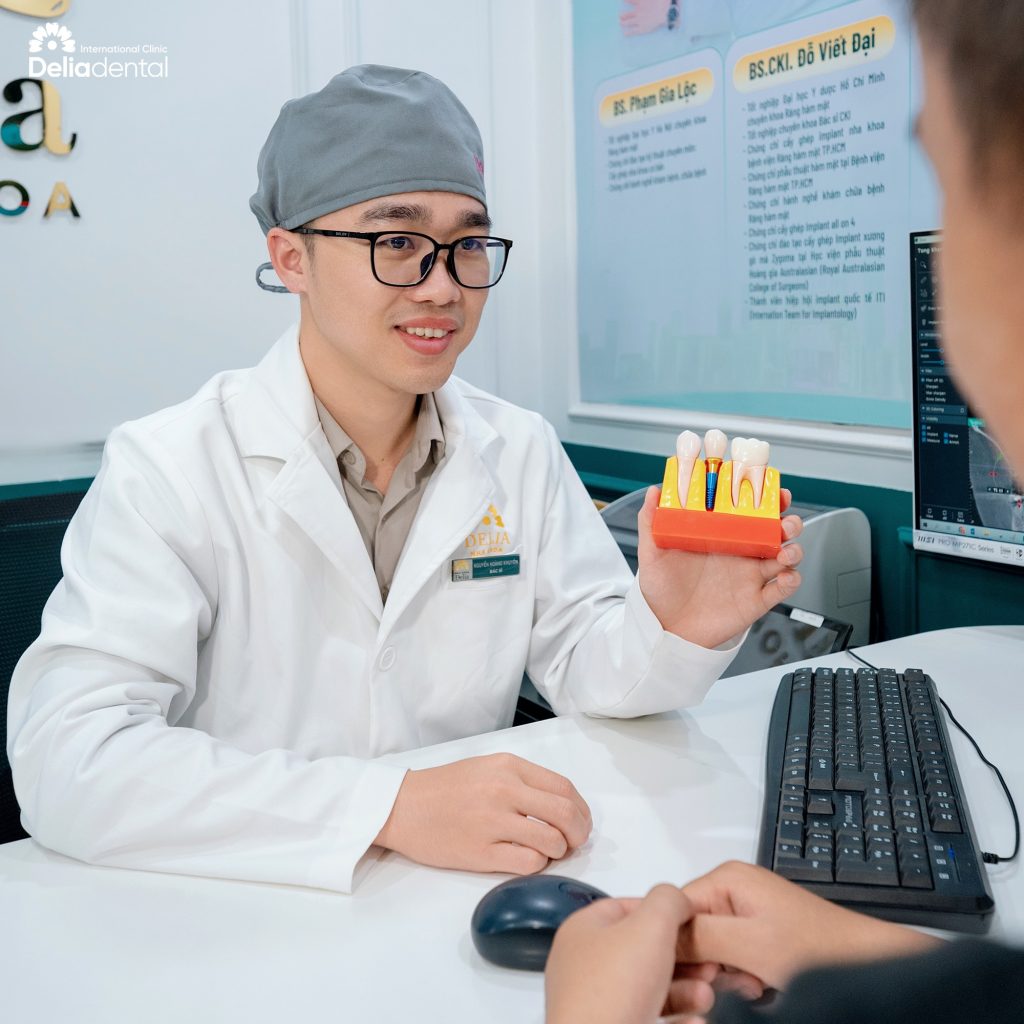
Three factors drive the total. The first is the implant system. Delia Dental Clinic’s standard prices for an implant post plus abutment start at $890 for Osstem, with a 10 year published warranty reference, and $990 for Dentium, with 15 years, then rise to $1,390 for HIOSSEN, with 30 years. Premium systems such as Straumann are priced higher. These figures cover the post and abutment only, not the full cost of replacing a tooth.
The second is bone grafting. If the socket needs extra bone support, grafting adds cost and may change whether immediate placement is suitable at all. In some cases grafting can be done in the same surgery as placement, which shortens total surgical time, but that is a clinical decision made after the CBCT scan, and the price is only set once the amount of bone needed is known.
The third is the crown. Standard prices start at $190 per tooth for Ceramill and $290 for Emax, with more premium materials available. Root canal treatment, core buildup or gum treatment, where needed, are billed separately.
Delia Dental Clinic provides a written itemised quote before treatment. Whichever clinic you compare, a quote should name the implant brand, come with documentation of its origin, and be based on a CT scan, because a firm surgical price given without imaging can change after you arrive. A remote estimate is preliminary, and any additional treatment identified after examination is quoted separately. If a second visit is needed, budget flights and accommodation for both trips.
How Delia Dental Clinic Plans Immediate Implants Before You Travel
Before you fly, you can send X-rays, dental photos, your medical history, a medication list and any existing quote. The international patient team can review these and suggest a preliminary direction. A 2D panoramic X-ray is enough for that stage only. The final decision waits for the in-clinic CBCT scan and an examination.
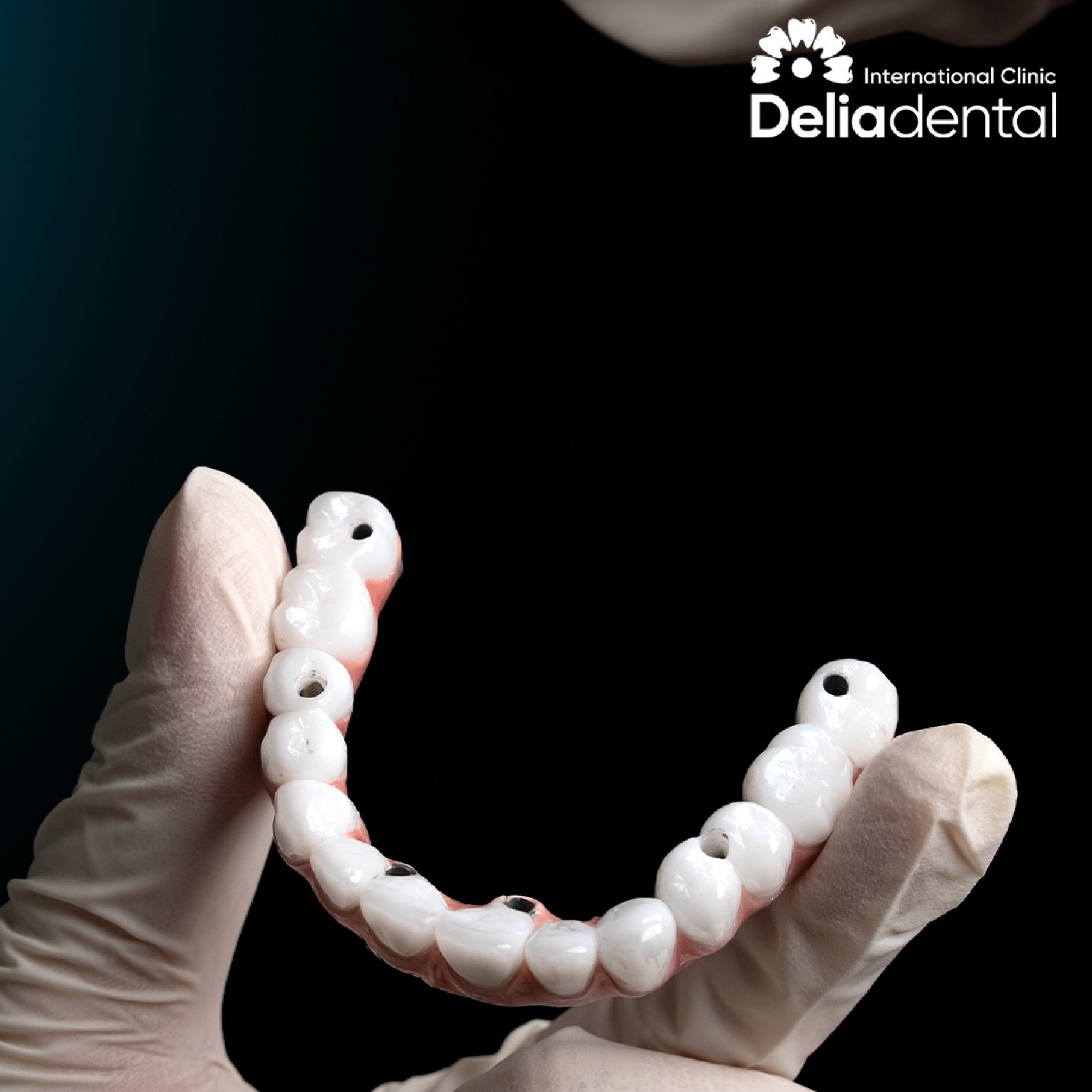
If the case suits immediate placement, treatment follows three stages. First, the failing tooth is removed and the implant is placed in the same appointment, usually under local anesthesia with sedation available, and the procedure takes about 60 to 90 minutes per implant. No hospital stay is normally needed. Topical numbing may be applied before the injection, and allergy history is checked beforehand. Second, a temporary tooth is typically attached within 24 to 72 hours where the case allows it, so you are not left with a gap during healing. Third, after about two to three months, once the implant has integrated, the temporary is replaced with a permanent crown, in a material such as Emax or Lava Plus Zirconia.
That final stage is usually a second visit. In selected cases with one to three missing teeth and a stable bite, the final restoration may be completed after surgery, depending on bone quality and chewing force, but this is the exception rather than the standard plan. The date depends on healing, and it can be adjusted if you tell the coordinator in advance. Delia Dental Clinic also coordinates hotel and timeline planning, and an English speaking team with a dedicated coordinator handles communication from the first message, including remote follow up after you fly home. A written warranty document is provided, and its terms for the implant, abutment and crown are set out separately. Delia Dental Clinic also offers free airport pickup ahead of your stay. Teeth whitening, to match natural teeth to the new restoration, and gum reshaping can be discussed during planning.
Frequently Asked Questions
Is immediate implant placement painful?
Placement is done under local anesthesia, and Delia Dental Clinic may apply topical numbing before the injection. Allergy history is checked beforehand, and an alternative anesthetic can be used if a patient reacts to the standard one. What a patient feels varies from person to person, so it helps to raise any anxiety at the consultation, where sedation can be discussed. Soreness and swelling commonly follow in the first days as the tissue settles. The treating dentist gives aftercare and pain relief instructions for the individual case, and pain that persists or worsens should be reported to the clinic.
Can I fly home a few days after the procedure?
The date depends on the case, so it is confirmed after the CBCT scan and treatment plan rather than promised in advance. Delia Dental Clinic describes a return to normal activities in about one to two days, with one to two follow up checks, which is why this approach may suit a short stay. Flying out straight after surgery leaves no margin if the dentist needs a review or an extra day, which is why most plans include buffer days before the flight home. The treating dentist is best placed to say when travel is reasonable, since only they know how the surgery went. Patients with a fixed return flight should tell the coordinator before the schedule is set. The plan can then be built around that date where it is clinically suitable.
What can I eat after surgery?
A soft diet is commonly advised during early healing so the implant is not loaded by hard or sticky food. The temporary tooth restores appearance and basic function, but it is not designed for the biting forces of the final crown. How long the restrictions last depends on the case, including whether grafting was done and how the temporary is fitted. The dentist provides written instructions after surgery. Following them matters more than any general food list, since excessive load on a healing implant may affect integration.
Can I get an immediate implant if my tooth was removed years ago?
An implant may still be possible, but the immediate protocol is generally not the right one. Bone at a long healed site often shrinks, so grafting is likely in many cases, with the amount decided case by case after CBCT. The immediate approach relies on a fresh, intact socket, and that no longer exists. Such a case more commonly follows a staged plan of grafting, healing and then implant placement, which needs a longer timeline. A remote review of X-rays can indicate the direction, but it cannot confirm the plan before an in-clinic CBCT.
How long do immediate dental implants last?
Longevity depends on the patient and the site more than on whether the protocol was immediate or delayed. Bone support, oral hygiene, smoking, general health and regular follow up all influence how an implant performs over time. Delia Dental Clinic publishes a warranty reference for each implant system, such as lifetime for Straumann SLA and SLActive. Coverage differs between the implant post, abutment and crown, and maintenance conditions apply. Patients should read the written terms rather than assume the whole treatment is covered for life, because a warranty is not a prediction of how long an implant will last.
Planning The Rest Of Your Implant Trip
These guides cover the scan, the stay and the grafting questions that usually come up once you know immediate placement may suit your case.
- Immediate Implant Placement vs Immediate Loading Explained
- Dental Implant Quote CBCT Scan Vietnam
- Dental Work While Visiting Family in Vietnam: What Fits?
- Dental Bone Grafting in Vietnam: Planning Your Return Flight
Final thoughts
Immediate implant placement in Vietnam is a practical option for the right candidate. The combination of a shorter total timeline, fewer visits, and same-day tooth replacement makes it particularly well-suited to dental implants short stay Vietnam patients who cannot extend their trip over several months.
The key is confirming suitability before committing. A 3D CT scan and an honest clinical assessment are what separate a predictable outcome from an unnecessary risk.
Send your X-rays or dental photos to Delia Dental Clinic via WhatsApp or Messenger before booking your flight, and the team will suggest a preliminary direction, with the final plan confirmed after examination.


