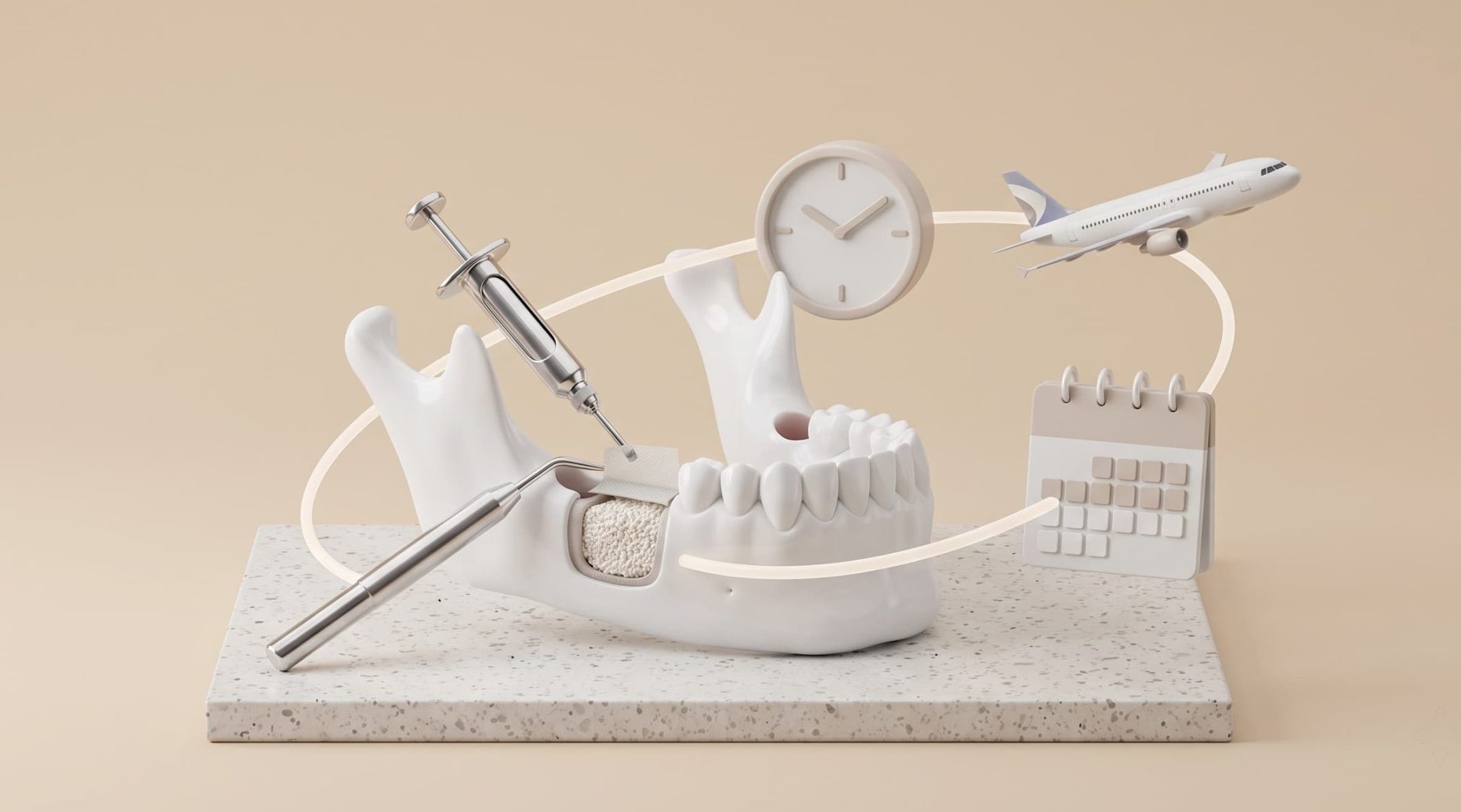
Bone grafting does not usually change how an implant treatment is finished. It changes how long the first trip runs and how firm the original flight home should be. Some patients know before they fly that grafting is likely, based on X-rays or a CBCT scan sent ahead of time. Others only find out once the surgeon examines the site in person and sees that bone volume is lower than the images suggested.
Either way, the return flight originally booked around a straightforward implant placement may no longer fit once grafting enters the plan. This is not a sign that anything has gone wrong with the treatment. It is a scheduling consequence of a procedure that needs more healing time in the jaw before an implant can be safely placed, or before the surgical site is stable enough to travel.
This guide covers what grafting typically adds to a first trip, how to choose or adjust a flight around that possibility, and what it means for the second visit that fits the final teeth.
Quick Answer
Bone grafting often adds extra days to the first implant trip and may require the surgeon to confirm a departure date rather than relying on the original itinerary. A flight booked with some flexibility, and a hotel stay that is not locked to a fixed departure, make this far easier to manage than trying to change a rigid ticket at short notice. Grafting can also extend the healing interval before the second trip, so that date is best confirmed closer to the time rather than fixed months in advance.
Two Ways Grafting Changes a Trip
Grafting affects travel planning differently depending on when it is identified.
When a CBCT scan or recent X-rays are sent ahead of booking, the clinical team may already flag that grafting is likely before the patient buys a ticket. In this situation, the trip can be planned around that possibility from the start, with a flight and hotel booking that assume a longer stay rather than the shortest case.
When grafting is only confirmed after the surgeon examines the site in person, the patient has often already booked flights and a hotel based on a simpler treatment. Photos and even prior imaging can suggest a likely direction, but bone volume, the condition of the site and the extent of any infection are frequently only clear once the area is examined directly. This is the situation where the original return flight is most likely to need changing.
Neither situation means the treatment has become riskier. It means the trip length assumed at booking did not match what the case actually needed.
What a Grafting Case Usually Adds to the First Trip
Not all grafting is the same size, and the extra time it adds to a trip varies accordingly.
| Type of grafting | What it generally involves | Typical effect on the first trip | General healing before an implant is ready |
|---|---|---|---|
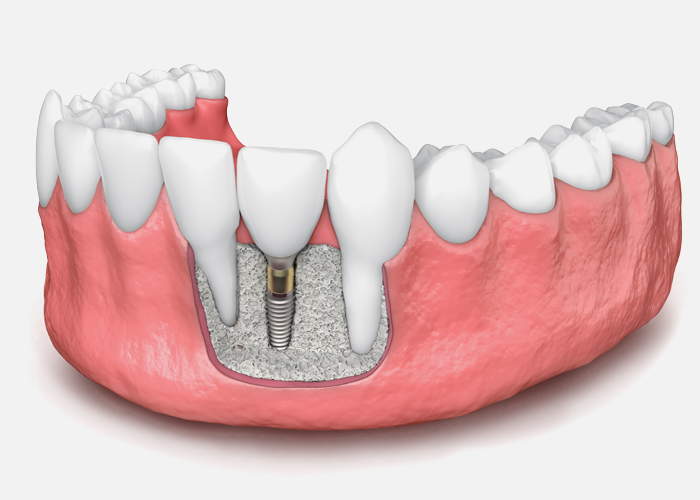
| Small graft placed with the implant (socket graft) | Bone material added around the implant site at the same appointment, often after an extraction | Usually a modest extension, often within the same general trip window | Often a few months |
| Larger graft treated as its own stage (ridge augmentation) | A separate procedure to rebuild a more significant bone defect before or apart from implant placement | Can extend the first trip more substantially, and may mean the implant itself is placed on a later visit rather than the same one | Generally longer than a socket graft |
| Sinus lift | A graft procedure affecting the maxillary sinus, generally treated as its own category | Follows sinus-specific timing rather than the general implant timeline | Typically the longest of the three, and confirmed through follow-up imaging rather than a fixed date |
These are general patterns, not a countdown that applies the same way to every patient. Bone density, how the graft site responds and whether infection was present at the time of grafting all affect the actual pace, which is why the surgeon confirms readiness through follow-up imaging rather than a calendar estimate made before treatment starts.
The exact number of extra days a specific case needs is set by the surgeon once the graft size, healing response and any complicating factors are known, not by a general table. How soon a patient can safely fly once a graft or sinus lift has been performed, including the more cautious timeframes involved in sinus cases, is covered in how soon you can fly after dental implant surgery, which this article does not repeat.
What matters for travel planning is that a small graft is a different scheduling event than a staged graft or a sinus lift, and the flight decision below should be made with that distinction in mind rather than treating all grafting as one fixed delay.
Changing a Flight Once Grafting Is Confirmed
The most useful decision happens before the flight is booked. If grafting is even a possibility based on the records reviewed, a fully flexible or easily changed fare is worth the extra cost compared with a cheap non-changeable ticket that then has to be abandoned.
If the ticket has already been bought and grafting is confirmed after arrival, the practical steps are the same as any other treatment-related delay. The process for contacting the airline, what fare types allow a change, and what a change typically costs are covered in detail in changing a flight after a dental treatment delay, so this guide does not repeat those steps here. The one grafting-specific point worth adding is that the surgeon, not the original itinerary, should be the one confirming when the patient is ready to travel, since a graft site needs to be clinically stable before a long flight regardless of what the ticket says.
Patients who booked through a travel agent or a bundled package should raise a possible date change as early as grafting is discussed, since some fare and package terms need more notice than others.
Hotel and Stay Adjustments
Extending a hotel booking by a few extra nights is almost always cheaper and easier to arrange than changing a flight at short notice. Where possible, booking accommodation with a cancellable or extendable rate from the start gives more room to adjust if the first trip runs longer than expected.
A patient who already knows grafting is likely from a pre-travel scan review can simply book a longer stay from the outset rather than a minimum-length one that assumes no complications. This removes the need to negotiate an extension mid-stay, which can be harder during busier periods.

What This Means for the Second Trip
A larger graft can extend the healing period the jawbone needs before an implant is placed or loaded, which shifts the likely window for the second trip later than it might have been for a straightforward case. The healing interval varies considerably by graft type: a small socket graft placed after an extraction is often ready in a few months, a larger ridge augmentation generally needs longer, and a sinus lift typically sits at the far end of the range. This is a healing consideration rather than a sign that the treatment plan has changed in nature, and the ranges above are general patterns rather than a fixed countdown for any individual case.
Because the exact healing pace varies between patients and is confirmed through follow-up imaging rather than a calendar date, the second trip is best planned around a window agreed with the clinic rather than fixed months in advance on an assumed schedule. Booking non-refundable flights or committing to fixed leave dates before that window is confirmed is one of the more common ways an otherwise well-planned second trip ends up mistimed. Applying for travel documents or visas well ahead of a date that may still move is its own planning question, and it is easier to get right once the graft’s likely healing timeline is known.
How Delia Dental Clinic Flags Grafting Before You Book
Before a patient books flights, Delia Dental Clinic can review recent X-rays, a CBCT scan if one is available, and dental photos sent by WhatsApp or Messenger. This preliminary review can indicate whether grafting appears likely for the case and give a rough sense of how it might affect the length of the first trip.
This remote review has limits. Photos and even prior imaging cannot fully replace an in-person examination and a CBCT taken at the clinic, since bone volume, infection and the exact extent of any defect are confirmed once the surgical site is assessed directly. A patient who is told grafting is possible based on remote review should still expect the final decision, and the final trip length, to be confirmed once they are examined at Delia’s Hanoi or Ho Chi Minh City branch.
Where grafting changes the plan, the international patient team can explain what it is likely to mean for the remainder of the first trip and for the interval before the second visit, so the patient has a realistic basis for choosing flight and hotel flexibility rather than assuming the original booking will still fit.
Frequently Asked Questions
Does bone grafting always mean staying longer on the first trip?
Not always. A small graft placed at the same time as the implant often adds only a modest amount of time to the trip, while a larger staged graft or a sinus lift is more likely to extend the stay noticeably. The size and complexity of the graft, confirmed once the site is examined, determines the actual effect, so a patient should ask the surgeon directly rather than assume a fixed number of extra days.
Can I know before flying whether I will need grafting?
Sending recent X-rays or, ideally, a CBCT scan before booking can give a preliminary indication of whether grafting is likely, since these show bone volume and the condition of the surgical site. This remains a preliminary read rather than a confirmed diagnosis, since some detail only becomes clear once the area is examined and imaged in person at the clinic.
What kind of flight ticket should I book if grafting is possible?
A ticket that can be changed without a large fee, or a fully flexible fare, is worth the extra cost if grafting has already been flagged as a possibility from pre-travel imaging. This avoids having to abandon a cheap non-changeable ticket if the surgeon determines that more healing time is needed before the flight home.
Does grafting change when the final teeth are fitted?
It can, particularly with a larger graft, since the jawbone generally needs more healing time before an implant is placed or loaded in a grafted site compared with a straightforward case. This can push the likely window for the second trip later, and that window is best confirmed based on how healing is progressing rather than fixed in advance.
What if grafting is only discovered after I land?
This is a common situation, since bone volume and the condition of the surgical site are often only fully clear once the area is examined in person. If this happens, the surgeon will explain what the graft involves and how it affects the remaining days of the trip, and the practical next step is adjusting the flight and hotel booking around that revised plan rather than around the original one.
Does a bone graft always delay the whole treatment?
No. Many grafting cases fit within a trip that is only somewhat longer than originally planned, and the overall treatment still follows a first trip and second trip structure rather than becoming an open-ended process. The exception is a large or staged graft, which can meaningfully extend the healing interval before the case is ready for the final restoration.
Getting the Rest of the Trip Right
Grafting is one of several reasons a treatment plan can shift after booking. These guides cover the related planning questions that tend to come up around the same decision.
- Vietnam Visa Buffer for Two-Trip Dental Implants
- How Long Should You Stay in Vietnam for Dental Implants?
- Should Every Failing Tooth Be Removed Before Full Arch Implants?
Final Thoughts
Bone grafting changes a travel plan more than it changes a treatment plan. The implant procedure itself follows the same first-trip, healing-interval, second-trip structure either way, but the exact length of the first trip and the timing of the second depend on how much grafting the case needs and how the site heals.
Booking with some flexibility from the start, extending a hotel stay rather than rushing to keep a fixed flight, and confirming the departure date with the surgeon rather than the original itinerary all make a grafting case far easier to manage than treating the first booking as fixed.
Send your recent X-rays or CBCT files, current dental photos and proposed travel dates to Delia Dental Clinic via WhatsApp or Messenger before booking your flight. The international patient team can give a preliminary view on whether grafting is likely for your case and how it may affect the length of your first trip. The final treatment plan and departure timing are confirmed after an in-person examination at Delia’s Hanoi or Ho Chi Minh City branch.


