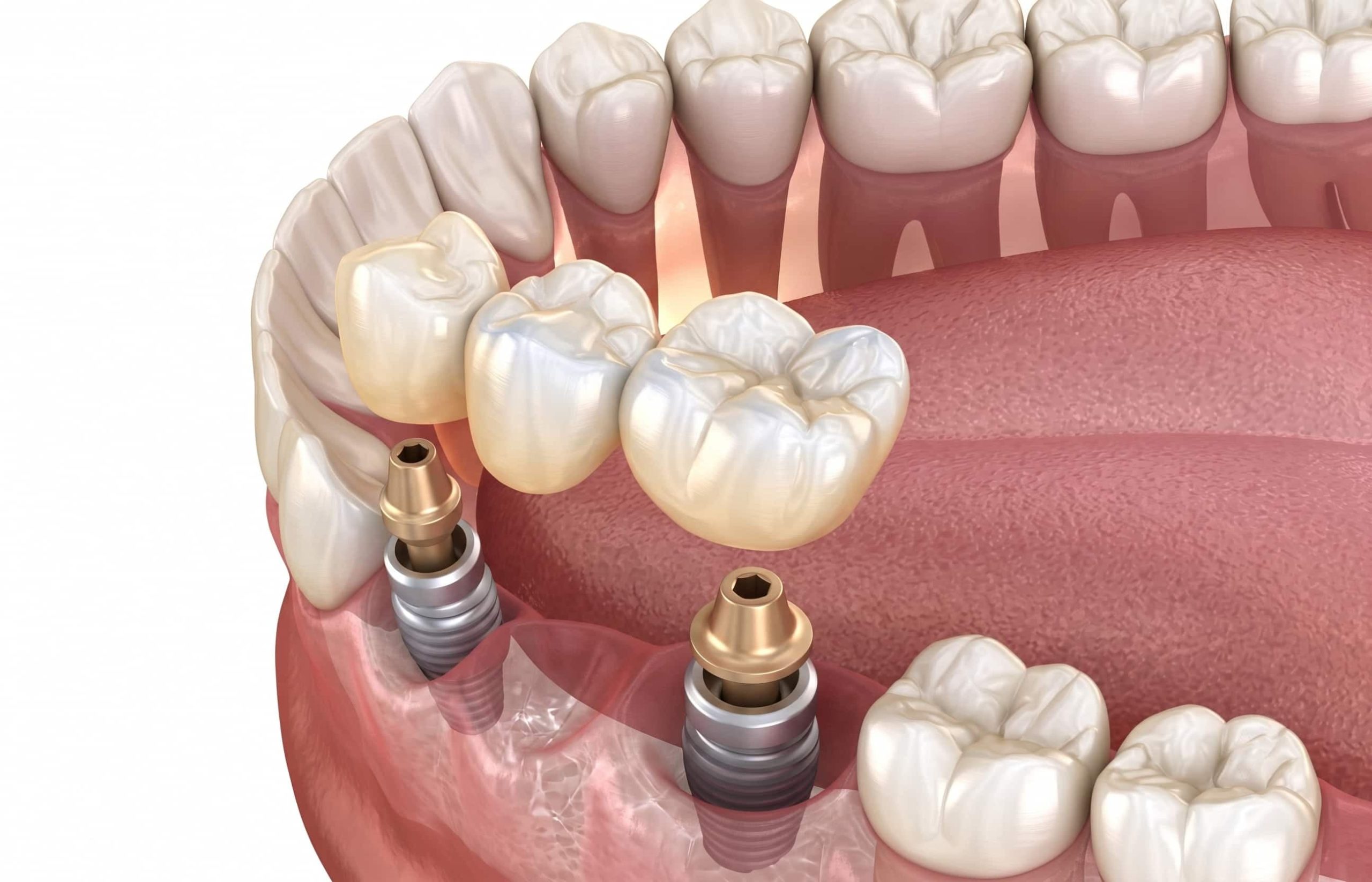
Immediate placement and immediate loading are two separate clinical decisions that often get treated as one. Immediate placement is about when the implant post goes into the jawbone. Immediate loading is about when a tooth gets attached to that post and put under biting force. A patient can have one without the other, and mixing the two up is the most common source of confusion when comparing quotes or reading about same day implants.
This distinction matters because the criteria behind each decision are different, and a case that qualifies for one does not automatically qualify for both. Understanding which decision is actually being discussed, and what has to be true for each to be possible, makes it much easier to evaluate a treatment plan or ask the right questions during a consultation.
This guide separates the two concepts, explains what determines whether each is possible, and clarifies what actually happens on the day of treatment. For a full breakdown of Delia Dental Clinic’s process, cost, and candidacy criteria for the combined immediate placement and immediate loading protocol, see the dedicated guide to immediate dental implants in Vietnam.
Quick Answer
Immediate placement means the implant is placed into the jawbone right after a tooth is removed, instead of waiting for the socket to heal first. Immediate loading means a tooth is attached to the implant and put under bite force right away, instead of waiting for osseointegration. The two can happen together or separately, and each depends on different clinical conditions.
What Is Immediate Implant Placement?
Immediate implant placement means the implant post is inserted into the extraction socket during the same appointment as the tooth removal, rather than waiting for the bone to heal.
The alternative is delayed placement, where the tooth is extracted first and the socket is left to heal for a period that commonly runs two to three months before an implant is placed. Delayed placement gives the bone time to fill in and remodel around the socket, which can make positioning more predictable in cases where the bone is already compromised.
Immediate placement works from the anatomy that exists at the moment of extraction. The socket walls, the remaining bone volume, and the condition of the surrounding tissue all have to support the implant without the benefit of healing time first. This is a decision about timing relative to the extraction, and it says nothing on its own about when a tooth will be attached to that implant.
What Is Immediate Loading?
Immediate loading means a crown, bridge, or temporary restoration is attached to the implant and put under functional or near functional bite force on the same day the implant is placed, or within a short window afterward.
The alternative is delayed loading, where the implant is left to integrate with the bone undisturbed, usually under a healing cap or cover screw, before any restoration is attached. This waiting period commonly runs a few months and allows osseointegration, the process by which bone fuses to the implant surface, to progress without the added stress of chewing forces.
Immediate loading is a decision about the implant’s mechanical stability at the moment it goes in, not about how recently a tooth was extracted. An implant can be placed into a socket that has been healed for months and still be a candidate for immediate loading if it meets the mechanical criteria. Equally, an implant placed the same day as an extraction does not automatically qualify for a tooth to be attached right away.
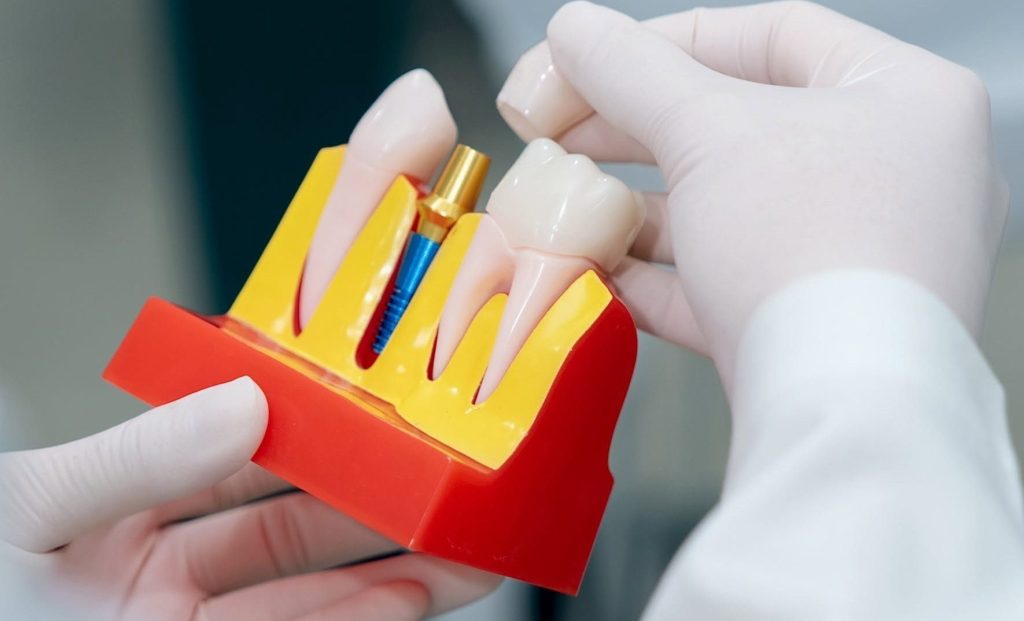
How Are Placement and Loading Two Separate Decisions?
Placement timing and loading timing can be combined in four different ways, and a treatment plan only makes sense once both decisions have been made for the specific case.
Immediate placement with immediate loading
This is the combination most people mean when they hear terms like same day implant or teeth in a day. The implant goes in right after extraction, and a temporary tooth is attached soon after, often within the same visit or within a few days. This path requires the case to meet the criteria for both decisions at once, which is a narrower set of cases than either decision considered alone.
Immediate placement with delayed loading
The implant is placed immediately after extraction, but the tooth is not attached until osseointegration is further along. This is a common outcome when the socket and bone support immediate placement, but the implant does not achieve the mechanical stability needed for immediate loading. The patient still avoids the separate healing period between extraction and placement, even though the final or temporary tooth takes longer to arrive.
Delayed placement with immediate loading
The extraction site is allowed to heal before the implant is placed, but once it is placed, the bone quality and implant stability are strong enough to support a tooth right away. This combination is less commonly discussed but is realistic in posterior sites with dense bone, where the delay before placement has nothing to do with the implant’s mechanical readiness once it is inserted.
Delayed placement with delayed loading
This is the traditional protocol. The site heals after extraction, the implant is placed later, and a separate healing period follows before any restoration is attached. It remains the most predictable pathway for cases where either the extraction socket or the anticipated implant stability does not support acceleration at either stage.
What Determines Whether Placement or Loading Is Possible?
The criteria for placement and the criteria for loading are evaluated separately, and a case can pass one assessment without passing the other.
Criteria for immediate placement
Immediate placement depends mainly on the condition of the extraction site itself: whether there is enough remaining bone volume, whether the socket walls are intact, whether there is active infection at or near the site, and whether the patient has any uncontrolled systemic condition that could affect healing. Delia Dental Clinic’s guide to immediate dental implants in Vietnam covers these placement criteria in full, including how bone volume, infection status, and smoking history are assessed before a case is confirmed for immediate placement.
Criteria for immediate loading
Immediate loading depends on a different set of measures, centered on how mechanically stable the implant is at the moment it is placed rather than on the condition of the socket. The main factor is primary stability, which describes how firmly the implant is held in the bone before any biological healing has occurred. This is usually assessed through insertion torque, the resistance felt as the implant is driven into the bone, with higher torque values generally indicating stronger initial stability. Some clinics also use resonance frequency analysis, a device based measurement that produces a stability score at the time of placement.
Bone density plays a direct role here as well. Denser bone, more common in certain areas of the lower jaw, tends to provide better primary stability than the softer bone typically found in the upper back jaw. This is part of why immediate loading is more commonly offered in some sites than others, independent of whether the extraction socket itself was suitable for immediate placement.
Occlusal control matters just as much as the initial stability reading. Even an implant with strong primary stability can be compromised if the attached tooth is subjected to excessive or uneven biting force too soon. This is why a temporary restoration placed for immediate loading is often adjusted to reduce contact during normal chewing, protecting the implant while it continues to integrate.
Because these criteria are independent of the extraction timeline, a delayed placement case can still be an excellent candidate for immediate loading, and an immediate placement case can still require delayed loading if primary stability is not sufficient on the day of surgery.

Same Day Placement vs a Temporary Tooth: Clearing Up the Confusion
Same day implant placement does not automatically mean the patient leaves with a permanent tooth, and it does not always mean the patient leaves with any tooth at all.
What same day placement guarantees is that the implant post itself goes into the bone during the same appointment as the extraction. Whether a temporary tooth is attached on that same day, a few days later, or only after a healing period, depends entirely on whether the case meets the loading criteria described above. A patient can have a same day placement and still wait weeks or months before any restoration is attached, if the implant’s stability does not support earlier loading.
When a temporary tooth is attached quickly, it is still a provisional restoration rather than the final result. It is designed to protect the implant and restore appearance and basic function, not to withstand full biting force indefinitely. The permanent crown or bridge comes later, once osseointegration is complete, and is a separate fabrication from the temporary piece. Patients considering this pathway can review Delia Dental Clinic’s step by step process for extraction, temporary tooth placement, and permanent crown timing in the main guide to immediate dental implants in Vietnam.
How Does Delia Dental Clinic Confirm Placement and Loading Candidacy?
Delia Dental Clinic assesses placement and loading as two distinct questions during the same pre-treatment evaluation, rather than assuming one confirms the other.
A 3D CBCT scan is the starting point for the placement decision, giving the treating specialist a detailed view of bone volume, socket anatomy, and proximity to nerves or the sinus before confirming whether immediate placement is appropriate for the case. The loading decision is assessed separately at the time of surgery itself, based on the insertion torque achieved and the specialist’s clinical judgment of how the implant is seated in the bone. This means a patient may know before surgery that they qualify for immediate placement, while the loading decision is only finalized once the implant is actually in place.
Patients who want a full breakdown of Delia’s combined immediate placement and immediate loading protocol, including the typical visit schedule and what the process looks like day by day, can find that detail in the dedicated guide to immediate dental implants in Vietnam. This article focuses on the underlying decisions rather than repeating that process here.
Frequently Asked Questions
Can I have immediate loading without immediate placement?
Yes. If the extraction site is allowed to heal and the implant is placed later, that implant can still be a strong candidate for immediate loading if it achieves good primary stability during surgery, particularly in bone that is naturally denser. The healing period before placement addresses the condition of the extraction socket, not the mechanical stability of the implant once it goes in, so the two are assessed independently at the time of surgery. This combination is common in posterior sites in the lower jaw, where bone density tends to be higher than in the upper jaw. A patient in this situation may still leave with a temporary tooth on the same day the implant is placed, even though months passed between the extraction and the implant itself.
Does delayed placement always mean delayed loading?
No. Delayed placement only means the implant went in after the socket had time to heal, and it says nothing on its own about how soon a tooth can be attached. Many delayed placement cases, especially in areas of the jaw with denser bone, achieve strong primary stability and are suitable for immediate loading. The loading decision depends on torque and stability readings taken during the surgical appointment, not on how much time passed since the original extraction. Two patients who both waited the same three months before placement could end up on completely different loading timelines, depending purely on how the implant seats on the day it is inserted.
Why would a dentist recommend immediate placement but delayed loading?
This usually happens when the extraction socket has enough bone to support placing the implant right away, but the implant does not reach the torque or stability level needed to safely support a tooth under bite force. Rather than risk the implant’s long term success, the specialist places it immediately to avoid a second surgical procedure later, then waits for osseointegration to progress before attaching any restoration. The patient still benefits from avoiding the separate healing period between extraction and placement, even though the tooth itself takes longer to arrive. In this scenario the patient usually wears a removable temporary or a non functional provisional that keeps pressure off the implant until stability improves. This is a routine outcome rather than a sign that something went wrong during surgery.
Does immediate loading affect long term implant survival compared to delayed loading?
When immediate loading is only performed on implants that meet the stability criteria, published outcomes are generally comparable to implants that were loaded after a traditional healing period. The key variable is proper case selection rather than the loading protocol itself. Attaching a tooth too early on an implant that has not achieved adequate primary stability is what increases the risk of complications, not immediate loading as a concept. This is why a specialist bases the loading decision on the torque reading taken during surgery rather than on how quickly the patient would prefer to have a tooth. A case that does not meet the stability threshold on the day of surgery is better served by delayed loading, even if immediate loading was the original plan.
If my bone does not support immediate loading, can I still qualify for immediate placement?
Possibly, since the two assessments look at different things. Immediate placement depends on the extraction socket having enough remaining bone and no active infection, while immediate loading depends on how firmly the implant sits once inserted. A patient can meet the placement criteria while still needing a delayed loading approach if torque readings during surgery come in lower than expected, and this is confirmed at the time of surgery rather than beforehand. Softer bone in the upper back jaw is a common reason this combination occurs, since the socket itself may be perfectly suitable for placement even when the surrounding bone density limits initial implant stability. Discussing this possibility before surgery helps set realistic expectations about when a temporary tooth might actually be attached.
Final Thoughts
Immediate placement and immediate loading answer two different questions: when the implant goes in, and when a tooth goes on it. Treating them as one automatic package is where most confusion about same day implants comes from, and it is worth asking a clinic to confirm both decisions separately rather than assuming a quote for one covers the other.
Send your dental X-rays, CBCT files, or details about your missing tooth to Delia Dental Clinic via WhatsApp or Messenger. The team can review whether your case is likely to qualify for immediate placement, immediate loading, or both, before you travel.


