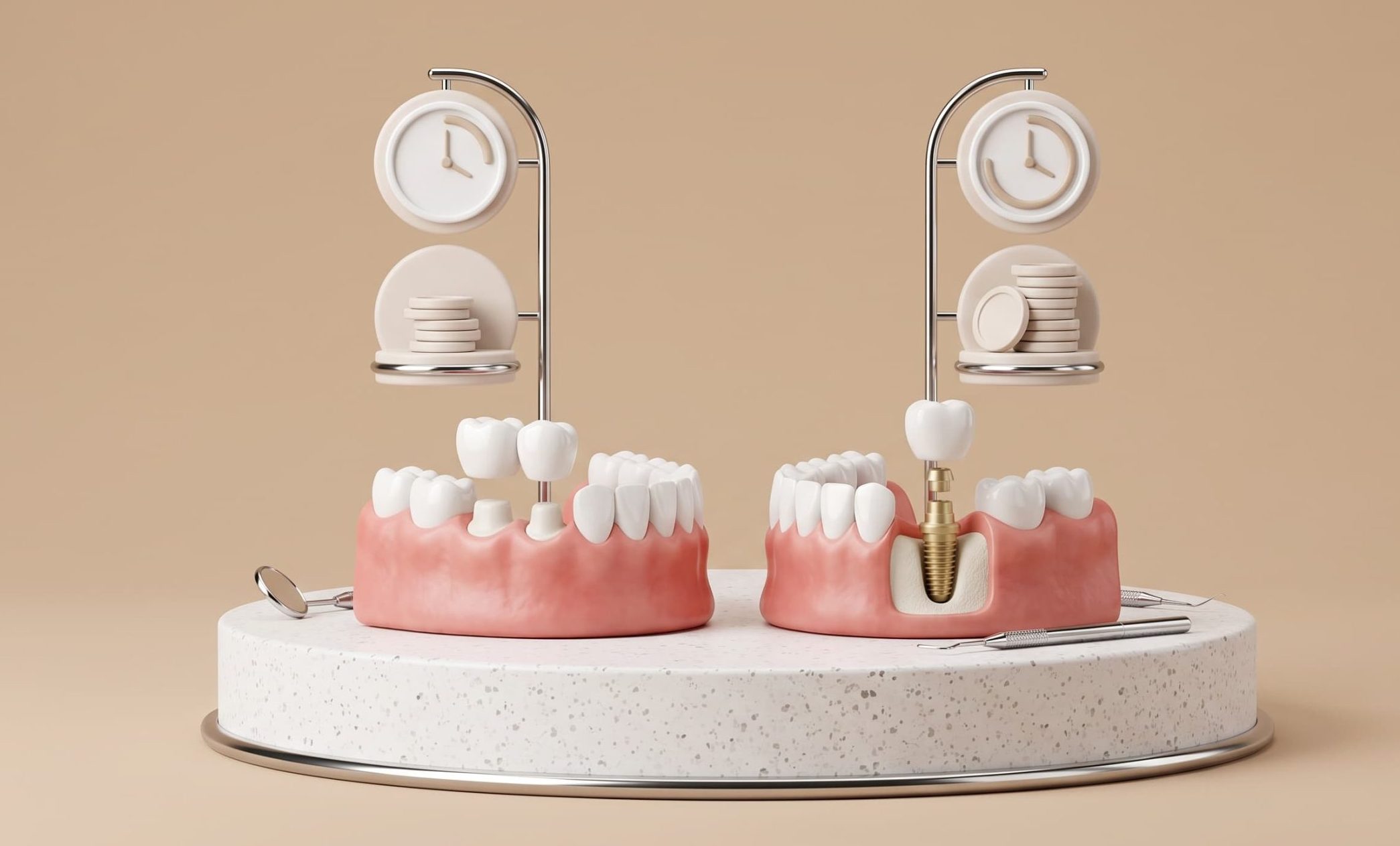
A bridge and an implant rarely fail for the same reason or on the same schedule, and the upfront price of either one says almost nothing about what it will cost to keep a replaced tooth in place for twenty years.
Most comparisons between a bridge and an implant stop at the initial quote, which makes the bridge look like the cheaper choice more often than not. That comparison only holds if neither restoration ever needs attention again. In practice, a bridge tends to fail earlier and for a specific reason tied to the teeth supporting it, while an implant tends to hold its position for longer but carries its own pattern of mechanical repairs along the way.
This article assumes the decision between the two has already been made, or that one is already in the mouth and the question is what happens from here. It covers how each one fails over a ten to twenty year window, what a typical repair or replacement costs when it happens, and how the two totals compare once that full cycle is counted rather than just the first bill.
Quick Answer
An implant crown tends to outlast a bridge over a fifteen to twenty year window, since a conventional tooth-supported bridge survives at roughly 87 percent at ten years and 69 percent at fifteen, largely because one of the supporting teeth develops decay or needs a root canal underneath it. Implant-supported restorations report somewhat higher survival at ten years, closer to the low nineties, but carry a different repair pattern of loosened screws and chipped crowns along the way. The lower upfront cost of a bridge can be offset by a full remake once a supporting tooth fails.
How Each One Fails
Bridges
A bridge does not fail evenly across its structure. The pontic in the middle, the false tooth filling the gap, rarely causes a problem on its own. The failure almost always originates at one of the two abutment teeth carrying the load on either side.
A meta-analysis of fixed partial denture survival, cited widely in prosthodontic literature, put ten-year survival at approximately 87 percent and fifteen-year survival at approximately 69 percent for conventional tooth-supported bridges. The reasons behind that decline are consistent across studies: decay developing under the crown covering an abutment tooth, the need for a root canal on an abutment that was previously healthy, or loss of retention where the cement bond gives way. None of these failure modes involve the bridge material itself breaking. They involve the natural teeth holding it up.
This is the structural weakness that makes a bridge different from an implant in the long run. An implant does not depend on neighbouring teeth for support, so it has no equivalent failure point. A bridge always does, which means every bridge carries a built-in risk that has nothing to do with how well it was made and everything to do with how the two abutment teeth age underneath it.
Implants
An implant fixture, once integrated with the jawbone, is remarkably stable. Systematic reviews following implants for ten years or more report survival at the fixture level in the mid-to-high nineties, and some cohorts followed past fifteen years still show similar figures. That number describes whether the titanium post stays anchored, not whether the crown or prosthesis attached to it stays trouble-free.
The complications that occur with implants happen above the bone line. A loosened abutment screw, a chipped porcelain layer on the crown, or peri-implantitis around the gum tissue are the events that generate a repair bill, and reviews of implant-supported fixed restorations put ten-year survival of the full restoration, fixture plus crown or bridge together, somewhat lower than the fixture alone, typically in the low-to-mid nineties depending on the study population. Full-arch implant bridges see this pattern more than single crowns, since more mechanical parts are under load across a wider span.
The distinction that matters for cost planning is this: a failing implant fixture is rare and usually shows up early, within the first few years, if it is going to happen at all. A mechanical repair to the crown or screw on top of a stable fixture is far more common and can occur at any point over the restoration’s life, similar to how a natural tooth crown might eventually need attention.
| Restoration | What typically fails | When it typically shows up |
|---|---|---|
| Conventional bridge | Abutment tooth decay, root canal need, loss of cement retention | Steadily across 10 to 15 years, rising after year 10 |
| Implant fixture | Failure to integrate, or later bone loss around the post | Mostly in the first few years if it occurs at all |
| Implant crown or bridge | Loose screw, chipped ceramic, peri-implantitis | Can occur at any point, more common with full-arch spans |
What A Failure Costs To Fix
The repair cost for each restoration type reflects what broke, not a flat percentage of the original price.
When a bridge fails because an abutment tooth needs a root canal, the practical outcome is usually a full bridge remake, since the crown covering that tooth has to come off to treat it. This means paying for the root canal itself, then the full bridge fabrication again, effectively resetting the clock on the original investment. If the abutment tooth cannot be saved at all, the case moves toward extraction and a new plan, sometimes an implant in that position instead, which adds surgical cost on top of everything already spent on the bridge.
An implant repair is usually narrower in scope. A loose screw is typically a same-visit tightening or replacement of a low-cost component, not a rebuild of the whole case. A chipped porcelain layer can often be polished or, if the chip is significant, the crown remade without touching the implant fixture underneath, since the two are separate parts. Peri-implantitis, when it does develop, requires more involved treatment and is the implant complication most likely to threaten the fixture itself, which is one reason ongoing checkups and hygiene around implants specifically are part of most warranty conditions.
The pattern this creates: a bridge’s biggest cost risk is a single large event tied to a supporting tooth, while an implant’s cost risk is spread across smaller, more frequent mechanical items with a lower chance of losing the whole restoration outright.
Which One Costs Less After 15 To 20 Years
Weighing the two options over a realistic ownership period means adding the upfront cost to the probability-weighted cost of what typically goes wrong.
A bridge usually costs less to place initially, since it does not involve surgery or a healing period, and case-based figures for a bridge should reflect the crowns on both abutment teeth plus the pontic rather than a single tooth’s worth of material. Against that lower start, the roughly 30 percent chance of the bridge failing by year fifteen, most often due to an abutment problem requiring a full remake, needs to be weighed against the implant’s higher initial cost, since an implant treatment plan generally covers the fixture, abutment, and final crown together.
Two supporting teeth also carry their own risk independent of the bridge sitting on top of them. Even a bridge that never fails structurally still means two teeth that were otherwise healthy are now permanently reduced and covered with crowns, which is a cost that does not appear on any invoice but does appear if either of those teeth ever needs its own future treatment. An implant leaves the neighbouring teeth untouched.
Neither pattern is universally cheaper. A younger patient with a fifteen-plus-year time horizon and healthy abutment candidate teeth may still see the bridge fail at least once in that window, while an older patient with a shorter expected timeline may never experience that failure at all and get better value from the lower upfront cost. This is a case-specific calculation, not a fixed rule, and it depends heavily on the condition of the specific teeth that would support a bridge in that patient’s mouth.
Delia Dental Clinic’s Role In This Decision
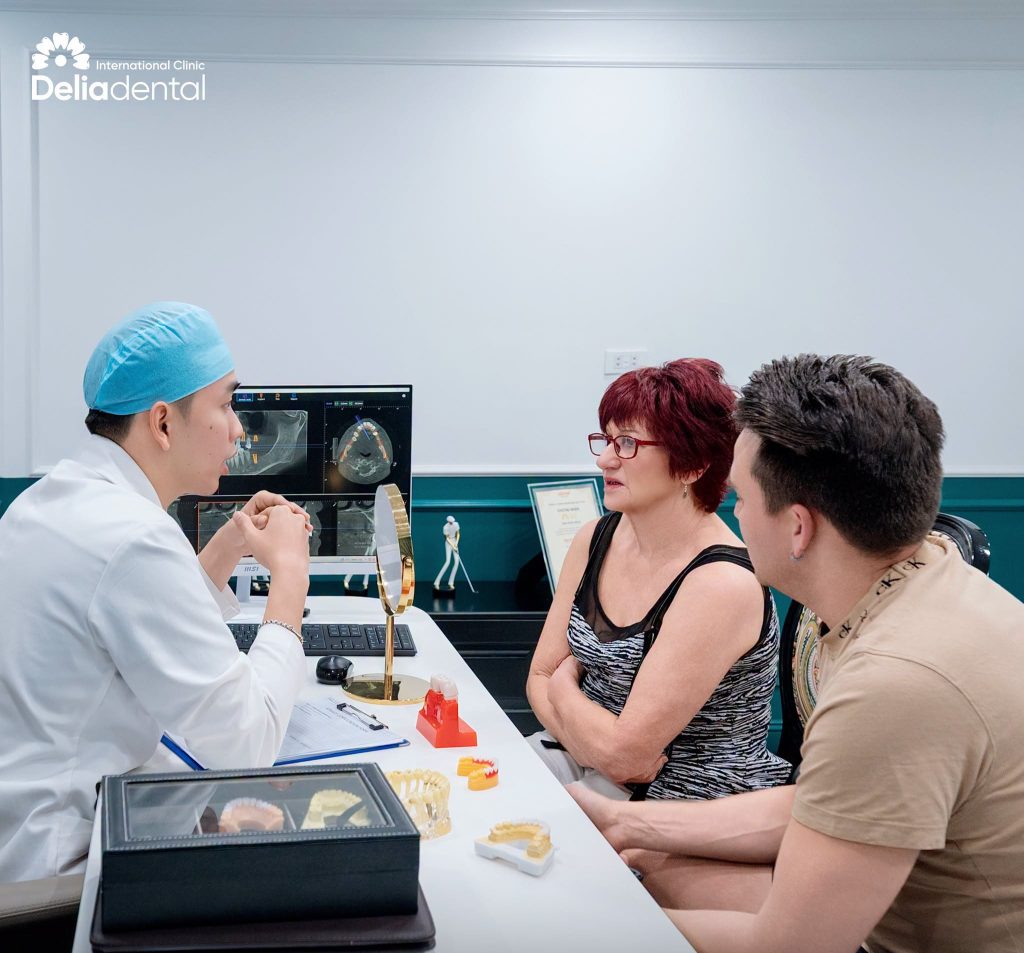
Delia Dental Clinic generally suggests a bridge when only one or two adjacent teeth are missing, jawbone density at the site is good, and the patient prefers to avoid a surgical procedure, since a bridge still requires shaping down the two neighbouring healthy teeth to anchor it. An implant is generally the better fit when several teeth are missing, or when the priority is protecting healthy neighbouring teeth from being altered at all, since an implant functions independently in the jawbone rather than depending on the teeth beside it. Both approaches are clinically effective, and which one applies depends on the specific case rather than one option being universally preferable.
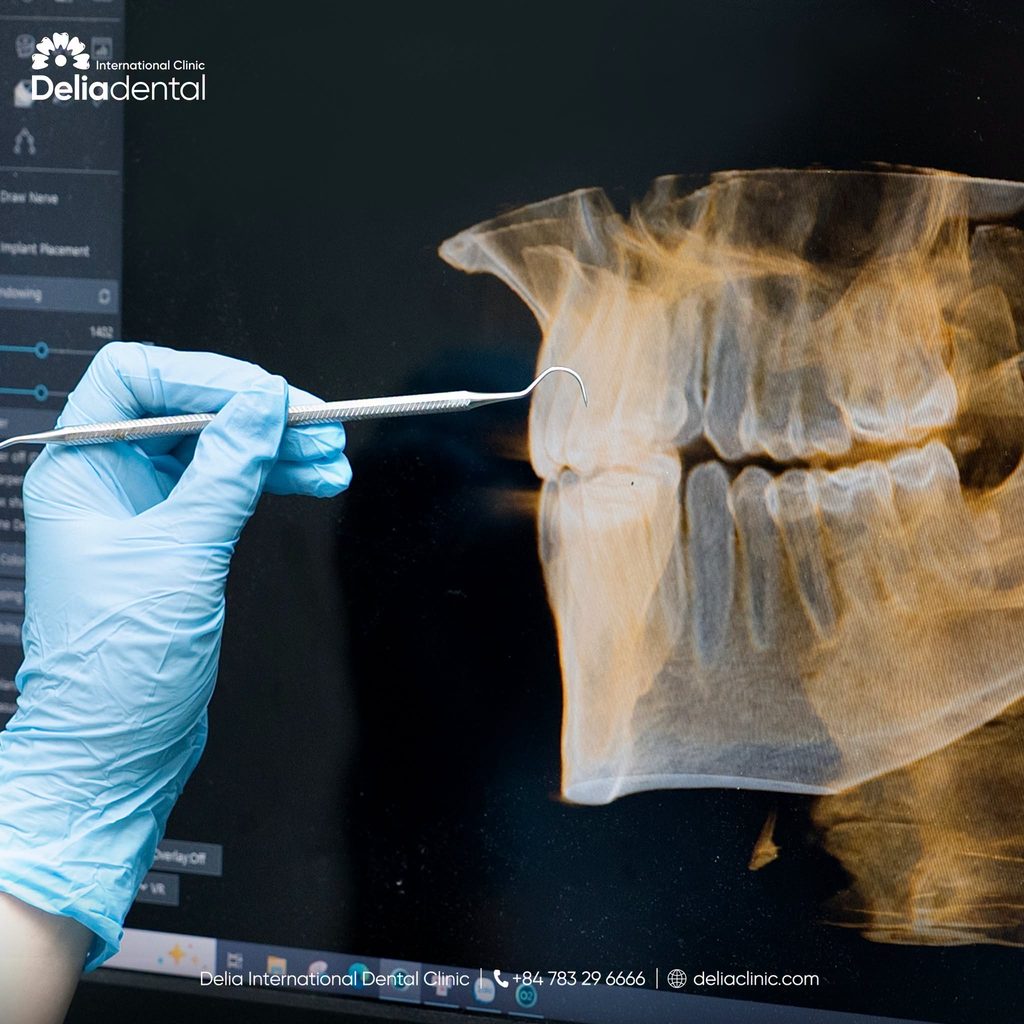
Delia Dental Clinic evaluates which of the two options fits a specific case using a CBCT scan and an assessment of the condition of any teeth that would act as bridge abutments, rather than presenting the two as interchangeable. Where the teeth on either side of the gap already have large fillings, old root canals, or early decay, that context changes the long-term outlook of a bridge built on top of them, and the clinical team factors this into the recommendation rather than defaulting to whichever option is quoted lower.
For patients sending records before travelling to Hanoi or Ho Chi Minh City, this assessment can start with existing X-rays or a recent CT scan reviewed by the international patient team, giving an initial read on whether the neighbouring teeth are strong candidates for a bridge or whether an implant avoids a foreseeable complication. Warranty terms differ by component and by restoration type, and the written terms for each part of a treatment plan should be requested and kept, since claims are assessed against those specific conditions rather than a general guarantee. A final recommendation is always confirmed after an in-person examination.
Frequently Asked Questions
Does a failed bridge always mean losing the abutment teeth?
Not always. Many bridge failures involve treatable problems, such as a root canal on an abutment tooth or a new bridge remade over the same two teeth, without extraction being necessary. Extraction becomes likely only when decay or a fracture has progressed too far to restore the tooth, which is why catching a failing abutment early tends to preserve more options than waiting until the bridge itself feels loose.
Is an implant ever the wrong choice compared to a bridge?
Yes, in specific situations. A patient with insufficient bone volume who is unwilling to undergo grafting, or someone who needs treatment completed in a very short timeframe without the healing period an implant requires, may be better served by a bridge despite its different long-term risk profile. The right choice depends on the individual case, not a universal ranking between the two options.
Do implant crowns need to be replaced on the same schedule as the fixture?
No. The implant fixture itself, once integrated, rarely needs replacement, but the crown or prosthesis attached to it is a separate component that can wear, chip, or need remaking over the years independently of the fixture underneath. This is similar to how a natural tooth root can remain stable while the crown on top of it eventually needs redoing.
Does grinding affect a bridge and an implant differently?
Yes. A bridge relies on natural tooth roots with a periodontal ligament that absorbs some bite force, while an implant has no equivalent cushioning, which is one reason implant-supported restorations are more exposed to chipped ceramic and loosened screws in patients who grind. A dentist assessing either option should factor in whether grinding is present, since it changes the expected complication rate for both.
How does cost compare if only one tooth is missing?
For a single missing tooth, the bridge’s initial cost typically covers three units, the two abutment crowns plus the pontic, while the implant’s initial cost covers one fixture, one abutment, and one crown. This narrows the upfront cost gap between the two options compared to what many patients expect, since the bridge is not simply a one-tooth cost even though it replaces one tooth.
Where To Check Before Deciding
These guides cover the decision points that usually come up before or after this comparison.
- Missing Molar Tooth: What Waiting Actually Costs You
- Implant Warranty vs Prosthetic Warranty: What’s Covered?
- Bone Grafting and Dental Implant Cost in Vietnam
- Night Guard After Implants or Crowns: Do You Actually Need One?
Final Thoughts
The lower number on a bridge quote and the higher number on an implant quote are both incomplete on their own. What decides the real cost over time is whether the teeth supporting a bridge stay healthy for fifteen years, and whether the mechanical parts on top of an implant get the checkups needed to catch a loose screw or a chip before it becomes something larger.
Send a recent X-ray or CT scan of the gap in question to Delia Dental Clinic via WhatsApp or Messenger. The international patient team can review the condition of any neighbouring teeth and give an initial read on which option better fits the case before a final plan is confirmed in person.


