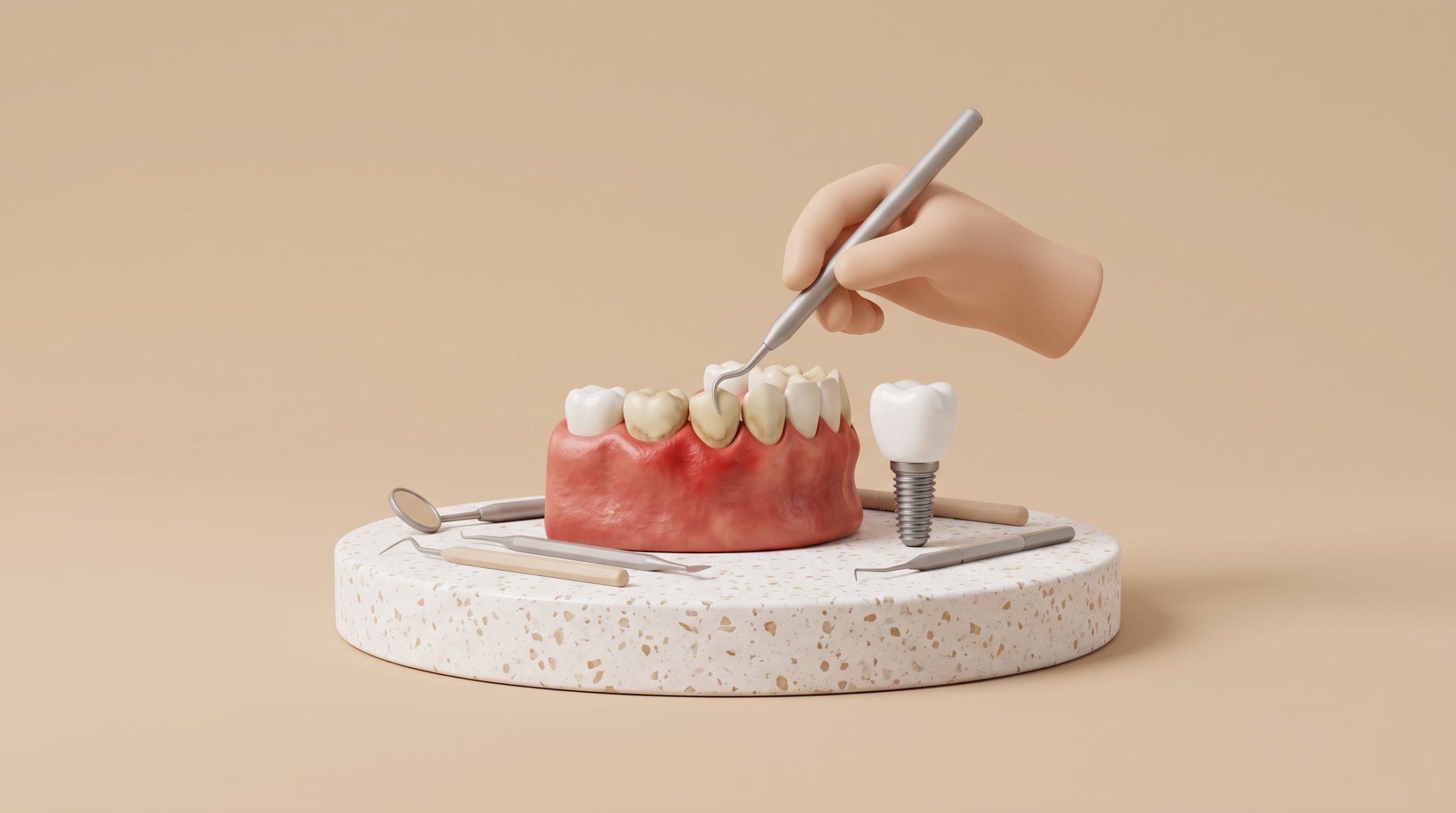
Gum disease is one of the most common reasons an implant plan gets delayed, and one of the most treatable. The delay usually comes from getting the order of care right, not from a closed door.
Dental implants with gum disease are possible in many cases, but active gum disease has to be brought under control before an implant goes in. An implant sits in the same bone and gum tissue that periodontitis attacks, so placing one into an infected, shrinking foundation tends to repeat the original problem at a higher cost.
That makes the real question one of sequence. Gum treatment comes first, then a check that the gums have stabilised, then decisions about which teeth stay and whether bone needs rebuilding, and only then the implant. Skipping a step rarely saves time, because the early steps decide whether the implant lasts.
This guide sets out the order of care, how a dentist decides whether to treat or extract a tooth, what bone loss changes, which habits and health conditions matter, and how the sequence fits a trip to Vietnam, where many implant cases already run across two visits.
Quick Answer
Dental implants are often possible with gum disease, but active periodontitis is usually treated and stabilised first. The common order is assessment, deep cleaning, reassessment, extraction of teeth that cannot be saved, bone grafting if needed, then implant placement. Your dentist confirms the sequence after an examination and imaging.
Why Gum Disease Changes the Order of Implant Treatment
Periodontitis is a bacterial infection that breaks down the bone and ligaments holding teeth in place. An implant needs two things to succeed: enough healthy bone to fuse to, and gum tissue that seals tightly around the post. Active disease weakens both, and the bacteria living in deep pockets around diseased teeth can reach a new implant site.
An implant cannot decay, but it can develop peri-implantitis, which is inflammation around the implant that gradually destroys the bone supporting it. Dental teams widely treat a history of periodontitis as a risk factor for it. That is why a patient who has had gum disease is usually told that implant care is a lifelong routine of home cleaning and professional check ups, not a one time procedure.
A history of gum disease does not disqualify anyone. Once the disease is controlled and stays controlled, many patients go on to have successful implants. The word that matters is stable: dentists look for gums that have held steady over a period of time, not gums that looked better on one day.

The Order of Treatment When You Have Gum Disease
Most plans follow the same logic, even though the timing differs from patient to patient. The table shows the usual sequence and the reason each step sits where it does.
| Step | What happens | Why it comes before the implant |
|---|---|---|
| Assessment | Gum measurements, X-rays, CBCT where indicated, medical history | Shows how far bone loss has gone and which teeth are in question |
| Deep cleaning and home care | Plaque and tartar removed below the gumline, with a daily cleaning routine | Reduces the bacteria a new implant would otherwise meet |
| Reassessment | Gums rechecked for bleeding, pocket depth and tooth movement | Confirms the disease is responding and holding steady |
| Tooth decisions | Teeth that can be saved are treated, teeth that cannot are extracted | Removes infected sources before placement |
| Bone or gum tissue rebuilding | Grafting where volume or tissue is not adequate | Gives the implant enough support |
| Implant placement | Surgery, with temporary teeth where suitable | Goes into a site that is stable |
| Maintenance | Regular professional cleaning and daily hygiene | Protects against peri-implantitis |
Assessment: Finding Out How Far the Disease Has Gone
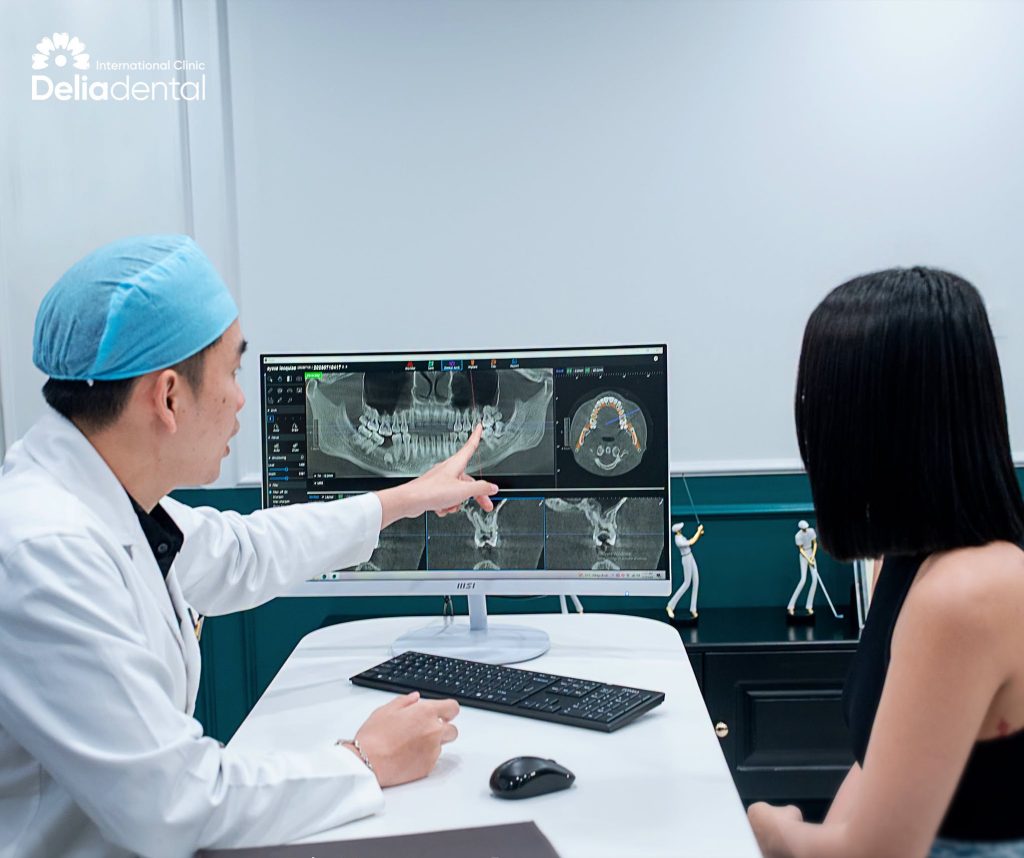
The first appointment is about measuring, not treating. The dentist checks how deep the gum pockets are, whether the gums bleed, whether any teeth move, and how much bone remains around each tooth. X-rays show bone height, and a CBCT scan shows the bone in three dimensions, which matters for planning where an implant can sit. A guide to why implant quotes change after a CBCT scan explains how that imaging feeds into the final plan.
Deep Cleaning and the Weeks That Follow
Deep cleaning, often called scaling and root planing, removes plaque and hardened tartar from below the gumline and smooths the root surfaces so the gum can reattach more tightly. It only works if the patient also keeps up daily cleaning between and around the teeth. Gums respond at different speeds, and there is no honest way to promise a date by which they will be ready. That is the reason the next step exists.
Reassessment: The Checkpoint That Decides What Happens Next
After a period of healing, the dentist measures again. If bleeding has settled and pockets have become shallower, the plan moves forward. If some areas have improved and others have not, those areas may need further treatment before implants are considered. If a tooth has not responded at all, that tooth moves into the keep or extract decision, which is covered next.
How the Decision to Keep or Extract a Tooth Is Made
Gum disease does not automatically mean a tooth has to come out, and it does not mean every tooth can be saved either. The decision is made tooth by tooth, based on how much bone support remains, whether the tooth moves, and whether the surrounding gum has responded to treatment. The wider logic is covered in the guide on whether every failing tooth has to be removed, so this section stays focused on the gum disease angle.
A tooth with treatable gum disease and reasonable bone support may be worth keeping, and keeping it can protect the bone around it. A tooth that is badly loose, has lost most of its bone support or keeps getting infected despite treatment is a different case. Holding on to it can delay the whole plan, and a tooth that fails later can damage the bone needed for an implant beside it.
Signs that usually push a decision toward extraction include:
- Movement that does not settle after gum treatment
- Bone loss reaching deep along the root
- Repeated abscesses or infection in the same area
- A root fracture or decay too deep to restore
- Too little remaining support to carry a crown or bridge
Extraction and implant placement can sometimes happen at the same appointment, but only when infection is under control and the bone allows it. In other cases the site is left to heal first. A dentist who offers a fixed date for either option before examining the area is promising something the findings cannot yet support.
Bone Loss From Gum Disease and What Grafting Adds
Bone loss is the part of gum disease that changes implant planning the most. Bone that has been lost around a diseased tooth does not return on its own, and the site left after an extraction may be narrower or shorter than the implant needs. Patients with a long history of gum disease are more likely to need some form of grafting, though only imaging and examination can show who does.
Grafting adds a step and, in larger cases, a healing period before the implant can go in. In the upper back teeth, the sinus can limit the available height, which may call for a sinus lift. Soft tissue matters too: thin or loose gum around an implant collects plaque more easily, and some cases benefit from gum tissue work to give the implant a firmer seal. None of this means treatment is out of reach. It means the plan has more stages, and the quote should show them as separate items.
Habits and Health Conditions That Change the Risk
Gum disease rarely travels alone. Two factors come up in almost every assessment, and both are worth raising early.
Smoking narrows blood vessels, slows healing and makes gum disease harder to control, which is why dentists ask patients to stop around surgery. The details are covered in the guide on how long to stop smoking before and after implant surgery, and vaping belongs in that conversation as well.
Diabetes works in both directions. Poorly controlled blood sugar makes gum disease worse, and active gum disease can make blood sugar harder to manage. Stable control matters before surgery, and the guide to dental implants with diabetes covers how that affects planning for patients who travel.
Daily plaque control is the third factor, and it is the one entirely in the patient’s hands. A dentist can treat the disease and place the implant, but the cleaning routine decides whether the result holds. Patients who struggle with it should say so, because the plan can include a hygienist, a simpler routine or closer check ups.
How the Sequence Fits a Trip to Vietnam
Many implant cases already run across two trips: surgery first, then a final restoration after healing. Gum disease adds a stage in front of that, and the practical question is where that stage happens. For mild or well controlled disease, the gum treatment may already be done or can be completed with your own dentist before you fly. For more advanced disease, the plan may need to be staged so that gum stabilisation, extractions and any grafting are sequenced before implants are placed.
Which of these applies depends on how advanced the disease is, and it cannot be settled from a photo. X-rays show bone height but not pocket depth, bleeding or tooth movement. That is why a remote review gives a preliminary direction and the final plan is confirmed after an in person examination. Patients should avoid booking non refundable flights until they know whether gum treatment has to come first.
After treatment, the maintenance routine happens at home. Planning regular hygiene visits with a local dentist or hygienist before you travel makes the long term side much easier to manage.

How Delia Dental Clinic Reviews Gum Health Before Planning Implants
Delia Dental Clinic looks at gum health, bone and the remaining teeth together rather than treating them as separate questions. Implant planning at the Hanoi and Ho Chi Minh City clinics uses CBCT imaging, and the written plan separates items such as gum treatment, extractions, grafting and the implants themselves, so patients can see what each stage involves before agreeing to it.
Before travelling, patients can send records through WhatsApp or Messenger so the international patient team can give a preliminary direction. Useful records include:
- Recent panoramic X-rays or CBCT files
- Any records of gum treatment, with dates, and gum measurement charts if your dentist has them
- Clear photos of your gums and teeth
- A list of medication and any conditions such as diabetes
- Your smoking or vaping habits
- An existing implant quote, if you have one
- Your proposed travel dates
From these, the team can indicate whether gum treatment looks likely to come first, whether teeth may need extraction, whether grafting may need to be considered and whether the case looks suited to one trip or a staged plan. It cannot confirm pocket depth, tooth movement or final bone volume remotely. Those findings, the final plan and the quote are confirmed after examination at the Hanoi or Ho Chi Minh City clinic, and any treatment sequence is explained before it begins.
Can I Get Dental Implants If My Gums Bleed?
Bleeding gums can be early inflammation that clears with professional cleaning and better home care, or a sign of periodontitis that needs fuller treatment. An examination and X-rays show which one it is. Either way, the bleeding is usually dealt with before implants, because inflamed tissue is a poor place for surgery.
How Long Do I Wait After Gum Treatment Before an Implant?
There is no fixed waiting time that applies to everyone. The dentist reassesses the gums after treatment and decides whether they are stable enough, and larger cases involving extractions or grafting take longer. A date set before that reassessment is a guess rather than a plan.
Will an Implant Fail Because I Had Gum Disease?
Not automatically. A history of gum disease raises the risk of peri-implantitis, which is inflammation and bone loss around the implant itself, so it calls for closer maintenance rather than ruling implants out. Patients whose gum disease was treated and has stayed stable are often good candidates, and regular check ups let problems be caught early.
Is Peri-Implantitis the Same as Gum Disease?
They are closely related but not identical. Gum disease affects natural teeth, while peri-implantitis affects the tissue and bone around an implant. Both are driven by bacteria in plaque, and both are far easier to manage when caught early, which is the reason cleaning routines and follow up visits matter after implants.
Can Diseased Teeth Be Extracted and Replaced With Implants on the Same Day?
Sometimes, when the infection is controlled and there is enough bone to hold the implant steady. In other cases the extraction site needs to heal first, or grafting is needed before the implant can go in. The dentist decides after examining the site, and the answer can differ from one tooth to the next in the same mouth.
Can Delia Dental Clinic Assess My Gums Before I Travel?
The international patient team can review X-rays, CBCT files, photos and records you send and give a preliminary direction on what may need treating first. Photos and X-rays cannot measure pocket depth, bleeding or tooth movement, so the final plan and quote are confirmed after an in person examination in Hanoi or Ho Chi Minh City.
Planning the Next Steps After Your Gum Assessment
Once the gums are stable, the questions that follow tend to be about bone, trip length and what happens if an implant has already caused trouble.
- Why Bone Grafting in Vietnam Is a Smart Investment For Your Smile
- How Long Should You Stay in Vietnam for Dental Implants?
- Replacing Failed Implants: What Must Be Assessed First?
Final Thoughts
Gum disease changes the order of implant treatment, not the possibility of it. The patients who do best are usually the ones who treat the gums first, let the reassessment decide the timing and keep up the cleaning routine afterwards.
Send your recent X-rays or CBCT files, any gum treatment records, clear photos of your teeth and gums, your medication and health details, and your travel dates to Delia Dental Clinic via WhatsApp or Messenger before booking flights. The international patient team can suggest what is likely to come first and whether your case looks suited to one trip or a staged plan in Hanoi or Ho Chi Minh City. The final plan and quote are confirmed after an in person examination.


