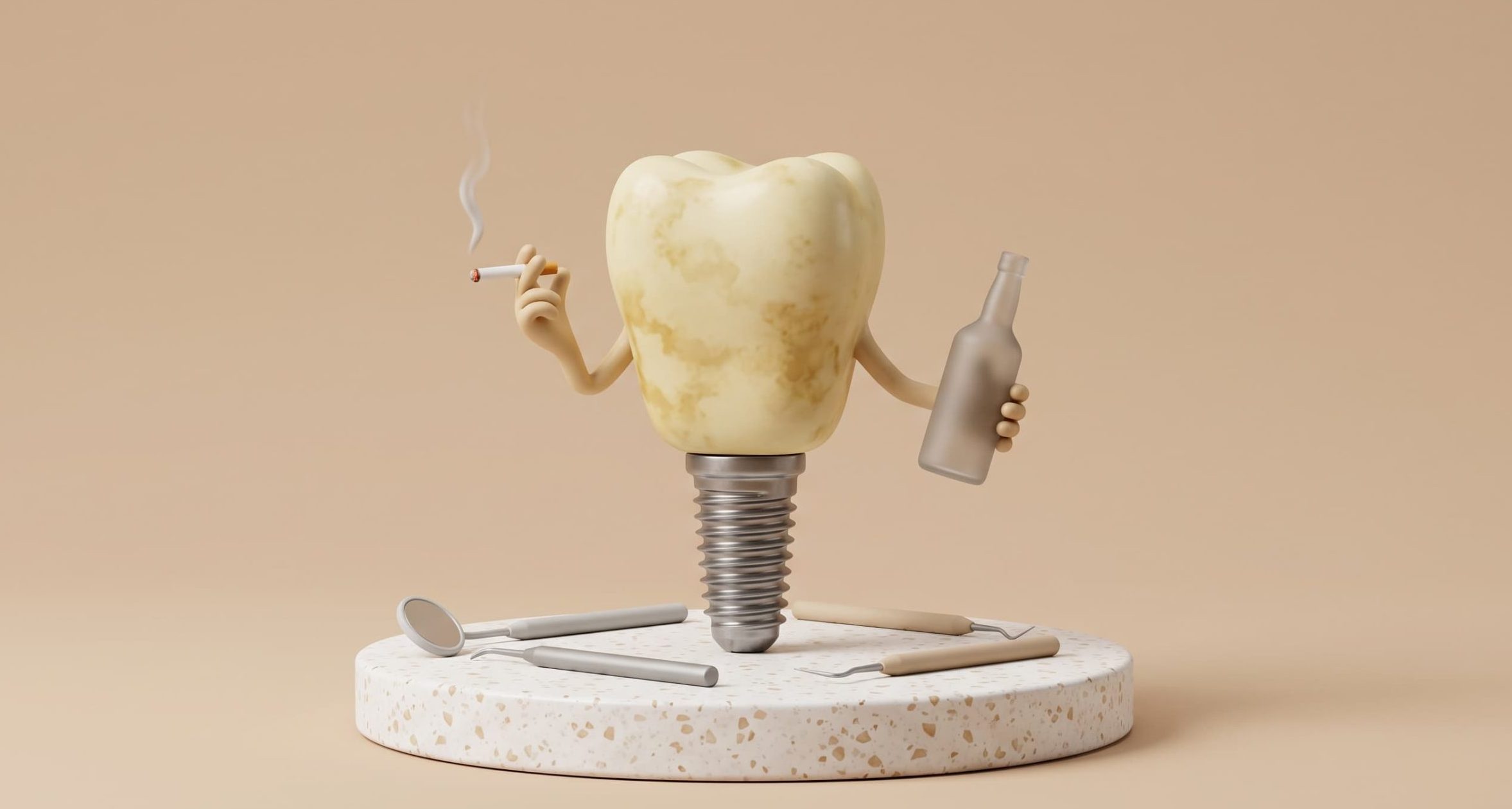
Smoking does not rule out a dental implant, but it is one of the few risk factors a patient controls completely, and the weeks around surgery are when it counts most.
An implant depends on bone growing onto a titanium post over several months, and that process needs a steady blood supply. Tobacco and nicotine reduce it. Alcohol interferes with the medication and healing of the first few days. Neither habit decides the outcome alone, but both shift the odds.
This matters more for patients who fly in for surgery. The advice is easy to follow at home and easy to forget in a hotel room on the last night of a trip. Cigarettes, vapes and a farewell glass of wine all fall inside the window dentists care about.
This guide covers what the research shows about smoking and implant failure, how long guidelines ask patients to stop, where vaping fits, what to know about alcohol, and what to tell your dental team before you book. It is general guidance, and your dentist sets the dates for your case.
Quick Answer
Smoking more than doubles the odds of implant failure in the research, and vaping shows a similar direction of risk on thinner evidence. Guidelines commonly ask patients to stop nicotine before surgery and stay off it for about two months afterward. Alcohol matters most in the first days, when it interacts with prescribed medication and works against healing. Your dentist confirms the exact dates.
What Smoking Does to Implant Healing and Long Term Success
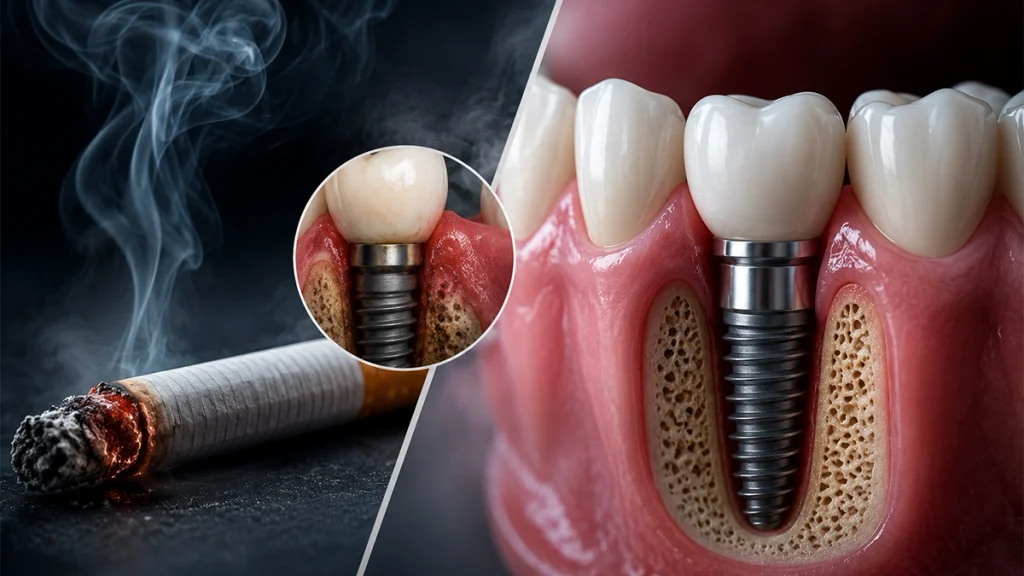
Smoking raises the odds that an implant fails, and the effect is clearest in the first weeks, before bone has bonded to the post. A meta-analysis of 292 publications covering 35,511 implants in smokers and 114,597 in non-smokers found the odds of failure were about 2.4 times higher in smokers, with similar figures for the upper and lower jaw.
The mechanism is mostly blood supply. Smoking and nicotine constrict blood vessels, which limits what reaches the wound. The Foundation for Oral Rehabilitation treatment guidelines link this to more dry sockets, more postoperative complications and lower implant success, especially in the upper jaw.
The risk does not end once the implant has healed. An AO/AAP systematic review found that about one in five patients developed peri-implantitis within 20 years of function, and it named smoking, diabetes, periodontitis and alcohol consumption as risk indicators. Peri-implantitis is bacterial inflammation around the implant that gradually destroys the supporting bone.
An odds ratio compares groups and does not give one person a fixed failure rate. Studies that compare daily cigarette counts also report risk rising with the number smoked. A light smoker with healthy gums sits in a different position from a heavy smoker who needs an upper jaw implant and already has gum disease.
How Long to Stop Smoking Before and After Implant Surgery
Guidelines agree on a nicotine free window on both sides of surgery but not on its length. The Foundation for Oral Rehabilitation advises stopping at least six weeks before and eight weeks after, and ideally for good. Other guidance asks for less.
| Source | Before surgery | After surgery |
|---|---|---|
| Foundation for Oral Rehabilitation guidelines | At least 6 weeks | At least 8 weeks, ideally permanent |
| American Academy of Implant Dentistry patient guidance | About 2 weeks | 8 weeks |
| Range across clinic patient guides | 1 to 4 weeks | 2 weeks to 2 months |
The spread exists because the evidence on timing is thin. The early failure review noted that the literature lacks detail on smoking dose and on the most effective timeline for stopping before placement. The practical reading is that longer is better on both sides, and that the weeks right after surgery matter most, because that is when bone attaches to the implant and early failure happens.
Nicotine replacement needs a question rather than an assumption. Nicotine itself constricts blood vessels, so patches, gum and lozenges are not a neutral substitute. Ask your dentist and your own doctor which support suits you before surgery.
For a patient on a two trip plan, the window starts before the first flight, runs through recovery in Vietnam and the flight home, and continues through healing at home until the second trip.
Vaping and Dental Implants: Is It Any Safer?
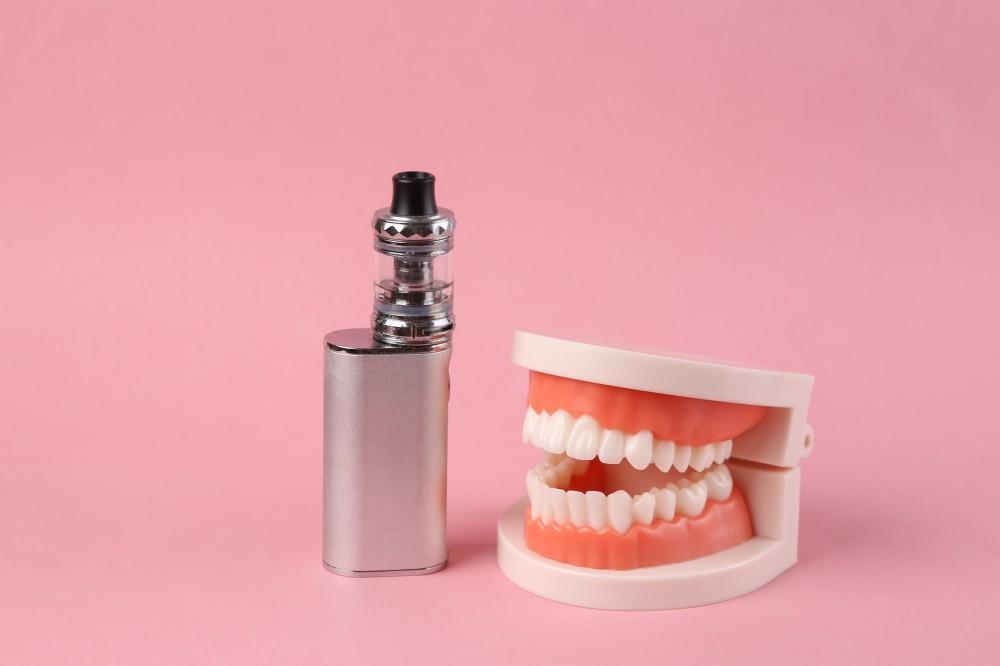
Vaping is not a proven safe alternative, although the research is smaller than for cigarettes. A 2025 systematic review and meta-analysis compared cigarette smokers, waterpipe smokers and vapers with non-smokers. All three groups had worse peri-implant outcomes, with a gradient of cigarettes worst, then waterpipe, then vaping. A 2024 review of seven studies reported deeper probing depth, more bone loss and higher levels of IL-1β, an inflammatory marker tied to bone breakdown, around implants in vapers.
That places vaping in the same direction of risk as smoking, at a lower level in the one review that compared them. The limits are real: the evidence base is small, and the 2024 review itself calls for more research. Most vapes also deliver nicotine, so the blood vessel concern still applies.
For planning, treat vaping like smoking. Use the same window and tell the team. A patient who has switched from cigarettes to vaping to prepare for surgery has made a useful change, but the dentist still needs to know about it.
Alcohol Before and After Implant Surgery
Avoid alcohol for the first days after implant surgery at minimum, because it interacts with prescribed medication and works against early healing. Clinic guidance ranges from about three days to two weeks, and your dentist may extend it for larger procedures. Most guidance also asks for no alcohol in the two to three days before surgery.
Alcohol does not mix with prescribed pain medication, and combining them can be dangerous. Patients on blood thinners face a higher bleeding risk. Alcohol also dehydrates and dampens immune response, and it should be avoided before sedation as well. A farewell dinner with wine while still on antibiotics is the usual trouble spot for visiting patients.
Once the site has healed, the question shifts to long term risk. A meta-analysis on alcohol and implant failure found no significant association for overall or moderate drinking, but heavy drinking carried an odds ratio of 2.78. The AO/AAP review above also lists alcohol consumption as a risk indicator for peri-implantitis. Heavy drinking often comes with poorer oral hygiene, which adds to the problem.
How Delia Dental Clinic Handles Smoking, Vaping and Drinking Before Your Trip
Delia Dental Clinic takes a medical history before major surgery and, in many cases, runs preoperative blood tests. Smoking, vaping and drinking belong in that first conversation rather than being left for the day of surgery. When you send X-rays or a CBCT scan via WhatsApp or Messenger, include how much you smoke or vape, what you drink in a normal week and any medication you take. The team can then give a preliminary view of how those habits might affect the plan, and the dentist confirms it after examining you at the Hanoi or Ho Chi Minh City clinic.
Most implant cases run across two trips: surgery and a temporary restoration first, then the final restoration after healing, as covered in the guide to how long to stay for dental implants in Vietnam. That structure shapes the advice, because the nicotine free window has to cover your recovery stay, the flight home and the weeks of healing between visits. During your recovery stay, your coordinator can be reached by WhatsApp or Messenger with questions about what is allowed, including what to drink while on medication.
Disclosing a habit does not disqualify you automatically. Smoking is a risk factor, and the dentist weighs it alongside bone quality, gum health and the type of treatment. Hiding it only removes the chance to plan around it. Remote guidance is preliminary, and the final plan, timing and quote are confirmed after an in person examination and imaging.
Frequently Asked Questions
Can I Smoke a Few Days Before Implant Surgery?
Smoking shortly before surgery does not automatically cancel treatment, but the dentist needs to know. The windows in the guidelines exist because a longer break gives your gums and blood supply more time to recover. A few smoke free days is better than none, though it falls short of the longer recommendations. Tell the team before you travel rather than on the day, since it can change the timing, the plan or the medication they choose.
Can I Smoke Again After the Implant Has Healed?
Healing ends the early risk but not the long term one. Smoking remains a risk indicator for peri-implantitis years after placement, which is why the Foundation for Oral Rehabilitation guidance says quitting permanently is ideal. If you do restart, keep up daily cleaning around the implant and attend your check-ups, since bleeding or tender gums are the first signs of trouble. Tell your dentist about the habit so they can monitor the area more closely.
Are Nicotine Patches or Gum Safer Than Smoking?
They remove smoke, but nicotine still constricts blood vessels, and the guidelines group smoking and nicotine consumption together. Research on replacement products around implant surgery specifically is limited. That makes this a decision for your dentist and your own doctor rather than a general rule. Tell the dental team which product you use and for how long.
Does Shisha or Waterpipe Smoking Count?
Yes. The 2025 review placed waterpipe smoking second only to cigarettes for worse peri-implant outcomes, and worse than vaping. Treat any inhaled tobacco or nicotine the same way when planning your window. Cigars and pipes were not separately covered in the reviews used here, so mention them to your dentist rather than assuming they are lower risk.
When Can I Have a Drink During My Recovery Trip?
Not in the first few days, and not while you are taking prescribed pain medication or antibiotics, since alcohol interacts with both. Sources put the minimum anywhere from three days to two weeks, and your dentist may extend it after grafting, a sinus lift or a full arch procedure. Ask at your follow-up appointment before planning a celebratory dinner, so the answer reflects how your site looks rather than a general range.
Do I Need to Quit Before I Send My X-Rays for Review?
No. A remote review is a preliminary look at your records, and the nicotine free window is tied to your surgery date, which is set after that review. Send your records now and disclose your habits. The team can then suggest when to start your window and how long it should run, subject to the dentist’s confirmation.
Planning the Rest of Your Recovery
Nicotine and alcohol are two of several recovery choices that affect how an implant heals, alongside activity levels and the sedation and aftercare plan.
- What Causes Dental Implant Failure and How to Avoid It
- Exercise and Gym After Dental Implant Surgery
- Dental Surgery Safety in Vietnam: Sedation, Aftercare, and Complication Protocols
Final Thoughts
The weeks around surgery decide most of what smoking and alcohol can do to an implant, and they are the part you control. Plan the nicotine free window before you book flights, treat vaping the same as smoking, and keep alcohol away from your medication in the first days.
Send your procedure details, your smoking, vaping and drinking habits and your travel dates to Delia Dental Clinic via WhatsApp or Messenger, and the team can suggest when to stop and how the window fits around your visits to Hanoi or Ho Chi Minh City.


