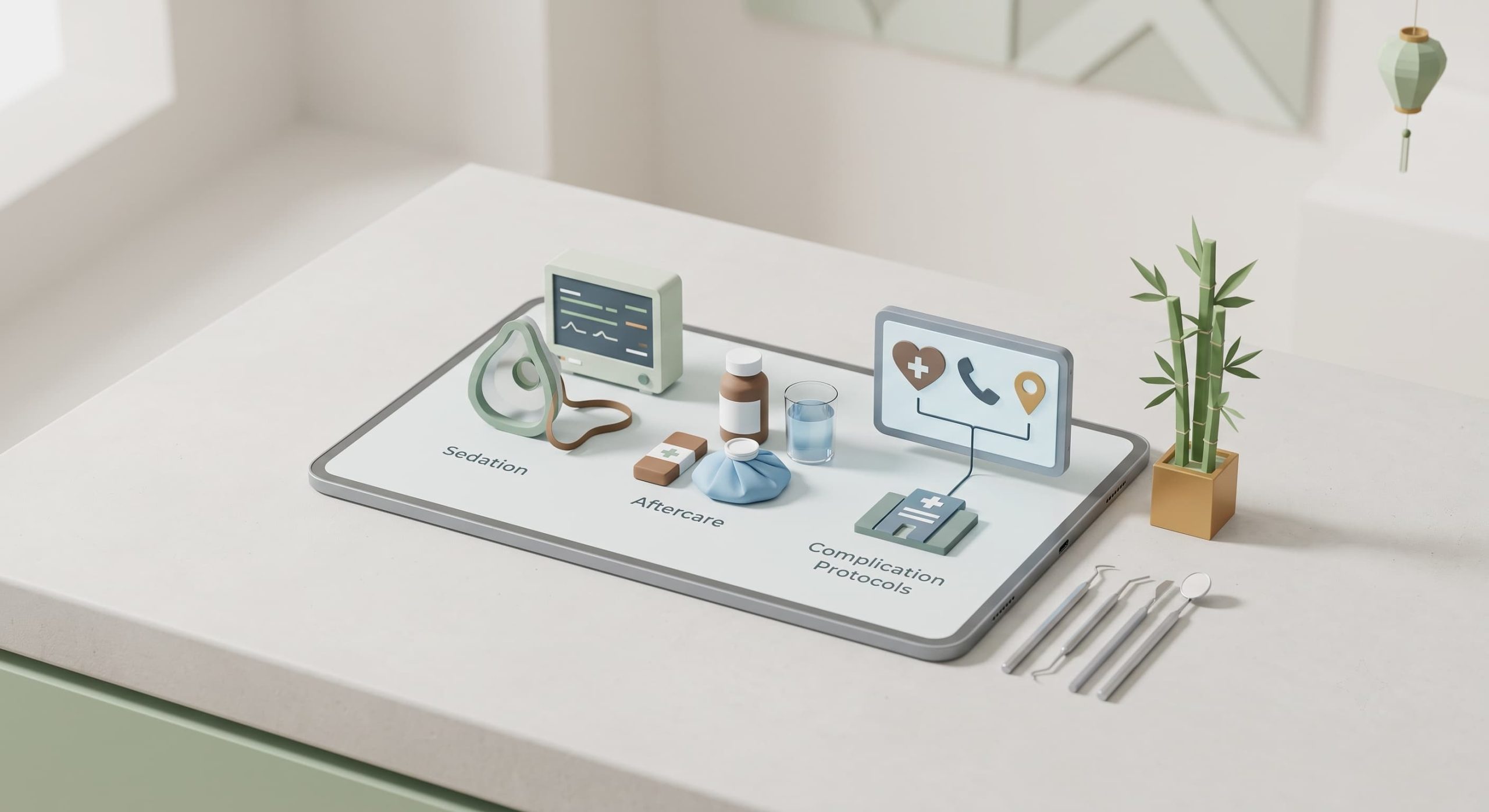
Traveling abroad for major dental work requires more than just evaluating the cost of treatment and the anticipated aesthetic outcome. For international patients planning extensive dental surgery procedures like full-arch All-on-4 implants, sinus bone grafting, or multiple complex extractions, the most critical deciding factor is understanding the clinical safety net. Trust is established not when a clinic promises that nothing will ever go wrong, but when that facility possesses transparent, documented protocols for managing complications if they actually occur.
Before booking flights, patients frequently ask three crucial questions regarding their medical security overseas. They need to know exactly who administers and monitors their sedation, how to contact the clinic during an after-hours emergency at their hotel, and what specific clinical steps are taken to resolve sudden infections, nerve issues, or biological implant failures.
Understanding these operational and medical protocols provides international patients recovering in Hanoi or Ho Chi Minh City with the psychological comfort necessary for a successful surgical trip. This guide outlines the exact safety measures and complication response protocols that protect patients throughout their restorative journey.
Quick Answer
Dental surgical safety relies on strict clinical action plans for every potential complication. Severe bleeding, infection, and implant failure are managed through immediate clinical debridement, targeted medication, or rapid revision surgery. Sedation is administered strictly by board-certified anesthesiologists, and patients receive 24/7 triage support via messaging apps to ensure continuous monitoring during their recovery stay.
Anesthesia and Sedation Protocols: Who Administers Your Care?
Complex dental surgeries require appropriate pain management and deep patient comfort, which is achieved through local anesthesia, conscious Intravenous (IV) sedation, or in extremely rare cases, general anesthesia. The administration of these medications follows strict regulatory and clinical guidelines to ensure absolute patient safety during the entire procedure.
Local anesthesia is administered directly by your treating oral surgeon or prosthodontist. This targeted injection numbs the specific surgical site while you remain fully awake, alert, and capable of responding to instructions. However, for highly invasive procedures such as full-mouth implant placement, multiple complex extractions, or severe dental anxiety cases, conscious IV sedation is the gold standard protocol. IV sedation places the patient in a deeply relaxed, sleep-like state where they can still breathe independently and respond to physical cues, but they retain little to no memory of the surgical trauma.
When IV sedation is utilized, it is never administered by the operating dentist or a dental assistant. The clinical protocol mandates the presence of a licensed, board-certified medical anesthesiologist who is specifically trained in critical care and airway management. The anesthesiologist’s sole responsibility in the operating room is to administer the sedative medications and continuously monitor your vital signs, including heart rate, blood pressure, and oxygen saturation. This distinct separation of roles allows the oral surgeon to focus entirely on the dental procedure while the anesthesiologist maintains complete control over your physiological stability.
Post-Operative Communication: The 24/7 Dental Surgery Remote Support
Undergoing surgery in a foreign country can cause immense anxiety, particularly if unfamiliar symptoms arise outside of standard clinic operating hours. To mitigate this stress, the post-operative aftercare process is structured around a direct, continuous communication loop designed specifically for international visitors recovering in local hotels.
Upon completing your surgery, you are assigned a dedicated English-speaking international patient coordinator. This coordinator serves as your primary medical point of contact via WhatsApp or Messenger. This digital channel remains active twenty-four hours a day, seven days a week during your entire recovery stay in Vietnam. The system is designed for rapid medical triage and clinical escalation rather than functioning as a generic customer service call center.
If you experience unexpected symptoms late at night, you can send a message, voice note, or clear photograph of the surgical site directly to your coordinator. The coordinator instantly escalates these clinical concerns to the on-call surgical team. For minor issues, the clinical team provides immediate reassurance or remote instructions regarding adjusting your medication dosage. If the symptoms indicate a genuine medical complication, the coordinator will arrange priority transport for you to return to the clinic for an immediate in-person assessment as soon as the facility opens, or guide you to an affiliated 24-hour medical center for acute, life-threatening emergencies.
Clinical Action Plans for Surgical Complications
While advanced 3D Cone Beam CT (CBCT) planning significantly reduces the baseline rate of surgical complications, biological unpredictability means that risks cannot be eliminated entirely. The true measure of clinical safety is having a definitive, pre-planned action plan for every potential adverse event.
Managing Prolonged Bleeding
Slight blood oozing mixed with saliva is a normal physiological response during the first twenty-four hours following extractions or implant placement. However, active, continuous hemorrhage requires immediate physical intervention. The standard protocol for severe bleeding involves bringing the patient back into the clinical setting to locate the exact vascular source. The surgeon will clean the area, apply firm mechanical pressure using sterile gauze, and utilize hemostatic agents or collagen sponges to encourage rapid clotting. In cases where the tissue remains unstable, the surgeon will place additional tight sutures to close the wound securely and stop the arterial or venous blood flow.
Resolving Post-Operative Infections
The oral cavity harbors millions of bacteria, making post-operative infection a known risk despite stringent sterile protocols in the operating room. Signs of infection typically manifest as worsening throbbing pain, localized heat, increasing facial swelling after the third day, or the presence of visible pus. The immediate protocol for suspected infection involves prescribing a targeted course of broad-spectrum oral antibiotics. If the infection has localized into a visible abscess, the surgeon will perform a clinical debridement. This process involves opening the surgical site, draining the accumulated fluid, flushing the area with an antimicrobial chlorhexidine solution, and adjusting the medication regimen to stabilize the tissue completely.
Addressing Severe Pain and Nerve Issues
Pain management follows a structured pharmacological step-system. If prescribed analgesics fail to control severe pain, the clinical team must investigate the underlying biological cause rather than simply increasing the medication dosage. Unrelenting pain often indicates dry socket following extractions or severe localized bone inflammation that requires physical intervention.
Nerve issues, clinically known as paresthesia, manifest as prolonged numbness, tingling, or altered sensation in the lips, chin, or tongue long after the local anesthetic should have worn off. Paresthesia is typically caused by post-surgical swelling pressing against the inferior alveolar nerve in the lower jaw. The immediate clinical response involves prescribing oral corticosteroids to rapidly reduce deep tissue inflammation. The surgeon will also take a new CBCT scan to verify the exact distance between the titanium implant post and the nerve canal. If the scan reveals that the implant is physically compressing the nerve chamber, the protocol dictates immediately backing out or removing the implant to decompress the area and prevent permanent nerve damage.
The Implant Failure and Rejection Protocol
Dental implant success rates generally exceed ninety-five percent globally, but biological rejection can still occur due to numerous systemic factors. Early implant failure happens when the jawbone fails to fuse with the titanium post during the initial three to six-month osseointegration phase. Symptoms include a loose implant, sharp pain when biting, or chronic inflammation around the gum line.
If an implant fails to integrate, the clinical protocol requires its immediate removal. Attempting to save a failing, mobile implant only leads to further bone destruction and wider infection. Once the failed fixture is extracted, the surgeon will thoroughly clean the bony socket and often place a bone graft to rebuild the structural foundation. The patient is then given three to four months to heal completely without any pressure on the area. Once the bone has regenerated solidly, a new implant is placed under a revised surgical plan. Reputable clinics provide transparent written warranties covering the cost of the replacement implant fixture in cases of biological failure, ensuring that patients are financially protected during the revision process.
How Delia Dental Clinic Structures Surgical Safety and Aftercare
Executing these emergency protocols safely requires a highly robust clinical infrastructure. At Delia Dental Clinic, international patient safety begins long before the surgery date is even scheduled. Operating across modern facilities in Hanoi and Ho Chi Minh City, Delia functions as a comprehensive dental and aesthetic complex rather than a small standalone practice. This scale allows the clinic to maintain strict, hospital-grade sterilization rooms and utilize advanced diagnostic equipment for every single international case.
Before any major surgery, Delia Dental Clinic requires comprehensive medical history screening and, in many cases, pre-operative blood tests to verify clotting factors and overall physiological readiness. During the procedure itself, the integration of 3D CBCT scanning and digital surgical guides minimizes invasive cutting, which directly reduces the risk of post-operative bleeding and accidental nerve trauma.
When an international patient completes their treatment phase, the handover process is highly structured to ensure safety across borders. Delia Dental Clinic provides every patient with a physical and digital medical exit package before they fly home. This includes post-operative X-rays, detailed medication instructions, and an official implant passport documenting the exact serial numbers of all placed components. By combining rigorous internal surgical protocols with transparent international documentation, Delia ensures that your recovery is monitored closely while in Vietnam and that your local home dentist has all the technical information needed to care for you in the future.
Frequently Asked Questions
What specific qualifications do the doctors administering IV sedation hold?
Intravenous sedation at Delia Dental Clinic is never administered by general dentists or surgical assistants. It is managed exclusively by fully licensed, board-certified medical anesthesiologists who possess advanced degrees in anesthesiology and critical care. These medical specialists undergo extensive training in advanced pharmacology, airway management, and emergency resuscitation protocols. Their singular responsibility during your procedure is to deliver the sedative medication safely, monitor your vital signs on hospital-grade equipment, and precisely adjust the depth of sedation. This strict division of clinical labor ensures that the oral surgeon remains completely focused on the precision of the dental implants. Meanwhile, the anesthesiologist focuses entirely on keeping your physiological state stable and comfortable throughout the surgery.
How quickly can I get help if I experience severe bleeding in the middle of the night?
If you experience heavy, active bleeding outside of regular clinic operating hours, you must immediately contact your dedicated international patient coordinator via WhatsApp. The coordinator remains on call to triage emergencies and will instruct you to apply firm, continuous biting pressure using sterile gauze to encourage initial blood clotting. If the bleeding persists heavily and represents a true medical emergency, the coordinator will guide you directly to the nearest affiliated 24-hour medical center. Alternatively, they will arrange for an immediate clinical intervention as soon as the dental facility doors open the following morning. Because most international patients stay in accommodations located very close to the clinic in Hanoi or Ho Chi Minh City, physical access to urgent care is always rapid. Our clinical surgical team reviews these late-night reports instantly to determine whether immediate physical intervention is biologically necessary.
Does the clinic cover the cost if an implant fails to integrate with my bone?
Delia Dental Clinic provides a formal, transparent written warranty for all genuine imported implant fixtures from manufacturers like Straumann, Osstem, and HIOSSEN. If an implant biologically fails to integrate with your jawbone during the initial healing phase despite strict adherence to post-operative instructions, the clinic covers the full cost of the replacement implant fixture and the subsequent revision surgery. It is important to note that while the clinical materials and surgical time are covered under this specific warranty, international patients are typically responsible for their own flight and accommodation costs to return for the revision procedure. All warranty terms, coverage durations, and specific behavioral exclusions are explicitly detailed in a stamped service contract provided before your surgery begins. This legal documentation ensures that you are financially protected against unpredictable biological rejections without any hidden replacement fees. By maintaining this clear policy, the clinic shares the responsibility for your long-term restorative success.
What is the protocol if an implant causes permanent nerve damage?
Permanent nerve damage is an exceedingly rare complication because our surgical teams utilize advanced 3D Cone Beam CT scans to map the exact location of the inferior alveolar nerve before any drilling begins. If a patient experiences prolonged numbness or tingling long after the surgery, the immediate protocol involves prescribing oral corticosteroids to rapidly reduce localized swelling that may be compressing the nerve chamber. A secondary CBCT scan is performed instantly to verify the titanium implant’s exact physical position relative to the delicate nerve canal. If the diagnostic scan indicates direct physical compression or dangerous proximity that threatens the nerve’s integrity, the clinical protocol dictates immediately unscrewing and removing the implant. This rapid surgical intervention decompresses the area, allowing the bruised nerve tissue the best possible environment to recover fully over time. Prioritizing nerve safety always supersedes keeping a poorly positioned implant in the jawbone.
How do local dentists in my home country know what was done if I need emergency care?
To ensure seamless continuity of care, Delia Dental Clinic provides every international patient with a comprehensive medical exit package before they board their return flight. This comprehensive package includes an official implant passport that lists the exact manufacturer, model, lot number, and physical dimensions of every titanium post placed in your mouth. You also receive complete digital copies of your post-operative panoramic X-rays and 3D CBCT DICOM files for your personal medical records. If you visit a local dentist in your home country for emergency care or routine hygiene, you simply present this detailed clinical documentation to them. This allows the local Australian or American clinician to instantly identify the system, order compatible specialized tools if adjustments are needed, and understand your exact surgical history. Proper record-keeping eliminates dangerous clinical guesswork and ensures your investment is safely maintained for decades.
Final Thoughts
Undergoing major dental surgery requires a strong partnership built on total transparency, clinical competence, and reliable communication. While modern technology and advanced materials make implant dentistry highly predictable, true safety comes from knowing exactly how your medical team will respond when unpredictable biological challenges arise.
By strictly separating surgical and anesthesia duties, maintaining a 24/7 remote triage channel, and adhering to strict clinical protocols for every possible complication, you can approach your procedure with confidence. Verifying these safety structures is just as important as verifying the cost of your treatment.
If you are planning complex restorative treatment and want to discuss your medical history, sedation options, or clinical risks, send your current X-rays or dental photographs to Delia Dental Clinic via WhatsApp or Messenger. Our clinical team will review your specific case and provide a transparent, objective assessment of your treatment safety and surgical protocols.


