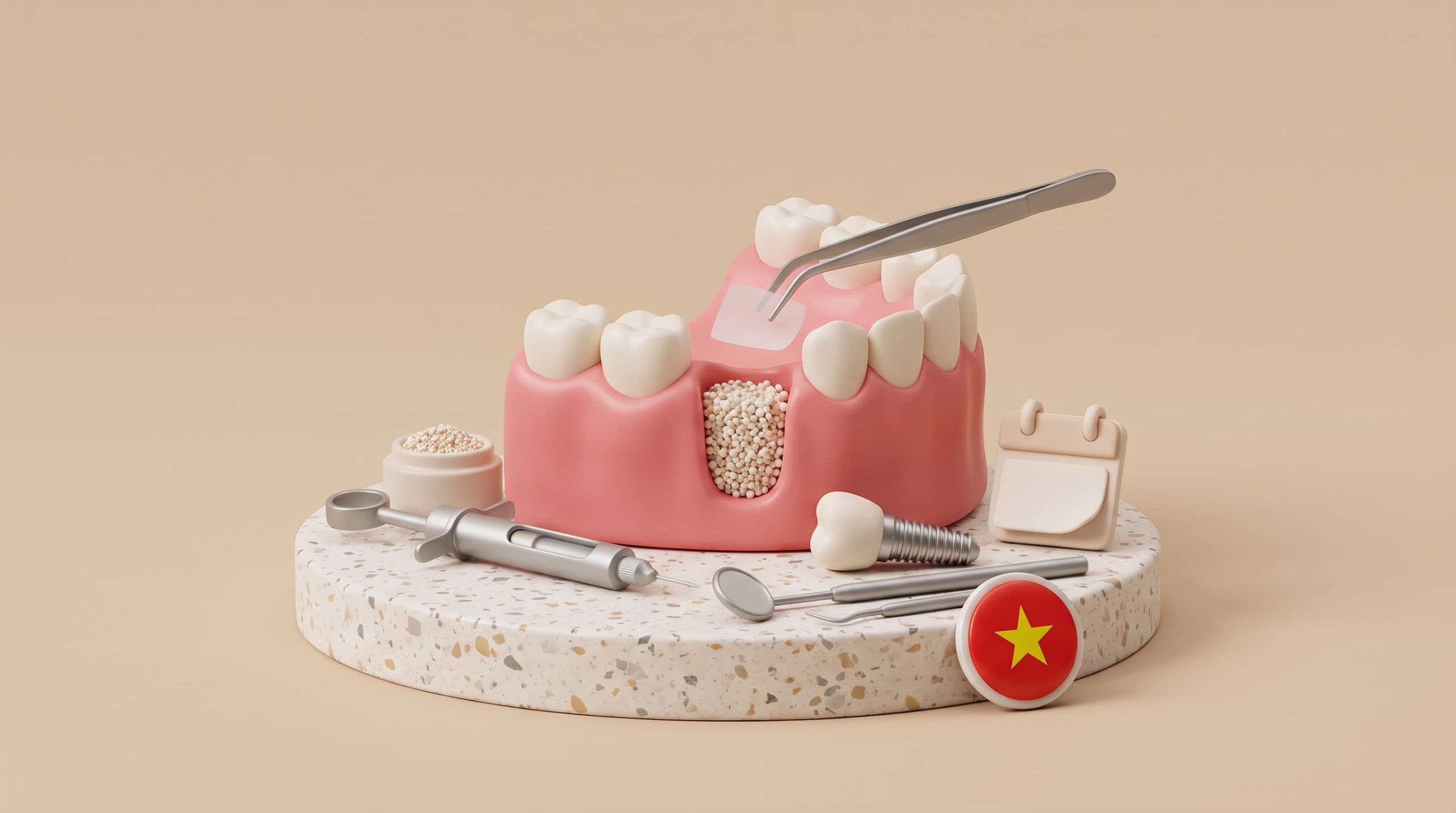
The bone that held a tooth in place starts to shrink immediately once the tooth is gone. Without early socket preservation, most patients only discover this bone loss months later, when their dental implant plan suddenly includes a costly and unexpected bone graft.
Socket preservation is a smaller step taken at the moment of extraction to reduce that loss. The empty socket is filled with graft material and usually covered with a membrane, so the ridge keeps more of its height and width while the area heals. It is not needed after every extraction, and it is not the same as placing an implant on the day the tooth comes out.
This guide explains who may benefit, when the step can be skipped, how it compares with an immediate implant or a later graft, and what to send a clinic before you plan a trip to Vietnam.
Quick Answer
Socket preservation is a bone graft placed into a tooth socket right after extraction to limit bone loss before a planned implant. It is most useful when the implant will be delayed by several months, when the socket walls are thin or damaged, or when the tooth sits in the visible smile zone. It may be unnecessary when an implant can be placed immediately or bone volume is already generous. The dentist decides case by case after an examination and suitable imaging.
Why bone shrinks after an extraction
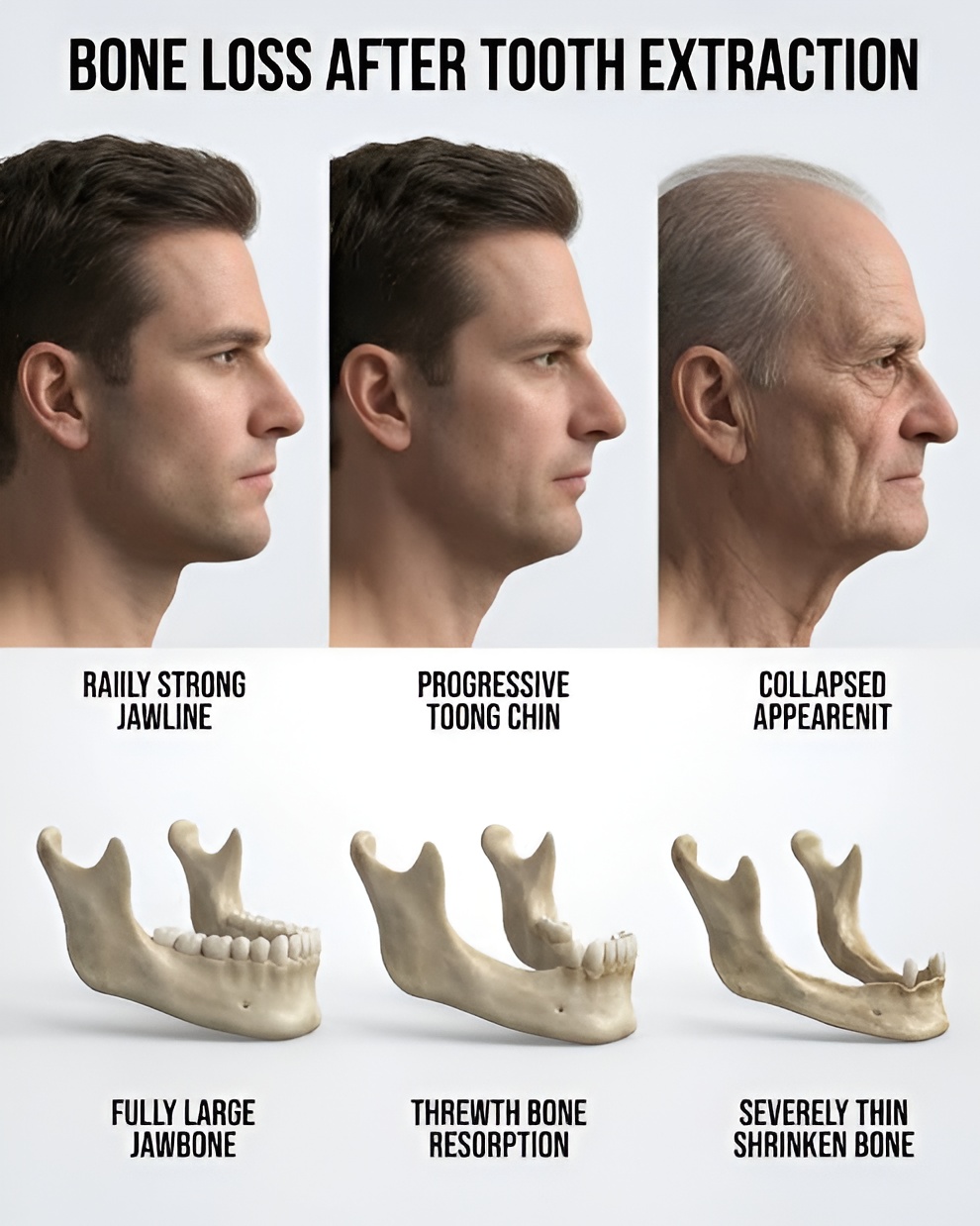
Jawbone around a tooth exists partly to support that tooth. When the tooth is removed, the body gradually reabsorbs bone that no longer has a job. Most of the change happens in the first months, and the outer wall of the socket is often the first part to thin, especially in front teeth where that wall is naturally slim.
The amount of loss differs between patients and between teeth. Gum disease, infection around the root, a fractured socket wall and smoking can all make it worse. Back teeth with thick surrounding bone often lose less visible volume than front teeth.
This matters because an implant needs bone on every side to sit securely. A ridge that has narrowed or lost height may need a larger graft before an implant can be placed, which adds a procedure and healing time. Socket preservation aims to avoid that larger step by protecting the bone while it is still there.
Who may benefit from socket preservation
The implant will be placed months later
If the tooth comes out now and the implant follows after a gap, the socket will heal and remodel in between. Grafting at the extraction visit gives that healing a scaffold, so the bone available at implant time is closer to what you started with. This is the most common reason international patients are offered the step, because many of them extract on one trip and place the implant on a later one.
The tooth is in the smile zone
Gum shape and tooth position around a front implant depend on stable bone underneath. Losing even a little volume can affect how natural the final crown looks, so dentists tend to be more cautious about front teeth than molars.
The socket walls are thin, damaged or infected
A fractured root, long standing infection or advanced gum disease can leave the walls weak. In these cases the dentist may graft to rebuild support before healing starts. If you are still unsure whether a tooth should come out at all, the guide on when every failing tooth needs to be removed covers that earlier decision. This article starts after the extraction is already planned.
When socket preservation may not be needed
It is not a default step, and a clinic that grafts every socket without explaining why should be asked for its reasoning.
Some extractions heal with enough bone for a future implant without any graft, particularly a back tooth with thick bone and intact walls. In other cases the dentist may place an implant at the same visit, which uses the socket directly instead of preserving it for later. That route depends on factors such as no active infection and enough bone to hold the implant steady, and the details are in the guide to immediate dental implants in Vietnam.
Timing also matters. Socket preservation only works at the time of extraction. If a tooth was removed years ago and the ridge has already collapsed, the question becomes one of rebuilding bone, which involves different steps and costs. The bone grafting cost guide explains that side, so this article does not repeat it.
Socket preservation, immediate implant or later graft
The three routes address the same problem at different moments, and each suits a different starting condition.
| Route | When it happens | Suited to | Trade off |
|---|---|---|---|
| Socket preservation | Graft at extraction, implant placed later | Delayed implant, thin or damaged walls, front teeth | Adds a healing period and a return visit |
| Immediate implant | Implant placed at the extraction visit | Healthy socket, no active infection, enough bone | Needs enough bone to hold the implant steady |
| Later bone graft | Ridge rebuilt after bone is already lost | Teeth removed long ago, collapsed ridge | Often a larger procedure with longer healing |
No route is better for every patient. The choice follows the condition of the socket, the position of the tooth and how soon the patient can return.

What the procedure involves
Socket preservation usually happens in the same appointment as the extraction. The tooth is removed as gently as possible to protect the surrounding bone, and the socket is cleaned of infected tissue. Graft material is then placed into the socket. Depending on the case, this can be the patient’s own bone, donor bone, animal derived material or a synthetic substitute, and the dentist chooses based on the site. A membrane or soft tissue covering holds the graft in place, and the area is closed or protected with stitches.
Recovery is usually similar to a standard extraction, with swelling, mild bruising and a few days of soft foods. Patients who smoke or have conditions that affect healing, such as poorly controlled diabetes, should tell the dentist beforehand, since healing quality influences how well a graft performs. Anyone taking blood thinners or other prescribed medication should never change it without advice from the prescribing doctor.
How long the graft needs before an implant
The graft needs time to mature into bone that can hold an implant. The waiting period is commonly described as roughly three to six months, but the real interval depends on the material, the size of the socket and how the patient heals. The dentist confirms readiness from an examination and often a new scan, not from the calendar alone.
For trip planning, the important point is that you do not need to stay in Vietnam while the graft matures. The usual pattern is extraction and grafting on the first visit, healing at home, then a return for implant placement once the site is ready. How many days each visit needs is covered in the guide on how long to stay in Vietnam for dental implants. If a graft is part of the plan, the healing time cannot be shortened to fit a flight date.
How Delia Dental Clinic reviews an extraction site before you travel
Delia Dental Clinic treats socket preservation as a planning question that should be raised before a patient flies, not on the morning of the extraction. The international patient team at the Hanoi and Ho Chi Minh City clinics can look at X-rays, CBCT files or photos you already have and give a preliminary view of whether the case looks straightforward, likely to need a graft, or better suited to another sequence.
A remote review has clear limits here. Images can show roughly how much bone surrounds a tooth and whether there are visible signs of infection. They cannot confirm the thickness of the socket walls, the exact graft needed or the final sequence. Those points are settled after an in person examination and, where needed, a new CBCT scan. If you already hold a quote from another clinic, send it too, since the team can check which steps it includes. Patients who want to understand why a plan or price may shift after imaging can read about why implant quotes change after a CBCT scan.
Frequently asked questions
Is socket preservation the same as a bone graft?
It uses similar materials, but the purpose and timing differ. Socket preservation is done at the moment of extraction to limit bone loss before it happens. A bone graft in the wider sense rebuilds bone that has already been lost, often months or years later. Because more bone is missing by then, the later procedure is usually larger and heals more slowly. Protecting a socket early is often simpler than repairing a ridge afterwards.
Can I skip it to keep the cost down?
Sometimes yes, and sometimes skipping it costs more later. If the surrounding bone is thick and the implant will go in soon, a graft may add little. If the walls are thin and the implant is months away, a collapsed ridge may need a larger graft afterwards. The right answer depends on your bone and your timeline, so the dentist should explain the reasoning behind a recommendation in either direction.
Does it hurt more than a normal extraction?
For most patients the experience is close to a standard extraction, with swelling and tenderness over the first days. The graft goes into an area that is already numb, so the extra step is not usually felt at the time. Recovery varies with the tooth, the difficulty of the extraction and general health. Pain that grows after the first few days, a bad taste, fever or facial swelling should be reviewed by a dentist promptly.
Can I fly home right after an extraction with a graft?
Many patients fly within days, but the treating dentist should confirm the timing. The usual considerations are swelling, bleeding control and whether the dentist wants to check the site once more before departure. Leave at least a day or two of buffer after the extraction instead of booking a same evening flight. If anything looks wrong, you want to be near the clinic when it happens, not at the airport.
What if my tooth was removed years ago and never grafted?
Socket preservation is no longer possible, because it only works at the time of extraction. A dentist can still assess whether enough bone remains for an implant, and a CBCT scan is usually needed to see ridge height and width. If bone is lacking, a graft to rebuild the ridge may come first, with the implant after healing. Sending your existing X-rays is a practical first step to find out where you stand.
Is the graft material permanent?
In many cases the graft is gradually replaced by the patient’s own bone, though the rate and extent depend on the material used and how the patient heals. The goal is a ridge that can hold an implant, not a block of material that stays unchanged forever. Ask your dentist which material is proposed and what it is expected to do in your case.
Preparing for the rest of the implant plan
Once you know a graft or a staged plan is likely, these articles cover the questions that usually come next.
- How Long Should You Stay in Vietnam for Dental Implants?
- Why Dental Implant Quotes Change After a CBCT Scan
- Should Every Failing Tooth Be Removed? When Full-Arch Implants Are the Right Choice
Final thoughts
The decision that matters most is timing. If a tooth is coming out and the implant will follow months later, deciding about the socket on the day of extraction usually costs less effort than rebuilding the ridge after it has collapsed. If an implant can go in right away, or the bone is already generous, preservation may add nothing.
Send your X-rays or CBCT files, a few clear photos of the area, any existing plan or quote and your intended travel dates to Delia Dental Clinic via WhatsApp or Messenger before booking flights. The team can suggest a preliminary direction and help estimate whether the plan is likely to need one trip or two. The final plan and quote are confirmed after examination.


