
Siem Reap sits close enough to Hanoi and Ho Chi Minh City that adding Angkor Wat to a Vietnam dental implant trip looks simple on a map. The flight is short, tickets are cheap, and it seems like an easy way to make an implant trip feel less like a medical errand. The part the flight schedule doesn’t show is that Angkor Wat is a genuinely demanding day out, with hours of walking in heavy heat over uneven stone steps, and that combination does not suit every stage of implant recovery.
A single uncomplicated implant, a bone graft, a sinus lift and full arch surgery all carry different recovery timelines. What counts as a reasonable day out after one procedure can be a poor idea a day or two after another, so the right answer depends on what was actually done, not on how good the flight connection looks.
This guide covers what actually decides whether Angkor Wat fits into your recovery, what the temple complex demands physically, how the flights and Cambodia entry requirements work from Vietnam, and how to sequence the trip around your treatment stage rather than around a fixed itinerary.
Quick Answer
Angkor Wat can work as an add-on to a Vietnam implant trip, since Siem Reap is roughly a one hour direct flight from Ho Chi Minh City or under two hours from Hanoi. The temple complex itself involves hours of walking on uneven stone steps in high heat and humidity, which is a poor match for early recovery from implant surgery, grafting or a sinus lift. It tends to fit best after a postoperative review confirms healing is progressing as expected, or as a straightforward add-on before treatment begins.
What Actually Decides If This Trip Fits
The question is not whether you have a free day between appointments. It is whether your current recovery stage supports several hours of heat, walking and time away from the clinic in another country.
A patient a few days past a single implant placed without grafting is usually in a very different position than a patient a day or two out from full arch surgery, a sinus lift or extensive grafting. Delia’s guide to flying after dental implant surgery covers why there is no single recovery number that applies to every procedure, and the same logic applies here. Angkor Wat adds a further layer beyond the flight itself: once you land in Siem Reap, the day involves sustained walking and heat exposure that a short domestic day trip in Vietnam usually does not.
A single implant without grafting
Once bleeding has settled, swelling is following an expected pattern and a postoperative review has confirmed the site looks stable, a day trip becomes more realistic. Heat, hydration and keeping up with any prescribed medication schedule still need planning, but the case for going is stronger here than for any other implant scenario.
Bone grafting without a sinus lift
A small graft placed around one implant site behaves differently from a larger staged graft used to rebuild bone volume. Extended time upright, walking and heat exposure can add to swelling during early healing, so this is a case for asking the treating surgeon directly rather than assuming the general implant timeline applies. Delia’s guide to bone grafting and implant cost in Vietnam explains why grafted cases are planned individually rather than against a fixed calendar.
A sinus lift
This deserves separate caution for a reason that has nothing to do with walking. Reaching Siem Reap means boarding a short flight, and cabin pressure change during ascent and descent is the same concern that applies to any flight taken soon after a sinus lift. Adding heat and exertion at the temples on top of that is not the primary issue here. The flight itself is. This should be confirmed with the surgeon who performed the procedure before any Cambodia leg is booked, regardless of how the recovery otherwise feels.
All-on-4, All-on-6 or full arch surgery
Full arch treatment typically involves more extraction sites, more swelling, general fatigue and a provisional bridge that needs to be checked before you go far from the clinic. A hot, multi-hour day with limited access to soft food is a difficult match for this stage. Delia’s comparison of All-on-4 and All-on-6 and the guide to temporary versus final full arch teeth both explain why the provisional stage needs to be stable before travel that takes you further from the treating clinic, not just further from the hotel.

What a Day at Angkor Wat Actually Involves
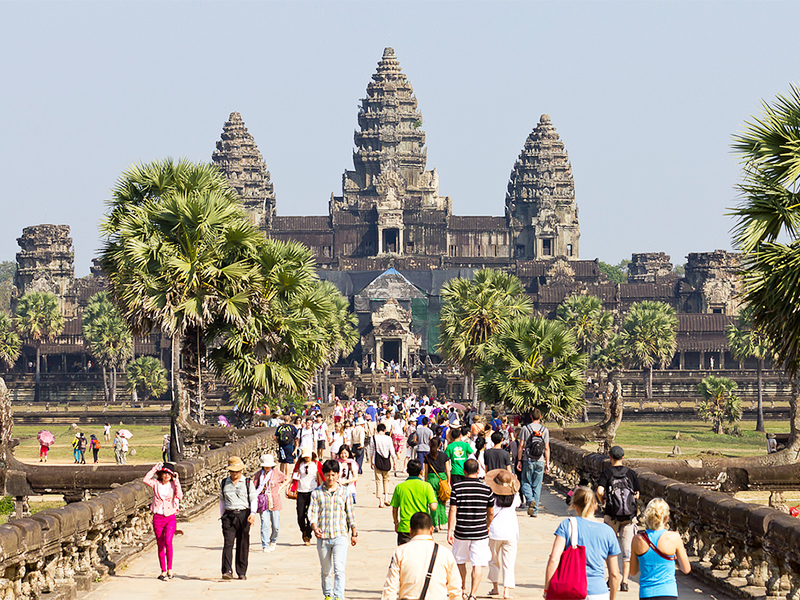
Angkor Wat is one of the most rewarding sights in Southeast Asia, and most visitors spend a full day moving between temples rather than seeing just one. Siem Reap stays warm and humid for most of the year, with temperatures typically in the 30 to 38 degree Celsius range, so it helps to plan the day the way most experienced travellers do: start early, pace yourself between sites, and treat it as an active day out rather than a quick stop.
Heat and timing your visit
Many visitors prefer an early morning start or a later afternoon session, both to catch better light for photos and to avoid the strongest heat of the day, which usually peaks between around 11am and 2pm. This is good general advice for any visitor, and it matters a little more if you are still managing post-operative swelling or general fatigue, since staying cool and hydrated makes the day noticeably easier regardless of recovery stage.
Getting between temples
Angkor Wat is not a single building but a wide archaeological park, so most visitors hire a tuk-tuk or car for the day and cover the walking between sites once they arrive. Several temples, such as Ta Prohm and the upper levels of Angkor Wat itself, involve climbing steep, uneven stone steps, which is part of what makes them so memorable but is also a genuinely active climb rather than a stroll. Worth keeping in mind if you are still easing back into a full day on your feet after treatment.
What to wear and how tickets work
Temples ask visitors to keep shoulders and knees covered, so loose, breathable clothing works well in the heat and keeps you comfortable for photos at the temple entrances. A one day pass covers the main circuit, and multi-day passes are available if you would rather spread the visit over two shorter sessions instead of one long day, which can be a nice option either way.
Flights and Entry Requirements From Vietnam
Ho Chi Minh City to Siem Reap is a direct flight of around one hour, operated by more than one carrier with several departures most days. Hanoi to Siem Reap runs closer to one hour forty minutes, with fewer weekly departures, so that route is worth booking further ahead than the Ho Chi Minh City connection.
Cambodia requires its own visa, separate from any Vietnam visa or e-visa already held. Most passport holders from Australia, New Zealand, the United States, the United Kingdom, Canada and Singapore need either a Cambodia e-visa arranged in advance or a visa on arrival at Siem Reap airport. Fees, validity periods and exact requirements are set by Cambodian immigration and can change, so this should be checked against the official Cambodia e-visa portal or a current embassy source close to your travel date rather than assumed from a past trip or a third party site.
Sequencing Angkor Wat Around Your Treatment
Where the Cambodia leg sits in the trip matters more than whether it happens at all. The same day trip can be a non-issue or a bad idea depending only on whether it comes before your appointment, after a review, or in the middle of a staged implant case.
Before treatment begins
This is the lowest friction option of the three, since there is no recovery stage to plan around yet. If your schedule allows a couple of extra days at the start of the trip, seeing Angkor Wat before your first appointment removes the timing question entirely and means you are not weighing it against how you feel post-op. It also tends to make for a more relaxed visit, since you are not managing swelling, medication timing or a soft diet on top of a full day of walking in the heat.
After a postoperative review, before flying home
For single implant cases where a postoperative check confirms the site is healing as expected, adding Angkor Wat before the flight home can work. The key is that this decision should follow the clinic’s clearance rather than a personal read of how you feel that morning, since early swelling can settle faster in some patients than others and a review is the only reliable way to know where you actually stand. If the review flags anything, it is worth pushing the Cambodia leg back rather than going ahead as originally planned.
During the gap between a two trip implant case
Full arch and grafted cases often involve two separate visits to Vietnam, with the bulk of healing taking place at home between them, as covered in Delia’s guide to how long to stay in Vietnam for dental implants. For these cases, Cambodia usually fits better as its own standalone trip, or added onto the return visit once treatment has progressed further, rather than squeezed into the days right after the first surgical stage. Trying to fit it into the initial trip tends to work against the rest most patients need in that early window, without actually saving much time overall.

How to Visit Angkor Wat With Less Physical Strain During Recovery
If your recovery stage is borderline rather than a clear no, you do not have to choose between skipping Angkor Wat entirely and pushing through a full, high-effort day. A few adjustments to how the day is planned bring the exertion level down while still letting you see the main highlights.
- Hire a private driver or tuk-tuk for the day so transfers between temples are covered by vehicle, keeping walking to inside each site rather than between them
- Split the visit into two shorter half-day sessions instead of one long day, with a proper rest back at the hotel in between
- Skip optional climbs, such as the steep upper tower stairs at Angkor Wat itself, if balance or fatigue is a concern that day
- Time the visit for early morning or late afternoon rather than the midday heat, when the temples are also quieter and easier to photograph
- Build in seated rest breaks with water on hand rather than trying to match the pace of a group tour
- Choose loose, breathable clothing that still covers shoulders and knees, which is more comfortable in the heat than anything tight or heavy
How Delia Dental Clinic Reviews This Before You Add Cambodia to Your Trip
Delia Dental Clinic’s coordination team in Hanoi or Ho Chi Minh City can look at where you currently sit in your treatment plan and give an honest read on whether a day or more away from the clinic, and out of the country, fits your recovery stage. This is particularly useful for cases involving grafting, a sinus lift or full arch surgery, where the general guidance above needs to be checked against what was actually done in your specific case.
If you share your planned Cambodia dates along with your procedure type and current recovery stage, the team can flag anything worth reconsidering before you book flights and a visa that are not easy to change last minute. This is a scheduling and planning check based on your treatment record. It does not replace the direct clearance your treating surgeon gives on diet, activity or medication during recovery.
Send your treatment stage and travel dates here
Frequently Asked Questions
Can I visit Angkor Wat right after All-on-4 or All-on-6 surgery?
This is not a good match for the days immediately following full arch surgery. Swelling is often still developing, the provisional bridge needs to be confirmed as stable, and a hot, multi-hour day away from the clinic works against the soft diet and rest most patients need at this stage. This is a case to revisit after a postoperative review, or during a later visit rather than the initial surgical trip.
Do I need a separate visa for Cambodia?
Yes. A Vietnam visa or e-visa does not cover entry to Cambodia. Most travellers need a Cambodia e-visa arranged in advance or a visa on arrival at Siem Reap airport, and requirements vary by nationality and change over time, so check the current official Cambodia e-visa portal close to your travel date.
How long is the flight from Vietnam to Siem Reap?
From Ho Chi Minh City, direct flights run around one hour. From Hanoi, the direct route takes closer to one hour forty minutes, with fewer weekly departures than the Ho Chi Minh City connection.
Is Angkor Wat too much for someone recovering from a sinus lift?
The bigger concern is not the walking but the short flight required to reach Siem Reap. Cabin pressure changes during a flight taken soon after a sinus lift are a separate consideration from general fatigue or heat, and this should be confirmed directly with the surgeon who performed the procedure before booking any Cambodia leg.
Can I do Angkor Wat before my dental treatment instead of after?
Yes, and for most cases this is the simplest option. Visiting before your first appointment removes the recovery timing question entirely, since there is no healing stage to work around yet.
Should I tell Delia Dental Clinic before booking the Cambodia leg?
It is not required, but it is worth doing if the trip falls close to a procedure or if you are unsure whether your current stage supports a full day away from the clinic. Sharing your planned dates and procedure type in advance lets the coordination team flag any concerns before you have already paid for flights and a visa that are difficult to change.
Final Thoughts
The flight connection between Vietnam and Siem Reap makes Angkor Wat an easy add-on on paper, but the temple complex itself is a demanding day of heat, walking and uneven stone steps, not a relaxed extension to a dental trip. The right timing depends on what procedure was actually done and how your recovery is progressing, not on how convenient the flight schedule looks.
Send your procedure type, current recovery stage and planned Cambodia dates to Delia Dental Clinic via WhatsApp or Messenger before you book flights or a visa. The Hanoi or Ho Chi Minh City coordination team can give an honest read on whether the trip fits where you currently are in treatment, and flag anything worth confirming with your treating surgeon first.


