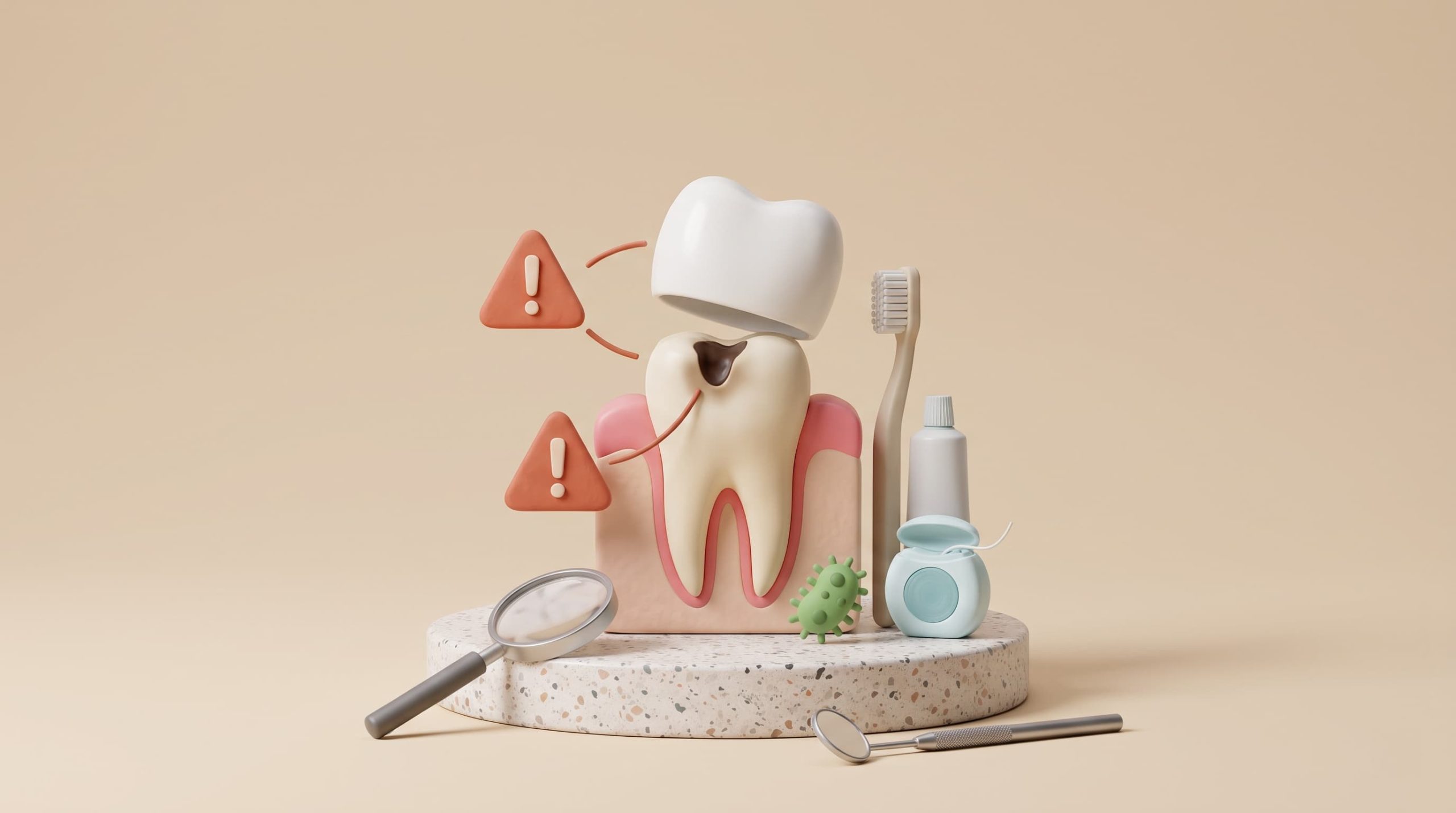
A crown can look perfect for years while the tooth underneath slowly breaks down. The porcelain or zirconia cannot decay, but the natural tooth it covers still can, and that is the part nobody can see.
Decay under a crown usually starts at the margin, the thin line where the edge of the crown meets the tooth. Plaque collects there, and a small gap or rough edge makes it harder to clean. Dry mouth, gum recession and long gaps between checkups raise the risk, and a tooth that has had a root canal may give no pain at all.
This guide explains how a cavity under a crown starts, which signs deserve action, what dentists do about it and how to prevent it. It also covers what to do if a crown placed in Vietnam gives you trouble after you return home.
Quick Answer
Yes, decay can form under a crown, most often at the margin where the crown meets the tooth. Warning signs include sensitivity, a bad taste, swollen gums, a loose crown or a dark edge. A dentist confirms it with an examination and X-rays. Catching it early keeps treatment simpler.
How Decay Under a Crown Starts
A crown protects the part of the tooth it covers, but it does not seal the tooth for life. Bacteria can reach the tooth underneath by three routes, and each one has a different warning pattern.
The crown margin
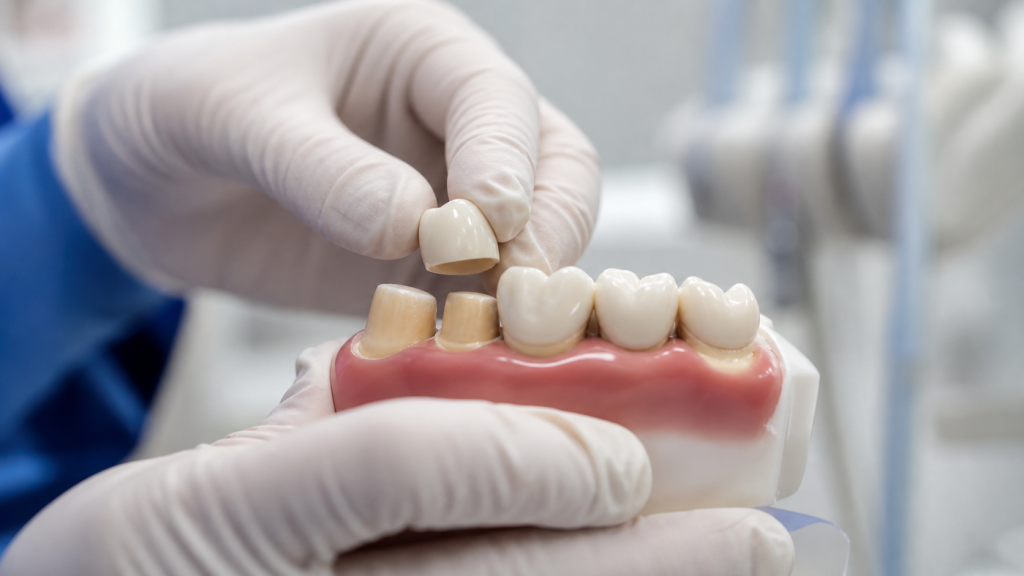
Every crown has an edge. If plaque sits along that edge, the tooth at the margin can soften and decay even though the crown surface looks spotless. Crown margin decay is the most common route and is often called secondary or recurrent decay. It tends to start slowly and out of sight, usually below the gum line on the side facing the neighbouring tooth.
Cement that has loosened or washed out
Crowns are held on with cement or bonding material. If that layer breaks down, a tiny gap opens and saliva and bacteria can seep in. The crown may feel slightly loose, or it may stay firmly in place while decay develops beneath it. A crown that has become loose is therefore a warning sign in its own right, not just an annoyance.
Exposed root surfaces next to the crown
When gums recede, the root surface beside the crown margin becomes exposed. Root surfaces are softer than enamel and decay faster, so a crown on a tooth with receding gums needs closer attention than one with healthy gum cover.
Who Is More Likely to Get a Cavity Under a Crown
Anyone with a crown can develop decay, but some situations make it more likely. Saliva is the mouth’s natural defence, because it washes away food and neutralises acid. When saliva drops, the margin loses that protection. Dry mouth crown decay is common in people who take certain regular medicines, breathe through the mouth at night or have had radiotherapy to the head and neck. If you take medicines that dry your mouth, tell your dentist and your doctor, but do not stop any prescribed medicine on your own.
Other factors that raise the risk include:
- Frequent snacking or sugary drinks through the day
- Poor access for cleaning around the crown margin
- Gum recession that exposes the root next to the crown
- A crown placed over a tooth where earlier decay was not fully removed
- Long gaps between dental checkups and X-rays
Heavy night grinding can also stress the cement layer over time, which is one reason a night guard after dental implants and crowns is sometimes recommended.
One distinction is useful if you have both crowns and implants. A crown on a dental implant has no natural tooth underneath, so it cannot decay in the same way. The gum and bone around an implant can still become inflamed, which is a separate problem that also needs a dental review.
Warning Signs of Decay Under a Crown
Early decay is often silent, so symptoms tend to appear late. The table below separates what can wait for a planned visit from what needs prompt attention.
| What you notice | What it may mean | What to do |
|---|---|---|
| Mild sensitivity to sweet food or cold near one crown | Early margin decay or an exposed root | Book a dental review within the next few weeks |
| Bad taste or smell around one crown | Bacteria and breakdown at or under the crown | Book a review soon and keep cleaning the area gently |
| Gum around the crown is red, puffy or bleeds | Plaque at the margin or deeper irritation | Book a review soon |
| Dark line or shadow at the crown edge | Possible margin decay, or a normal look for some crown types (a metal edge or gum shadow) | Have it checked with an X-ray |
| Crown feels loose or moves | Cement failure, often with decay beneath | Get seen promptly and stop chewing on it |
| Crown falls off and the tooth looks dark or soft | Decay under the crown | Get seen as soon as you can |
| Facial swelling, fever, pus or severe constant pain | Possible infection | Seek urgent dental or medical care |
Two cautions apply. A dark line at the edge is not always decay, so it needs an examination rather than a guess. And no pain does not mean no problem, especially on a tooth that has had a root canal, because that tooth no longer has a living nerve to warn you.

Crown Falling Off and Decay: What to Do
Crown falling off decay is a common pairing, because a crown that has lost its seal often comes off after the tooth underneath has weakened. If your crown falls off while you are travelling or back home, keep it in a clean container and do not stick it back with superglue. Rinse the tooth gently, avoid chewing on that side and book a dentist as soon as you can, since an exposed tooth can break down quickly.
A local dentist can usually provide temporary protection until the proper repair is arranged. Look at the tooth in a mirror under good light. A dark, rough or soft surface suggests decay or old staining, but only an examination can tell the difference, and photos cannot settle it.
Pain with swelling, fever or a bad taste that keeps returning needs prompt care. It should not wait for a flight or an online reply.
How Dentists Find and Treat Decay Under a Crown
Your dentist will check the crown margin, test whether the crown is firm and take X-rays. An X-ray can show decay along the edge, but the crown can hide parts of the tooth, so the dentist sometimes needs to remove the crown to see what is underneath. What happens next depends on how far the decay has gone.
Small decay at the margin
If the decay is shallow and the crown still fits well, the dentist may be able to clean out the decay and repair the area without replacing the crown. Many cases still end with a new crown, because a repair at the margin can leave a weak seal that fails again later.
Decay that has reached deeper into the tooth
The dentist removes the crown, takes out all the decay and rebuilds the tooth with a core buildup. If the decay has reached the nerve, root canal treatment is needed before a new crown is made. That decision follows the same logic as our guide on whether you need a root canal before a crown.
Decay too extensive to rebuild
If too little healthy tooth remains to hold a new crown, the tooth may not be restorable. The usual options are then extraction followed by an implant or a bridge, and the dentist should explain both after a full examination.
Replacement crowns are priced per tooth. Root canal treatment, core buildup and gum treatment depend on the case and are quoted separately, as explained in the guide to dental crown cost in Vietnam.
How to Prevent Decay Under a Crown
Prevention comes down to keeping the margin clean and the mouth moist. These steps matter most:
- Brush twice a day with fluoride toothpaste, angling the brush at the gum line where the crown meets the tooth
- Clean between teeth daily with floss, a floss threader or interdental brushes, and consider a water flosser if flossing around the crown is difficult
- Reduce how often you eat or drink sugar, because frequency matters more than the amount at a single meal
- Sip water through the day, chew gum without sugar and ask your dentist about fluoride products or saliva substitutes if your mouth is dry
- Keep regular checkups, with X-rays when your dentist advises them
Cleaning mistakes around crowns, such as scrubbing too hard or skipping the margin, are covered in brushing mistakes that damage crowns and implants.
If your crowns were placed abroad, ask for your X-rays and treatment records before you leave. Your home dentist can then compare future images against a baseline and spot small changes early.
How Delia Dental Clinic Reviews a Crown You Suspect Has Decay
International patients can send photos of the crown, recent X-rays, treatment records or an existing quote to Delia Dental Clinic before travelling to its Hanoi or Ho Chi Minh City branch. For a crown you suspect has decay underneath, include the date and place of the original treatment if you know them.
From these, the international patient team can indicate whether the pattern looks like something a local dentist should see now, something that can wait for a planned visit or something that needs an in person assessment. A remote review cannot confirm decay, because that needs a clinical examination and X-rays. Some questions cannot be answered until the crown is removed and the tooth underneath is examined.
When you are in Vietnam, the dentist checks the margin, the fit of the crown and the condition of the tooth beneath it, explains the options and provides an itemised quote before treatment starts. The final diagnosis and treatment plan are confirmed only after that examination.
Frequently Asked Questions
Can decay under a crown be treated without removing the crown?
Sometimes, when the decay is small and sits at an accessible margin. The dentist may be able to clean it out and restore the edge without making a new crown. In many cases, though, the crown has to come off so the dentist can see how far the decay goes, and a margin repair may not give a lasting seal. That decision is made at the examination, not from a photo.
Can a tooth with a root canal get decay under its crown?
Yes. A root canal tooth no longer has a living nerve, so decay can progress without sensitivity or pain. That makes regular X-rays and checkups more important for these teeth, not less. If a root canal tooth has a crown that feels loose or a gum that keeps swelling, it should be examined even if it does not hurt.
Do zirconia or porcelain crowns prevent decay?
No. The crown material does not decay, but the tooth underneath and the margin still can. A well fitted crown with a tight margin lowers the risk, and good cleaning lowers it further, but no material makes the tooth immune. This is why the routine around the margin matters as much as the crown itself.
How often should crowns be checked?
Most dentists recommend a checkup once or twice a year, with X-rays at intervals based on your risk of decay. If you have dry mouth, gum recession or a history of decay, your dentist may suggest more frequent visits. A crown that has been in place for many years still needs the same attention as a new one.
Why does my crown have a dark line at the edge?
It can be a normal feature of some crown types, a shadow from the gum or an early sign of decay at the margin. You cannot tell which from a photo. If the line is new, getting darker or comes with sensitivity or gum changes, have it checked with an examination and an X-ray.
My crown fell off and the tooth underneath looks dark. Is it too late to save it?
Not necessarily. A dark tooth can mean old staining, decay or both, and only an examination shows how much healthy tooth is left. Keep the crown, avoid chewing on that side and see a dentist soon. If enough structure remains, the tooth can often be rebuilt and fitted with a new crown, sometimes after a root canal.
Can a crown on a dental implant get a cavity?
The crown itself cannot decay, and there is no natural tooth underneath it. The gum and bone around the implant can still become inflamed if plaque builds up, with signs such as bleeding gums or a bad taste. Cleaning around the implant crown and keeping regular checkups protect it in the same way they protect natural crowns.
Keeping Your Crowns in Good Shape After the Trip
Once you know where decay starts, these guides cover the next steps in caring for crowns placed in Vietnam.
- Emax Crown Procedure in Vietnam: Visits, Recovery & Aftercare
- How to Check Zirconia Crown Quality in Vietnam Before Treatment
- How to Pay for Dental Treatment in Vietnam as a Foreigner
- How Much Tooth Is Removed for a Dental Crown?
Final Thoughts
A crown does not end the risk of decay on that tooth. It moves the risk to the margin, where it is harder to see and easier to ignore. A loose crown, a persistent bad taste, swollen gums or sensitivity that is new or getting worse are the signs that deserve a dental visit rather than a wait and see approach.
If you already have crowns and something feels off, send your crown photos, any recent X-rays and the date and place of the original treatment to Delia Dental Clinic via WhatsApp or Messenger. The international patient team can review what you send and explain what an in person assessment at the Hanoi or Ho Chi Minh City branch would involve. Any diagnosis and final treatment plan are confirmed only after an examination.


