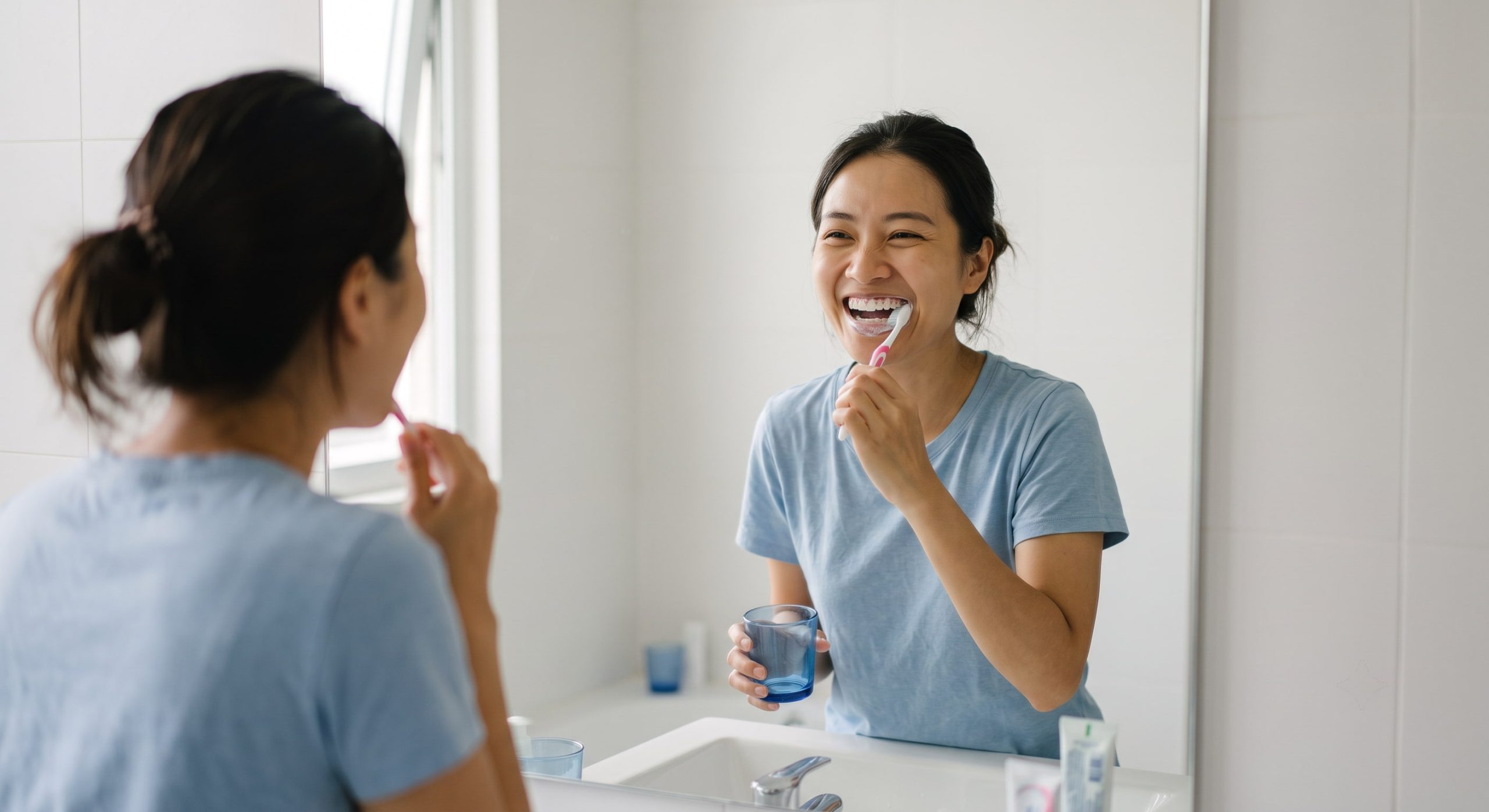
A crown or an implant does not respond to plaque, pressure, or the wrong toothpaste the same way a natural tooth does. The same brushing habit that a natural tooth tolerates for years can wear a crown margin or irritate the tissue around an implant much faster, because the materials and the supporting structures underneath are different.
Most brushing advice online is written for natural teeth. It rarely explains what changes once a tooth has been replaced or capped, which is why patients with restorations keep running into the same avoidable problems: a crown edge that starts trapping food, a mild ache around an implant that turns out to be inflammation, or a whitening toothpaste that dulls a zirconia surface instead of brightening it.
This article works through the brushing and cleaning mistakes that matter most once you have a crown or an implant, and why each one carries a different consequence than it would on a natural tooth.
Quick Answer
Brushing too hard, using whitening or heavily abrasive toothpaste, skipping interdental cleaning, and using alcohol-based mouthwash are the mistakes most likely to affect a crown or implant. Crowns can develop open margins and dulled surfaces; implants are more vulnerable to inflammation because the tissue around them lacks the natural tooth’s protective ligament.
Brushing Pressure And Crown Margins
A crown sits on a prepared tooth with a thin joint, the margin, where the crown meets the remaining natural structure. That margin is the weakest point in the whole restoration. Pressing hard with a toothbrush, especially a medium or hard-bristled one, gradually wears at the cement or composite sealing that joint, and it is also the mechanism behind the gum recession that exposes crown margins over time.
The American Dental Association’s general brushing guidance already assumes soft bristles and a light touch: two minutes, twice a day, without heavy pressure, since firmer pressure does not clean better and instead risks abrasion and gum recession. That guidance carries more weight around a crown, because once a margin opens even slightly, it becomes a ledge where plaque collects and is far harder to clean away than the smooth crown surface itself.
If a crown margin feels rough to the tongue, or if the gum next to a crown has started to pull back, that is usually a sign the brushing angle or pressure needs to change, not a sign to brush more.
Why The Gum Around An Implant Reacts Differently To Plaque
An implant is not held in place the way a natural tooth is. A natural tooth sits inside a periodontal ligament, a layer of fibers that both cushions the tooth and acts as a barrier that slows down bacterial spread if plaque builds up. An implant has no equivalent structure. The soft tissue around it forms a cuff instead, with fibers that run alongside the implant surface rather than into it, and a more limited blood supply feeding that area.
Research comparing the two situations describes this as a genuine anatomical vulnerability: without the periodontal ligament’s fiber barrier, plaque-driven inflammation around an implant, known as peri-implantitis, tends to progress faster and destroy more tissue than the equivalent inflammation around a natural tooth. This is the biological reason implant sites need more consistent daily cleaning, not just cleaning that looks similar to what a natural tooth gets.
In practice, that means the plaque you might get away with skipping around a natural molar for a day or two is a bigger risk left around an implant crown, since the tissue has less capacity to contain it before inflammation sets in.
Toothbrush And Cleaning Tools That Helps Fixed Restorations
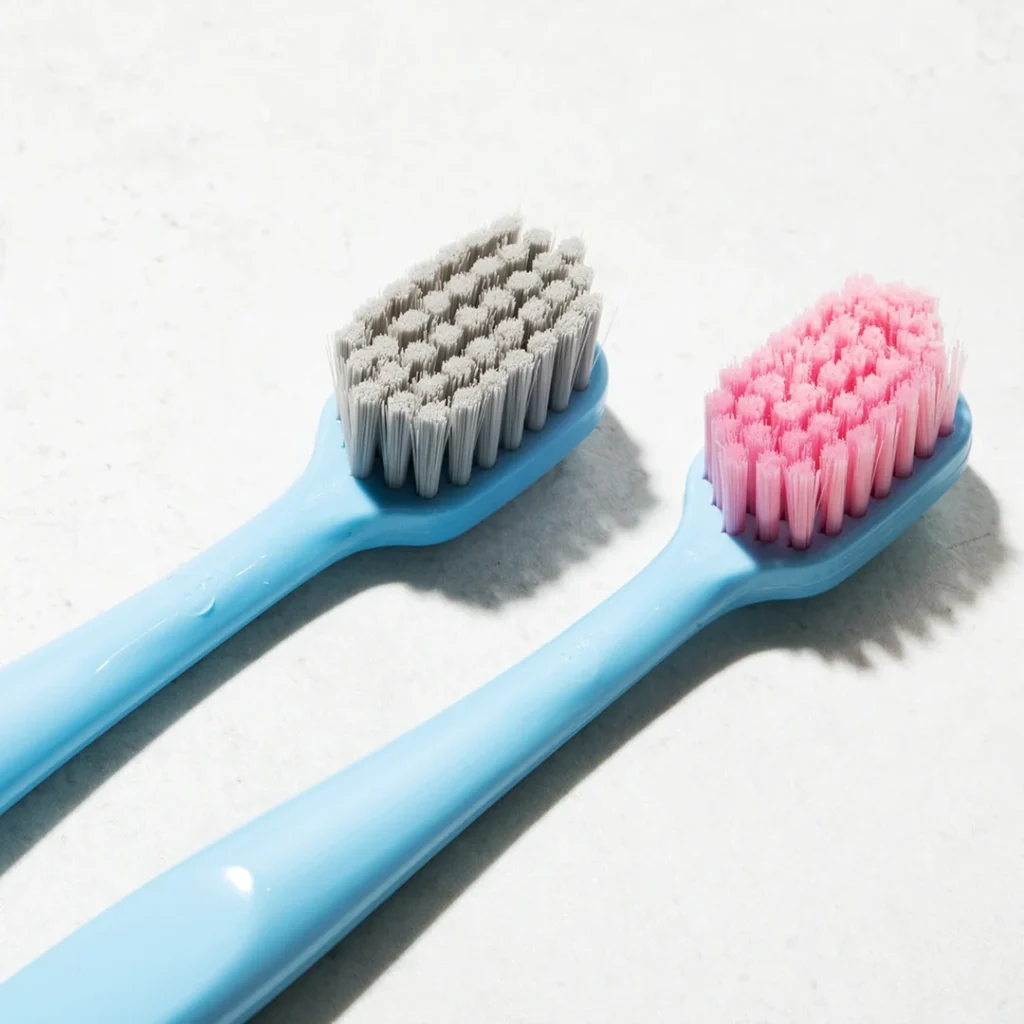
Standard floss is built for the tight, flat contact between two natural teeth. Around an implant crown or a fixed bridge, the space is often wider or a different shape, and standard floss does not always adapt to it. Dental associations and clinical studies both point to interdental brushes as a more reliable primary tool for these wider spaces, with implant-specific floss, floss threaders, or a water flosser used depending on the restoration design, particularly for bridges where the underside needs cleaning too.
A few adjustments worth making once you have a crown or implant in place:
- Use a soft-bristled brush and let the bristles do the work rather than pressing harder for a “deeper clean.”
- Around single implant crowns, an interdental brush sized correctly for the gap usually reaches plaque that floss cannot.
- Around implant-supported bridges, a floss threader or implant-specific floss lets you clean underneath the connecting section, where regular floss cannot reach.
- If dexterity is limited, a water flosser is a reasonable adjunct, though it works alongside brushing rather than replacing it.
Toothpaste And Mouthwash Choices That Affect Crowns
Whitening toothpaste does not change the shade of a crown, because it works on surface stains on enamel, not on the ceramic, zirconia, or composite a crown is made from. What it can do is dull the polished finish of the restoration. Zirconia and porcelain crowns are deliberately polished smooth, and that smoothness is part of what keeps plaque from sticking to them; repeated brushing with an abrasive whitening formula gradually roughens that surface, and a rougher surface holds more biofilm, not less.
Alcohol-based mouthwash carries a separate concern. Some dental sources note that alcohol content can weaken the cement bond holding a crown in place over time, which is one reason many clinics recommend an alcohol-free, fluoride mouthwash for patients with crowns rather than assuming any mouthwash is neutral for a restoration.
None of this means avoiding toothpaste or mouthwash altogether. It means matching the product to the restoration: a low-abrasive fluoride toothpaste instead of a whitening or charcoal formula, and an alcohol-free mouthwash instead of a strong antiseptic rinse chosen purely for its burn.
Mistake, Natural Tooth, Crown Or Implant
| Habit | Effect on a natural tooth | Effect on a crown or implant |
| Brushing with heavy pressure | Gradual enamel wear over years | Faster wear at the crown margin; can open the seal and trap plaque |
| Whitening or abrasive toothpaste | Removes surface stain | Dulls the polished ceramic/zirconia surface, which then holds more plaque |
| Skipping interdental cleaning | Increases cavity and gum disease risk | Plaque around an implant progresses to inflammation faster due to the missing ligament barrier |
| Alcohol-based mouthwash | Generally well tolerated | May weaken the cement bond securing a crown |
| Using standard floss only | Adequate for tight natural contacts | Often fails to adapt to wider implant or bridge contours, leaving plaque behind |
How Delia Dental Clinic Handles This
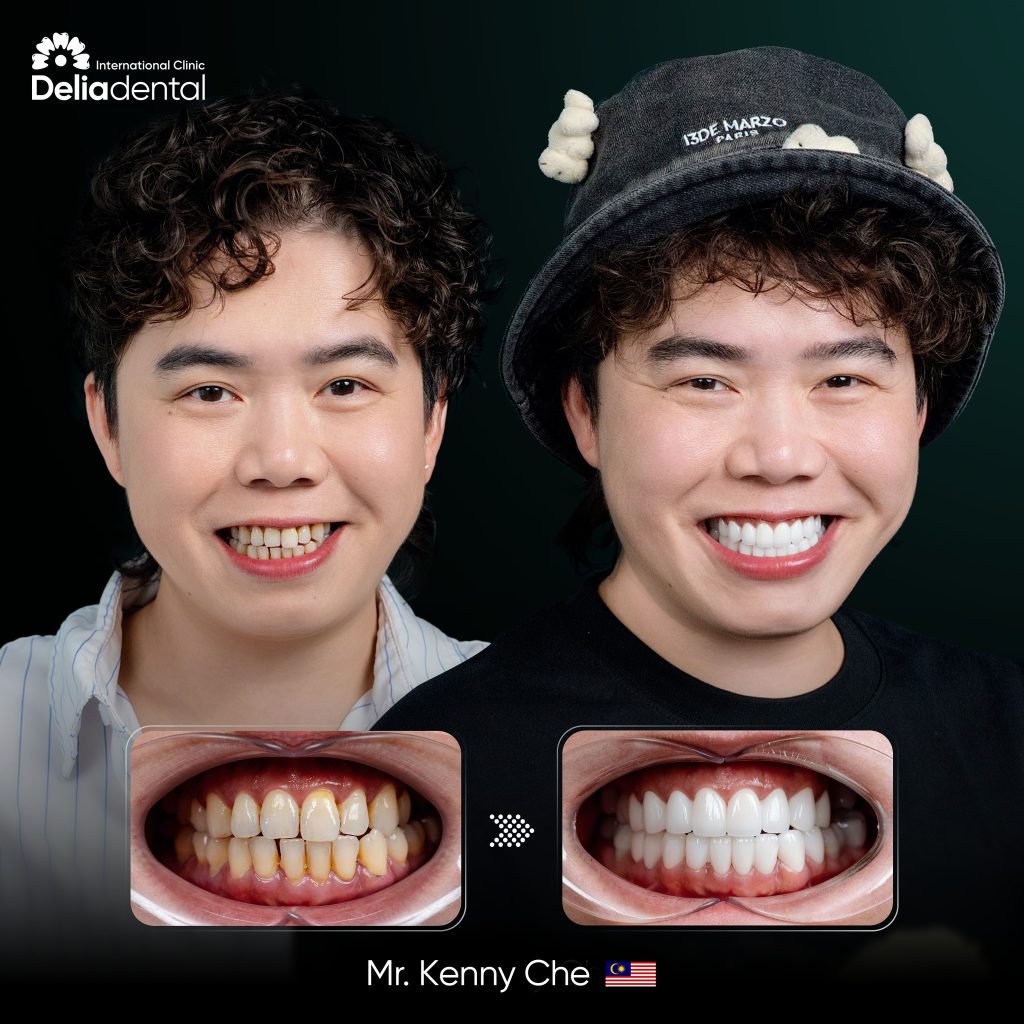
For patients who received a crown or implant at Delia Dental Clinic Ho Chi Minh or Hanoi, aftercare guidance is built around the specific restoration placed rather than a generic hygiene handout, since a single crown, a full-arch implant case, and a bridge all need slightly different daily routines. Patients can send a photo of the treated area via WhatsApp or Messenger if something looks or feels different, such as a shifted margin, gum irritation, or sensitivity around an implant, so the team can review it and advise whether it needs monitoring or an in-person check with a local dentist.
FAQ
Can brushing mistakes cause a dental implant to fail?
Brushing habits alone rarely cause outright implant failure, but consistently poor plaque control around an implant is one of the main contributors to peri-implantitis, which can progress to bone loss around the implant if left unaddressed.
Does whitening mouthwash affect crown color?
No. Whitening agents in mouthwash and toothpaste act on natural enamel, not on ceramic, zirconia, or composite crown material, so they will not lighten a crown’s shade.
Is an electric toothbrush safer than a manual one for crowns and implants?
Either can be used safely. What matters more than manual versus electric is bristle softness and the amount of pressure applied, since both types can cause wear or gum irritation if used too aggressively.
How soon after getting a crown or implant should cleaning habits change?
Adjustments are usually relevant from the point the restoration is placed and fully settled, since the margin or the peri-implant tissue is present from day one, not something that develops only after months.
Final Thoughts
A crown or an implant does not need a complicated routine, but it does need a routine that accounts for what is actually there: a margin that can open under pressure, or tissue that lacks the natural barrier a real tooth has. Matching brush pressure, toothpaste abrasiveness, and interdental tools to the restoration is usually enough to avoid the problems above.
If you have a crown or implant and something feels off around it, send a photo via WhatsApp or Messenger to Delia Dental Clinic so the team can take a look and advise on next steps.


