
Heading to Da Lat after dental treatment offers a cool, refreshing escape when Ho Chi Minh City feels too hot and humid for a comfortable recovery. A swollen cheek in the tropical heat is not how most people picture healing, which is why this highland city, sitting 1,500 metres above sea level, is where many travellers head instead.
Da Lat can work as a quiet recovery stop after your treatment in Vietnam, but only at the right stage. The question is rarely whether the city is pleasant. It is whether your mouth is ready for a flight or a long mountain road, and whether you are still due back at the clinic.
This guide covers which treatments leave room for a Da Lat trip, how to get there from Ho Chi Minh City or Hanoi, how to pace the days, and what to clear with your dentist before you book anything. It is written for patients having crowns, veneers, or implants at Delia Dental Clinic in Hanoi or Ho Chi Minh City.
Quick Answer
Da Lat suits patients whose main treatment is finished or who have a gap of several days between appointments, and whose dentist has cleared travel. Avoid it while stitches, heavy swelling, bleeding or an unfinished temporary restoration are still being monitored. Always confirm your next appointment date before booking.
Which treatments leave room for a Da Lat trip?
Da Lat fits best when your dentist expects no appointments for a few days. The deciding factor is your treatment stage, not the treatment name.
| Treatment stage | Da Lat trip | What to settle first |
|---|---|---|
| Crowns or veneers fitted and final bite check done | Usually reasonable | Sensitivity, bite comfort, any adjustment still planned |
| Crown or veneer preparation done, temporaries in place | Ask first | Temporaries can loosen, and you still need a return fitting |
| Implant surgery within the last few days | Ask first | Stitches, swelling, bleeding, review date |
| Implant surgery with sinus lift or bone grafting | Ask first, and expect to wait | Pressure changes, sinus symptoms and healing checks |
| Staged implant case, home between the two trips | Plan it for your return trip | Your next visit is in Vietnam, so fit Da Lat around it |
Staged implant cases often involve a healing interval of months between visits. If that is your situation, the more practical Da Lat window is during your return trip, after the final teeth are fitted. Our guide to dental implant length of stay in Vietnam explains how the two trips usually split.

Why Da Lat suits recovery, and where it does not
Da Lat is much cooler than the lowlands. Daytime temperatures typically sit in the low 20s °C, and in the dry season, roughly November to March, evenings often fall to around 10 to 15°C. Many patients find that more comfortable than heat and traffic while their mouth is tender. The city is also slower, and much of its food is soft or can be eaten lukewarm.
Cool air does not speed healing, and no clinical evidence says a highland climate improves dental recovery. The benefit is comfort and rest, nothing more. Da Lat also has limits for a recovering patient:
- Roads are steep and winding, which is hard on a swollen face or an upset stomach.
- Popular activities such as canyoning, waterfall climbs and mountain bike trails involve exertion, impact and sometimes falls.
- Hot pot, grilled rice paper and crunchy street snacks are everywhere and are poor choices around fresh dental work.
- Access to a dentist who knows your case is far lower than in Hanoi or Ho Chi Minh City.
How to get to Da Lat from Ho Chi Minh City or Hanoi
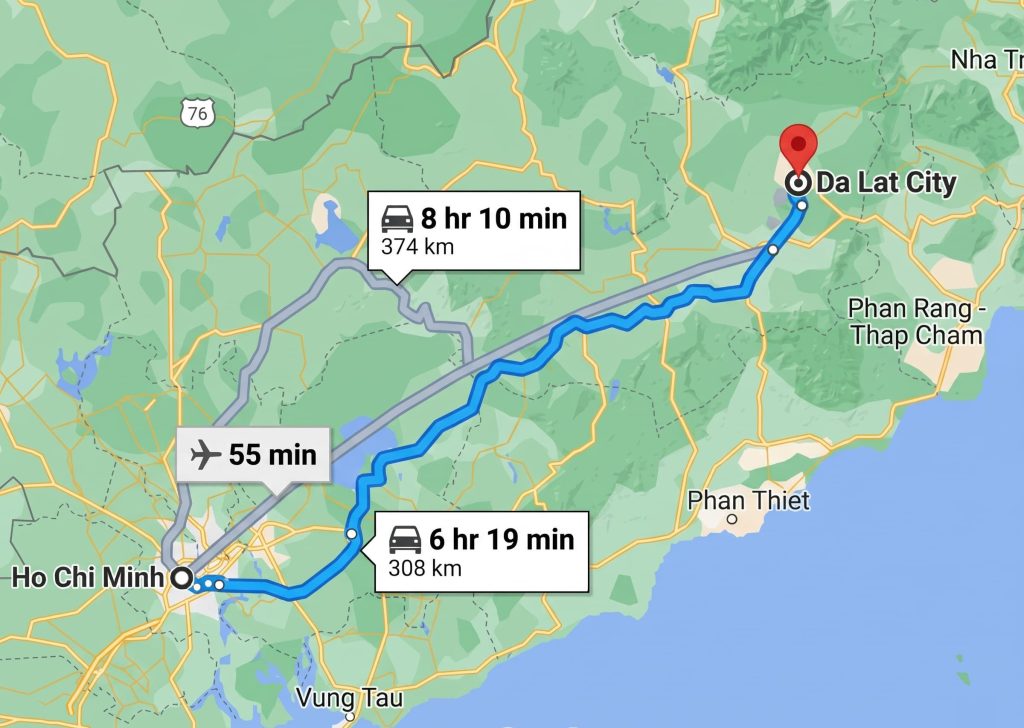
Flying is the better choice for most recovering patients. Da Lat’s airport, Lien Khuong, sits about 30 kilometres south of the city centre. Flights from Ho Chi Minh City take roughly an hour, and flights from Hanoi take about two hours. Add the airport transfer and check-in time, and the door to door trip from Ho Chi Minh City is closer to four hours. Schedules change by season, so check the current timetable with the airline before booking.
The road from Ho Chi Minh City is roughly 300 kilometres and usually takes 6 to 8 hours, including a mountain pass near the end. Sitting for that long with a swollen jaw, or in a car with frequent braking and bends, is uncomfortable. If you choose the road anyway, take a private car with scheduled stops rather than a crowded bus, and keep your medication in your hand luggage.
If you had implant surgery or any sinus related procedure, ask about flying before you buy tickets. Our article on how soon you can fly after dental implant surgery explains why a single implant, a bone graft and a sinus lift each follow a different timetable, even for a short domestic flight.
A paced three day Da Lat plan for dental recovery
Treat this as a template. Move days around to match your swelling, sensitivity and appointment dates. The three intensity levels used in our 10 day Vietnam dental tourism guide, rest, light and moderate, apply here as well.
Day 1: arrive and do very little
Rest level. Check in early, rest, and walk gently around Xuan Huong Lake in the late afternoon. Eat something soft and lukewarm, such as rice porridge (chao) or a simple noodle soup that has cooled. Warm soy milk (sua dau nanh), a common Da Lat street drink, is easy on the mouth as long as it is not hot.
Day 2: short, low effort outings
Light level. Choose a flower garden, a cafe with a view or a drive past the pine forests. Keep outings under a few hours and avoid anything that jolts the head. Eat on the soft side, and rinse or clean as your dentist instructed. If you have crowns or veneers, our guide to dental crown aftercare in Vietnam lists what to avoid in the first days and weeks.
Day 3: travel back with a buffer
Plan the return so you are back in Hanoi or Ho Chi Minh City at least a day before your next appointment or flight home. Mountain weather and delayed flights are the usual reasons patients cut it close.
What to clear with your dentist before you book
Ask these before you pay for flights or a hotel:
- Do I have any appointment, adjustment or review in the next week?
- Are my stitches dissolvable, and when do they come out?
- Is my temporary crown or bridge secure enough for travel?
- What swelling, bleeding or pain should make me return immediately?
- Which medication must I carry, and at what times?
- Who can I contact by phone or message if something changes while I am away?
Write the answers down. If anything on that list is unresolved, postpone the trip.
How Delia Dental Clinic fits a Da Lat trip into your treatment schedule
Delia Dental Clinic does not run recovery trips to Da Lat, so the city is something you arrange yourself. What the international patient team can do is tell you where you stand in your treatment plan and whether the days you have in mind are free of appointments.
For that, they need your treatment dates, your planned travel dates and a note on how your mouth feels. Our team in Hanoi or Ho Chi Minh City can then say whether the stage of your treatment leaves room for a trip, or whether a follow up visit should come first. Your treatment plan and appointment schedule are confirmed in person at the clinic, so the answer you get is based on your actual case rather than a general rule. The patient journey page shows how the stages of a typical international case are laid out.
Book a Consultation Now
Frequently asked questions
Can I go to Da Lat right after a crown or veneer fitting?
Often yes, once your final restorations are fitted and any bite adjustment is done. If you are still wearing temporaries, or a return fitting is due, stay close to the clinic. Temporaries can loosen, and the gap between preparation and fitting is not the time to be a long way from your dentist.
Does the cooler weather in Da Lat help dental healing?
No clinical evidence supports that. Cooler air feels more comfortable than Ho Chi Minh City heat, and a quiet setting can make rest easier, but healing depends on your treatment, aftercare and general health. Treat the climate as a comfort factor, not a medical one.
Is the mountain altitude a problem after implants or a sinus lift?
Da Lat’s altitude of about 1,500 metres is lower than the pressure altitude inside a typical passenger cabin, so the city itself is rarely the main concern. The bigger questions are the flight and how recent your surgery is. After a sinus lift, pressure changes matter more, so follow the restriction from the surgeon who treated you, and report sinus pain, nasal bleeding or a sensation of air passing through the surgical site before you travel.
What can I eat in Da Lat while my mouth is healing?
Rice porridge, soft noodle soups served lukewarm, steamed dishes and lukewarm soy milk are easy to find. Skip hot pot served at boiling temperature, grilled rice paper and crunchy snacks. Chew on the side your dentist recommends, and follow their instructions over any general list.
Should I take a bus or fly from Ho Chi Minh City?
Flying is easier on a recovering mouth, since the flight takes about an hour against 6 to 8 hours by road. If you take the road, use a private car with stops, because winding mountain sections are uncomfortable with swelling or sensitivity. Check current flight schedules before booking.
What if something goes wrong while I am in Da Lat?
Contact your clinic first by message, with a photo if relevant, and describe the symptom. Fever, spreading swelling, heavy bleeding or difficulty breathing or swallowing need urgent local medical care, not a wait for a reply. This is why clearing your plan and your emergency contacts beforehand matters.
Planning the rest of your recovery days
These guides cover the other parts of a trip built around dental treatment, from pacing a full 10 days to deciding which city suits your treatment.
- What to Do in Vietnam for 10 Days: A Dental Tourism Guide
- How to Maintain Dental Implants Placed in Vietnam
- Hanoi vs Ho Chi Minh City Dental Treatment
- What Counts as a Dental Holiday Package in Vietnam?
Final Thoughts
A Da Lat trip after dental treatment works when it is planned around your appointment schedule, not the other way round. Settle your next clinic date, confirm that travel is cleared, and choose the flight over the long road. Pick low effort days, soft lukewarm food and a return with a day to spare. Keep one contact open at your clinic, so a small problem stays small.
Send your planned treatment dates, travel dates and any questions to Delia Dental Clinic via WhatsApp or Messenger before you book flights to Da Lat. The international patient team can review where you are in your plan and tell you which days look clear for travel.


