A wisdom tooth removal does not automatically needed before implants elsewhere in the mouth. The two decisions get bundled together far more often than they should, usually because a clinic wants a clean, simplified case rather than because the wisdom tooth is actually in the way.
What actually matters is proximity and condition. A wisdom tooth sitting in the same jaw quadrant as the planned implant, or one that is impacted, infected, or pressing against a neighboring tooth in the treatment area, is a different situation from a wisdom tooth on the opposite side of the mouth that has already erupted normally and is causing no problems. The first case may genuinely need to be addressed before or alongside implant surgery. The second usually has nothing to do with the implant plan at all.
This guide explains what connects a wisdom tooth to an implant decision, when removal is genuinely part of the plan, when it is not, and how a case gets sorted into one category or the other before a patient travels.
Quick Answer
Wisdom tooth removal before implants is necessary only when the wisdom tooth is close to the planned implant site, impacted in a way that affects bone quality nearby, or already causing infection or pressure on an adjacent tooth in the treatment area. A wisdom tooth in a different part of the mouth, or one that has erupted normally with no symptoms, usually has no bearing on an unrelated implant plan and does not need to be removed as a precaution.
What Actually Connects a Wisdom Tooth to an Implant Plan
The link between a wisdom tooth and an implant elsewhere in the mouth is proximity, not the mere fact that both are dental issues happening around the same time. An implant placed in the lower back jaw sits in the same general region where a lower wisdom tooth would be, so the two can genuinely interact. An implant planned for a front tooth or the opposite arch is a different quadrant entirely, and a wisdom tooth on the other side of the mouth has no anatomical relationship to it.
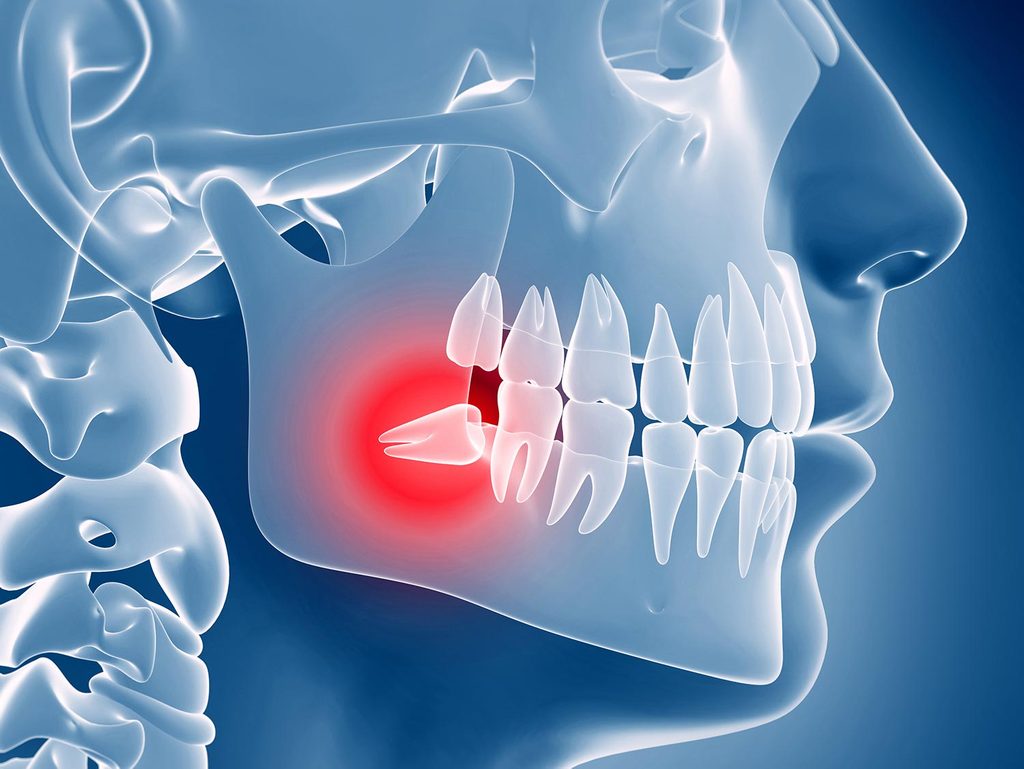
Three things determine whether that relationship matters clinically. The first is distance: how close the wisdom tooth root sits to the proposed implant position, and whether the implant site would need to encroach on space the wisdom tooth is occupying. The second is condition: whether the wisdom tooth is impacted, partially erupted, infected, or associated with a cyst, since any of these can affect the bone quality and volume the implant depends on. The third is timing pressure on a neighboring tooth: an impacted or angled wisdom tooth can push against the tooth in front of it, and if that neighboring tooth is inside the treatment area, the wisdom tooth becomes part of the implant conversation even though it is not the tooth being replaced.
None of this can be judged from how a wisdom tooth feels day to day. A wisdom tooth that has never caused pain can still be sitting close enough to an implant site to matter, and one that occasionally aches can still be irrelevant if it is nowhere near the planned treatment area. This is why the assessment depends on imaging rather than symptoms alone.
When Wisdom Teeth Actually Matter for Treatment
When removal becomes part of the implant plan
Removal is genuinely indicated when the wisdom tooth sits in or very close to the planned implant site, since the implant needs adequate bone width and length without interference from an adjacent root. It is also indicated when the wisdom tooth is impacted and associated with bone loss, a cyst, or chronic low-grade infection nearby, because any of these can compromise the bone quality an implant needs to integrate successfully. A wisdom tooth pressing against the tooth directly in front of it, where that neighboring tooth is inside the treatment area, is another case where the wisdom tooth has to be addressed even though it was never the primary problem.
In a full-arch or multiple-implant case covering most of one jaw, a wisdom tooth in that same arch is far more likely to fall inside the surgical field than it would in a single-implant case at the front of the mouth. Case scope changes how often this question even comes up.
When it can be left in place
A wisdom tooth on the opposite side of the mouth from the planned implant, or in the opposite jaw entirely, typically has no bearing on the treatment plan and does not need to be touched. A wisdom tooth that has erupted fully, sits in a normal position, has adequate bone support, and shows no infection or decay is also usually left alone regardless of where it sits, since a stable, functional tooth is not a surgical target just because implant treatment is happening nearby.
An asymptomatic impacted wisdom tooth outside the treatment field falls into a genuine gray area. Some patients keep these indefinitely without incident. Others develop problems years later. The decision to remove an asymptomatic wisdom tooth that is not interfering with the implant plan is a separate conversation from the implant treatment itself, not something that should be added to the surgical list simply because the patient is already having oral surgery.
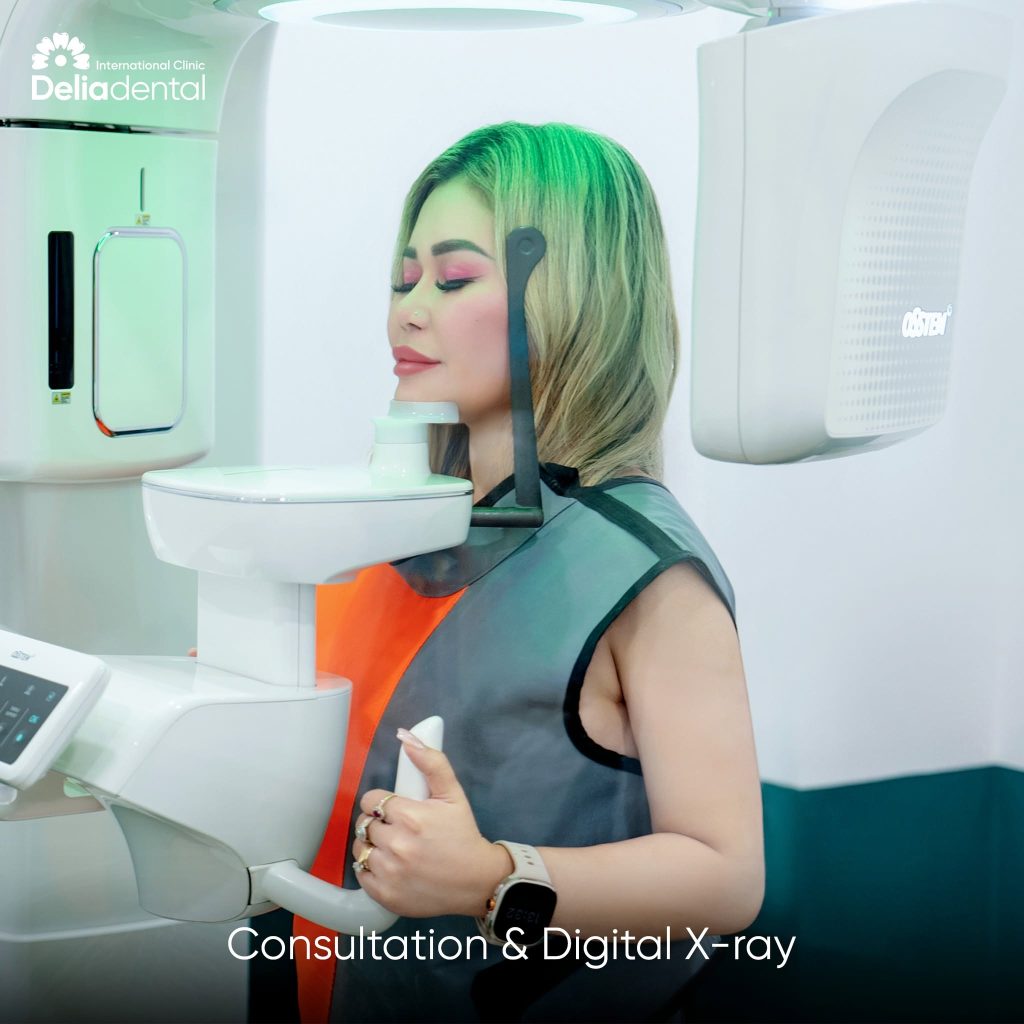
Panoramic X-rays and CBCT scans are what actually settle which category a given case falls into. A wisdom tooth’s exact position relative to the mandibular canal, the sinus floor, or a neighboring root is not reliably visible on a photo or described accurately from memory, which is why this question usually cannot be answered with confidence before imaging is reviewed.
Delia Dental Clinic’s Approach to Wisdom Teeth Near an Implant Site
Before a patient travels, Delia Dental Clinic can review a panoramic X-ray or existing CBCT files to check whether a wisdom tooth sits inside or near the planned implant area. This initial read can flag whether a wisdom tooth is likely to be relevant to the case, but it cannot replace an in-person examination and, where clinically indicated, a CBCT scan taken at the clinic, since the three-dimensional relationship between a wisdom tooth root and nearby anatomy is not always clear on a two-dimensional image.
When a wisdom tooth does need to come out as part of the plan, Delia Dental Clinic assesses whether the extraction can be completed during the same surgical visit as implant placement or whether the site should heal first. That decision depends on the wisdom tooth’s position, whether infection is present, how close it sits to the implant site, and the overall surgical plan for that trip. Patients preparing for an implant consultation at Delia’s Hanoi or Ho Chi Minh City branch can send a recent panoramic X-ray, any existing CBCT files, and a note on which side and jaw the implant is planned for, so the initial review can focus on the area that actually matters.
Frequently Asked Questions
Can a wisdom tooth be removed on the same day as implant surgery?
In some cases, yes, particularly when the extraction site is separate enough from the implant site that the two procedures do not interfere with each other. When the wisdom tooth is directly adjacent to the implant position or there is active infection, the dentist may prefer to let the extraction site heal before placing the implant, since operating on both areas at once can complicate bone healing at the implant site.
Does removing a wisdom tooth add extra time to an implant trip?
It can, depending on whether the extraction is straightforward or the tooth is impacted and requires a more involved surgical approach. A simple extraction alongside implant placement may not meaningfully change the first-trip schedule, while an impacted tooth requiring its own healing period before the implant can proceed may extend the overall timeline between trips.
If my wisdom tooth doesn’t hurt, does that mean it’s fine to leave during implant treatment?
Not necessarily, and it also does not automatically mean it needs to come out. Pain is not a reliable indicator of whether a wisdom tooth is close enough to an implant site to matter. The relevant question is its position relative to the treatment area, which is assessed through imaging rather than symptoms.
Will removing a wisdom tooth affect the cost of my implant treatment?
It can, since extraction is typically a separate line item from the implant itself. Whether it is priced as part of the same surgical visit or as an additional procedure depends on the case, and this should be reflected in an itemized quote rather than folded into the implant price without explanation.
Can an impacted wisdom tooth on the other side of my mouth still affect implant planning somewhere else?
Generally not, if it is truly unrelated in location and not causing any wider issue such as an infection or cyst that could theoretically affect general oral health. Most impacted wisdom teeth that sit outside the treatment quadrant are managed as their own separate matter, if they are managed at all.
How is it decided whether my wisdom tooth is close enough to matter?
Through imaging, primarily a panoramic X-ray for an initial read and a CBCT scan when a clearer three-dimensional view of the root position relative to the implant site is clinically needed. Distance on an X-ray, the wisdom tooth’s angulation, and any signs of bone loss or infection all factor into that assessment.
Getting the Rest of the Implant Plan Right
A wisdom tooth is only one factor among several that shape what an implant trip actually looks like once imaging comes back. These guides cover the parts of that planning this article does not.
- Why Dental Implant Quotes Change After a CBCT Scan
- How Long Should You Stay in Vietnam for Dental Implants?
- Should Every Failing Tooth Be Removed? When Full-Arch Implants Are the Right Choice
- Bone Grafting and Dental Implant Cost in Vietnam
Final Thoughts
A wisdom tooth only belongs in an implant conversation when it sits close enough to the planned site, or in poor enough condition, to actually affect the plan. Distance and condition decide that, not the fact that both are happening in the same mouth around the same time.
Send a recent panoramic X-ray or any existing CBCT files to Delia Dental Clinic via WhatsApp or Messenger before booking your flight, along with a note on which tooth and side the implant is planned for. The international patient team can give an initial read on whether a wisdom tooth is likely to be relevant to your case, with the final decision confirmed after an in-person examination in Hanoi or Ho Chi Minh City.


