
Vietnamese coffee can be found on every corner in the country, and it stains. Here’s what actually happens to whitened teeth versus veneers, and how to still drink it safely.
Whitened enamel and porcelain veneers do not react to coffee the same way, and that difference matters more than any generic list of “foods to avoid.” Whitening changes the tooth’s own surface temporarily, opening it up to pigment for a short window after treatment. A veneer or crown made from Emax or zirconia is a separate, glazed material that does not absorb color the way enamel does, so the real risk for a restoration is different: a lost polish or a stained cement margin, not the ceramic itself turning yellow.
That distinction is the reason a blanket “avoid coffee for a month” instruction does not fit either case well. Whitening patients need to be strict for a short, specific window and can then relax. Veneer and crown patients are dealing with a much more stain resistant surface long term, but one that still needs its glaze protected and its edges kept clean.
This matters more in Vietnam than almost anywhere else, since coffee is not an occasional treat here. It is a daily ritual, often strong, often sweetened with condensed milk, and rarely avoidable for the length of a dental trip. This guide separates what whitening actually requires from what veneers and crowns actually require, and covers the specific drinks a patient is likely to encounter during treatment in Hanoi or Ho Chi Minh City.
Quick Answer
Whitened teeth need a strict 24 to 48 hour window without coffee, tea, or other strongly pigmented drinks, since the enamel is temporarily more porous right after treatment. Veneers and crowns made from Emax or zirconia are far more stain resistant than natural enamel and do not need the same strict window, though heavy coffee exposure over years can still dull the surface polish or stain the cement line at the edge of the restoration. Confirm which situation applies to your case with the dentist who did the work.
Why Whitened Enamel and Porcelain Handle Coffee Differently
Teeth whitening works by using a peroxide gel to oxidize pigmented compounds trapped inside the enamel layer. Enamel is naturally made of hydroxyapatite crystals with a porous structure, and that porosity is what lets pigments from food and drink settle in over years in the first place. The whitening process temporarily disrupts the protective pellicle film on the tooth surface and leaves the enamel more open than usual right after treatment, which is exactly why it becomes easier for new pigment to move back in during the first day or two.
A veneer or crown made from a material like Emax lithium disilicate or zirconia does not have that same porous structure. These materials are fired and glazed into a dense, largely non-porous surface, which is part of why they were chosen for the restoration in the first place. Coffee pigment sitting on a glazed ceramic surface behaves more like coffee sitting on a glass than coffee soaking into a sponge. The practical result reported in prosthodontic research is that glazed ceramic resists staining significantly better than natural enamel, and that when a veneer does appear to have picked up color, it is usually the thin cement line at the margin, not the ceramic body, that has actually taken on pigment.
What can affect a veneer or crown over the long term is the surface finish rather than the material’s chemistry. A polished or glazed ceramic surface is smooth enough to resist plaque and pigment sticking to it, but that smoothness can be worn down over years by abrasive toothpaste, aggressive brushing, or general wear. A duller, slightly roughened surface holds onto surface stain more easily, which is why a veneer that looks stained after several years is often solved by professional polishing rather than replacement.
The First 24 to 48 Hours After Whitening
This window is where the caution actually needs to be strict, and it applies regardless of where the whitening was done. Dental guidance consistently points to the first 24 to 48 hours as the period when enamel is most porous and most likely to pick up new staining, with some clinics extending caution to 72 hours for patients who also have noticeable sensitivity.
During this window, the drinks and foods worth avoiding go beyond coffee. Dark tea, red wine, dark sauces, and strongly pigmented fruit all carry the same risk, and a useful rule dentists often give is to treat anything that would stain a white shirt as something to skip. Acidic drinks are worth limiting too, not because they stain directly, but because acid softens enamel further and can make a tooth more receptive to pigment on top of the porosity from whitening itself.
If coffee genuinely cannot be avoided during this window, a straw reduces direct contact with the front teeth, and rinsing the mouth with plain water immediately afterward helps limit how long pigment sits on the surface. Neither fully replaces waiting, but both reduce the damage if the trip schedule makes total avoidance impractical.
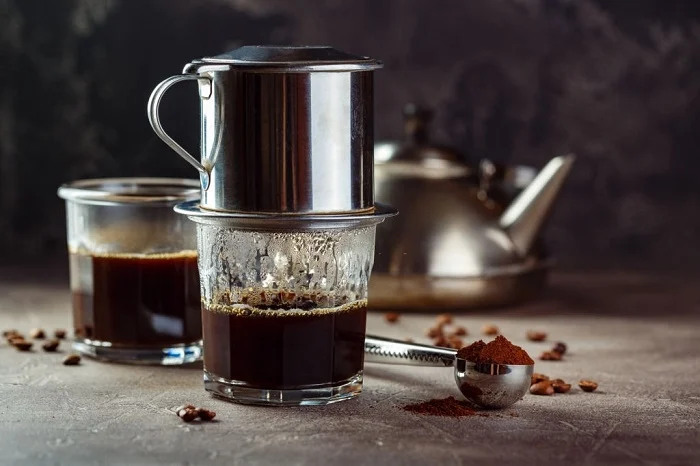
Vietnamese Coffee, Broken Down by Type
Vietnamese coffee culture is not one drink, and the differences matter for staining risk. The table below applies most directly to the 24 to 48 hour post-whitening window; for veneers and crowns, all of these are considered low risk to the restoration itself, with the main consideration being enamel on any remaining natural teeth.
| Drink | What it is | Staining risk | Notes |
|---|---|---|---|
| Cà phê đen (black phin coffee) | Strong, dark-roasted coffee brewed slowly through a metal filter | High | Long contact with dark pigment during slow drinking increases exposure |
| Cà phê sữa đá (iced milk coffee) | Black coffee mixed with sweetened condensed milk over ice | Moderate to high | Milk dilutes color somewhat, but the drink is still consumed slowly over ice |
| Cà phê trứng (egg coffee) | Coffee topped with whipped egg yolk and condensed milk | Moderate | The foam layer reduces direct coffee contact with front teeth in early sips |
| Trà đá (iced tea) | Weak brewed tea served cold, often unsweetened | Low to moderate | Lighter pigment than coffee, but ubiquitous and easy to drink in volume |
| Nước mía (sugarcane juice) | Fresh pressed sugarcane juice | Low | Not significantly pigmented, though high in sugar |
The common thread across the darker options is contact time. A quick espresso finished in one go stains less than the same volume of coffee sipped slowly over ice across an hour, which is closer to how cà phê sữa đá is usually consumed.
Practical Ways to Still Drink Coffee Without Undoing the Result
Outside the strict 24 to 48 hour whitening window, coffee does not need to be avoided altogether, and for veneer and crown patients it rarely needs to be avoided at all. A few habits reduce the practical impact without asking a patient to give up something that is genuinely part of daily life here.
Using a straw for iced coffee reduces direct contact with the front teeth, which is the area most visible and most relevant to whitening results. Rinsing with plain water right after finishing a cup limits how long pigment sits on the tooth surface before it is cleared away. For anyone specifically in the post-whitening window, waiting around 30 minutes before brushing is worth noting separately, since brushing too soon after treatment can aggravate temporary sensitivity rather than actually helping.
For veneers and crowns, the more relevant long-term habit is avoiding abrasive whitening toothpaste on the restoration itself. These pastes are designed to polish natural enamel more aggressively, and repeated use can dull the glazed surface of a veneer or crown over time, which is what eventually makes staining easier even though the material itself never changed color.
Delia Dental Clinic’s Guidance for Patients Drinking Coffee During Treatment
At Delia Dental Clinic Hanoi and Ho Chi Minh, the timing advice given to patients depends on which stage of treatment they are in, not a single blanket rule for every visit. Patients who have just finished an in-chair whitening session are advised to avoid coffee, tea, and other strongly pigmented drinks for the same 24 to 48 hour window supported by the wider clinical evidence, since this is when the whitening effect is still settling and the enamel is most receptive to new pigment.
Patients who have just had veneers or crowns fitted are given different guidance, since the ceramic surface itself is not vulnerable in the same way. The more relevant instruction in the days immediately after fitting is protecting the cement bond while it fully sets, rather than avoiding coffee specifically. Once that initial period has passed, coffee at any strength or frequency common in Vietnam is not expected to discolor the restoration itself.
Patients who notice a veneer, crown, or whitened tooth looking duller or more stained than expected, whether during the trip or after returning home, can send a photo through WhatsApp or Messenger so the international patient team can assess whether it is surface stain that a professional polish would resolve, or something that needs an in-person check.
Frequently Asked Questions
Is iced milk coffee less likely to stain than black coffee?
To some extent, since the condensed milk dilutes the concentration of coffee pigment compared with drinking it black. It is not a reliable safety margin on its own, though, because cà phê sữa đá is typically sipped slowly over ice across a longer period, which increases the total contact time between the drink and the teeth. For someone in the strict post-whitening window, both versions are best avoided rather than treating the milk as protective.
How long after whitening can I drink coffee normally again?
Most dental guidance points to 48 hours as the point where the enamel has returned closer to its normal state and the highest-risk window has passed. Some patients with more sensitive teeth are advised to extend caution slightly longer, closer to 72 hours, particularly if lingering sensitivity is still present. After that period, normal coffee drinking does not need to be treated as a threat to the result, though very frequent heavy exposure over months can still gradually affect any natural teeth that were not treated.
Will my veneers stain permanently if I drink coffee every day in Vietnam?
Not in the way natural enamel does. Emax and zirconia are glazed, largely non-porous materials, and clinical studies on coffee exposure consistently show them holding color far better than tooth enamel over comparable periods. What can happen with years of heavy exposure is a loss of surface polish, which makes a restoration look duller rather than genuinely stained, and that is typically corrected with professional polishing rather than needing the veneer replaced.
Is trà đá safer for my teeth than coffee during recovery?
Generally yes, since brewed tea served this way is lighter in pigment concentration than Vietnamese coffee, particularly compared with black phin coffee. It is not risk free, since tea still contains tannins that contribute to staining over time, and because trà đá is served constantly with meals in Vietnam, the total volume consumed in a day can add up. During the strict post-whitening window, it is still worth treating with the same caution as coffee rather than assuming it is automatically safe.
I had coffee right after whitening before I knew better. Is the damage permanent?
A single lapse is unlikely to cause a lasting problem on its own, since the enamel gradually returns to its normal, less porous state over the following day or two regardless. The more useful step is simply resuming the white diet guidance for the remainder of the recommended window rather than assuming the result is already compromised. If noticeable discoloration shows up in the days that follow, a photo sent to the clinic that performed the whitening is the fastest way to confirm whether it needs attention.
Final Thoughts
The difference between whitening and a ceramic restoration is the whole story here. Whitening asks for genuine discipline during a short, specific window, while a well-made veneer or crown is built from a material that was chosen partly because it resists exactly the kind of staining coffee causes on natural teeth. Knowing which situation applies to your own treatment is what actually protects the result, rather than trying to avoid Vietnamese coffee culture altogether for the length of a trip.
If a tooth, veneer, or crown looks different than expected after drinking coffee during your visit, send a photo to Delia Dental Clinic via WhatsApp or Messenger. The international patient team can help confirm whether it is ordinary surface stain or something that needs a closer look before you fly home.


