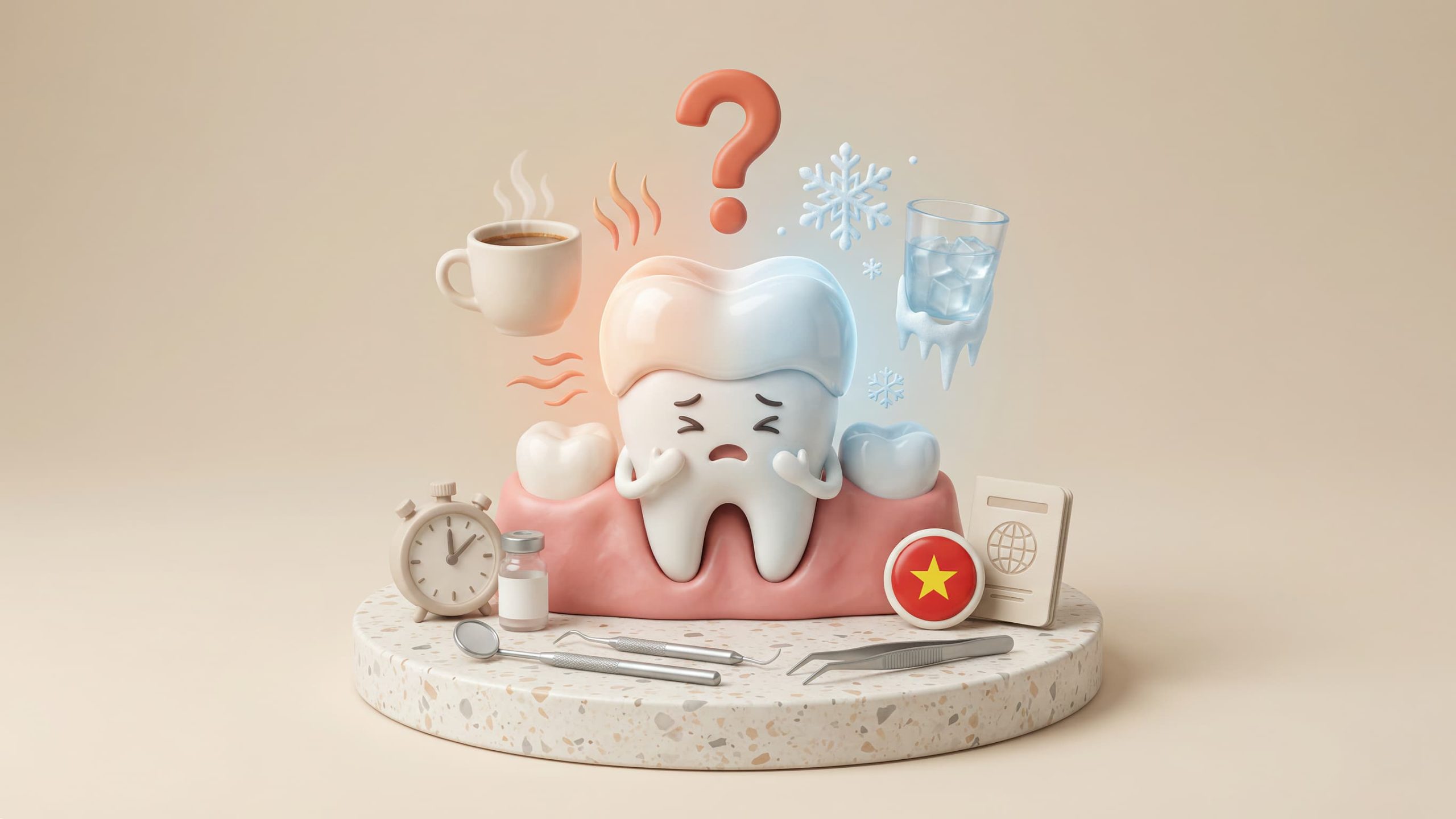
A new dental crown that reacts to hot and cold is usually part of normal settling, especially in the first one to two weeks after fitting. The tooth underneath was reshaped to hold the crown, and the nerve inside it needs time to calm down.
The pattern matters more than the reaction itself. A brief zing that fades within seconds and gets milder each day is a different situation from an ache that lingers, wakes you at night or keeps getting worse.
This guide separates the two by timeline. It covers why crown sensitivity happens, how long it commonly lasts, what to do at home, which signs need a dentist’s review, and what to send a clinic if symptoms start after you have already flown home from treatment abroad.
Quick Answer
A new crown can be sensitive to hot and cold because the reshaped tooth underneath has an irritated nerve. Mild, brief sensitivity commonly eases within days and may take one to two weeks to settle. Pain that lingers, wakes you at night, worsens or comes with swelling needs a dentist’s review.
Why Does a New Crown Make a Tooth Sensitive to Hot and Cold?
A new crown makes a tooth sensitive because the tooth has to be shaped to hold the crown, and that shaping can irritate the nerve inside it. Aspen Dental describes the result as sensitivity to pressure, hot, cold or even a quick zing from air, and notes that mild soreness usually improves within a few days. Several separate mechanisms can sit behind that reaction, and they behave differently over time.
Reshaped Tooth and Exposed Dentin
Enamel normally shields a tooth from temperature. When a dentist removes enamel to make room for a crown, the layer underneath, called dentin, sits closer to the surface. Dentin contains microscopic channels that lead toward the nerve, so a cold drink or a hot coffee reaches the nerve more easily than before. A tooth that was deeply decayed or heavily filled before the crown may react more strongly, because its nerve was already irritated when the work began.
Crown Fit and Bite Contact
A crown that sits slightly too high takes more chewing force than the neighbouring teeth and can make the tooth sore and temperature reactive at the same time. A small gap at the crown edge can also let fluids and bacteria reach the tooth underneath. Why a crown ends up high and how a dentist corrects it is covered in the bite guide linked in the related reading below.
Gum Recession and Exposed Root
Gums that sit lower around a crowned tooth expose root surface, which has no enamel covering and reacts to cold more readily than the crown itself. Gum recession can appear weeks, months or years after fitting. A reaction at the gum line, rather than across the whole tooth, is the typical pattern.
Grinding and Clenching
Grinding or clenching loads a crowned tooth repeatedly and can keep the nerve irritated well beyond the usual settling window. People who wake with jaw tightness or morning headaches are more likely to see sensitivity that does not fade on schedule. Whether a night guard is appropriate is a decision for the dentist after an examination.

How Long Does Crown Sensitivity Last?
Crown sensitivity commonly eases within a few days and continues to settle over one to two weeks. The table below shows general ranges, and a dentist may give a different timeline for a tooth that had deep decay or a nerve close to the surface.
| Timeframe after fitting | What is commonly seen | What to do |
|---|---|---|
| Days 1 to 3 | Brief reaction to cold or heat, mild gum tenderness at the crown edge | Avoid extreme temperatures, brush gently |
| Days 4 to 14 | Reaction becomes shorter and weaker each day | Keep a short note of what triggers it and how long it lasts |
| Weeks 3 to 4 | Occasional mild reaction, no lingering | Ask for a check if it is not clearly improving |
| Beyond 4 weeks | Sensitivity still present or getting stronger | Book a dental review, since a persistent reaction is not expected settling |
Direction of travel is a better guide than the exact day count. Sensitivity that gets a little milder every few days is reassuring even if it takes three weeks. Sensitivity that stays flat or increases is the signal to book a review earlier.
Normal Settling or Needs Review? How to Tell the Difference
Normal sensitivity after a crown is brief, triggered by a clear stimulus, and improving. Sensitivity that needs review lingers after the stimulus is gone, appears without a trigger, or changes character. A reaction that lasts around 30 seconds or longer after the trigger is removed is commonly used as a rough marker for review, and only a dentist can confirm what it means with testing. The table below puts that marker alongside the other signs dentists ask about.
| Pattern | Usually normal settling | Needs dental review |
|---|---|---|
| Reaction to cold or heat | Fades within seconds | Lingers around 30 seconds or longer |
| Trend over time | Milder every few days | Flat or worsening |
| Bite | Even on both sides | Feels high, uneven or sore when pressing |
| Pain without a trigger | None | Throbbing, night waking, spontaneous ache |
| Gum around the crown | Mild tenderness for several days | Swelling or tenderness that spreads |
| Duration | Under 2 weeks, easing | Beyond 4 weeks, or any worsening |
Signs That Need Prompt Care
Contact a dentist promptly if you notice any of the following, and seek urgent medical care if swelling affects breathing or swallowing:
- Facial or gum swelling
- Fever
- Pus or a persistent bad taste
- Severe pain that starts on its own or wakes you at night
- A crown that feels loose or has come off
- Difficulty opening the mouth
Does a Temporary Crown Behave Differently From a Permanent One?
A temporary crown often causes more temperature sensitivity than a permanent crown because it usually seals the tooth less tightly. The two types also settle on different schedules, so the same symptom can mean different things depending on which one you have.
Temporary Crown Sensitivity
A temporary crown can leave tiny gaps at the edge, which lets temperature changes and air reach the exposed dentin. Cold sensitivity is the most common complaint, and it often improves once the permanent crown is cemented. A temporary crown that feels loose, or sensitivity that is severe, should be checked rather than managed at home.
Permanent Crown Sensitivity
A permanent crown seals the tooth more fully, so sensitivity after cementation is usually mild and settles within days to a couple of weeks. A reaction that is strong from the first day, or that grows after an initial improvement, points more toward bite contact, crown fit or an irritated nerve than toward normal settling.
What Can You Do at Home While the Tooth Settles?
Home steps reduce irritation while the nerve calms down, but they do not fix a high bite or a poorly fitting crown. Pain that pain relievers bought without a prescription do not ease is a reason to call the dentist rather than keep waiting.
- Choose lukewarm drinks and room temperature food for the first week or two
- Brush gently with a soft brush and avoid abrasive toothpaste around the crown
- Use a toothpaste made for sensitive teeth every day, since the effect builds with regular use
- Skip very hard or sticky foods on the crowned side until the bite is confirmed comfortable
- Do not file, grind or try to adjust the crown yourself
- Keep a simple note of what triggers the reaction and how many seconds it lasts
What Should You Send Your Dentist About Crown Sensitivity?
A useful report gives the dentist a timeline, not just a complaint. The more specific the details, the easier it is to decide between waiting, adjusting the bite, or examining the nerve. Send these items when you contact a clinic:
- The date the crown was fitted, and whether it is temporary or permanent
- Which tooth it is and which triggers set it off (cold, heat, sweet, biting)
- How many seconds the sensation lasts after the trigger is removed
- Whether it is getting better, staying the same or getting worse
- Whether the bite feels high or uneven
- A clear photo of the crown and gum, plus any recent X-rays
Photos and records help a dentist form a preliminary view, but they cannot confirm whether the nerve is healthy. That finding needs an examination in person, with nerve testing and a bite check.
How Delia Dental Clinic Handles Crown Sensitivity Reports From Travelling Patients
Delia Dental Clinic reviews the photos, X-rays and symptom timeline a patient sends, then advises whether the pattern looks like settling or needs an examination at the Hanoi or Ho Chi Minh City clinic. For cosmetic crown cases, the workflow includes a provisional crown for trial and temporary cement before permanent cementation, so sensitivity, bite feel and appearance can be reviewed while the patient is still in Vietnam. Permanent cement is used only after the patient approves the result.
A patient still in Vietnam can be rechecked at the clinic, which is the easiest time to catch a reaction that is not settling. A patient who has already flown home needs a local dentist to examine the tooth, because nerve testing cannot be done remotely. In that situation, the records sent to Delia Dental Clinic give both dentists the same timeline to work from. Leaving a few spare days at the end of a trip makes a review before departure practical, and dental crown treatment in Vietnam is the starting point for that planning.
Frequently Asked Questions
Is It Normal for a New Crown to Hurt With Cold but Not Heat?
Yes, cold is the most common trigger after a crown, and a brief reaction that fades within seconds is usually part of settling. Heat sensitivity deserves a little more attention, especially if the discomfort lingers after the hot drink is gone. A lingering reaction to heat can mean the nerve is more inflamed, which only a dentist can confirm with testing. If heat or cold pain outlasts the trigger by around 30 seconds or more, book a review.
When Should I Call the Dentist About a Sensitive Crown?
Call when sensitivity lingers, wakes you at night, gets worse instead of better, or comes with swelling or fever. Also call if the bite feels high or uneven, since that is a quick fix and the tooth keeps taking extra load until it is corrected. If the sensitivity is mild and improving, waiting one to two weeks is reasonable. Any sensitivity still present beyond four weeks should be examined.
Does a Sensitive Crown Mean I Need a Root Canal?
Not usually. Most sensitivity after a crown comes from a reshaped tooth, a high bite or exposed dentin, and it resolves without nerve treatment. Root canal treatment becomes a consideration when the nerve does not recover, which shows up as spontaneous throbbing, severe pain that lingers after temperature changes, or swelling. The decision follows clinical testing and an X-ray, not the sensitivity alone.
Can a Crown Become Sensitive Years After It Was Fitted?
Yes. Gum recession can expose root surface beside the crown, decay can start at the crown edge, and grinding can irritate the nerve over time. A crack in the underlying tooth can also produce temperature or biting pain long after fitting. New sensitivity on an old crown is not part of settling, so it deserves an examination rather than waiting.
Will Toothpaste for Sensitive Teeth Fix a Sensitive Crown?
Toothpaste for sensitive teeth can ease mild sensitivity caused by exposed dentin or gum line exposure, but the effect builds over days to weeks of regular use rather than working immediately. It does not correct a bite that sits too high or a crown edge that does not fit. If the tooth is not clearly calmer after several weeks of daily use, the cause is more likely mechanical and needs a dentist’s check.
My Crown Became Sensitive After I Flew Home From Treatment Abroad. What Should I Send?
Send the treating clinic your fitting date, the trigger that sets the tooth off, how many seconds the reaction lasts and whether it is improving, since that timeline is what lets them judge settling from a problem. Add a clear photo of the tooth and gum and any X-rays you have. A local dentist can then test the nerve response and check the bite in person, which photos cannot replace. Severe pain, swelling or fever should go to a local dentist or urgent care the same day.
Next Steps After the Crown Fitting
These articles cover the bite, material and planning questions that usually come next once crown sensitivity is settled or ruled out.
- Why Can a New Dental Crown Feel Too High After Fitting?
- Do You Need a Root Canal Before a Crown in Vietnam?
- How to Check Zirconia Crown Quality in Vietnam Before Treatment
- Crown or Implant for a Badly Damaged Tooth?
Final Thoughts
If your new crown is still reacting after the first two weeks, send the fitting date, a clear photo of the tooth, any recent X-rays and a short description of your symptoms through WhatsApp or Messenger, and Delia Dental Clinic will review them and suggest the next step.


