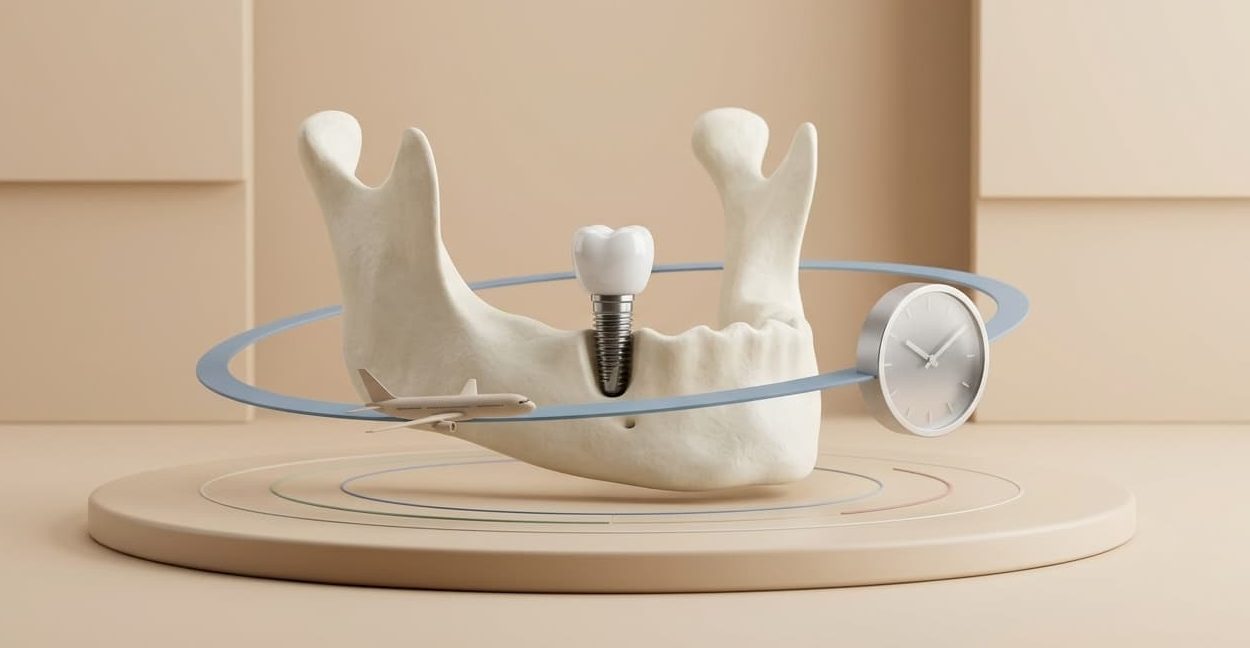
Flying in the morning of a consultation and going into surgery the next day sounds efficient, but it puts two separate sources of circadian disruption on top of each other. The long-haul flight itself shifts the body clock, and general anaesthesia produces a similar shift on its own, even without a single time zone crossed. Stacking both close together is where patients end up with jet lag rather than the treatment plan accounts for.
The fix is not a fixed number of buffer days that applies to every patient from every country. Someone flying from Sydney crosses three time zones and barely notices it. Someone flying from Los Angeles crosses fifteen and is functioning on an almost fully reversed day and night cycle by the time they land. The right amount of buffer depends on where the trip starts, which direction it runs, and what is actually scheduled for the first days in Vietnam.
This guide covers why long-haul travel and dental surgery compound each other, how much buffer actually helps by market, how to sequence arrival against the first consultation and surgery date, and practical ways to reduce the disruption on the specific routes most Delia Dental Clinic patients fly.
Quick Answer
Long-haul travel and dental implant surgery both disrupt the body’s circadian rhythm, and scheduling them close together compounds the effect rather than cancelling it out. Patients flying from Australia cross only two to three time zones and need minimal buffer, while patients from the UK, the US or Canada cross seven to fifteen time zones and benefit from at least one to three days before a consultation and longer before surgery itself. The buffer should be built around the first consultation date, not just the surgery date, since jet lag affects the accuracy of a first clinical exam too.
Why Long-Haul Travel and Surgery Compound Each Other
Jet lag is not simply feeling tired after a long flight. It is a measurable disruption of the circadian rhythm, the internal clock that governs sleep, hormone release, digestion and alertness, and it happens because the body’s suprachiasmatic nucleus can only adjust to a new light and dark cycle at roughly one hour per day. Crossing multiple time zones in a matter of hours outpaces that adjustment rate by a wide margin, which is why the body keeps running on the old schedule for days after landing.
General anaesthesia adds a second, separate disruption on top of that. Research from the University of Auckland found that general anaesthesia shifts the activity of the genes controlling the body’s biological clock, effectively producing what the researchers described as chemically induced jet lag, independent of any travel involved. A patient who has just crossed multiple time zones and then receives anaesthesia for implant placement is not dealing with one disrupted clock. They are dealing with two disruptions layered on the same system, and the body does not process them as a single combined event that resolves faster because they happened together.
This matters for a few practical reasons beyond simply feeling rough. Fatigue and poor sleep affect how well a patient can follow pre-operative instructions, communicate symptoms accurately during a consultation, and recover comfortably in the days immediately after surgery. A first clinical exam conducted while a patient is running on three hours of disrupted sleep is not necessarily as reliable as one conducted after the body has had a chance to settle, particularly for anything involving the patient’s own report of discomfort, sensitivity or bite feel.
How Many Time Zones Are Actually Involved
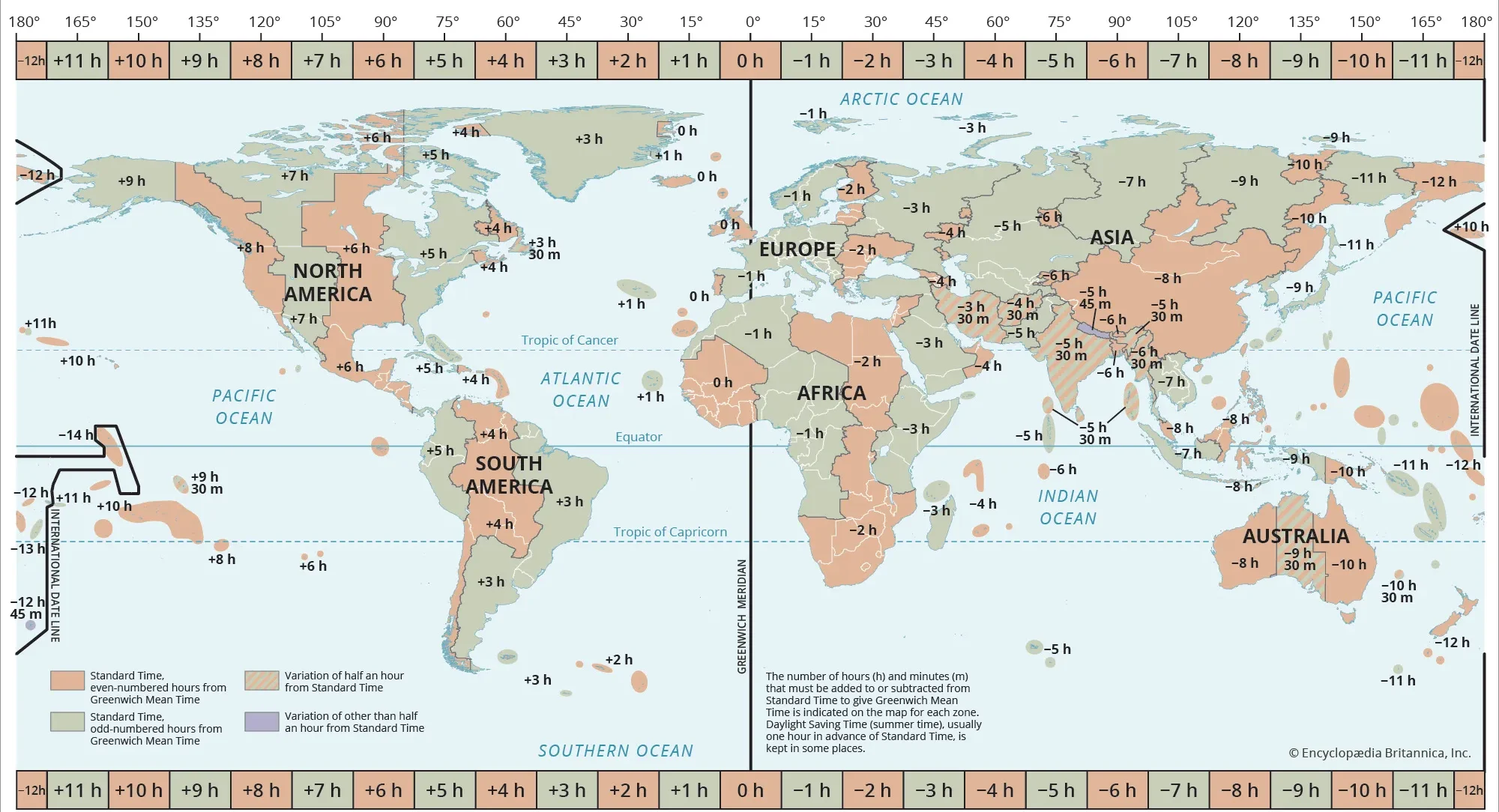
The scale of the problem depends entirely on where the trip starts. Vietnam sits at UTC+7 year round and does not observe daylight saving time, so the gap with any given country shifts slightly depending on whether that country is in its own summer or winter clock.
| Departure region | Typical time difference from Vietnam | Travel direction | Jet lag severity |
|---|---|---|---|
| Sydney Melbourne | 3 hours | Slightly east | Minimal, often barely noticeable |
| Perth | 1 hour | Slightly east | Negligible |
| Singapore Malaysia | 1 hour | East | Negligible |
| United Kingdom | 6 to 7 hours | East | Moderate to significant |
| Eastern Canada US East Coast | 11 to 12 hours | East (effectively crosses the date line pattern) | Severe, near-complete day and night reversal |
| US West Coast Western Canada | 14 to 15 hours | East | Severe, near-complete day and night reversal |
Direction matters as much as distance. General sleep medicine guidance consistently finds that eastward travel, where the body has to fall asleep earlier than its natural rhythm, is harder to adjust to than westward travel, where the body simply stays up later. Most Delia Dental Clinic patients from the UK, the US and Canada are technically flying east into Vietnam given the routing, which places them on the harder side of that adjustment curve on top of already crossing a large number of zones.
Australian and Singaporean patients are in a different position entirely. A three-hour or one-hour shift is well within what most people adjust to within a single day, so a dedicated jet lag buffer is far less important for these markets than it is for long-haul patients from further away.
How Much Buffer Actually Helps
There is no single number that fits every patient, but sleep medicine research gives a reasonable planning rule: the body adjusts to a new time zone at roughly one time zone per day for westward-style shifts, and somewhat slower, often closer to one and a half days per time zone, for the harder eastward-style shifts that apply to most patients arriving in Vietnam from further away.
Applied practically, that means a full adjustment before major surgery is not realistic for most international patients and is not what the buffer is trying to achieve. The goal is narrower: enough recovery that the first consultation and the surgical appointment do not land during the worst one or two days of disruption, which is when sleep is most fragmented and daytime alertness is lowest.
| Trip origin | Suggested arrival buffer before first consultation | Suggested buffer before surgery if not same-day as consultation |
|---|---|---|
| Australia (Sydney, Melbourne) | Same day arrival is usually manageable | Not usually necessary |
| United Kingdom | 1 full day | 1 to 2 days if surgery is separately scheduled |
| US East Coast Eastern Canada | 2 days | 2 to 3 days |
| US West Coast Western Canada | 2 to 3 days | 3 days |
These are planning ranges, not guarantees, and they assume a reasonably healthy adult with no unusual sleep sensitivity. Patients who know from past travel that they adjust slowly, or who are combining the trip with a demanding itinerary before arrival, should build in more rather than less.
Sequencing the Trip Around Arrival, Consultation and Surgery
The order these events happen in matters more than the total number of days spent in Vietnam. A common mistake is treating the quoted length of stay as something that can start counting from the moment of arrival, when the more useful approach is to treat arrival as a separate buffer period that sits before the treatment clock starts.
For patients making the trip in one stage, a workable sequence looks like arrival first, with no clinical commitments on the arrival day itself beyond settling in. The first consultation and imaging follow once the worst of the initial fatigue has passed, giving the clinical team an exam that reflects the patient’s actual condition rather than one clouded by exhaustion. Surgery is then scheduled with its own short buffer after the consultation where the case allows it, rather than immediately following imaging on the same day purely for convenience.
For cases that already require two separate trips to Vietnam, such as many implant and full arch cases where a second visit is needed after the healing period, the same jet lag logic applies to both trips independently. Arriving jet-lagged for the final restoration appointment is just as likely to affect comfort and communication as arriving jet-lagged for the surgical stage, even though the second trip does not involve anaesthesia in the same way.
Patients travelling back to back with a stopover, or adding another country to the same long-haul trip, should be cautious about compressing this sequence further rather than building in more room. A stopover can help distribute the time zone adjustment across the journey, but it does not eliminate the underlying disruption, and a rushed schedule on the other side of that stopover puts the same pressure on the appointment timing regardless of how the flights were split.

Reducing Jet Lag on the Route You Are Actually Flying
General jet lag advice applies here, but it is more useful when matched to the specific direction and length of the flight rather than treated as one generic checklist.
For patients flying from the UK or Europe, shifting bedtime earlier by an hour or so for a few nights before departure gives the body a head start on the eastward adjustment Vietnam requires. Getting outside into daylight soon after arrival, rather than sleeping through the first afternoon, helps reset the internal clock faster than staying indoors with the curtains closed.
For patients flying from the US or Canada, where the shift is closer to half a day or more, the adjustment is harder to complete before a scheduled consultation regardless of preparation, which is exactly why the buffer matters more for this group than the pre-flight routine does. Staying hydrated during the flight, avoiding alcohol and heavy caffeine on board, and eating on something closer to Vietnam time rather than home time from the point of boarding all help modestly, but they do not substitute for arriving with enough of a gap before clinical appointments begin.
For Australian and Singaporean patients, the time difference is small enough that most of this section is not particularly relevant, and the more useful planning focus is simply flight timing that allows a reasonable night’s sleep before the first appointment rather than a red-eye landing followed immediately by a morning consultation.
Melatonin is sometimes used to help shift the sleep cycle faster on long eastward routes, but timing and dosage affect whether it helps or backfires, and it should be discussed with a doctor rather than self-administered around a trip that also involves anaesthesia and prescription medication.
How Delia Dental Clinic Plans Appointments Around Long-Haul Arrival
Delia Dental Clinic’s coordination team can review a patient’s flight itinerary alongside the proposed treatment plan before confirming appointment dates in Hanoi or Ho Chi Minh City. This means the first consultation is not automatically booked for the morning after landing purely because that is the earliest available slot, particularly for patients arriving from long-haul routes where a same-day appointment would land during the roughest part of the adjustment window.
Sharing the flight itinerary, departure city and any connections in advance lets the team suggest a realistic gap between arrival and the first clinical appointment, and flag where a surgical date might benefit from sitting a day or two after the consultation rather than immediately following it. This scheduling adjustment does not replace the clinical judgement of the treating surgeon on the day, and a patient who still feels unusually unwell on the morning of a scheduled procedure should raise it before proceeding rather than pushing through on the assumption that the itinerary has already accounted for it.
Send your proposed treatment dates here
Frequently Asked Questions
Do Australian patients need to worry about jet lag before dental implant surgery?
Not to any significant degree. The time difference between Vietnam and Australia’s eastern states is only two to three hours, which most people adjust to within a single day without noticeable disruption. The bigger planning consideration for Australian patients is usually flight timing and connection length rather than jet lag itself.
How many days before surgery should US or Canadian patients arrive?
There is no fixed number that applies to every patient, but a gap of two to three days before the first consultation is a reasonable planning range for patients crossing eleven to fifteen time zones from the US or Canada. This allows the worst of the initial fatigue to pass before a clinical exam and gives some room before a surgical date, though the exact schedule should be confirmed with the clinic based on the specific treatment plan.
Does jet lag affect how anaesthesia works during surgery?
There is no established evidence that jet lag changes how anaesthesia is metabolised or dosed. The concern is different: general anaesthesia itself produces a circadian disruption similar to jet lag, so a patient who is already jet-lagged from travel is adding a second disruption on top of the first, which tends to make the overall recovery period feel more draining rather than changing the safety of the anaesthesia itself.
Can melatonin be used to adjust faster before a dental trip?
Melatonin is sometimes used to help shift sleep timing on long eastward flights, but the timing and dose matter, and taking it incorrectly can make sleep patterns worse rather than better. Since the trip also involves anaesthesia and prescription medication around surgery, using melatonin should be discussed with a doctor rather than tried without guidance close to a surgical date.
If I already booked a flight that arrives the night before my consultation, is that a problem?
Not necessarily, particularly for shorter-haul routes such as Australia or Singapore. For long-haul routes from the UK, the US or Canada, arriving the night before a consultation is workable but leaves little margin, so it is worth telling the clinic the actual arrival time so the appointment can be set later in the day rather than first thing the following morning if the schedule allows it.
Should I combine a stopover with my flight to reduce jet lag?
A stopover can spread the time zone adjustment across the journey rather than absorbing it all at once, which some patients find easier to manage. It does not remove the adjustment altogether, so the same buffer logic before appointments still applies on the other side of the stopover rather than assuming the stopover has already solved the timing question.
Final Thoughts
The number of days quoted for a treatment trip is not the same question as how many days a patient needs to arrive feeling functional. Long-haul travel and general anaesthesia both disrupt the same underlying system, and scheduling a consultation or surgical date without accounting for that stacks two sources of fatigue on top of each other rather than one.
Australian and Singaporean patients can generally treat this as a minor consideration. Patients flying from the UK, the US or Canada benefit from treating arrival as its own buffer period, sequenced before the first consultation rather than squeezed against it.
Send your flight itinerary and proposed treatment dates to Delia Dental Clinic via WhatsApp or Messenger before confirming your booking. The Hanoi or Ho Chi Minh City coordination team can review the routing and suggest a realistic gap between arrival and your first appointment before flights are locked in.


