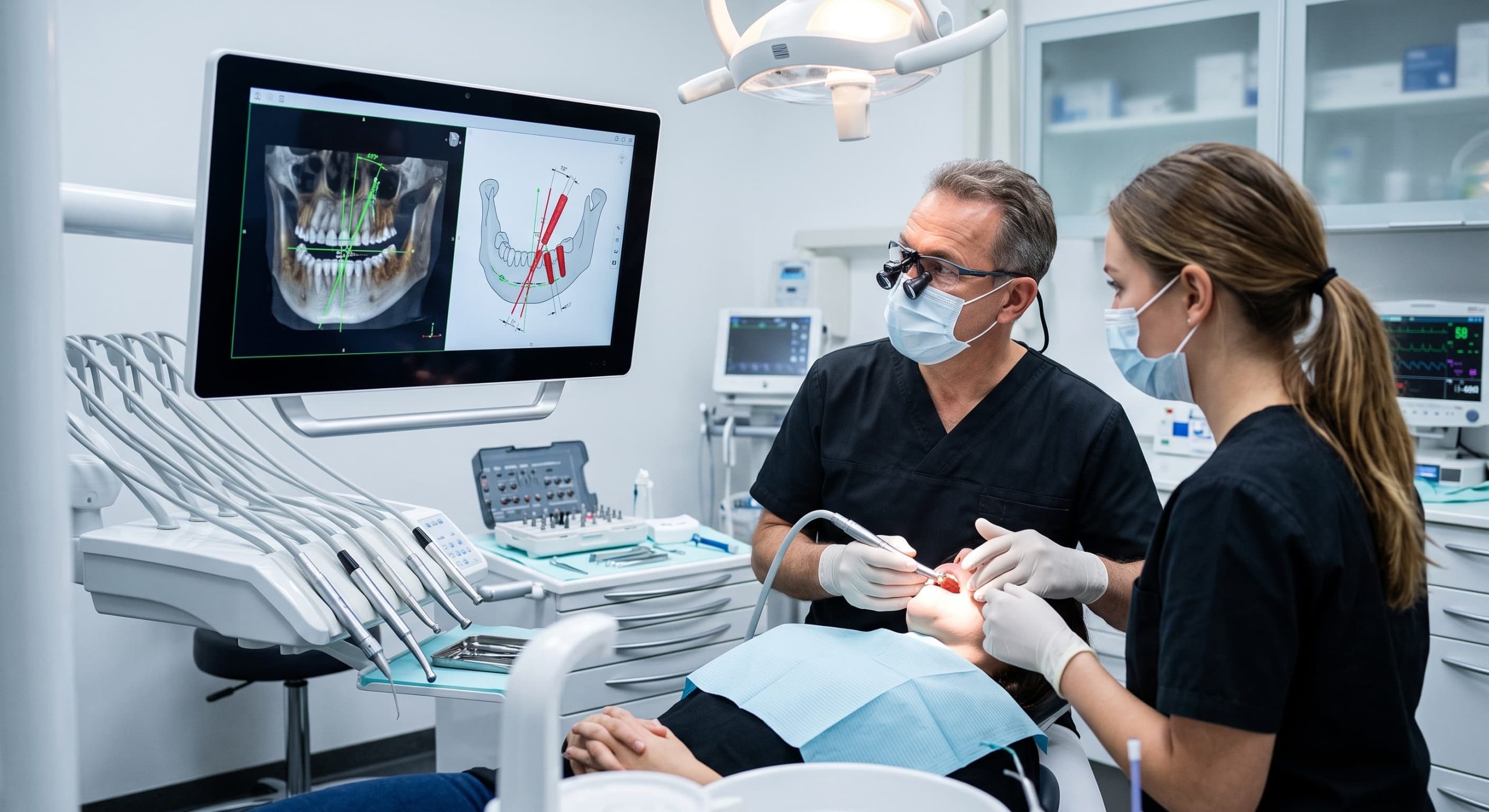
A dental implant plan can change once surgery has already started, and this happens more often than most patients expect. A CBCT scan gives a dentist a very accurate preview of the jaw, but it is still a preview. Once the gum is opened and the bone is directly visible, a dentist is working with information a scan cannot fully capture, including exact bone density, the condition of the tissue, and how the site responds to the first steps of preparation.
This is not the same as a treatment plan being wrong. A plan built from CBCT imaging is the best available estimate before surgery, and in most cases it holds up closely to what is found in the chair. When it does not, the change is usually a sign that the surgeon is adjusting to real conditions rather than following a scan blindly, which is the safer outcome for the patient even if it is not the one they expected to hear about.
This article explains why plans can shift mid surgery, what kinds of changes are common, who actually makes the call in the moment, and what a patient should ask before traveling so a mid surgery change is never a complete surprise.
Quick Answer
A dental implant plan can change during surgery because CBCT imaging predicts bone conditions but cannot fully confirm them until the site is open. Small adjustments, such as implant angle or size, are usually made on the spot. Larger changes, such as adding a bone graft or staging the case, typically involve pausing to inform the patient once anesthesia allows, and can affect cost and timeline.
Why a CBCT based plan can still change once surgery starts
A CBCT scan measures bone volume and general density well enough to plan implant position, length, and diameter with a high degree of confidence. What it cannot fully replicate is the tactile experience of drilling into that bone. Surgeons commonly use drilling torque and resistance as a live check on bone quality, and that reading can differ from what the scan suggested, particularly in areas where bone density is naturally uneven or where healing after a previous extraction was incomplete.
Soft tissue condition is another variable a scan does not fully show. Thin or compromised gum tissue, unexpected inflammation, or scarring from an old extraction site can all change how a surgeon approaches placement, even when the underlying bone measurements match the plan closely.
Proximity to the sinus in the upper jaw or the nerve canal in the lower jaw is usually well mapped by CBCT, but the margin for error that a dentist builds into the plan exists precisely because these structures matter. If the bone turns out to be softer or thinner than expected near one of these landmarks, the safer decision is often to adjust rather than proceed exactly as planned.
What kinds of changes can happen mid surgery
Changes generally fall into two categories, and the distinction matters for how they are handled.
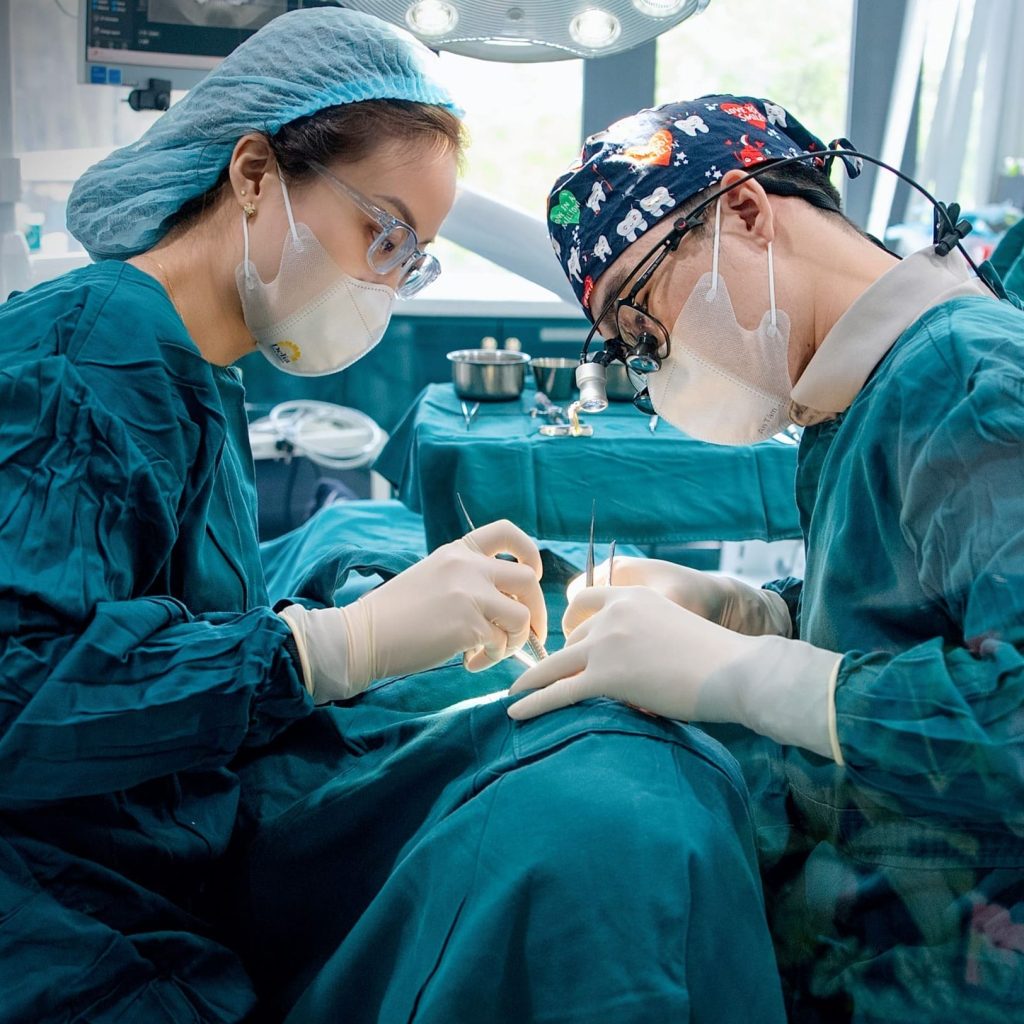
Small adjustments are usually made by the surgeon without pausing the procedure. This includes shifting an implant a few millimeters from its planned position, changing to a slightly different implant length or diameter than originally selected, or adjusting the angle of placement to follow the actual bone contour more closely. These decisions sit squarely within a surgeon’s clinical judgment during an active procedure, in the same way any surgeon adapts technique to what they find once a site is open.
Larger changes are different, because they can affect the overall treatment path rather than just one implant. The most common example is discovering that bone volume or density at a specific site is lower than the scan suggested, which may mean adding a bone graft before an implant can be placed there, or delaying that implant until the graft has healed. In a full arch case, this can mean placing fewer implants at the first visit than planned, with the remainder staged for a later date. Another example is finding unexpected infection or inflammation around an extraction site that needs to be addressed before an implant is placed in that same area.
A staged approach, where implant placement and bone grafting happen in two separate procedures months apart rather than at the same time, is a recognized and common way to manage cases where bone volume is genuinely insufficient. It is not a failure of planning. It reflects that grafted bone needs time to integrate before it can reliably support an implant.
Who decides, and does the patient get asked
Small, in the moment adjustments are made by the surgeon without stopping to consult the patient, because the patient is under local anesthesia and the decision falls within the scope of what informed consent for implant surgery already covers. A patient consenting to implant placement is generally also consenting to the surgeon exercising clinical judgment on exact position, angle, and implant dimensions within the planned site.
Larger changes are handled differently. A responsible approach is for the surgeon to complete whatever step is necessary for patient safety in that moment, then discuss the change with the patient as soon as it is practical, which may be immediately after the local anesthesia allows a clear conversation, or once the patient is out of the chair. For cases where a large change would significantly alter the treatment approach, such as switching from immediate implant placement to a staged bone graft first approach, some clinics build a pause into the plan itself, so the patient is informed before the team proceeds further that day.
This is why what gets discussed before surgery matters as much as what happens during it. A consent conversation that only says surgery may take longer than expected leaves a patient unprepared. A consent conversation that specifically names the realistic possibilities, based on what the CBCT already shows, gives the patient a much clearer picture of what a mid surgery change would actually mean for their case.
How this affects cost and timeline
A small adjustment, such as a different implant size within the same brand and system, typically does not change the overall cost or timeline in a meaningful way. A larger change usually does.
Adding a bone graft that was not part of the original plan can add cost, since it is a separate procedure with its own materials and time. It also affects timeline, because grafted bone needs a healing period, often measured in months rather than weeks, before an implant can be placed on top of it or loaded with a permanent restoration. For a patient traveling internationally with a fixed return date, this is the scenario most worth understanding in advance, since it can mean the current trip covers preparation and grafting only, with implant placement following on a later visit.
Staging a full arch case, where some implants are placed as planned but others are delayed, has a similar effect on timeline without necessarily changing the total number of implants or the final result. It changes how many trips the treatment takes to complete.
None of this should be treated as a fixed number without a written, case based quote. A trustworthy clinic distinguishes between what a CBCT scan already supports as a confident estimate and what can only be confirmed once the surgeon is looking at the site directly.

What to ask before you travel, to reduce surprises
A few direct questions before booking travel can significantly reduce the chance of a mid surgery change catching a patient off guard.
Ask what the CBCT scan currently shows about bone volume and density at each planned implant site, and whether any site is borderline. Ask what the realistic range of outcomes is for those borderline sites, including the possibility of a graft. Ask how the clinic communicates a change once surgery is underway, and at what point in a larger change the team would pause to inform the patient rather than proceeding and explaining afterward. Ask how a staged approach, if needed, would affect the number of trips and the overall timeline. These questions do not eliminate uncertainty, since some information genuinely cannot be known before the site is open, but they do turn a possible surprise into an understood possibility.
How Delia Dental Clinic approaches informed consent for implant cases
For implant cases at Delia Dental Clinic in Hanoi and Ho Chi Minh City, planning starts with CBCT imaging that gives the treating dentist a detailed view of bone volume and density before any surgical decision is made. This imaging supports a preliminary treatment direction and case based quote, though the exact number of implants a site can support, and whether any area needs additional preparation such as a bone graft, is confirmed once the site is examined in person.
Where a scan shows a borderline area before travel, that possibility can be discussed with the patient in advance rather than left as a surprise for the day of surgery. Patients who want a sense of how their own case looks before committing to travel dates can send recent X-rays or CBCT files to Delia Dental Clinic via WhatsApp or Messenger for an initial review, understood as a preliminary read rather than a final surgical plan.
Frequently Asked Questions
If bone turns out to be insufficient during surgery, does that mean two separate surgeries instead of one? Not always, but it is a realistic possibility for borderline cases. Some sites with mildly insufficient bone can still be grafted and have an implant placed in the same visit, depending on the technique used and how the surgeon assesses the site. Where bone volume is more significantly reduced, a staged approach with grafting first and implant placement several months later is often the safer route, since it gives the graft time to integrate before it needs to support an implant.
Will I be charged more on the spot if something changes during surgery? This depends entirely on the clinic’s written policy, which is exactly why a case based quote should specify how additional procedures like grafting are priced before treatment begins. A trustworthy quote separates what is confirmed against the current scan from what may be added if the surgeon finds a site needs extra preparation, so there are no surprise charges introduced mid procedure without prior discussion.
What if I only find out I need a bone graft after I have already flown home? This can happen if a planned implant is deferred rather than placed during the original trip, or if a follow up scan after returning home shows an area needs attention. In this situation, the clinic that performed the original treatment should be able to review the findings, ideally alongside any local dentist involved, and plan the graft and delayed implant placement for a future visit rather than treating it as a new, unrelated problem.
Does this risk apply to every implant, or mainly to full arch cases like All-on-4 and All-on-6? It can technically apply to any implant, since any site depends on real bone conditions rather than the scan alone. It comes up more often in full arch and full mouth cases simply because more implant sites are involved, which increases the chance that at least one site is borderline. Patients who have been missing teeth for a long time, or who wore dentures for years before considering implants, are also more likely to have uneven bone volume across different sites in the same jaw.
If my dentist changes my treatment mid surgery without asking me first, does that mean something went wrong? Not necessarily. Small, in the moment adjustments, like a slightly different implant angle or size, are a normal part of a surgeon adapting to what they find and are covered by the informed consent given before the procedure started. What matters more is whether the clinic clearly explained, before surgery, the kinds of changes that might happen and how larger changes would be communicated, rather than whether every minor adjustment was announced in the moment.
Can I ask my dentist to stop and wake me up mid surgery if something changes? For most implant procedures done under local anesthesia, the patient remains conscious throughout, so a pause for discussion is often genuinely possible for anything beyond an immediate safety decision. Whether that pause happens depends on the clinic’s approach and on how urgent the finding is. This is a reasonable question to raise directly with the treating dentist before surgery, so both sides are clear on how a significant change would be handled if one comes up.
Final Thoughts
A mid surgery change to an implant plan is usually a sign of a surgeon responding correctly to what the body actually shows, not a sign that something was planned poorly. The real difference between a stressful surprise and a manageable adjustment comes down to what was discussed before the surgery started. A CBCT scan that flags a borderline site, paired with a clear conversation about what would happen if that site needs more than originally planned, gives a patient a realistic picture to travel with.
Send your recent X-rays or CBCT files to Delia Dental Clinic via WhatsApp or Messenger before booking your flight. The international patient team can review the available imaging, flag any site that looks borderline, and help set expectations around cost and timeline for Hanoi or Ho Chi Minh City. The final treatment plan and any decision made during surgery are confirmed in person.


